From the National Intelligence Service and Druking to Livac School... the dark history of ‘online public opinion manipulation’
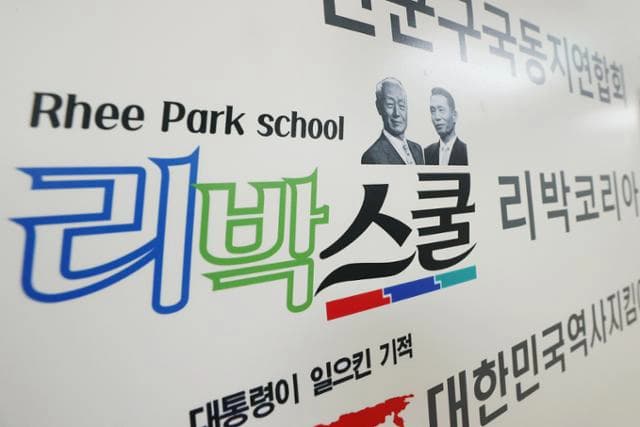
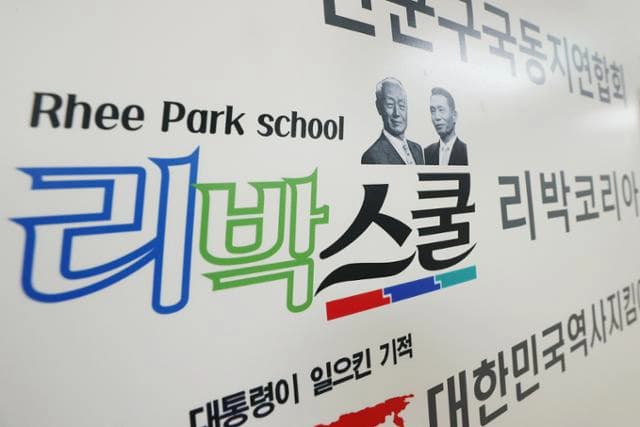
In 2002, when MB was mayor of Seoul, he first surfaced, criticizing the intervention of state agencies and the use of macro programs as a "threat to democracy"... The cautious view on 'freedom of expression' is also spreading amid controversy over comment manipulation by the far-right history education group Livac School. Livac School is an organization named after the last names of former President Syngman Rhee and former President Park Chung-hee, respectively, and is suspected of trying to create public opinion favorable to the conservative camp and influence various elections through Internet comment activities three years ago. On the 4th, three days after the incident was announced, the police began a full-scale investigation, seizing and searching the residence and office of Son Hyo-sook, CEO of Revac School. Online public opinion manipulation incidents such as the Revac School incident have continued since the early 2000s when computers became popular. Online spaces are the perfect place to push public opinion on various issues in a specific direction. First of all, Internet portal sites and communities have enormous potential in that they are spaces used by hundreds of thousands or millions of people. Moreover, the anonymity that is a characteristic of online makes it difficult to identify the true nature of public opinion manipulation. This means that if some forces systematically carry out posting or commenting activities, it can create an optical illusion as if this is the actual trend of public opinion. The damage is truly enormous. It may hinder the free formation of opinions by voters and ultimately lead to distorted election results. Manipulation of public opinion threatens and undermines the foundation of democracy. Is there any way to prevent this in advance? We looked for appropriate response measures by looking at the patterns of online public opinion manipulation incidents that have occurred in the political world and cases of criminal punishment.‘Public opinion manipulation’ regardless of whether conservative or progressiveOnline public opinion manipulation first surfaced in 2002. Soon after, Mayor Lee Myung-bak of Seoul, who took office on July 1 of that year, was suspected of trying to create 'pro-Lee Myung-bak' public opinion by hiring part-time workers. This is because, in a situation where the mayor was embroiled in a series of rumors, hundreds of posts defending Mayor Lee were posted in the civil liberties discussion room on the Seoul City Hall website in just a few days. Ahead of the 2004 general election, a prospective candidate in the Uri Party's primary was arrested on charges of paying college students to post articles supporting him on the Internet. The National Intelligence Service's comment manipulation incident, which came to light in late 2012, most clearly demonstrated the seriousness of online public opinion manipulation. This was an incident in which the National Intelligence Service directly operated a ‘civilian comment unit’ during the Lee Myung-bak (MB) administration and attempted to manipulate public opinion. In May 2009, when the approval ratings of the MB government hit rock bottom due to protests against the import of U.S. beef, then-NIS Director Won Se-hoon, who was four months into his term, established a 'cyber outskirt team' under the NIS North Korea Psychological Warfare Division and had them post internet posts and comments defending the government and the conservative camp and defaming the opposition party and progressive civic groups. The size of the cyber external team, which initially started with 9 teams, increased to 30 teams (3,500 people in total) in 2012, when the general and presidential elections were held. In this case, former Director Won was sentenced to four years in prison and four years of suspension for violating the Public Official Election Act and the National Intelligence Service Act. The 'temptation' of manipulating public opinion did not discriminate between the left and the right. A representative example is the so-called ‘Druking incident’, which caused great harm to the progressive camp in 2018. It was an incident in which a group of men who were active online under the pen name 'Druking' used a macro program between 2014 and 2018 to manipulate the number of 'likes' or 'dislikes' in comments on news articles on portal sites to favor the Democratic Party of Korea. It was revealed that Gyeongsangnam-do governor at the time, Kim Kyung-soo, a close associate of former President Moon Jae-in, had conspired, and he was eventually sentenced to two years in prison and lost his position as governor.① Macro ② Organizational ③ Punishment must be proven to be quid pro quoAs in previous cases, criminal punishment for manipulating public opinion is possible. Illegality is recognized if an organized activity is carried out, such as using a macro manipulation program (alleged computer interference with business) or installing a similar organization to influence the election even though it is not an official election office (crime of election fraud under the Public Official Election Act). In addition, even if a person promises compensation and instructs to manipulate public opinion, it falls under Article 230 of the Public Official Election Act (crime of buying and inducing interest). However, not all acts related to manipulating public opinion are subject to judicial processing. For example, the act of sharing a specific comment or community post and simply encouraging people to click on a recommendation or leave a comment (so-called 'marking') is recognized as 'freedom of expression' in a broad sense. Livac School also claims, “Writing comments and clicking ‘Like’ or ‘Dislike’ are clearly legal and constitutionally guaranteed acts of citizen political participation.” Seong-Hoon Ahn, a lawyer at Beopseung Law Firm, explained, "If a small number of people engage in comment-related activities on a small scale, the charge of obstruction of business may not be recognized. However, if the scale reaches a significant level and the targeted comments are exposed to the top for a significant period of time, there is a possibility that a crime can be established. Portal sites also do not restrict users' participation in the 'simple coordinate shooting' style." It is viewed as a free expression of collective opinion. A Naver official said, “It may change depending on the results of the investigation, but it is not easy to view the act of multiple people clicking ‘recommend’ on comments using their own accounts as obstruction of business.” An official from Kakao, which operates the portal Daum, also said, "It is difficult for a business operator to judge whether public opinion has been manipulated and take preemptive legal action simply by expressing a collective opinion online." Therefore, the keys to determining illegality in this Revac School incident are expected to be 'quid pro quo' and 'organization'. According to data submitted by Naver on the 5th by Choi Min-hee, Chairman of the Science, Technology, Information, Broadcasting and Communications Committee of the National Assembly, Naver said, "After analyzing the login records of nine Revac School member accounts, we confirmed some cases where accounts with different names were accessed from the same IP." This means that multiple accounts were accessed from one computer. In a phone call with the Hankook Ilbo, Naver explained, "We are independently checking whether accounts have been transferred or rented in the name of others, and additional information will be revealed through investigative agencies." He added, "It is not possible to determine whether public opinion has been manipulated simply by the fact that multiple accounts are connected from the same IP. However, if one person writes (multiple) comments using another person's account, there may be a potential for problems." Naver's terms of use stipulate that "accounts cannot be sold, transferred, or rented to other people."“The government should step in and strengthen regulations on manipulating public opinion.”Experts argue that the government must step in and strengthen regulations on manipulating public opinion. Yoo Hyeon-jae, a professor of journalism and broadcasting at Sogang University, said, "Considering the rapidly changing media environment, there is no legal system that can respond appropriately to it." Professor Yoo explained, "From the portal's perspective, it is beneficial in terms of traffic (number of visitors), so there is not much incentive to (actively) prevent the act of manipulating public opinion." He added, "The government should first present guidelines such as 'disadvantages when manipulating public opinion' and proceed by requesting these from portals." However, there are also cautious views. This is because defining the meaning of public opinion manipulation broadly has the potential to harm freedom of expression. Lawyer Jae-young Yoo of Daeryun Law Firm said, "Even if specific punishment provisions are prepared for manipulating public opinion, it is difficult to clarify the elements, and issues of legal punishment will arise in the future," and emphasized, "There must be a social consensus first on the extent to which Internet public opinion formation and public opinion-leading behavior will be punished." Reporter Oh Se-woon (cloud5@hankookilbo.com)[View full article]
"From the National Intelligence Service and Druking to Livac School... the dark history of 'online public opinion manipulation' (link)