Page title background (PC version)Page title background (mobile version)

Press Coverage

Numerous media outlets recognize the expertise of Daeryun Law LLC.
Explore interviews, legal commentary, and columns by Daeryun lawyers.

2 places including Asia Economy
2024-11-11
[로펌은 지금]법무법인 대륜, 가족친화 경영 방침…모성보호제도 ‘눈길’
[Law Firm Now] Daeryun Law Firm adopts family-friendly management policy... Maternity protection system ‘attention’
“Guaranteed from before childbirth to raising children.” Male lawyers and employees also benefit from the welfare system, so there is no need to worry about work gaps due to the systematic management system. “Everything from the preparation period before childbirth to recovery and raising young children is covered, so I was able to focus on my family with peace of mind.” Jiyeon Kwak, an attorney at Daeryun Law Firm (Limited), returned to the office after completing 10 months of parental leave last May. When I first found out I was pregnant, my heart was full of worry. This is because lawyers, too, can never be free from career breaks due to so-called ‘pregnancy, childbirth, and childcare.’ However, contrary to expectations, the company’s response was very positive. The company conveyed that it was okay to fully focus on raising children, and thanks to the company's consideration, Attorney Kwak was able to prepare for childbirth with ease. “In fact, even if there is a system in place, if an atmosphere that is difficult to use is created, the reality is that you have no choice but to return,” said Attorney Kwak. “I was grateful that I was able to come back and work whenever I wanted even after taking a leave of absence.” Daeryun, which operates a systematic case management system to ensure no gaps in work, is contributing to the balance between work and family by implementing various maternity protection support policies. ‘Family-friendly law firm’ is one of Daeryun’s core management policies. In particular, we actively support women who are going through the process of childcare to maintain a stable corporate life and develop their careers after returning. What is worth noting is that after returning to work, we provide a variety of help to adapt to work, such as learning how to work and raise children in parallel, as well as adapting to work from senior employees. Not only that, but for employees who are worried about the economic impact of childcare leave, they have also established a 'work from home system during childcare period'. As a result of this pioneering implementation of a maternal protection policy, Daeryun's maternal protection policy is considered a role model for law firm welfare within the industry. Regarding concerns about work gaps that may occur when using the maternal protection system, a Daeryun official said, "Usually, at least 3 and up to 20 professionals are assigned to a single case," and "Chief Judge and Chief Prosecutor." “A veteran lawyer oversees the entire case, and there is a system in place where a team of professional lawyers constantly communicate and share the situation, so there are no concerns about gaps,” he said. Support for work-family balance... In the law firm industry, male lawyers and employees often do not benefit from work-family balance policies. In fact, the Korean Bar Association conducted a survey of 478 male lawyers last year, and 30% of respondents said they were unable to use maternity leave at all. Daeryun's welfare system is also open to male lawyers. Attorney Kim Tae-hwan, one of the beneficiaries of male parental leave, said, “It was useful because it encouraged people to use the maternity protection system regardless of gender. It is a necessary system for parents with young children, and guaranteeing it itself can be said to be a very good welfare.” This policy also applies to general employees, not lawyers, without exception. There are several employees who are currently using shortened working hours for childcare, as well as several employees who have returned from maternity/childcare leave and worked for more than several years. Daeryun plans to further expand the welfare system for work-family balance so that executives and employees can continue working without worrying about childbirth or childcare. Meanwhile, in addition to the current maternity protection system, Daeryun is also actively promoting employment policies for young people and middle-aged people. Regardless of gender and age, we are discovering talent with outstanding abilities in the field of support. We aim to contribute to the development of the local community and achieve sustainable growth. [View full article] Asia Economy - [Law Firm Now] Daeryun Law Firm adopts family-friendly management policy... Maternity protection system ‘eye-catching’ (Shortcut) Aju Economic Daily - [Law Firm Lounge] “Guarantees child rearing before birth”… Daeryun, maternity protection system ‘eye-catching’ (Shortcut)
KBC Gwangju Broadcasting
2024-11-11
음주운전으로 면허 취소 처분..행정 절차 결함 있다면 '무효'
License revoked for drunk driving. If there is a flaw in the administrative process, it will be invalid.
Although he had his driver's license revoked for drunk driving, an administrative judgment found that it could have been invalidated if the procedure had not been legal. The Central Administrative Appeals Commission ruled on the 11th of last month to cancel the disposition in an administrative judgment filed by driver A, who objected to the police's decision to revoke his driver's license. Mr. A received a prior notice of cancellation of his driver's license when he was caught in a drunk driving crackdown on June 4. The notice states that he must attend a nearby police station by the 24th of the same month to give his opinion. However, on the 18th, six days earlier than the opinion submission date notified by the police, Mr. A's license cancellation process was completed. Mr. A argued, "It was unfair to dispose of the case before the appearance request date." In addition, "At the bottom of the statement presented by the police, there was an additional statement stating that even if the deadline for submitting opinions had not passed, there was an additional statement acknowledging that there was no objection and agreeing to the administrative disposition." He said, "This statement is inconsistent with the Road Traffic Act. He emphasized, "This is a loss of the opportunity to express one's opinion." In relation to this, the Administrative Appeals Committee said, "There was a phrase in the notice asking whether to agree to proceed with the disposition, but this was added arbitrarily, unlike the prescribed format." It said, "It is possible that Mr. A expressed consent without fully understanding the meaning." It also said, "The Road Traffic Act does not recognize exceptions for content added arbitrarily, such as the statement text," and "Administrative dispositions made before the deadline for submitting opinions have procedural defects." "You can see it," he pointed out. Attorney Park Sang-beom of Daeryun Law Firm, who represented Mr. A, said, "The purpose of the prior notification system is to give the parties the opportunity to raise objections," and pointed out, "The police's failure to keep the deadline for submitting opinions is a violation of Article 21 of the Administrative Procedure Act." He continued, "The phrase at the bottom of the statement also shows that Mr. A, who was a suspect, could not have easily refused the police's request to express consent." “It is,” he emphasized. [View full article] - License revoked for drunk driving. If there is a defect in the administrative process, it is invalid (go to link)
Sungdae Newspaper
2024-11-11
e-커머스 플랫폼과 이용자 간 법적 분쟁, 해결책과 개선 방향은?
Legal disputes between e-commerce platforms and users, what are the solutions and directions for improvement?
The nature of disputes between e-commerce platforms and users requires institutional supplementation to strengthen legal liability for default. With the rapid growth of the e-commerce market, the role of e-commerce platforms is becoming more important. However, legal issues arising from transactions brokered by platforms, especially disputes related to payment and consumer protection, continue to appear in a more complex manner. In particular, as various controversies, including payment delays, consumer refund issues, and platform financial instability, have frequently occurred recently, we met with Kim Yu-jeong, an attorney who is active in the e-commerce field, and asked about legal disputes between platforms and users. Please introduce yourself. As a member of Daeryun Law Firm's Fair Trade Group, I carry out litigation and advisory work in the fields of e-commerce and fair trade. It mainly deals with various legal issues, including disputes that arise in e-commerce platforms, especially payment issues between the platform and platform users. Please explain the transaction brokerage process of the e-commerce platform. When a consumer pays for a product registered by a seller on an e-commerce platform, the platform does not pay the money directly to the seller but deposits it with a payment agency such as a credit card company. After the transaction is completed by the seller delivering the product or providing the service, the platform settles the deposited amount to the seller. If a consumer files a complaint about a product, the platform mediates the dispute and proceeds with the refund or exchange process. At this time, the paid amount is refunded to the consumer through the payment agency. During this process, the platform manages transactions between sellers and consumers and adjusts their respective rights and obligations. This method can be seen as forming a structure that repeatedly creates and destroys debt relationships between sellers and consumers. How is damage compensated for e-commerce platform users? E-commerce platform users refer to consumers who purchase products or services and sellers who sell them. If an e-commerce platform does not settle payments to sellers or provide promised services to consumers, users can raise issues through the platform's own customer support center. However, if it is difficult to resolve the issue because the platform does not respond properly, the user may report it to the Fair Trade Commission (hereinafter referred to as the Fair Trade Commission), and the Fair Trade Commission may issue a corrective order or impose a fine. In particular, in the case of consumers, it is also possible to file a lawsuit for damages against the platform in accordance with Article 17 of the Act on Consumer Protection in Electronic Commerce, etc. (hereinafter referred to as the Electronic Commerce Act). What do you think about the recent ‘Timon-WeMakePrice incident’? The Timon-WeMakePrice incident clearly reveals the financial instability of e-commerce platforms and the resulting vulnerability to consumer protection, and suggests the need to legally clarify the platform’s responsibility as a transaction intermediary. This is because when a platform fails to fulfill its role, the damage goes directly to the consumer. In particular, I think the biggest problem is the lack of legal mechanisms in a situation that reduces trust between consumers and sellers. Accordingly, it is necessary to mandate transparency of the platform's financial status and fund flow and to establish a specific system to protect consumers. How is the legal responsibility for the issue of an e-commerce platform's inability to make payments defined? Pursuant to Articles 17 and 18 of the Electronic Commerce Act, e-commerce platforms are obligated to pay sales proceeds to sellers and respond to consumers' requests for refunds, regardless of financial status. In particular, if inaccurate information or payment delays related to payment are repeatedly provided in the process of brokering transactions between sellers and consumers, pursuant to Article 23 of the Fair Trade Act, sanctions such as a fine of up to 100 million won or a corrective order from the Fair Trade Commission may be imposed. In order to strengthen the legal responsibility of e-commerce platforms. The current E-commerce Act restricts the responsibility of e-commerce platforms, so more specific legal revisions are needed. First, to protect consumers and sellers, an institutional mechanism is needed to warn in advance about fund liquidity problems on the platform. It is also important to establish a payment guarantee system, which protects the payment amount for a certain period of time until the consumer purchases the product and the seller receives payment. In addition, specific legal supplementary measures are needed, such as preparing a plan for payment agencies, which are responsible for managing the flow of money and ensuring the stability of the payment process, to share some of the responsibility for the platform's financial problems. [View full article] - Legal dispute between e-commerce platform and users, what is the solution and direction for improvement? (Shortcut)
lowrider
2024-11-08
동료 차량 손괴 혐의로 약식기소된 50대···정식재판 청구해 무죄
A man in his 50s who was summarily indicted on charges of damaging a colleague's car... acquitted after requesting a formal trial
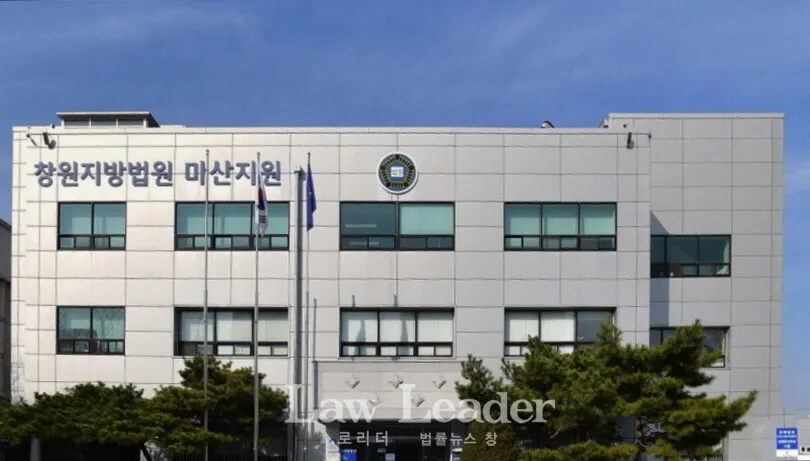
Changwon District Court Masan Branch Chief Judge Jeon A-ram said, “There is no direct evidence from the scene of the damage, and the motive for the crime has not been proven.” A defendant in his 50s, who received a summary order of fines for damaging a co-worker's car, requested a formal trial and was acquitted. Changwon District Court Masan Branch Chief Judge Jeon A-ram found Mr. A, in his 50s, not guilty on October 25 on charges of property damage. Sentenced. In October 2021, Mr. A was indicted on charges of scratching the car of his colleague B, which was parked on the road in front of the company where he worked, with a Buddhist sharp tool, incurring repair costs worth 3 million won. The prosecution claimed guilt using CCTV footage as evidence showing Mr. A leaving the company's main gate on the day of the incident, entering the passenger side of the victim's vehicle and then coming back out. Mr. A completely denied the charges. At the time, he was returning to his car after submitting his resignation letter to the company, and he felt like someone was calling him from the company side of the wall, so he went inside for a moment to check. At the same time, Mr. A emphasized, "I usually walk to work and do not know the employees' vehicles, and on the day of the incident, I did not know that the vehicle in question belonged to Mr. B." Chief Judge Jeon A-ram of the Masan Branch of the Changwon District Court, who heard the case, said, "Even if you look at the enlarged photo of the CCTV video, you can see that the defendant was in the damaged vehicle. “I could only see the scene of him going close to the wall and coming back through the passenger side,” he said, and ruled in favor of Mr. A on the grounds that there was no direct evidence of damage to the vehicle. Chief Judge Jeon A-ram also ruled that there was insufficient evidence to reveal Mr. A’s motive for the crime. During the previous trial, Mr. B claimed that he had had several conflicts with Mr. A over work issues and had once heard threatening words from Mr. A, but Chief Judge Jeon A-ram said, “I heard threatening words. The ruling ruled, “Mr. B failed to clearly state the circumstances, and there is no evidence to acknowledge that the defendant was aware of the victim’s vehicle.” Attorney Choi Yong-hwan of Daeryun Law Firm (Limited), who represented Mr. A, said, “A summary order of fine was initially issued to Mr. A, but he actively claimed innocence by requesting a formal trial.” Attorney Choi Yong-hwan continued, “In order to be punished for property damage, ‘intention’ must be clearly proven,” and “In this case, “In this case, there was not only direct evidence of vehicle damage, but also no clear motive for the crime, and the court appears to have taken this into consideration as well,” he explained. [View full article] - A man in his 50s who was summarily indicted on charges of damaging a colleague's car... acquitted after requesting a formal trial (link)
Money Today
2024-11-07
처벌 수위 높아지는 '불법 암표 거래', 초기 대응이 중요
‘Illegal ticket scalping’ with increasing punishment, early response is important
After the popular Netflix cooking competition program Black and White Chef aired, so-called 'scalping', in which restaurant reservation tickets for the cast members are sold at higher prices, has become prevalent. With more than 110,000 users flocking to make reservations for the restaurant that won the program's final winner, buying a reservation ticket has become a challenge. In fact, a post offering to purchase a reservation for two at the restaurant for 700,000 won appeared on various second-hand trading sites. However, the original selling price was only 100,000 won, raising the seriousness of illegal ticket scalping. Such illegal ticket trading is often found in our daily lives, and occurs in a variety of ways, from sports games to famous singer concerts. As of August this year, the number of scalping transactions reported to the professional sports scalping report center was 51,405, an increase of nearly eight times compared to 6,237 in 2020. The same goes for the popular music performance field, which is most affected by ticket scalping. According to statistics from the Korea Creative Content Agency's scalper monitoring center, the number of reports of scalpers in the performance field is increasing rapidly every year, from 359 in 2020, 785 in 2021, 4,224 in 2022, and 1,973 as of October last year. The reason scalpers can run rampant regardless of field is because the punishment was extremely weak. Selling ticket tickets was classified as a misdemeanor and was punishable by a fine of less than 200,000 won, detention, or fines. However, even this imposed fines only on on-site ticket scalping and failed to punish online ticket scalpers. As a result, it was pointed out that punishment was needed for all ticket scalping activities that took place both online and offline, and discussions on revising the law began in earnest. Afterwards, the illegal sales standards were supplemented, and the Performance Act and the National Sports Promotion Act were revised in March and September. What is noteworthy here is that the punishment has been greatly strengthened. In case of scalping, the seller will be subject to imprisonment for up to one year and a fine of up to 10 million won. The government did not stop there, but also announced plans to subdivide the punishment standards by size of profit and raise the level of punishment from the current level. As awareness of social problems related to ticket circulation is being strengthened, ticket transactions through illegal channels should be avoided as much as possible. As seen earlier, ticket scalping is a punishable matter regardless of whether it is online or offline, so it is best to reserve tickets through an official ticket office if possible. Nevertheless, if you are involved in a crime, it is advisable to consult with an expert to defend against the charges. [View full article] - ‘Illegal ticket scalping’ with increasing punishment, early response is important (link)
Money S
2024-11-07
형제 사는 집에 수 차례 쪽지 붙인 남성… 검찰 "스토킹 아냐"
A man posted several messages at his brother's house... Prosecutor: “It’s not stalking.”
Man A was sent to the prosecution on charges of violating the stalking punishment law. Prosecutors said, "There was no threatening content in the note." The man who visited the house where his brothers lived several times and posted notes was handed over to the prosecution on charges of stalking, but was not indicted. The Ansan branch of the Suwon District Prosecutors' Office announced on the 18th of last month that it had decided not to indict Mr. A, who is suspected of violating the law on the punishment of stalking crimes. Mr. A will be released in 2022. For about a year and a half since November, he was investigated for allegedly going to the residence where his brothers lived and pasting notes on their front door several times. During the investigation, Mr. A denied the charges, saying, "My eldest sister was suffering from mental difficulties, but she was virtually neglected by the other brothers, and because of that, she was often seen walking around the streets, so I only visited her to check on her well-being." However, the police reported that Mr. A had the intention of stalking and handed over the case to the prosecution. It was determined that there were no charges. After reviewing the note left by Mr. A, the main reason was that it was only a message expressing concern about his sister's well-being or informing him of the date and time of the next visit and did not contain any threatening content. The prosecution also added that it appears that there was an inheritance-related dispute between the brothers over the residence in question and that the victims also took into account the fact that they had not explicitly expressed their intention not to come to the suspect until the time of reporting. Lawyer Jeong Doo-yeon of Daeryun Law Firm (Limited), who acted as legal representative for Mr. “It must be clearly proven whether the act was done without ‘reason’ and whether it was to the extent of causing ‘fear’ to the victim,” he said. “In the case of Mr. A, he was not indicted because it was emphasized that he only left a note asking how he was doing and did not engage in any threatening behavior.” He added, “As the scope of application of the stalking punishment law has expanded, stalking charges are often applied to disputes that occur between family members or neighbors.” He added, “As the social perception related to stalking has become more stringent, if you are accused of it, you must be consulted by an expert.” “We need to get help,” he emphasized. [View full article] - A man posted several messages at his brother’s house… Prosecutor: “It’s not stalking” (link)
8 places including MBC
2024-11-07
[단독] 검찰, '용인 아파트 전단지 사건' 혐의없음 처분‥"증거 불충분"
[Exclusive] Prosecutors, ‘Yongin Apartment Flyer Incident’ dismissed with no charges… “Insufficient evidence”
A middle school student who had been handed over to the prosecution on charges of property damage by removing a post from an apartment elevator was cleared of charges. The Suwon District Prosecutors' Office notified Ahn, who was transferred on charges of property damage, not to be charged on the 5th due to 'insufficient evidence'. Previously, on August 8, the Yongin East Police Station in Gyeonggi Province transferred Ahn, a middle school student living in an apartment in Giheung-gu, Yongin City, to the prosecution on charges of property damage. The police said at the time It was determined that Ms. Ahn's tearing down an unauthorized post on a mirror while returning home in the elevator on May 11 constituted damage to property. However, Ms. Ahn's father later complained through the Kookmin Shinmungo, saying, "It is unfair to apply the crime of property damage to an act of removing a post on a mirror that blocks the view without any other intention." When this fact became known, the Gyeonggi Southern Police Agency, a superior agency, followed the Yongin East Division's judgment. Recognizing that there were additional matters to consider, the police directly requested a supplementary investigation from the prosecution last September, received the case back, and continued the investigation. The head of the criminal division at Yongin Eastern Police Station, who was in charge of the case, said, "As a result of the supplementary investigation, we determined that there was no intention in removing the post," and added, "We notified the prosecution of the opinion of non-transfer on the 29th of last month." “I think the mechanical application of the law that causes inconvenience is unfair,” Kim Dae-eun, a lawyer at Daeryun Law Firm who represented the middle school student, told MBC, “When I heard that he was in a situation where he would become a criminal criminal just for taking down an illegal post in an elevator, I thought that the state’s exercise of judicial power operated mechanically. I am glad that I was able to resolve the injustice of the young student.” [View full article] MBC - [Exclusive] Prosecutors, no charges in 'Yongin Apartment leaflet incident'... "Insufficient evidence" (Shortcut) Newsis - Middle school girl sent to prosecution for tearing up elevator flyers, 'no charges' after supplementary investigation (Shortcut) Edaily - Middle school girl almost becomes 'ex-convict' after tearing up leaflets in elevator... What's the ending? (Shortcut) Namdo Ilbo - A middle school girl sent to the prosecution for tearing up an elevator flyer, ‘no charges found’ after supplementary investigation (Shortcut) Chosun Ilbo – A middle school girl sent to the prosecution for ‘damaging property’ after taking down an elevator post… Result: (Shortcut) Segye Ilbo - The middle school girl who took out the ‘apartment leaflet’ was sentenced to ‘no charges’ by the prosecution… Expert points out “mechanical actions of judicial institutions” (Shortcut) Dong-A Ilbo - “Property is damaged” after putting out leaflets saying “You can’t see in the mirror”… Middle school girl eventually found ‘not guilty’ (Shortcut) Lo Leader - Middle school girl sent for charges of damaging elevator flyers... Eventually, ‘Not guilty’ (Shortcut)
lowrider
2024-11-06
1억2천 피해 보이스피싱 ‘현금수거책’···‘징역 2년 3월’·법정구속
Voice phishing with 120 million victims, ‘cash collection scheme’... ‘2 years and 3 months in prison’, court arrest
Most of the victims were ordinary people, and their entire assets were defrauded. Chief Judge Jeong-il Shin said, "He served as a cash collection agent essential to the completion of the crime... and severe punishment is inevitable." The victim's legal representative said, "The damage caused by the crime targeting the common people was extreme... This is a case that proves the intentionality of the fraud." The court sentenced a member of the voice phishing (telephone financial fraud) crime organization who was in charge of cash collection and stole about 120 million won in cash, and detained him in court. The first criminal division of the Pyeongtaek Branch of the Suwon District Court (Presiding Judge Shin Jeong-il) sentenced Mr. A, a member of a voice phishing organization, to two years and three months in prison on the 16th of last month on charges of violating the Special Act on Prevention of Damage from Telecommunications and Financial Fraud and Refund of Damages, and detained him in court. Mr. A acted as a cash collector for a voice phishing crime organization from around August to December 2023. He was charged with telecommunications financial fraud. Mr. A received tens of millions of won in cash from four people, including Mr. B, a victim who was deceived by phone lies from a voice phishing organization member, such as "This is Manager Kim Young-joo of the Financial Supervisory Service. An account in your name is involved in a crime," and "This is Prosecutor Kim Soo-gil of the Seoul Central District Prosecutors' Office. To prove that you are a victim of identity theft, I will send an employee, so deliver the cash." The total amount reached 118 million won. The Pyeongtaek branch of Suwon District Court, which heard this case, found Mr. A guilty and stated the reason for sentencing, saying, “Voice phishing is a planned and organized crime against an unspecified number of victims and continues to cause enormous damage,” and “Even if the defendant did not lead the crime, since he served as an essential cash collector for the completion of the crime, a correspondingly severe punishment is inevitable.” Attorney Lee Jong-hyun of Daeryun Law Firm (Lihan), who is the legal representative for victim B, said, "Perpetrators who stand trial for voice phishing fraud crimes are usually low-level gang members, and in these cases, they defend the charges by claiming that they had no criminal intent. However, the victims are in a situation where they are suffering so much damage due to the crime that they are unable to live their daily lives. The reality is that most of the victims are ordinary people, and it is not possible to properly recover from the damage after the crime. In this case, the victim was also defrauded of all his assets." Attorney Lee Jong-hyun continued, “In the case of the defendant in this case, he has been continuously communicating with other accomplices through SNS, and based on this, he emphasized that it was not a simple part-time job.” He added, “It appears that the court also judged that the defendant’s actions were intentional in fraud.” [View full article] - Voice phishing ‘cash collection plan’ that caused 120 million damages... ‘2 years and 3 months in prison’ · Court arrest (link)
Segye Ilbo
2024-11-06
헐값에 ‘길몽’ 판 아내, 남편은 10억 당첨…당첨금 주인은 누구?
Wife sells ‘lucky dream’ at a low price, husband wins 1 billion won… Who owns the winnings?
Thanks to a ‘good dream’ she had, her husband won first place in the lottery and was asked about ownership. The expert offered consolation to the wife who sold the lucky dream at a low price, saying, “The winnings belong to the husband.” A story like this was reported on JTBC on the 4th. According to the story of this day, woman A has been leading an enviable married life with her husband B. Ms. A said that the most disappointing part is that her husband is too salty. Then one day, Ms. A had a lucky dream, and when she told this story to her husband, he said, “Sell yourself a dream.” At her husband's suggestion, Ms. A sold her dream for just a few tens of thousands of won, but her husband won first place in an instant lottery and received 1 billion won. The problem starts from this point. Mr. B hid the fact that he won the lottery. Mr. A claims that he kept it a secret not only from his parents but also from his family, and that he reduced his living expenses even more than usual and showed himself to be even more of a miser. When he told Mr. B, “Now that I have a lot of money, please buy me just one bag,” he flatly refused, saying, “This money is no good because it is retirement funds.” On the other hand, my husband was generous to his friends. Ms. A happened to meet her husband's friend while walking down the street, and the friend said she was grateful and said, "Thanks to you, I was able to put out the emergency fire." My husband lent 200 million won to a friend. Ms. A, who felt sad about this incident, ended up having a fight with her husband. Ms. A expressed her disappointment to her husband. However, the husband dismissed Ms. A’s complaint, saying, “There is no touching on the lottery winnings between married couples.” Ms. A expressed her resentment, saying, “Do I have no authority over the lottery winnings that my husband received?” Regarding this story, lawyer Kim Dong-jin of Daeryun Law Firm, who spoke to Segye Ilbo on the same day, said, “I think it would be good to look at the core in terms of causality.” He pointed out, “In our country’s sentiments, selling dreams is understandable, but there is no causal relationship with purchasing a lottery ticket.” He continued, “When looking at the contribution to winning the lottery, it is recognized if action or effort was involved in the result,” adding, “It cannot be said that you contributed simply by having a dream.” At the same time, she advised, "It is superstitious to connect dreams with winning the lottery. There is no causal relationship. The lottery winnings belong to my husband." Meanwhile, lottery winnings are not subject to property division during divorce. If you have a good dream, it would be better to buy a lottery ticket and hope to win first place rather than sell it. [View full article] - Wife sells ‘lucky dream’ at a low price, husband wins 1 billion won… Who owns the winnings? (Shortcut)
lowrider
2024-11-04
대법원 “학생 팔 끌어올렸다고 학대신고···정당한 교육” 판결 의미
Meaning of Supreme Court ruling: “Reporting abuse for raising a student’s arm... legitimate education”
According to recently released data from the Ministry of Education, the number of reports of child abuse against teachers filed from September last year to June this year was 159. The investigative agency reportedly dismissed 111 cases, or about 70% of them, without prosecution. The number of cases in which teachers were indicted was 24, accounting for 15%. As the debate surrounding ‘child abuse’ continues in the educational field, a recent Supreme Court ruling is attracting attention. The circumstances of the case are as follows. Teacher A was teaching a class on the topic ‘What to do if you’re sick’ in an elementary school classroom in 2019. At the time, the class was conducted in a way that students formed groups to discuss, and the group representative presented related content. The group that Student B belonged to decided on a presenter through rock-paper-scissors, and in this process, Student B was selected as the presenter. However, Student B, who was dissatisfied with this, sulked and did not give the presentation, and did not participate in any other activities in class afterwards. Then it was lunch time, and Teacher A ordered Student B to move to the lunch room, but Student B did not follow this. In response, Teacher A approached Student B and said, “Hey, wake up,” and attempted to pull Student B up by grabbing his arm. However, Student B was steadfast. In the end, Teacher A called Student B's mother and explained, "I can't use my strength because I'm afraid the child will get stubborn and get hurt." With the mother's consent, Teacher A left Student B in the classroom and moved to the cafeteria. The original trial court ruled that Teacher A's lifting of Student B's arms constituted an act of abuse. The reason was that discipline through other educational means, such as conversation or non-physical sanctions, was not impossible. Meanwhile, the court fined Teacher A 1 million won and ordered him to complete 40 hours of child abuse treatment program. However, the Supreme Court's judgment was different. The original judgment was overturned and the case was sent back to the original court. The Supreme Court interpreted Teacher A's actions as part of education. Since the act of trying to raise the arms was done to encourage students to participate in essential educational activities, it should be viewed as a valid instruction. At the same time, the Supreme Court added that the defendant appears to have chosen an appropriate teaching method within the scope of his reasonable discretion as a teacher. Through this ruling, the Supreme Court made clear its position that ‘even if the teacher caused the student to feel some physical pain, if the act is within the scope of education, it cannot be considered abuse.’ This can be interpreted to mean that when judging a teacher's educational behavior, not only the Child Welfare Act but also related laws such as the Basic Education Act must be broadly considered. This ruling, which recognizes teachers' discretion, is expected to have a significant impact on future child abuse-related lawsuits filed in educational settings. [View full article] - Meaning of Supreme Court ruling: “Report of abuse for raising student’s arm... legitimate education” (link)
Have more questions?
Quick Menu

KakaoTalk