




Q
What happens if waste is treated without a permit under the Wastes Control Act?
 Views2,588
In the process of treating waste generated at my business site, the fact that I entrusted it to an outside company or treated it myself without a separate permit has become an issue, and I have received contact about an investigation. I am worried because I am told I may be punished for violating the Wastes Control Act. In such a case, I would like to know what conduct constitutes a violation and what the actual level of punishment is.
Wastes Control Act
Answer to Related Inquiry
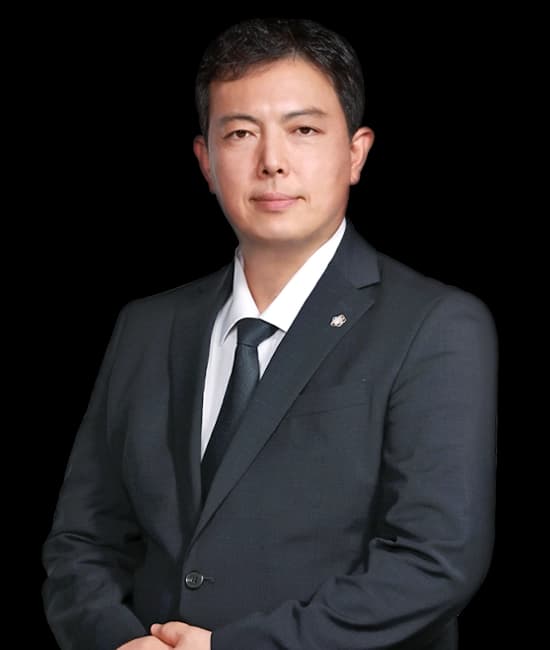
Author: KangIl LEE
If waste is treated without a permit under the Wastes Control Act, it may be subject to criminal punishment, and depending on the method of treatment, a heavier punishment may apply.
In your case, it appears that the issue is that you treated waste generated at your business site without a separate permit or entrusted it to an outside party, and this may fall under the case of treating business-site waste without a lawful procedure.
In such a case, under Article 63 of the Wastes Control Act, one may be subject to imprisonment for up to 7 years or a fine of up to 70 million won, and depending on the matter, imprisonment and a fine may be imposed concurrently.
In addition, separately from criminal punishment, administrative dispositions such as suspension of business or revocation of the permit may be imposed together.
Therefore, in such a situation, it is necessary to organize your response according to the following criteria.
① Clarifying the type of violation
Because the applicable provision and the level of punishment may differ depending on whether it is unauthorized dumping or unlicensed treatment, you must first distinguish which type the current conduct falls under.
② Organizing the circumstances of treatment and the scope of responsibility
You must organize the actual scope of responsibility based on the process from waste generation to treatment, whether there was a contract with an outside company, and the internal decision-making structure.
③ Securing related materials
You must secure objective materials such as the waste transfer form, transport records, and the contract so that you can explain how the actual treatment process was carried out.
④ Responding to administrative dispositions and criminal proceedings in parallel
Because a violation of the Wastes Control Act often involves administrative dispositions proceeding simultaneously with criminal proceedings, it is necessary to prepare responses suited to each procedure together.
Taken together, it is important to accurately organize the type of violation and the scope of responsibility, systematically prepare the related materials, and respond in a more organized manner to the criminal and administrative procedures that follow.

Environment and ESG Attorney
Legal consultation booking
All consultations are conducted by specialized lawyers after reviewing the case. It is carried out on a reservation basis to ensure a professional process.We encourage you to make an early reservation for consultation, and request adherence to the scheduled time. We will do our best to provide a satisfying consultation.
Phone
consultation 1800-7905
Available 24/7, 365 days
for consultation requests

KakaoTalk
consultation
KakaoTalk channel
Daeryun Law Firm Attorneys

Online
consultation
We provide tailored
legal services.

Deals & Cases
More
Related Practice Areas
More
Related People
More

KangIl LEE
Partner Attorney
Attorney specializing in criminal law and drunk driving and traffic matters
T. 070-5117-5510

Kuk Il KIM
President Attorney

Experience as Chief Prosecutor at the Seoul High Prosecutors' Office · Attorney Specializing in Criminal Law/Drugs/Intellectual Property
T. 070-5117-2950

Byung Joon KOH
President Attorney
Extensive experience handling large-scale corporate and white-collar crime cases · Attorney specializing in corporate/construction/labor/digital forensics law
T. 070-5221-2805

MoonKyoo JANG
Senior Partner Attorney
Performed Numerous Korea-Germany International Corporate Transactions and Advisory · Attorney Specializing in Corporate Legal Affairs/Family Law/Inheritance
T. 070-7510-2139



Do you have more questions?






