
CONTENTS
- 1. Occupational Safety and Health Act | A Law for Worker Protection

- - Explanation of Terms in the Occupational Safety and Health Act
- - Employer's Obligations Under the Act
- 2. Occupational Safety and Health Act | Safety and Health Management System
- 3. Occupational Safety and Health Act | Measures to Prevent Hazards and Risks
- - Safety Measures - Measures to Prevent the Risk of Industrial Accidents
- - Health Measures - Measures to Prevent Health Impairments
- - Workers' Right to Suspend Work
- 4. Occupational Safety and Health Act | Restrictions on and Management of Contracting Out
- 5. Occupational Safety and Health Act | Prevention of Industrial Accidents in the Construction Industry
- 6. Occupational Safety and Health Act | Management of Hazardous and Dangerous Machinery and Substances
- - Measures Concerning Asbestos
- 7. Occupational Safety and Health Act | Worker Health Management
- - Working Hour Limits for Hazardous and Dangerous Work
- 8. Occupational Safety and Health Act | Supplementary and Penalty Provisions
- - Criminal Punishment When an Accident Occurs
- - Industrial Accident Prevention Measures With a Labor Attorney and Lawyer

1. Occupational Safety and Health Act | A Law for Worker Protection
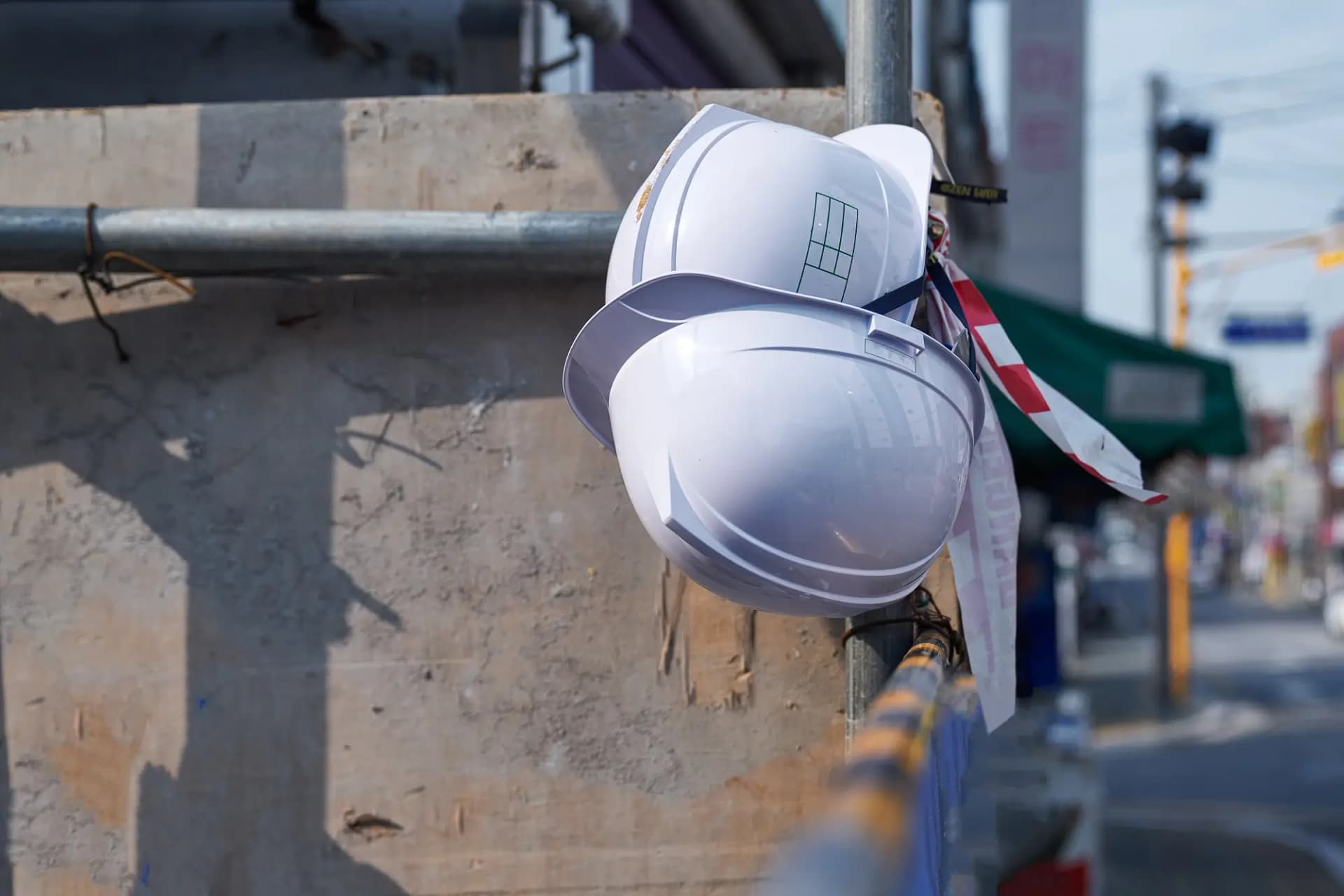
The Occupational Safety and Health Act is a representative worker-protection law enacted to protect the lives and bodies of workers at industrial sites.
Since its enactment, it has undergone numerous amendments and has strengthened safety and health standards in line with changes in industrial structure. Recently, it has also been linked with the Serious Accidents Punishment Act, making employers' safety and health obligations even stricter.
The scope of application extends to all workers and employers, as well as to entire subcontracting sites in construction, manufacturing, and similar industries operated under a prime-contractor and subcontractor structure.
As industrial accidents large and small recur, workers should themselves confirm whether the safety and health measures prescribed by law are being properly implemented at the site. Under the Occupational Safety and Health Act, workers have rights such as the right to report, the right to know, the right to claim damages, and the right to refuse work, so they should be aware of these.
 Explanation of Terms in the Occupational Safety and Health Act
- Industrial accident : a case in which a person providing labor dies, is injured, or contracts a disease due to buildings, equipment, raw materials, gases, vapors, dust, and the like related to the work, or due to the work or that business
- Contract for work : a contract entrusting another party with the manufacturing of goods, construction, repair, the provision of services, and the like
- Contractor (ordering party) : an employer who orders out the manufacturing of goods, construction, repair, or the provision of services (excluding a construction work ordering party)
- Subcontractor : an employer who has been engaged by the ordering party to manufacture goods, perform construction or repair, provide services, and the like
- Construction work ordering party : a party that orders construction work and does not lead, oversee, and manage the execution of the construction work


Employer's Obligations Under the Act
An employer must comply with policies for maintaining and improving the safety and health of workers and for preventing industrial accidents.
2. Occupational Safety and Health Act | Safety and Health Management System
The Occupational Safety and Health Act imposes on all employers the obligation to establish an appropriate safety and health management system.
The safety and health management supervisor must operate systems such as the establishment of industrial accident prevention plans, regular inspections, risk assessments, and education and training, including safety and health education and job training.
In particular, if a worker determines that safety and health measures are inadequate during work, the worker may immediately notify the manager and request corrective measures.
3. Occupational Safety and Health Act | Measures to Prevent Hazards and Risks

An employer must take preventive measures to protect workers from hazardous and dangerous factors such as machinery, equipment, and chemical substances.
In addition to conducting risk assessments and installing and posting safety and health signs, safety and health measures and safety and health diagnoses are required.
When it is determined that the failure to take safety and health measures may cause harm or danger to workers, the Minister of Employment and Labor may issue a corrective order, such as suspension of use, replacement or removal, or improvement of facilities.
If this order is not complied with, a work suspension order may be issued.
Safety Measures - Measures to Prevent the Risk of Industrial Accidents
- Hazards from machinery, instruments, and equipment
- Hazards from explosive, ignitable, and flammable substances and the like
- Hazards from electricity, heat, and energy
- Hazards from improper work methods during operations such as excavation, quarrying, loading and unloading, logging, transport, handling, conveyance, and dismantling
- Hazards from falls, falling objects, and natural disasters
Health Measures - Measures to Prevent Health Impairments
- Causes such as raw materials, gases, vapors, dust, fumes, and mist
- Causes such as radiation, harmful light, high heat, cold, ultrasound, and noise
- Causes such as gases, liquids, or residues discharged from the workplace
- Causes such as instrument monitoring, computer terminal operation, and precision machining
- Causes such as simple repetitive work
- Causes such as violations of appropriate standards for ventilation, lighting, and illumination
- Causes such as prolonged work during heat waves and cold spells
- Other health impairments caused by matters such as verbal abuse from customers
In particular, the Rules on Occupational Safety and Health Standards were amended so that at least 20 minutes of rest every two hours became mandatory during heat-wave work where the perceived temperature is 33 degrees or higher, so employers should review heat-wave safety guidelines, such as providing cooling gear and supplying water.
Workers' Right to Suspend Work
The right to suspend work is guaranteed so that a worker may stop work and secure safety when the worker recognizes an imminent danger of an industrial accident.
In this case, the worker who has suspended work and evacuated must report the facts to a supervisor or the like without delay, and the employer must not impose any disadvantageous treatment, such as dismissal, on the ground that the worker exercised this right.
4. Occupational Safety and Health Act | Restrictions on and Management of Contracting Out
The Occupational Safety and Health Act prohibits contracting out work such as plating operations, operations using mercury, lead, or cadmium, and operations for manufacturing and using hazardous substances.
Even where contracting out has been approved because the work is temporary or intermittent, subcontracting is prohibited.
Subcontractor workers also have the right to receive the prime contractor's safety and health training, and if safety facilities and equipment are not properly provided, they may request immediate correction regardless of whether the prime contractor or the subcontractor is involved.
• Confirm the work order and safety plan in advance when working on site
• Secure a contact line for the prime contractor's safety officer
• Request an immediate stop when safety equipment is inadequate
5. Occupational Safety and Health Act | Prevention of Industrial Accidents in the Construction Industry
To prevent industrial accidents, a construction work ordering party must take safety measures at the planning, design, and construction stages of the work.
The construction period must not be shortened, and the prescribed construction method must not be changed without justifiable grounds.
[Grounds for Extending the Construction Period or Changing the Design]
- Bad weather such as typhoons and floods
- War, civil disturbance, or riot
- Force majeure grounds such as earthquakes, fires, and epidemics
- Delay in commencement or suspension of construction due to causes attributable to the construction work ordering party
- The design may be changed when there is a risk of an industrial accident, such as the collapse of a temporary structure
6. Occupational Safety and Health Act | Management of Hazardous and Dangerous Machinery and Substances

Employers must ensure the safe operation of hazardous and dangerous machinery through protective measures, safety certification, reporting of voluntary safety confirmation, and safety inspections.
When a workplace handles hazardous or dangerous substances, the employer must provide safety measures for workers through risk assessment of harmful factors, establishment of exposure standards, and compliance with permissible limits.
In addition, the employer must prepare and keep a Material Safety Data Sheet (MSDS) on hand so that workers can review it at any time.
An MSDS includes information such as the components of the substance, its hazards, precautions when handling it, and first-aid procedures.
Before handling a new chemical substance, workers must always check the MSDS, and they may refuse to work without the proper safety equipment. This is a legitimate right.
Measures Concerning Asbestos
The Occupational Safety and Health Act sets out the standards for asbestos surveys and removal or dismantling work when buildings or facilities are demolished or dismantled.
During asbestos removal or dismantling work, the airborne asbestos concentration in the relevant work area must be 0.01 fibers per cubic centimeter of asbestos.
- Work performed by someone other than a licensed asbestos removal or dismantling contractor : imprisonment for up to 5 years or a fine of up to 50 million won
- Violation of the standards for asbestos removal or dismantling work : imprisonment for up to 3 years or a fine of up to 30 million won
- Removal or dismantling by an institution that conducted the institutional asbestos survey : an administrative fine of up to 5 million won
- Exceeding the asbestos concentration standard : an administrative fine of up to 50 million won
7. Occupational Safety and Health Act | Worker Health Management
Employers must make every effort to improve the working environment through workplace environment measurement and the medical examination and health management of workers.
When abnormal findings are detected in a worker, the employer must immediately carry out follow-up management, such as reassignment, treatment, and additional diagnosis, and workers with infectious diseases or mental illness must be prohibited or restricted from working.
Workers also have a duty to undergo regular medical examinations themselves.
Working Hour Limits for Hazardous and Dangerous Work
In the case of workers engaged in hazardous or dangerous work, they must not be required to work more than 6 hours per day or 34 hours per week.
[Examples of hazardous and dangerous work]
- Caisson or diving work
- Work inside a pit
- Work in places that are markedly hot and warm due to the handling of large quantities of high-temperature objects
- Work in places that are markedly cold and chilly due to the handling of large quantities of low-temperature objects
- Work handling radium radiation, X-rays, and harmful radiation
- Work in places where dust from glass, soil, stone, or minerals scatters heavily
- Work in places where intense noise and vibration occur (rock drills, etc.)
- Work handling heavy objects by human power
- Work in places where heavy metals and chemical substances such as lead, mercury, chromium, manganese, and cadmium are generated in large quantities
8. Occupational Safety and Health Act | Supplementary and Penalty Provisions

If an employer causes an industrial accident by violating the safety measures under the Occupational Safety and Health Act, the Minister of Employment and Labor may impose measures such as suspension of business, suspension of operations, restrictions on bidding for projects conducted by public institutions, and a penalty surcharge.
However, when ordering a suspension of operations would cause significant inconvenience to users or risk harming the public interest, a penalty surcharge of up to 1 billion won may be imposed in lieu of the suspension of operations.
A penalty surcharge of up to 1 billion won may likewise be imposed when an employer violates the obligations prohibiting the subcontracting of hazardous work, including re-subcontracting.
Criminal Punishment When an Accident Occurs
Where an employer's safety measures are inadequate and a resulting fatal accident or similar event occurs, the employer may be subject to criminal punishment.
Death of a worker due to inadequate safety measures | Imprisonment for up to 7 years or a fine of up to 100 million won |
Inadequate safety measures, violation of a work suspension order, violation of prohibitions such as the manufacture of hazardous substances, violation of a corrective order issued by the Ministry of Employment and Labor, and similar conduct | Imprisonment for up to 5 years or a fine of up to 50 million won |
A contracting party's violation of safety measures, the prohibition on subcontracting hazardous work, and the false or improper performance of safety and health evaluation duties | Imprisonment for up to 3 years or a fine of up to 30 million won |
Dismissal or other unfavorable treatment in response to a request, such as a job transfer, arising from a customer's abusive language | Imprisonment for up to 1 year or a fine of up to 10 million won |
Damaging the site of a serious accident or concealing the occurrence of an industrial accident | |
Joint penal provisions for a corporation | Death of a worker: a fine of up to 1 billion won For other matters, a fine is imposed under the applicable provision |
In addition, where an employer is found guilty in connection with the death of a worker, the court may also impose an order to complete coursework, such as completion of an occupational safety and health program necessary for the prevention of industrial accidents, within a limit of 200 hours.
Moreover, when a serious accident occurs, not only the site manager but also the representative may be held liable, both for violation of the Occupational Safety and Health Act and for violation of the Serious Accidents Punishment Act.
Industrial Accident Prevention Measures With a Labor Attorney and Lawyer
Every workplace must establish an industrial accident prevention plan and review it periodically.
There is also an obligation, when an accident occurs, to immediately suspend work, provide first aid, and report to the competent labor office.
A worker must report even a minor accident to a manager, and overlooking or neglecting this may be unfavorable for later compensation or industrial accident processing.
The Occupational Safety and Health Act is one of the most effective safeguards for protecting the life and body of workers.
However much the law may be strengthened, it is of no use if the workers within a workplace are unaware of it.
With the recent enforcement of the Serious Accidents Punishment Act, employers' responsibilities have been strengthened, so workers should also actively exercise their rights and become parties who observe safety and health rules.
In addition, the Occupational Safety and Health Act provides separate safety and health measures for workers in various forms of employment, including workers in special types of employment, such as insurance planners, quick-service drivers, and substitute drivers, as well as delivery workers and franchisees.
In this case, you should clearly assess the safety and health obligations across the various forms of employment and platform-based labor, and exercise the rights you need.
If you need legal counsel on a matter such as a violation of the Occupational Safety and Health Act, please contact our firm, where an evidence-examination specialist, a labor attorney (nomusa), and a labor-law attorney form a task force to stand on the client's side.
Daeryun Law Firm's Labor and Industrial Accident Group is available to listen to clients 24 hours a day, 365 days a year.
See More