
CONTENTS
- 1. Inheritance in a Common-Law Marriage | Concept

- - Concept of an Heir
- 2. Inheritance in a Common-Law Marriage | Methods
- - Receipt of Survivor's Benefits or Pension
- - Succession to the Housing Lease Right
- - Claim for Distribution of Inherited Property (Person with a Special Connection)
- 3. Inheritance in a Common-Law Marriage | Claim for Distribution by a Person with a Special Connection
- - Requirements for the Eligible Claimant
- - Filing Requirements and Deadline
- - Result of the Distribution Ruling and Objection
- 4. Common-Law Marriage Inheritance | Survivors' Benefits
- - What Are Survivors' Benefits?
- - Procedure for Receiving Survivors' Benefits
- - Filing Period and Statute of Limitations
- 5. Common-Law Marriage Inheritance | Checklist
- - The Inheritance Attorney's Case-Handling System

1. Inheritance in a Common-Law Marriage | Concept
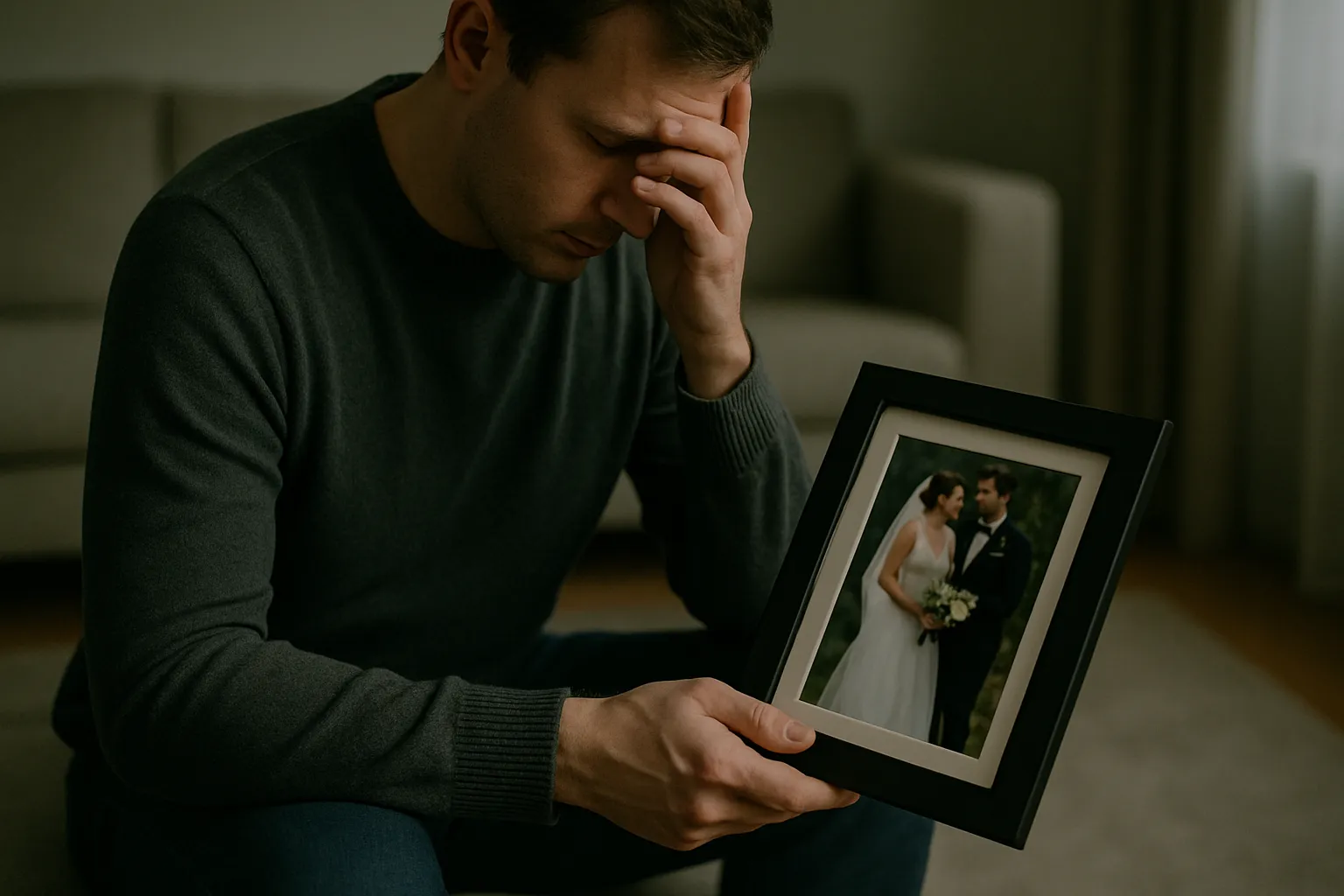
Inheritance in a common-law marriage is, as a rule, not possible, but it may be possible where specific requirements are met or where the common-law relationship is proven.
 Concept of an Heir
An heir is a person who succeeds to the property of the decedent upon the decedent's death, and is recognized only within the order and scope determined under the Civil Act.
Where there is an heir who is a lineal descendant or lineal ascendant of the decedent, the decedent's spouse becomes a joint heir together with such persons.
However, the spouse here means a person who has entered into a legally valid marriage by completing the marriage report.
Accordingly, a spouse in a common-law relationship cannot inherit.


2. Inheritance in a Common-Law Marriage | Methods

Inheritance in a common-law marriage is not possible because the common-law spouse has no right of inheritance.
However, a certain distribution of property or survivor's benefits may be received through the following methods.
Receipt of Survivor's Benefits or Pension
Under the National Pension, industrial accident compensation insurance, and the like, a common-law spouse may also be recognized as a surviving family member.
However, the common-law relationship must be proven, and because the requirements and documents differ by institution, individual confirmation is necessary.
Succession to the Housing Lease Right
Under the Housing Lease Protection Act, a common-law spouse may also succeed to the rights of the lessee.
Claim for Distribution of Inherited Property (Person with a Special Connection)
Where the decedent has died without an heir, the common-law spouse may file with the Family Court for distribution of the inherited property.
What Is a Claim for Distribution by a Person with a Special Connection?
3. Inheritance in a Common-Law Marriage | Claim for Distribution by a Person with a Special Connection

To claim a distribution as a person with a special connection (teukbyeol yeongoja) for the purpose of inheritance in a common-law marriage, there must be no heir even though the decedent has died.
In this case, a person with a special connection to the decedent, such as a common-law spouse, may, under certain requirements, file with the Family Court for a ruling on the distribution of inherited property.
Requirements for the Eligible Claimant
The Civil Act defines the following persons as a 'person with a special connection' (teukbyeol yeongoja) (Civil Act, Article 1057-2).
Type of Person with a Special Connection | Description |
Person in a Common-Law Relationship | A person who, without a marriage report, has in substance lived a shared married life as a couple |
Person Who Shared a Livelihood | A person who resided with the decedent and shared a common life |
Caregiver and Nurse | A person who cared for the decedent over a long period |
Person Designated to Perform Ancestral Rites | A person entrusted with performing the ancestral rites of the decedent or ancestors |
Manager of the Estate | A person who managed the estate of the decedent |
The key point here is that the person must not be merely an acquaintance, but a member of a shared livelihood, or a person who in substance carried out the physical, emotional, or financial care of the decedent.
Filing Requirements and Deadline
A claim for distribution by a special relative must be filed within 2 months after the expiration of the public notice period for searching for heirs.
Item | Content |
Public notice for searching for heirs | Issued by the administrator of the inheritance estate or the prosecutor (Civil Act, Article 1057) |
Filing deadline | Within 2 months after the expiration of the public notice (Civil Act, Article 1057-2, Paragraph 2) |
Court of filing | The competent family court for the domicile of the decedent |
Method of filing | Submission of a petition for adjudication of distribution of the inheritance estate, with supporting documents establishing the relationship attached |
Note: The public notice for searching is generally conducted by the family court or the administrator of the inheritance estate appointed by the court through means such as daily newspapers.
Result of the Distribution Ruling and Objection
The court may distribute all or part of the inherited property in consideration of the relationship between the person with a special connection and the decedent, the degree of contribution, and other factors (Civil Act, Article 1057-2 (1)).
A common-law spouse who objects to the result of the distribution ruling may file an immediate appeal.
What Is an Immediate Appeal?
4. Common-Law Marriage Inheritance | Survivors' Benefits

Inheritance through a common-law (de facto) marriage is not recognized, but in addition to a claim for distribution as a special related person, a claim for survivors' benefits is also available.
A common-law spouse is not a statutory heir under the Civil Act, but under the Industrial Accident Compensation Insurance Act may be recognized as a surviving family member of a worker who died in the course of employment and may receive survivors' benefits.
What Are Survivors' Benefits?
‘Survivors' benefits’ are industrial accident compensation insurance benefits paid to the remaining family members when a worker dies in the course of employment (Article 62 of the Industrial Accident Compensation Insurance Act).
In this case, not only a legally married spouse but also a person in a de facto marital relationship is included among the surviving family members (Article 5, subparagraph 3 of the Industrial Accident Compensation Insurance Act).
Item | Details |
Persons eligible for survivors' benefits | Legally married spouse, common-law spouse, children, parents, grandchildren, grandparents, and siblings |
Method of payment | Survivors' compensation annuity, half annuity plus lump sum, balance lump sum, survivors' compensation lump sum, and similar forms |
The survivors' compensation annuity is paid in ‘annuity form,’ while the survivors' compensation lump sum is paid as a ‘lump sum.’
A common-law spouse who meets the requirements may file a claim in the same manner as a legally married spouse.
Procedure for Receiving Survivors' Benefits
Survivors' benefits must be applied for through the Korea Workers' Compensation and Welfare Service, and the following documents must be prepared.
∙ Death certificate or postmortem examination report (one copy of an autopsy report if the cause of death is unknown)
∙ Resident registration certificate or family relationship certificate
In this case, for a common-law spouse, the key point is proving cohabitation and a substantive marital relationship through documents such as the resident registration certificate.
Filing Period and Statute of Limitations
Item | Details |
Filing period | Within 5 years from the day after death (extinctive prescription) |
Grounds for interruption of prescription | Interrupted upon a claim by a surviving family member |
If the filing period passes, survivors' benefits cannot be received, so it is important to promptly prepare documents that can prove the common-law relationship and to file the application.
5. Common-Law Marriage Inheritance | Checklist
For common-law marriage inheritance, it is necessary to prove that the parties lived together as a substantive married couple without a marriage registration.
Even though the right of inheritance is not recognized, there are many matters that must be prepared in order to secure rights such as a claim for distribution as a special related person or a claim for survivors' benefits.
Preparation item | Details |
Evidence proving common-law marriage | Resident registration certificate (cohabitation records), jointly held accounts or real estate, wedding photographs, written statements from family and acquaintances, registration as an insurance beneficiary, and similar items |
Evidence of a shared livelihood | Records of living-expense transfers, utility payment records, and supporting materials for shared living |
Securing property-related documents | A list of the decedent's property and materials confirming property subject to the legally reserved portion or distribution |
Organizing the special related person requirements | Organizing the period of shared livelihood, records of nursing and care, performance of ancestral rites, and other special related circumstances |
Confirming related procedures | - A claim for distribution as a special related person must be filed within 2 months after the period for the public notice searching for heirs expires - Survivors' benefits must be claimed within 5 years after death |
The Inheritance Attorney's Case-Handling System
Daeryun Law Firm includes attorneys with an average of more than 10 years of experience, and it organizes task forces of 1 to 20 members depending on the scale of the case to respond to matters systematically.
It establishes a tailored evidence-collection plan to prove the common-law marriage, including cohabitation, a shared livelihood, and a special related relationship, and through collaboration with evidence-examination experts it also provides assistance with the actual collection and analysis of evidence.
If you need assistance with proving a common-law relationship or with the claim procedure, you may request a consultation with an inheritance attorney.