




CONTENTS
- 1. Divorce Based on Domestic Violence | Whether Grounds for Divorce Exist

- - Legal Basis
- 2. Divorce Based on Domestic Violence | Divorce Procedure
- - The Procedure of Divorce Litigation
- - Essential Documents to Prepare for Divorce Litigation
- - Evidence Proving the Grounds for Divorce (Domestic Violence)
- 3. Divorce Based on Domestic Violence | Victim Protection Measures
- - Victim Protection Order
- - Temporary Protection Order
- - Personal Safety Measures
- 4. Divorce Based on Domestic Violence | Divorce and Criminal Complaint
- - How to File a Criminal Complaint
- - Contents to Include in a Criminal Complaint
- - Who May File a Criminal Complaint
- - Types of Punishment for Domestic Violence
- 5. Divorce Based on Domestic Violence | Claim for Consolation Money (Solatium)
- - Factors Considered in Calculating Consolation Money
- - How to Claim Consolation Money
- - Methods of Enforcing Payment of Consolation Money
- 6. Divorce Based on Domestic Violence | Step-by-Step Preparations
- - Divorce Attorney Support System

1. Divorce Based on Domestic Violence | Whether Grounds for Divorce Exist
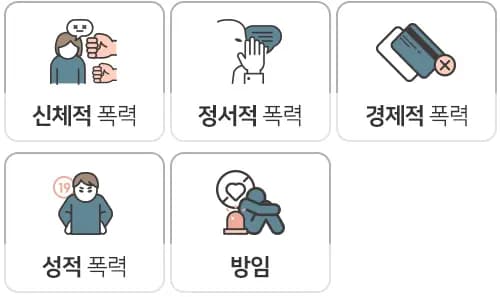
A divorce based on domestic violence does not amount to a mere quarrel but constitutes a serious cause that makes it difficult to continue the marriage.
Article 840, subparagraph 3 of the Civil Act provides that "having been treated very unjustly by the spouse" is a ground for judicial divorce, and domestic violence is a representative serious cause.
A divorce claim based on domestic violence may be recognized in the following cases.
Types of Domestic Violence
Category | Representative Examples |
Physical violence | Pushing, hitting, confinement, threatening with a weapon |
Emotional abuse | Verbal abuse, contempt and disregard, avoidance of conversation, forced isolation |
Economic violence | Withholding living expenses, control of property, arbitrary disposal |
Sexual violence | Forced sexual intercourse, coercion of imitative sexual acts, illegal filming |
Neglect | Refusal to provide meals, neglect of hospital treatment, neglect of children |
A one-time act of violence or a mere emotional quarrel alone, however, is not recognized as a ground for judicial divorce, and the continuity, repetition, and severity of the harm must be proven.
 Legal Basis
Civil Act Article 840 (Grounds for Judicial Divorce)
3. Where one has been gravely and unfairly mistreated by the spouse or the spouse's lineal ascendant


2. Divorce Based on Domestic Violence | Divorce Procedure

Where one seeks a divorce on the ground of domestic violence, the judicial divorce procedure applies.
The Procedure of Divorce Litigation
A divorce litigation begins by filing a complaint with the family court of the jurisdiction concerned.
A divorce based on domestic violence may proceed according to the following procedure.
Securing evidence such as text messages, photographs, medical certificates, and audio recordings
② Filing the divorce litigation
Filing a divorce complaint with the family court
③ Conducting the conciliation procedure (mandatory)
Even if a lawsuit is filed immediately, if the conciliation procedure has not been undergone, the case is referred to the conciliation procedure
④ Trial on the merits
Arguing the facts of harm and the continuity of harm, together with evidence
⑤ Divorce judgment and follow-up measures
Consolation money, division of marital property, and designation of the custodian may also be claimed together
Essential Documents to Prepare for Divorce Litigation
• Certificate of marital relationship for each spouse
• Certified copy of resident registration for each spouse
• Certificate of family relationship for each spouse
• Basic certificate and certificate of family relationship of any minor child
• Other supporting materials
Evidence Proving the Grounds for Divorce (Domestic Violence)
To have a divorce on the ground of domestic violence recognized, you must be able to prove the existence of the violence, its repetitiveness, and the causal relationship with the breakdown of the marriage.
Because proof is difficult based on one party's assertion alone, it is advisable to secure specific materials such as the following.
Type of Evidence | Details and Method of Collection |
Medical Certificate | Issued after confirmation of injury at a hospital. The time of the violence and the location of the injury must be clear |
Photographic Materials | Photographs of the scene, such as bruises, wounds, and damaged furniture. Including date information |
Audio/Video | Audio or video evidence of abusive language, threats, and similar conduct. Legal effect is recognized only if collected through legitimate means |
Text Messages and KakaoTalk | Content that suggests or admits the violence. When capturing conversations, include the time and sender information |
Police Report Records | 112 report history, on-scene dispatch results, and similar records. Can be secured through a police confirmation document or a case disposition result document |
Statements from Neighbors and Family | Witness statements, written petitions, and similar documents. Consistent content and credibility are important |
In addition, such supporting materials can also be used later in a criminal complaint and a claim for consolation money.
3. Divorce Based on Domestic Violence | Victim Protection Measures

In a domestic violence divorce, the victim can be actively protected under the law through various protective orders and personal safety measures.
Victim Protection Order
Upon the request of the victim, the legal representative, or the prosecutor, the court may issue the following orders to the perpetrator (Article 55-2 of the Act on Special Cases concerning the Punishment of Crimes of Domestic Violence).
▷ A prohibition on approaching within 100 meters of the residence, workplace, or the like of the victim or a family member
▷ A prohibition on approach using telecommunications (telephone, text messages, social media, and the like)
▷ Restriction on the exercise of parental authority by a person with parental authority
▷ Restriction on the perpetrator's exercise of visitation rights with respect to the victim
A victim protection order may impose several measures together, and its period is within one year initially, but where protection of the victim is necessary, it may be extended in two-month increments up to a maximum of three years.
Temporary Protection Order
When a victim protection order is requested, the court may, if it finds it necessary to protect the victim, immediately decide on a temporary protection order (Article 55-4 of the Act on Special Cases concerning the Punishment of Crimes of Domestic Violence).
A temporary protection order remains effective until the decision on the victim protection order, and includes separation, a restraining order, restriction of the exercise of parental authority, restriction of visitation rights, and similar measures.
Personal Safety Measures
For the safety of the victim, the court or the prosecutor may request the police to take the following personal safety measures (Act on Special Cases concerning the Punishment of Crimes of Domestic Violence, Article 55-2).
∙ Accompaniment and protection during a child's visitation
∙ Transfer of the victim to a protective facility or treatment facility
∙ Patrol of the victim's residence and installation of CCTV
∙ Other measures necessary for the victim's personal safety
The police must carry out the personal safety measures upon request unless there is a special reason not to do so.
4. Divorce Based on Domestic Violence | Divorce and Criminal Complaint
Divorce procedures on the ground of domestic violence can be pursued in parallel with a criminal complaint, and you can obtain legal punishment of the perpetrator as well as protective measures such as a restraining order.
How to File a Criminal Complaint
As with general criminal cases, a victim of domestic violence may file a criminal complaint with the police or the prosecutors' office to seek punishment of the perpetrator.
In particular, in the case of domestic violence, a complaint may be filed even where the perpetrator is one's own or one's spouse's lineal ascendant (parent) (Article 6 (2) of the Act on Special Cases concerning the Punishment of Crimes of Domestic Violence).
Methods of Filing a Complaint
: Prepare a written complaint and submit it to a police station or a prosecutors' office
• Oral complaint
: Visit in person, state the intention to file a complaint orally to an investigator, and prepare a written statement
Contents to Include in a Criminal Complaint
② The date, time, place, and specific content of the offense
③ The circumstances of the harm and the harm suffered
④ Evidence (attaching a medical certificate, photographs, recordings, screenshots of text messages, and similar items)
⑤ An expression of intent to request punishment, directed to the investigative agency
Who May File a Criminal Complaint
Person entitled to file a complaint | Explanation |
The victim personally | May file a complaint directly |
Legal representative | Where the victim is a minor, and the like |
Relative | Where the legal representative is the offender or a joint offender |
Interested party | Designated by the prosecutor where there is no person entitled to file a complaint |
Types of Punishment for Domestic Violence
Depending on the degree of the conduct, domestic violence may be punished as a violation of the Criminal Act, the Act on Special Cases concerning the Punishment of Crimes of Domestic Violence, and other statutes as follows.
Category | Main offenses | Criminal Act provisions |
Bodily injury and assault | (Lineal ascendant) bodily injury, (lineal ascendant) assault, special assault and bodily injury, (lineal ascendant) serious bodily injury, habitual offenses | Articles 257, 258, 260, 261, and 264 |
Abandonment and abuse | (Lineal ascendant) abandonment, (lineal ascendant) abuse, child cruelty | Articles 271, 273, and 274 |
Arrest and confinement | (Lineal ascendant) arrest, (lineal ascendant) confinement, special arrest and confinement, serious arrest and serious confinement, including habitual and attempted offenses | Articles 276 to 280 |
Intimidation | (Lineal ascendant) intimidation, special (aggravated) intimidation, including habitual and attempted offenses | Articles 283 to 286 |
Sexual violence | Rape, indecent act by compulsion, imitative rape (sexual assault other than intercourse), quasi-rape, sexual intercourse with a minor, and the like | Articles 300, 301, 302, 305, and 305-2 |
Defamation and insult | Defamation, insult, defamation through printed materials, defamation of a deceased person | Articles 307 to 309, and 311 |
Intrusion upon habitation | Intrusion upon habitation, special intrusion upon habitation, refusal to leave, search of a residence or person, including attempts | Articles 319 to 322 |
Interference with rights | Coercion, attempted coercion | Articles 324 and 324-5 |
Extortion | Extortion, special extortion, attempted extortion | Articles 350 to 352 |
Destruction of property | Destruction of property, special destruction of property | Articles 366 and 369 |
Category | Main offenses | Statute |
Illegal filming | Illegal filming using a camera and attempts thereof | Articles 14 and 15 of the Act on Special Cases concerning the Punishment of Sexual Crimes |
Distribution of illegal information | Distribution of illegal information and other violations of the Network Act | Article 74, paragraph 1, item 3 of the Network Act |
Other | Including aggravated punishment provisions for conduct deemed to be other domestic violence crimes | Aggravated punishment under individual special statutes |
5. Divorce Based on Domestic Violence | Claim for Consolation Money (Solatium)

In a domestic violence divorce, a claim for consolation money may be made against the at-fault spouse, who is the perpetrator (Articles 806 and 843 of the Civil Act).
Consolation money refers to monetary compensation for the mental suffering arising from the divorce, namely the shock, dishonor, and the like caused by the spouse's act of breaking down the marriage.
Factors Considered in Calculating Consolation Money
Factor Considered | Content |
Degree of responsibility of the at-fault spouse | The severity and persistence of the domestic violence, and the proportion of responsibility |
Emotional harm to the victim | The degree of shock, dishonor, and suffering caused by the breakdown of the marriage |
Duration of the marriage | The period of maintenance of the marriage and the period during which the domestic violence occurred |
Other circumstances | The victim's age, occupation, economic condition, and the like |
How to Claim Consolation Money
(A consolation money payment agreement may also be included in a divorce by agreement)
• If the promise to pay consolation money is not performed, a claim may be brought through a separate civil procedure
Methods of Enforcing Payment of Consolation Money
If the other party does not pay the consolation money, you may apply for compulsory performance through the following procedures.
▷ An administrative fine (up to 10 million won) for violating the order of performance
▷ If payment is not made for 3 or more installments without justifiable reason, confinement is possible (up to 30 days)
② Application for compulsory execution (Civil Execution Act Article 28, and others)
▷ Application for compulsory auction of real estate
▷ Attachment of deposit claims or wages
▷ Attachment of movable property such as automobiles and precious metals
▷ Attachment possible pursuant to a payment order decision
6. Divorce Based on Domestic Violence | Step-by-Step Preparations

Because a domestic violence divorce involves physical and emotional harm, thorough preparation is very important.
In particular, securing specific and objective materials such as medical certificates, photographs, recordings, and video materials can be advantageous in establishing the breakdown of the marriage and the fact of domestic violence before the court.
If you are considering divorce due to domestic violence, it is advisable to review the items below step by step and prepare thoroughly.
Preparation item | Check point |
① Clarification of the fact of violence | Confirmation of whether the domestic violence is continuous, repeated, and serious |
② Securing supporting evidence | Medical certificates, photographs, recordings and video, text messages and KakaoTalk, police report records, and the like |
③ Criminal complaint and application for victim protection | Confirmation of the person entitled to file a complaint and proceeding with the complaint, and application for a victim protection order and a temporary protection order |
④ Preparation for conciliation and trial procedures | Preparation for conciliation under the principle of mandatory prior conciliation and establishment of a trial strategy |
⑤ Concurrent review of child and property matters | Comprehensive review of custody, child support, division of marital property, and claims for consolation money, and the like |
Divorce Attorney Support System
Through team-based cooperation and continuous monitoring, our firm establishes a comprehensive response system and takes prompt and accurate measures even in urgent situations.
In addition, beyond execution support, we provide a total care service that extends to personal protection by deploying security experts at the client's request, thereby promoting the realization of the client's rights and their stability.
If you are considering divorce due to domestic violence, please request a consultation at any time.
See More










