
CONTENTS
- 1. Psychotropic Drugs | Concept

- 2. Psychotropic Drugs | Classification by Type and Representative Drugs
- - Category A (Psychotropic Drugs of the Highest Risk)
- - Category B (High Risk but with Some Medical Use)
- - Category C (Commonly Used Medically but with Risk of Misuse and Abuse)
- - Category D (Everyday Medical Drugs with Risk of Abuse)
- - Side Effects of Psychotropic Drugs
- 3. Psychotropic Drugs | Cases of Misuse and Abuse
- - Case Law on Psychotropic Drugs
- 4. Psychotropic Drugs | Penalty Levels
- 5. Psychotropic Drugs | How to Respond When Involved
- - Importance of the Initial Response

1. Psychotropic Drugs | Concept
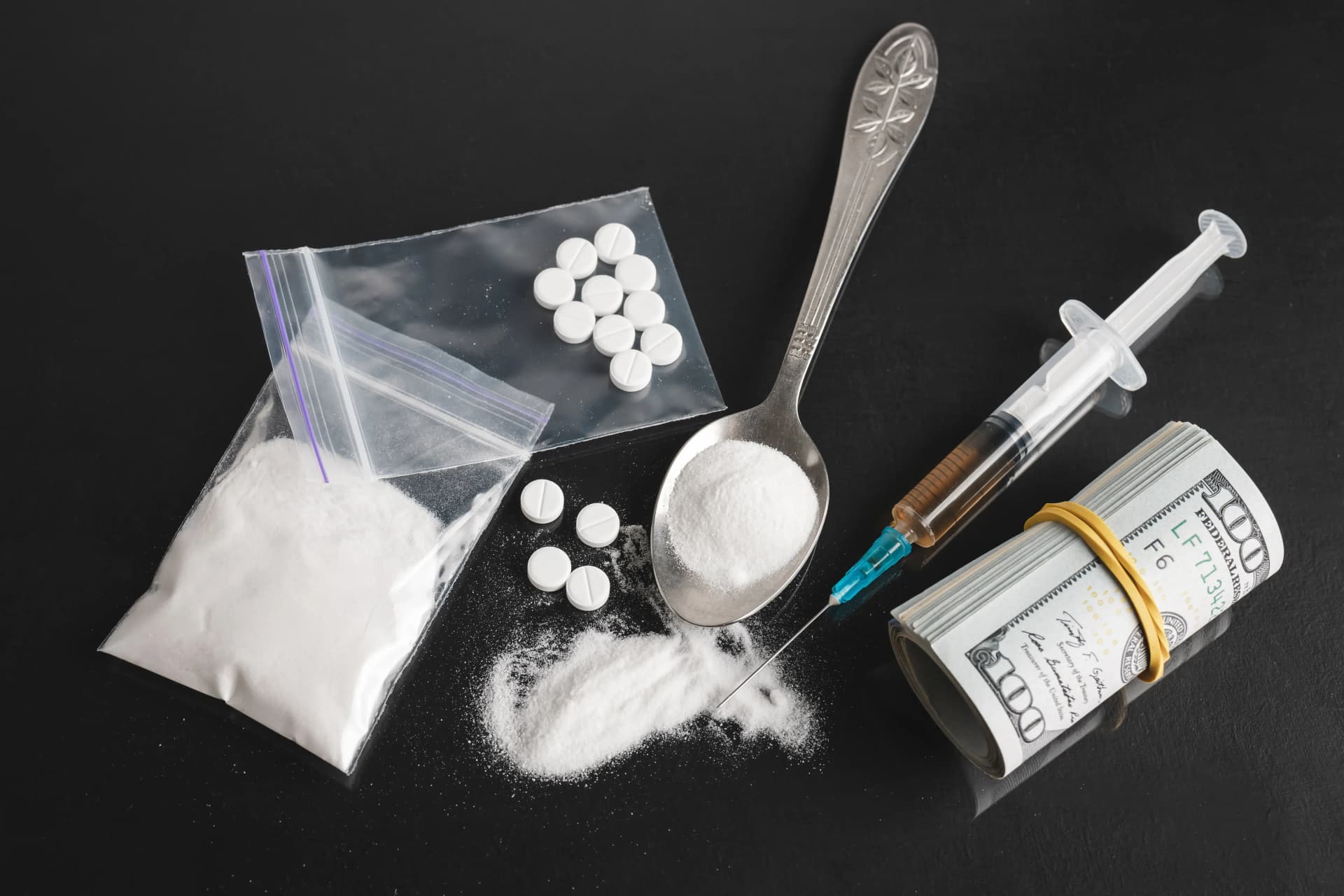
Psychotropic drugs refer to prescription drugs that act on the human central nervous system and are recognized as posing serious harm to the body if misused or abused.
Psychotropic drugs are designated as narcotics under the Narcotics Control Act.
Put simply, psychotropic drugs may be understood as narcotics other than narcotics in the narrow sense and cannabis.
If psychotropic drugs are sold, purchased, or taken without a physician's prescription, strict punishment is imposed under the Narcotics Control Act.
Psychotropic drugs are subdivided into categories (a) through (e) according to the possibility of misuse or abuse and the degree of risk.
Representative psychotropic drugs include the sleeping aid zolpidem, the anesthetic propofol, and the diet drug phentermine.
These drugs act to stimulate or suppress the central nervous system, and if used improperly, they may cause serious dependence and side effects.
2. Psychotropic Drugs | Classification by Type and Representative Drugs

Psychotropic drugs are substances that affect a person's central nervous system, and they are classified into types Ga, Na, Da, Ra, and Ma based on criteria such as physical and psychological dependence, safety, and the possibility of medical use.
However, healthcare institutions such as the Korea Pharmaceutical Information Center sometimes divide psychotropic drugs into types 1 through 5 based on criteria such as the action characteristics, safety, dependence, and possibility of medical use of the drug.
Focusing on the legal classification criteria, we will also examine the pharmaceutical classification.
 Category A (Psychotropic Drugs of the Highest Risk)
These are substances with a high risk of misuse or abuse that produce strong central nervous system stimulation, such as hallucination or arousal, and are not used even for medical purposes.
▶Representative drugs
-LSD
-Methoxy
-Bufotenine
-Psilocybin and psilocin


Category B (High Risk but with Some Medical Use)
These substances pose a lower risk than category (a) but still induce strong dependence, and some are used on a limited basis for medical purposes.
▶Representative drugs
-Amphetamine class
-Ketamine
-MDMA
Category C (Commonly Used Medically but with Risk of Misuse and Abuse)
These are substances that are used in medical settings but, when used repeatedly, carry a risk of dependence or abuse through their suppressive action on the central nervous system.
▶Representative drugs
-Barbital
-Pentazocine
Category D (Everyday Medical Drugs with Risk of Abuse)
These are substances that are relatively safe and commonly prescribed in general medical care, but that can cause dependence when abused or used over a long period.
▶Representative drugs
-Zolpidem
-Propofol
-Phentermine (dietamine, nabi pill)
Side Effects of Psychotropic Drugs
Psychotropic drugs act directly on a person's central nervous system, so they are dangerous drugs that can cause psychological and physical dependence.
They must be taken as prescribed by a physician, and if taken over a long period, they should not be stopped at one's own discretion but reduced gradually according to the physician's instructions.
✅ The side effects to watch out for most: dependence and withdrawal symptoms
If psychotropic drugs are taken over a long period and then suddenly stopped or reduced in dose, the following withdrawal symptoms may appear.
-Anxiety, insomnia, agitation
-Depression, hallucinations
-Vomiting, nausea
-In severe cases, even seizures or impulses to self-harm
If withdrawal symptoms occur, treatment from medical staff must be sought, and taking or stopping the drug at one's own discretion is very dangerous.
✅ Major side effects by type of action
Psychotropic drugs have various actions (hallucinogenic, stimulant, sleep-inducing, sedative, and the like) depending on the type of drug, and the patterns of side effects differ accordingly.
▶Side effects of drugs with a hallucinogenic action
-Psychological symptoms: delirium, reduced concentration, memory impairment, depression, anxiety, insomnia
-Physical symptoms: drooling, increased sweating and tearing, abnormal sensations, pupil dilation, hand tremors
Long-term use may cause permanent nervous system disorders, such as brain cell damage.
▶Side effects of drugs with a stimulant action
-Insomnia, anxiety, tension, aggression
-Difficulty breathing, upper abdominal pain, vomiting, fever
-Increased blood pressure and pulse, headache, hand tremors, abnormal sensations
Excessive stimulation of the body may cause cardiovascular side effects.
▶Side effects of drugs with a sleep-inducing action
-Dizziness, drowsiness, forgetfulness
-Impaired concentration, cognitive decline, headache
-Rarely, hallucinations or respiratory depression may occur
Elderly persons and those with chronic illnesses should be careful of the risk of falls.
▶Side effects of drugs with a sedative action
-Fatigue, stuttering, blurred vision, reduced sense of balance
-Decline in memory and judgment, dry mouth, dizziness
-Rarely, respiratory depression and reduced cardiovascular function
Because the risk of accidents increases when driving or operating machinery, caution is needed.
✅ How to respond when side effects occur
Do not stop taking the drug immediately: this may worsen withdrawal symptoms.
-If symptoms appear, notify a physician or pharmacist immediately
-Information on side effects can be found in the package insert or in the approval information of the Ministry of Food and Drug Safety
-Stopping the drug or changing the dose without consulting medical staff is very dangerous.
3. Psychotropic Drugs | Cases of Misuse and Abuse
Let us examine representative cases of misuse and abuse of psychotropic drugs.
1. Misuse and abuse of appetite suppressants (commonly called “butterfly pills”)
-Purchasing without a prescription for dieting purposes, or obtaining duplicate prescriptions by going from hospital to hospital (commonly called “drug shopping”)
-Sharing an acquaintance's prescribed medication or buying it illegally online
-Selling and advertising through social media, blogs, and online communities as “diet drugs”
Risk: Stimulating the central nervous system and causing serious side effects such as insomnia, anxiety, high blood pressure, and increased heart rate
2. Misuse of sleeping pills (such as zolpidem)
-Taking them based on one's own judgment for insomnia caused by stress or a sleep disorder
-Cases of gradually increasing the dose and becoming addicted
Risk: Side effects such as hallucinations, sleepwalking, memory loss, and suicide attempts in cases of overdose
3. Cases of self-prescription by physicians
-Cases in which a physician over-prescribes narcotic drugs to themselves
-Analysis indicating that the average annual amount prescribed per physician who self-prescribed narcotic drugs was greater than the average amount prescribed to the general public
Case Law on Psychotropic Drugs
The 3-month license suspension imposed on a dentist who self-administered the drug is "lawful"
The Seoul Administrative Court held that the "3-month physician license suspension" imposed by the Ministry of Health and Welfare on dentist A, who was sentenced to a fine for self-administering philopon, was justified.
A was sentenced to a fine of 30 million won in 2021 on charges of trading and self-administering philopon, and the Ministry of Health and Welfare regarded this as an immoral medical act under the Medical Service Act and suspended A's license for 3 months.
A filed suit, arguing that self-administration was not treatment of another person, but the court dismissed the claim.
-Whether self-administration also constitutes an "immoral medical act" by a medical practitioner
-The judgment that self-administration is contrary to a medical practitioner's morality and professional ethics and harms medical order
-The court's position that psychotropic drugs carry a high risk of misuse and abuse, and that indiscriminate use should be strictly sanctioned
Where philopon was delivered under instruction, it is difficult to regard this as receipt
Regarding the act of defendant Gap handing over approximately 500g of philopon to defendant Eul, the court held that it was difficult to regard Eul as having actual authority to dispose of or control it, and that this did not constitute the crime of receiving philopon.
The reasoning was that defendant Eul merely attempted to deliver the philopon to a third party under defendant Gap's instruction, and it was difficult to regard Eul as having the authority or controlling relationship to use or dispose of the controlled substance as their own.
-The legal meaning of "receipt of a psychotropic drug": it is not mere possession, but a state in which the recipient holds the authority to dispose of it or can in effect control it
-Where a person temporarily keeps or transports the drug after receiving an instruction, it is difficult to regard this as receipt
-Where there is actual possession but no authority to dispose of it, the requirements for the crime of receipt are not met
4. Psychotropic Drugs | Penalty Levels
The levels of punishment relating to psychotropic drugs are as follows.
| Act | Level of punishment |
| Habitual offender of import/export, manufacture, or sale of psychotropic drugs for profit | Death penalty, life imprisonment, or imprisonment for at least 10 years |
▶When administering or possessing
| Administration and possession of psychotropic drugs, item (a) | Imprisonment for at least 1 year |
| Administration and possession of psychotropic drugs, items (b) and (c) | Imprisonment for up to 10 years or a fine of up to 100 million won |
| Administration and possession of psychotropic drugs, item (d) | Imprisonment for up to 5 years or a fine of up to 50 million won |
▶When selling or arranging
| Sale and arrangement of psychotropic drugs, item (a) | Life imprisonment or imprisonment for at least 5 years |
| Sale and arrangement of psychotropic drugs, items (b) and (c) | Imprisonment for up to 10 years or a fine of up to 100 million won |
| Sale and arrangement of psychotropic drugs, item (d) | Imprisonment for up to 5 years or a fine of up to 50 million won |
5. Psychotropic Drugs | How to Respond When Involved
In cases involving psychotropic drugs, even a first-time offender may face an investigation involving detention, and the rate at which actual custodial sentences are imposed is also very high.
A thorough response is needed from the early stage of the case.
▶ Points to note at the investigation stage
-Caution with statements: hasty statements should be avoided until the assistance of defense counsel is obtained.
-Accompaniment during questioning: a person may be accompanied by defense counsel when undergoing police questioning. This is important in preventing distortion of statements or an unfavorable confession.
-Submission of a defense counsel's opinion: by submitting an opinion that clearly states the suspect's position at the early stage of the case, the direction of the investigation may be influenced.
▶ Confirming the legal nature of a psychotropic drug
-Whether a substance is a psychotropic drug can be confirmed by whether the drug in question is included in the list of designated controlled substances under the notification of the Ministry of Food and Drug Safety.
-Even if a suspect argues that they did not know the substance was a psychotropic drug, the court may render a guilty determination on the ground of a "breach of the duty of care."
Importance of the Initial Response
Psychotropic drugs may be thought of as mere sleeping aids or diet pills, but legally they fall under narcotics and are subject to severe punishment.
In particular, investigative agencies have recently taken a hard-line stance on drug crimes involving psychotropic drugs, so even a minor act of trading, taking, or possessing them may be subject to punishment.
Therefore, if you are involved in, or suspected of being involved in, an act related to psychotropic drugs, it is most important to respond promptly with the assistance of defense counsel experienced in drug cases from the early stages.
At our firm, drug specialist attorneys who handle drug cases form a TF response team for clients and provide the following legal services.
-Review of whether a substance is designated as a controlled drug
-Analysis of the actual dosage taken and whether there was misuse or abuse
-Assessment of whether to assert use for medical purposes
-Identification of accomplices or supply routes and coordination of statements
-Securing of evidence proving unlawful prescription
-Organization of grounds for mitigation for a first-time offender and preparation of response documents such as petitions and letters of appeal


Watch related video content
for this case study.

What if you are investigated by the police for drug use?