
CONTENTS
- 1. Defect Repair Lawsuit | Concept

- - Necessity
- - Types of Defects
- 2. Defect Repair Litigation | Legal Basis and Scope of Liability
- - Legal Issues
- - Aggregate Buildings Act
- - Housing Act
- - Multi-Family Housing Management Act
- 3. Defect Repair Litigation | Procedure and Conduct of the Lawsuit
- - Defect Investigation and Appraisal
- - Notice of Defects and Request for Repair
- - Claim for Performance of Defect Repair or Claim for Damages
- - Court Appraisal Procedure
- - Judgment and Compensation
- 4. Defect Repair Litigation | Structure for Calculating the Amount of Damages
- - Ratio of Assigned Claims
- - Court-Appraised Amount
- - Amount Rejected by the Court
- - Doctrine of Liability Limitation
- 5. Defect Repair Litigation | Principal Supporting Evidence
- - Evidence Proving the Occurrence of Defects
- - Evidence Proving Faulty Construction or Breach of Contract
- - Evidence Proving the Scale of Defects and the Amount of Loss
- - Materials Concerning the Standing of the Residents’ Representative Council
- 6. Defect Repair Litigation | Checklist
- - Advance Preparation Stage
- - Filing the Suit and the Appraisal Stage
- - Judgment and Follow-Up Measures
- - Support System of Construction-Specialist Attorneys

1. Defect Repair Lawsuit | Concept
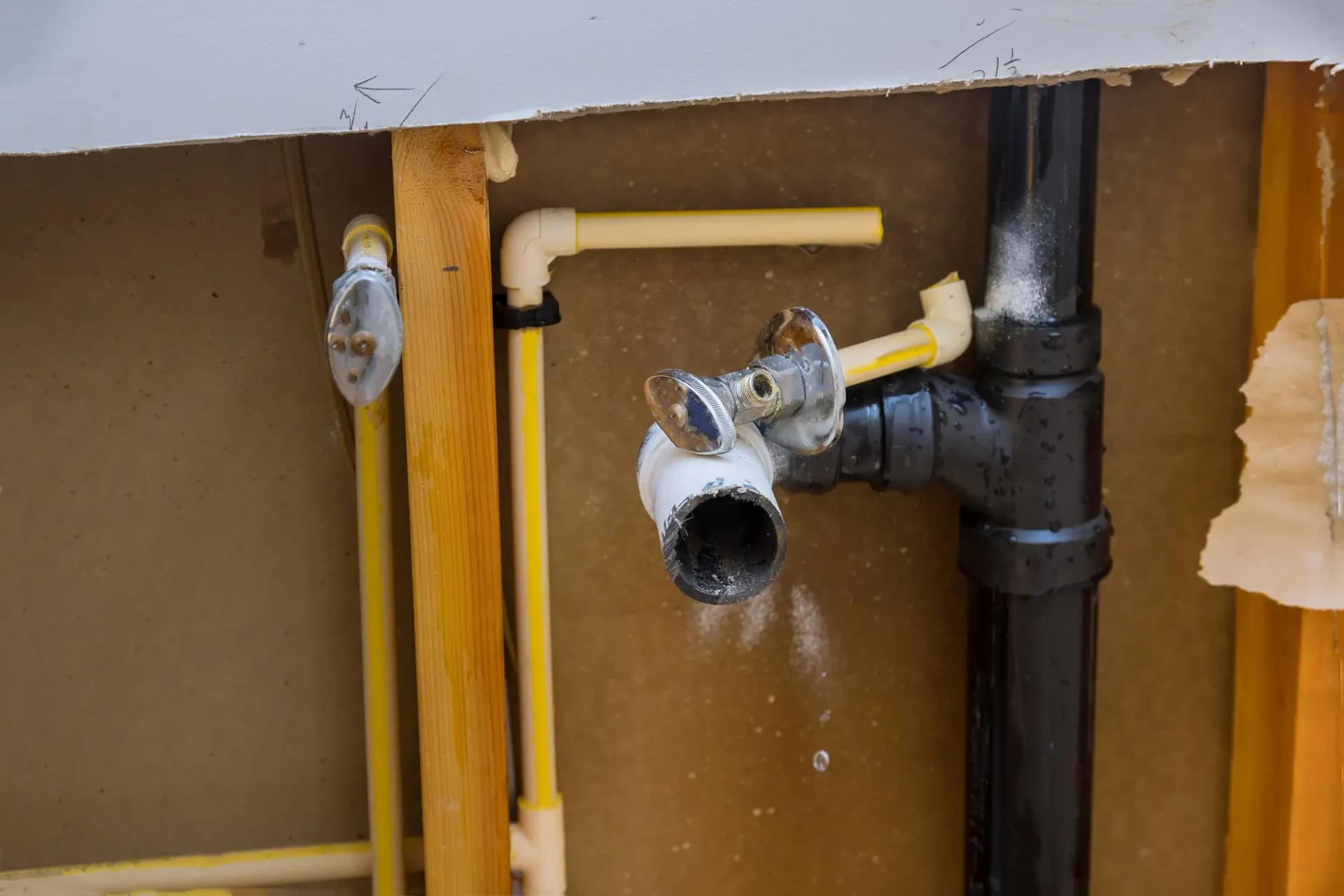
A defect repair lawsuit is a civil lawsuit in which, with respect to a 'defect' arising in a building such as an apartment, mixed-use residential building, or officetel, the repair of the defect or corresponding damages are claimed against the construction company or the seller.
 Necessity
A defect means a flaw arising from faulty construction—such as cracking, subsidence, breakage, or detachment—that is serious enough to impair the safety, function, or appearance of the building or facility.
This goes beyond a mere defect in appearance and has a serious effect on the function and safety of the building.
Furthermore, over the long term it may lead to a decline in asset value and to the infringement of residents’ rights.
In multi-family housing in particular, since the harm affects all residents, a response at the level of the residents’ representative council is called for.
Types of Defects
Defects manifest in a variety of forms, as set out below.
: Defects readily identifiable by appearance, such as cracking, breakage, subsidence, water leakage, and discoloration
∙ Performance defects
: Cases of inadequate function, such as fire doors, inter-floor noise, and faulty equipment
∙ Structural defects
: Cases affecting the safety of the building, such as ground subsidence and corrosion of reinforcing bars
∙ Defects constituting non-performance of obligation (breach of contract)
: Construction falling short of the agreed quality and specifications, etc.


2. Defect Repair Litigation | Legal Basis and Scope of Liability
Liability for the repair of defects, which is the subject of defect repair litigation, arises under the following statutes.
Statute | Scope of application | Party liable for defect warranty |
Act on Ownership and Management of Aggregate Buildings | Multi-family housing sold by unit | Seller (developer), contractor |
Housing Act | General housing and multi-family housing | Project undertaker (developer/contractor) |
Multi-Family Housing Management Act | Multi-family housing | Project undertaker |
Legal Issues
In defect repair litigation, the ‘time at which the defect arose’and the ‘period of warranty liability’become the central issues.
Even for the same defect, the period of warranty liability varies depending on the applicable statute, and the period differs according to the type of defect, so accurate legal interpretation and classification are required.
The periods of defect warranty liability for major defect categories under each statute are as follows.
Aggregate Buildings Act
Under Article 9-2 of the Act on Ownership and Management of Aggregate Buildings and Article 5 of its Enforcement Decree, among others, warranty liability arises for the following defects, and differing periods of duration apply.
Period of warranty liability | Type of defect |
10 years | Main structural members, ground |
5 years | · Defects arising before the commencement date : Omitted construction, altered construction |
· Defects arising after the commencement date : Structural and safety-related defects in site preparation, reinforced concrete, steel framing, masonry, roofing, waterproofing work, etc. | |
3 years | · Functional and aesthetic defects : Building equipment, carpentry, windows and doors, landscaping, electrical and power equipment, fire-fighting facilities, etc. |
2 years | · Finishing-work defects and other defects that are easy to replace or repair : Plastering, fitting-out, wallpapering, tiling, etc. |
※ Applicable to defects arising before or after the date of use inspection (subjective/objective defects)
Housing Act
Under Article 59(1) of the Enforcement Decree of the Housing Act and its Annexed Table 6, the following defects are subject to defined periods of warranty liability.
Period of warranty liability | Type of defect |
10 years | Load-bearing structural members, such as columns and load-bearing walls |
5 years | Load-bearing structural members, such as beams, floors, and roofs |
4 years | Reinforced concrete, roofing, and waterproofing |
3 years | Paving work, footings and foundations, structural steelwork, gas, fire-extinguishing equipment, electrical power |
2 years | Site preparation, masonry work, window and door work, landscaping work, finishing work |
1 year | Carpentry work, window and door work, finishing work, turf planting, metalwork, lighting equipment |
※ Applicable to defects arising within the period of warranty liability counted from the date of use inspection, etc.
Multi-Family Housing Management Act
Under Article 36 of the Multi-Family Housing Management Act and Article 36 of its Enforcement Decree, warranty liability arises for a defined period for the following defects.
Period of warranty liability | Type of defect |
10 years | Defects in load-bearing structural members and ground work |
5 years | · Structural and safety-related defects : Site preparation, reinforced concrete, steel framing, masonry, roofing, waterproofing work, etc. |
3 years | · Functional and aesthetic defects : Building equipment, carpentry, windows and doors, landscaping, electrical and power equipment, fire-fighting facilities, etc. |
2 years | · Finishing-work defects and other defects that are easy to replace or repair : Plastering, fitting-out, wallpapering, tiling, etc. |
※ Applicable to defects arising within the period of warranty liability counted from the date of use inspection, etc.
3. Defect Repair Litigation | Procedure and Conduct of the Lawsuit

Defect repair litigation follows ordinary civil procedure, but because it is a highly specialized and complex type of case, advance preparation and the securing of evidence are very important.
In the case of multi-family housing in particular, a systematic response centered on the residents’ representative council is required.
Defect Investigation and Appraisal
Prior to litigation, a defect investigation (on-site inspection) is conducted through a specialized institution or appraiser in order to objectively confirm whether the defects actually exist and their scope.
Depending on the type of defect, the opinion of a relevant expert such as a structural engineer or architect may be required, and the results of this investigation may later be used as material for the court appraisal.
Notice of Defects and Request for Repair
A procedure must be followed in which the contractor or seller is notified of the defects and formally requested to carry out the repairs.
Because this process later operates as an issue concerning ‘whether the repair request was complied with’ in the litigation, it is advisable to preserve a record of the request by means such as certified mail (content-certified mail).
Claim for Performance of Defect Repair or Claim for Damages
Where the contractor fails to carry out the requested repairs or addresses them only in part, a lawsuit may be filed in the following ways.
: A claim requesting that the repair of the defective items be carried out directly
∙ Claim for damages
: Where repair of the defects is impossible or the repairs have already been carried out at one’s own expense, a claim for monetary compensation corresponding thereto
Court Appraisal Procedure
In order to determine the cause, scope, and repair cost of the defects, the court designates an official appraiser and conducts an appraisal.
This process is a stage that becomes a central issue of the litigation, and the direction of the decision may turn on the appraisal result.
※ Where the appraisal result is considered improper, a request for correction or an additional appraisal may be requested.
Judgment and Compensation
The court renders judgment on the basis of the appraisal result, the evidence submitted, the contract, and the like.
At this point, where liability for the defects is found, the court renders a judgment ordering the contractor or other party to carry out the repairs or to pay monetary compensation.
4. Defect Repair Litigation | Structure for Calculating the Amount of Damages
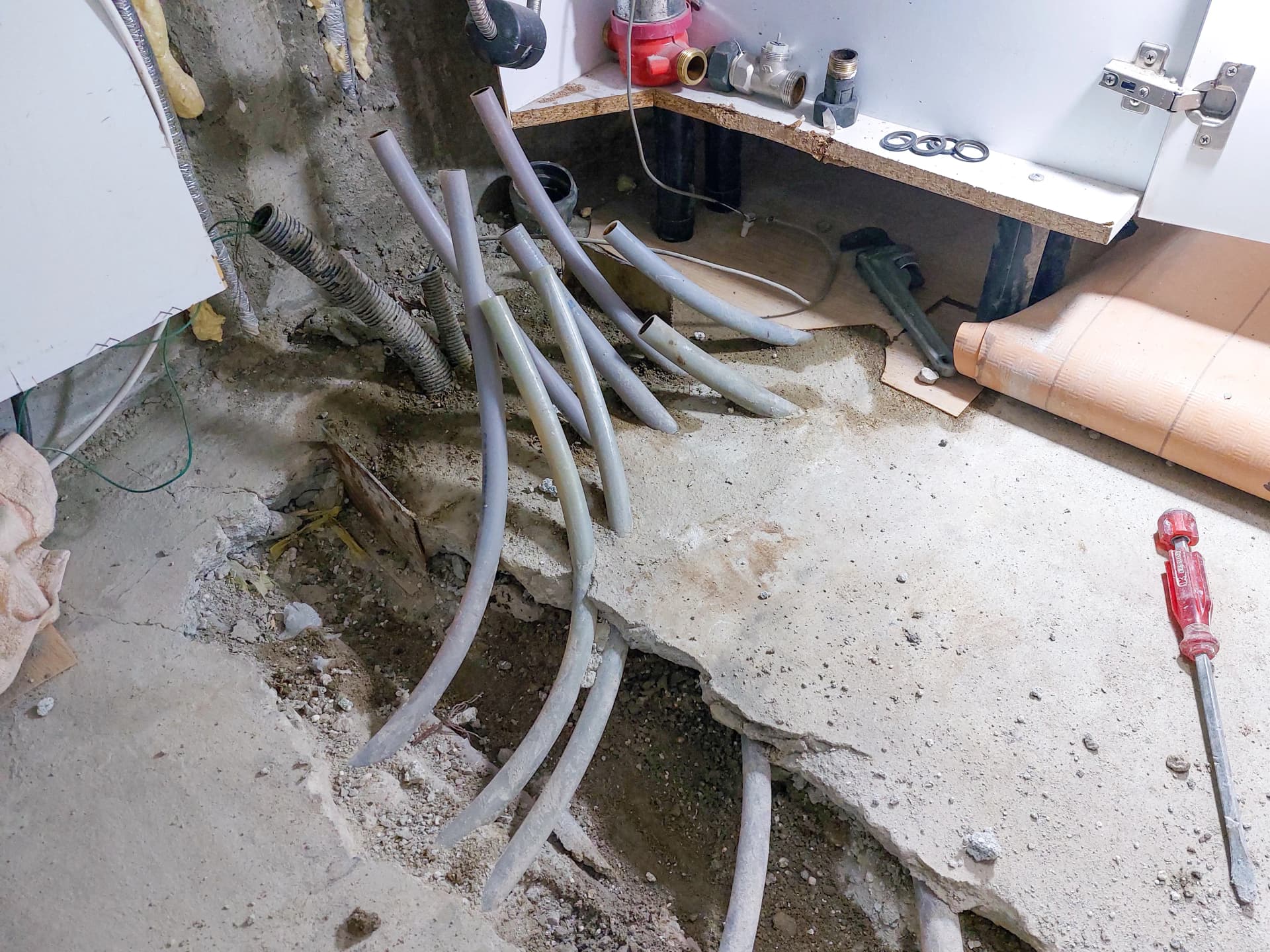
Even where the claim is upheld in defect repair litigation, the amount of damages actually received is calculated according to a formula that takes various factors into account.
The amount of compensation is not determined merely by the scale of the defects or the appraised amount; rather, the following four principal items are applied in sequence.
Ratio of Assigned Claims
In the case of multi-family housing, the right to claim defect warranty belongs to the sectional owner of each unit.
Accordingly, the residents’ representative council may bring a lawsuit against the contractor or other party only to the extent of the right to claim defect repair assigned to it by the sectional owners, and the final amount of compensation is likewise recognized only in proportion to the assigned share.
Court-Appraised Amount
For the technical determination of the case, the court designates a certified appraiser and appraises the type and scope of the defects.
The appraisal is conducted centering on the following two standards.
: Where the agreed quality or specifications have not been met
∙ Objective defect
: Where the ordinary quality standard or the standard set by statute has not been met
The appraisal result recognized by the court becomes the base figure for calculating compensation.
Amount Rejected by the Court
In response to the appraisal result, the contractor advances defense arguments such as that it ‘constructed in accordance with the drawings’ or that the matter is a ‘minor issue within the tolerance permitted by the design.’
In this process the court may reject (reduce) certain items, and only the defect items ultimately recognized become the subject of the damages calculation.
Doctrine of Liability Limitation
Finally, the court may limit liability in consideration of the following circumstances.
∙ Where damage due to natural aging has been mistaken for a defect
∙ Where a considerable period has elapsed from the date of use inspection to the time of appraisal
In practice, it is common for liability to be reduced at a rate of approximately 5% per year according to the period elapsed up to the time of the defect appraisal.
5. Defect Repair Litigation | Principal Supporting Evidence

Defect repair litigation is a procedure in which technical and legal proof must proceed in parallel, and thorough preparation of materials governs the prospects of prevailing in the case.
In particular, at the stages before and after the appraisal, materials capable of supporting the existence of the defects, the attribution of liability, and the occurrence and extent of the damage must be appropriately submitted, and the following materials are required as essential.
Evidence Proving the Occurrence of Defects
Material | Description |
Photographs and video of the defects | Visual materials by which the location, scope, and progression of the defects can be confirmed |
Defect schedule | A document organizing the date of occurrence, location, content, symptoms, and the like |
Records of resident complaints | In the case of multi-family housing, records of repeated complaints filed with the management office, etc. |
Organizing the photographs in chronological order—at the time the defect arose, immediately before the lawsuit, and immediately before the appraisal—enhances their reliability and persuasiveness.
Evidence Proving Faulty Construction or Breach of Contract
Material | Description |
Design drawings and specifications | Reference materials that can be compared against the agreed construction |
Supervision reports and inspection logs | Useful for tracing construction problems or the cause of the defects |
Construction contract and sales contract | Provisions concerning the scope of the quality warranty and the defect repair obligation |
If matters repeatedly pointed out in the supervision log actually resulted in defects, they serve as strong grounds for proving the contractor’s negligence.
Evidence Proving the Scale of Defects and the Amount of Loss
Material | Description |
Court appraisal report | The objective standard for the amount of loss adopted by the court |
Prior appraisal report by a private expert | Estimate of restoration costs based on a pre-litigation defect investigation |
Repair work estimate | Calculation of the construction cost actually required for restoration |
Before the court appraisal, the amount of loss may be roughly proved through a private appraisal report by an architect or engineer or through a contractor’s estimate.
Materials Concerning the Standing of the Residents’ Representative Council
In the case of multi-family housing, the following evidence is required.
: Evidence that the rights were assigned by the residents
∙ Minutes of the residents’ representative council
: Confirmation of the lawfulness of the resolution procedure for bringing the lawsuit
If the standing requirements are not met, the filing of the suit itself may be rejected, so the number of deeds of assignment and the resolution procedure of the representative council must be prepared clearly without fail.
6. Defect Repair Litigation | Checklist
Defect repair litigation is a procedure in which various elements—appraisal, contract, proof, and the like—are combined, and thorough preparation in advance is required.
The following is a checklist of the key matters that must be reviewed at the stages before and after the conduct of the lawsuit.
Advance Preparation Stage
▷ Securing deeds of assignment of the right to claim defect repair (a majority or more of the sectional owners)
▷ Organizing the particulars of the defects (location, symptoms, time of occurrence, etc.)
▷ Securing photographs and video of the defects (taken by time period, focusing on representative cases)
▷ Securing a history of defect-related complaints and repair requests
▷ Collecting construction-related materials such as design drawings, specifications, and supervision reports
▷ Securing a prior technical appraisal or estimate materials (optional)
Filing the Suit and the Appraisal Stage
▷ Reviewing the correctness of the named defendant (contractor, developer, etc.)
▷ Confirming the basis for calculating the amount in dispute (e.g., the ratio of assigned claims against the estimated appraisal value)
▷ Preparing for the court appraisal and arranging in advance for persons to accompany the on-site inspection
▷ Providing the appraiser with sufficient explanatory materials (e.g., a statement on how the defects arose)
▷ Reviewing whether to submit supplementary materials or a written opinion after the appraisal
Judgment and Follow-Up Measures
▷ Determining whether a limitation-of-liability ratio applies and whether it is appropriate
▷ Reviewing the structure for calculating the judgment amount
▷ Reviewing whether to pursue compulsory execution (attachment, collection, etc.) after the judgment becomes final
▷ Confirming whether the actual defect repair work has commenced and whether the costs have been settled
▷ Preparing a follow-up response plan in case further defects arise
Support System of Construction-Specialist Attorneys
Our law firm includes a substantial number of construction-specialist attorneys registered with the Korean Bar Association, as well as specialist attorneys with an average of more than 10 years of experience.
Accordingly, we are able to provide legal support throughout the entire process relating to the occurrence of defects, from sending a certified letter of content (naeyongjeungmyeong) to filing a claim, applying for an appraisal, and bringing a claim for damages.
If responding to such matters on your own proves difficult, we encourage you to seek the assistance of a construction-specialist attorney to restore your rights.
Related News


Watch related video content
for this case study.

What is your strategy for responding to construction damage compensation?