
CONTENTS
- 1. Framework Act on the Construction Industry | Scope of Application

- - Definitions of Key Terms
- 2. Framework Act on the Construction Industry | Construction Business Registration and Criteria
- - Types of Construction Business
- - Registration Authority
- - Registration Requirements and Criteria
- - Documents Required for the Registration Application
- - Registration Exceptions
- 3. Framework Act on the Construction Industry | Types of Registration Violations and Levels of Punishment
- - Violation of the Restriction on Holding Overlapping Business Types of the Same Kind
- - Failure of a Newly Registered Party to Complete Mandatory Training
- - Delay in Reporting a Change in Registered Particulars
- - Shortfall in Registration Criteria and Failure to Take Corrective Measures
- - Failure to Submit Fact-Finding Survey Data or False Reporting
- - Failure to Notify of a Business Suspension Disposition
- - Lending and Arranging the Lending of a Registration Certificate and Registration Booklet
- - Lending of a National Technical Qualification Certificate, etc.
- 4. Framework Act on the Construction Industry | Methods of Response
- - Methods of Response by Type
- - An Immediate Response Is Required
- 5. Framework Act on the Construction Industry | Checklist
- - Assistance System of Construction Specialist Attorneys

1. Framework Act on the Construction Industry | Scope of Application
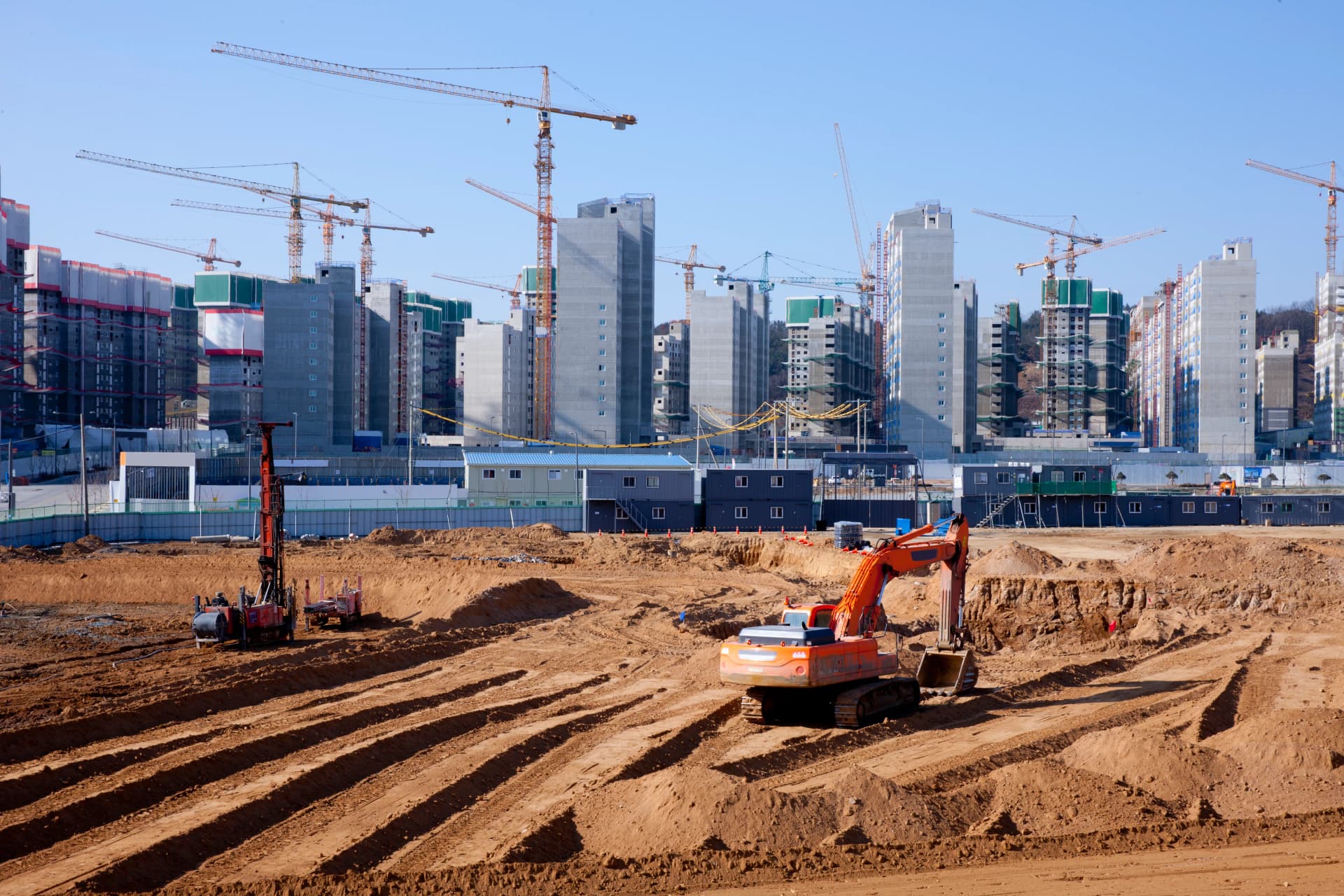
The Framework Act on the Construction Industry applies, in principle, to the construction industry as a whole, and this Act takes precedence unless other statutes provide otherwise.
In particular, with respect to the scope of construction works and the registration of a construction business, this Act applies with the highest priority, while electrical, information and communications, firefighting facility, and cultural heritage repair works are excluded.
Only certain provisions apply to the construction services business.
 Definitions of Key Terms
: Construction business (execution business) + construction services business (design, supervision, etc.)
∙ Construction Works
: Includes the installation, maintenance, and repair works of various facilities such as civil engineering, building, industrial equipment, and landscaping
∙ Contract/Subcontract
: A contract concluded upon an agreement on the completion of the works and the payment of consideration
∙ Subcontractor
: Where a specialized construction company is awarded a part of the construction works, it is not deemed a subcontractor even if it is not the contractor


2. Framework Act on the Construction Industry | Construction Business Registration and Criteria

Under the Framework Act on the Construction Industry, a person who intends to engage in a construction business must register with the Minister of Land, Infrastructure and Transport or the competent Mayor/Do Governor, and must meet certain requirements and criteria.
A registered construction company must continuously satisfy the criteria in order to maintain its qualification, and in the event of a violation it may be subject to an administrative disposition such as revocation of registration or business suspension.
Types of Construction Business
A construction business is divided into the comprehensive construction business, the specialized construction business, and others, depending on the type and scale of the works.
Category | Definition and Examples of Business Types |
Comprehensive Construction Business | Construction works in which facilities are built while carrying out comprehensive planning, management, and coordination |
Civil engineering works, building construction works, civil engineering and building works, landscaping works, industrial and environmental facility works | |
Specialized Construction Business | Construction works relating to a part of a facility or to a specialized field |
Interior construction works, earthwork, wet and waterproofing works, stonework, painting works, etc. |
Registration Authority
A person who intends to engage in a construction business must register with the Minister of Land, Infrastructure and Transport by business type.
: Receipt and review of registration applications, etc., are handled by the Construction Association of Korea (the respective Si/Do branches)
: The final disposition of acceptance is performed by the Mayor/Do Governor
∙ Specialized Construction Business
: Performed by the Si/Gun/Gu under re-delegated authority
Registration Requirements and Criteria
To register a construction business, all statutory requirements must be satisfied, including capital, technical capability, possession of an office, and membership in a mutual-aid association.
Common Registration Requirements
∙ Technicians : Securing dedicated technical personnel (differing for comprehensive, specialized, and mechanical equipment businesses)
∙ Office : Securing an independent office space
∙ Grounds for Disqualification : A person who falls under the grounds for disqualification under Article 13 of the Framework Act on the Construction Industry cannot register
Business Type | Capital | Technicians |
Civil Engineering and Building Works Business | KRW 850 million (individual KRW 1.7 billion) | 11 persons (at least 2 each at the intermediate level in civil engineering and building) |
Civil Engineering Works Business | KRW 500 million (individual KRW 1 billion) | 6 persons (at least 2 at the intermediate level in civil engineering) |
Building Construction Works Business | KRW 350 million (individual KRW 700 million) | 5 persons (at least 2 at the intermediate level in building) |
Industrial and Environmental Facility Works Business | KRW 850 million (individual KRW 1.7 billion) | 12 persons (at least 6 at the intermediate level in civil engineering, building, environment, etc.) |
Landscaping Works Business | KRW 500 million (individual KRW 1 billion) | 4 persons (at least 2 at the intermediate level in landscaping, and at least 1 each in civil engineering and building) |
Specialized Construction Works Business (interior construction, earthwork, reinforced concrete, etc.) | KRW 150 million (individual KRW 150 million) | 2 persons |
Specialized Construction Works Business (railway track, pavement, steel structures, cableway installation) | KRW 200 million (individual KRW 400 million) | See the table attached to Article 13 of the Enforcement Decree |
Specialized Construction Works Business (facility maintenance and management business) | KRW 200 million (individual KRW 200 million) | |
Specialized Construction Works Business (steel installation, dredging works business) | KRW 700 million (individual KRW 1.4 billion) |
Documents Required for the Registration Application
∙ (Corporation) certified copy of the corporate register, business registration certificate
∙ (Individual) business registration certificate, certified copy of resident registration
∙ (Securing capital) financial management status assessment statement, certificate of guaranteeable amount
∙ (Securing technical personnel) certificate of holding construction technicians, copies of technicians' certificates, list of employment insurance subscribers
∙ (Securing facilities and equipment) certified copy of the construction machinery register, photographs, etc.
∙ (Securing an office) lease agreement (if applicable), certified copy of the building register, interior and exterior photographs of the building
Registration Exceptions
However, where only minor construction works are performed, the construction works may be carried out without registration of a construction business.
: Construction works for which the estimated cost of a single project is less than KRW 50 million
∙ Specialized Works : Construction works for which the estimated cost of a single project is less than KRW 15 million
(except gas facility works, steel installation works, steel structure works, cableway installation works, elevator installation works, railway track works, and heating works)
∙ Installation works of mechanical equipment that can be readily assembled, dismantled, and moved
(limited to cases where the person who manufactures or supplies the relevant mechanical equipment installs it directly)
3. Framework Act on the Construction Industry | Types of Registration Violations and Levels of Punishment

A violation of the Framework Act on the Construction Industry undermines the fairness and reliability of the construction industry, and if detected may lead to an administrative disposition or criminal punishment.
The Framework Act on the Construction Industry requires that related obligations be continuously performed even after registration of a construction business, and representative examples of violations are as follows.
Violation of the Restriction on Holding Overlapping Business Types of the Same Kind
Under Chapter 2, Section 2 of the Construction Business Management Regulations, holding two or more construction business types of the same kind is prohibited.
Even where, by way of exception, such overlapping holding arises due to causes such as a transfer or merger, a report of business closure or cancellation of registration must be filed without delay.
A violation of this is deemed to constitute carrying out a construction business without registration of a construction business, or after registration by improper means, and may result in the following punishment.
Governing Legal Provision | Level of Punishment |
Article 95-2 of the Framework Act on the Construction Industry | Imprisonment for up to 5 years or a fine of up to KRW 50 million |
Failure of a Newly Registered Party to Complete Mandatory Training
Under Article 9-3 (1) of the Framework Act on the Construction Industry, a person who has newly registered a construction business must complete 8 hours of ethics and practical training for the construction business within 6 months from the date of registration.
In the case of a corporation, at least one of the registered officers must complete the training.
If the new training is not completed within 6 months after the registration of a new license, the following administrative fine may be imposed.
Governing Legal Provision | Level of Disposition |
Article 99, subparagraph 12 of the Framework Act on the Construction Industry | Administrative fine of KRW 5 million |
Delay in Reporting a Change in Registered Particulars
Under Article 9-2 of the Framework Act on the Construction Industry, where there is a change in registered particulars such as the trade name, location, or representative after registration, a report of change must be filed within 30 days.
In particular, cases in which an administrative fine is imposed for failure to report a change of location to the competent administrative agency occur frequently, so caution is required.
Level of Disposition for Failure to Report Within the Deadline
Governing Legal Provision | Level of Disposition |
Article 100, subparagraph 1 of the Framework Act on the Construction Industry | Administrative fine of up to KRW 500,000 |
Shortfall in Registration Criteria and Failure to Take Corrective Measures
A construction company must maintain the registration criteria (capital, technicians, equipment, office, etc.) at all times, and a violation results in the following administrative disposition.
: Business suspension for up to 1 year (Article 83, subparagraph 3 of the Framework Act on the Construction Industry)
– Where the shortfall in the criteria persists beyond the corrective deadline
: Cancellation of registration (Article 83-2 of the Framework Act on the Construction Industry)
– Where there is a record of business suspension within the past 3 years for the same cause
: Immediate cancellation of registration
Failure to Submit Fact-Finding Survey Data or False Reporting
Under Article 49 of the Framework Act on the Construction Industry, the Ministry of Land, Infrastructure and Transport conducts a fact-finding survey of construction companies every year.
If, at this time, the requested related documents are not submitted without justifiable grounds, the following disposition follows.
Articles 81 to 83 and Article 99 of the Framework Act on the Construction Industry
Corrective order → business suspension upon non-compliance → ultimately cancellation of registration
Failure to Notify of a Business Suspension Disposition
Under Article 14 (2) of the Framework Act on the Construction Industry, where a business suspension disposition has been imposed, the ordering party of the relevant construction works must be notified of that fact immediately.
Failure to comply may result in an administrative fine of up to KRW 5 million (Article 99, subparagraph 1 of the Framework Act on the Construction Industry).
Lending and Arranging the Lending of a Registration Certificate and Registration Booklet
Under Article 21 of the Framework Act on the Construction Industry, lending a construction business registration certificate or registration booklet to another person, or carrying out construction works under a borrowed name, is strictly prohibited, and arranging such conduct is also unlawful.
If detected, the following disposition and punishment may be imposed.
Governing Legal Provision | Disposition and Punishment |
Article 83, subparagraph 5 of the Framework Act on the Construction Industry | Cancellation of registration |
Article 95-2 of the Framework Act on the Construction Industry | Imprisonment for up to 5 years or a fine of up to KRW 50 million |
Lending of a National Technical Qualification Certificate, etc.
Under Article 21-2 of the Framework Act on the Construction Industry, borrowing another person's technical qualification certificate or technical career certificate in order to satisfy the construction business registration criteria is unlawful, and the following disposition may be imposed.
Governing Legal Provision | Disposition |
Article 82 of the Framework Act on the Construction Industry | Business suspension for up to 6 months |
Article 83, subparagraph 6 of the Framework Act on the Construction Industry | Cancellation of registration |
Article 16 of the National Technical Qualifications Act | Suspension or revocation of qualification for up to 3 years |
4. Framework Act on the Construction Industry | Methods of Response
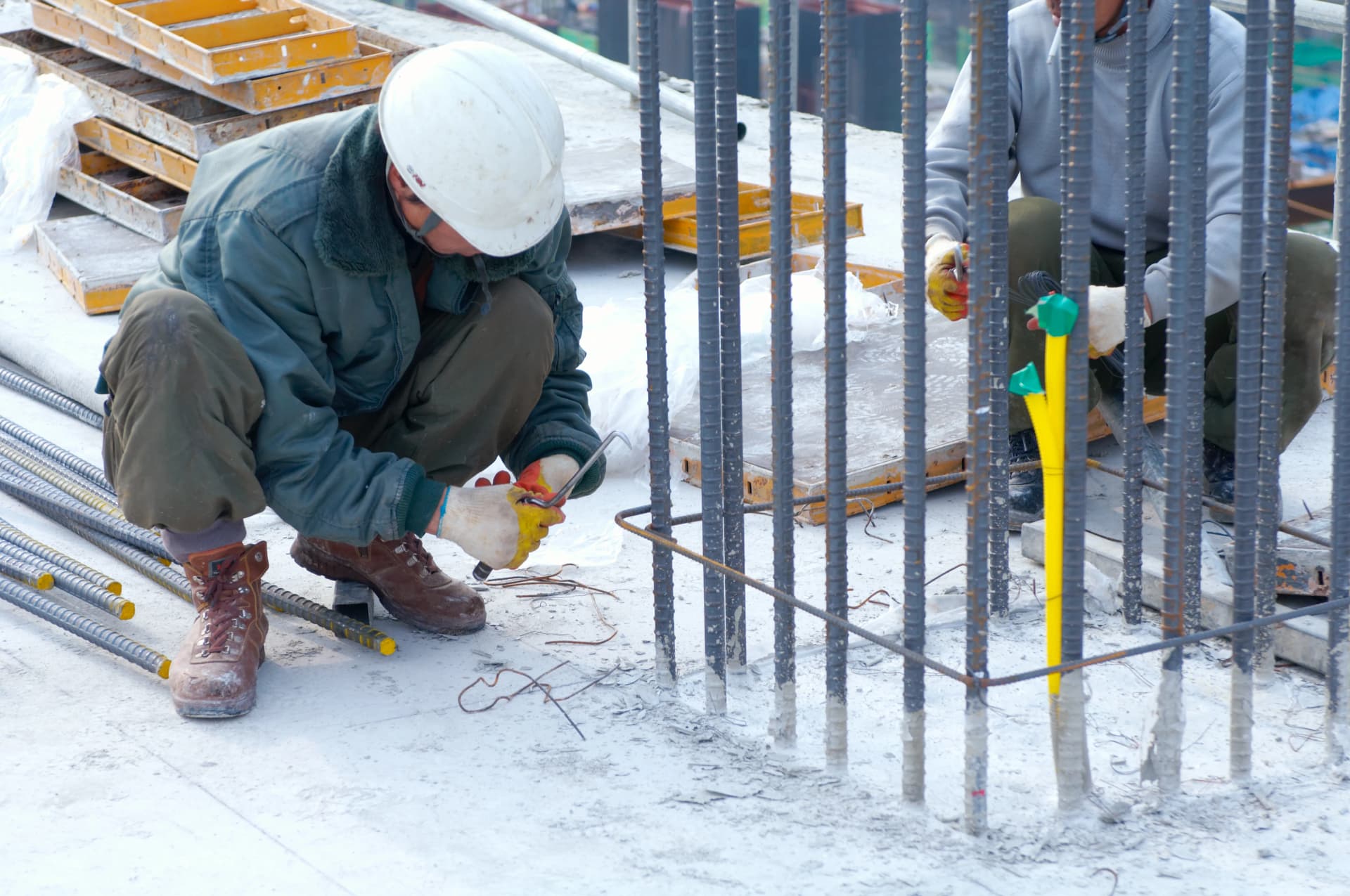
Where a violation of the construction business registration requirements under the Framework Act on the Construction Industry has occurred, it is important to accurately ascertain the nature of the violation and then respond promptly and appropriately.
This is because the matter may go beyond a mere administrative fine and lead to a critical administrative disposition such as business suspension or cancellation of registration.
The following are response measures by major type of violation.
Methods of Response by Type
Type of Violation | Method of Response |
Holding overlapping business types of the same kind | Immediately file a report of business closure for one of the overlapping business types and submit explanatory materials |
Failure to complete new training | Complete the training immediately and submit the certificate of completion |
Delay in reporting a change in registered particulars | Report the change immediately and submit a statement of reasons |
Shortfall in registration criteria | Satisfy the requirements within the corrective deadline and submit supplementary documents |
Failure to submit fact-finding survey data | Submit within the deadline or apply for an extension, and refrain from false reporting |
Failure to notify the ordering party of a disposition | Send a notice to the ordering party without delay, and retain evidence of compliance |
Lending of a registration certificate, booklet, or name | After legal counsel, terminate the related contract, and strengthen internal discipline and management |
Lending of a national technical qualification certificate or career certificate | Terminate the relationship with the relevant person, re-satisfy the criteria, and strengthen internal controls |
An Immediate Response Is Required
Where a construction company becomes aware of a violation, an immediate response is essential.
Violations such as registering overlapping business types or falling short of the registration criteria may lead not only to an administrative disposition but also to future restrictions on bidding and a downgrade in credit rating, so a system for correction, explanation, and reporting must be activated promptly, in addition to preventive measures, when a violation occurs.
In particular, even minor matters such as a change of location or representative may result in an administrative fine due to a delay in reporting, so the maintenance of internal management processes is essential.
In addition, intentional violations such as lending a qualification certificate or a name lead to cancellation of registration and criminal punishment, so prevention through self-inspection and ethics training is important.
Practical Checkpoints
∙ Where the registration criteria fall short, satisfy the requirements within the corrective deadline and secure evidence
∙ Always respond to administrative requests such as fact-finding surveys within the deadline
∙ For conduct that may constitute a violation of the law, minimize risk through prior consultation (legal/accounting, etc.)
∙ It is necessary to establish a system for training internal personnel and conducting regular inspections
5. Framework Act on the Construction Industry | Checklist

In order to prevent violations of the Framework Act on the Construction Industry and maintain construction business registration, regular advance inspections are essential.
It is advisable to periodically verify matters such as the maintenance of the registration criteria and the performance of legal obligations based on the checklist below.
Inspection Item | Details to Verify |
Status of business type registration | Are business types of the same kind not registered in an overlapping manner? |
Satisfaction of registration criteria | Are all the criteria, such as capital, technical personnel, and office, satisfied? |
Management of technicians' qualifications | Are technicians' qualification certificates and career records valid, with no lending or overlapping registration? |
Verification of completion of new training | Was the ethics and practical training completed within 6 months after new registration? |
Management of changes in registered particulars | Was a report filed within 30 days of any change in the trade name, representative, or location of the head office, etc.? |
Document management in preparation for fact-finding surveys | In preparation for a fact-finding survey request, are the relevant materials (certificate of guarantee, technicians' certificates, etc.) prepared? |
Management of administrative disposition records | When an administrative disposition such as business suspension occurs, was the ordering party notified immediately? |
Whether a registration certificate or qualification certificate has been lent | Is there no external lending of a registration certificate, booklet, or qualification certificate, etc.? |
Assistance System of Construction Specialist Attorneys
Our law firm has many attorneys, including construction specialist attorneys registered with the Korean Bar Association and specialist attorneys with an average of more than 10 years of experience.
Through this, we are able to provide substantive legal advisory across the entire range of procedures, from responding to administrative dispositions arising from violations, to supplementary measures for satisfying the registration criteria, objections to sanctions such as administrative fines and business suspensions, and the prevention of cancellation of registration.
If you find it difficult to resolve a violation on your own, or if you judge the risk to be significant, we recommend that you proceed with the response procedures more accurately and efficiently with the assistance of a construction specialist attorney.
See More


Watch related video content
for this case study.

What are the basic concepts and systems of subcontracting law?