
CONTENTS
- 1. Advisory Services Under the National Land Planning Act | Overview of the Act

- - The Need for Advisory Services
- - Key Terms
- 2. Advisory Services Under the National Land Planning Act | District Unit Plans
- - Discretionary Designation
- - Mandatory Designation
- - Advisory Points
- 3. Advisory Services Under the National Land Planning Act | Specific-Use Areas, Districts, and Zones
- - Use District
- - Use Districts
- - Use Areas
- - Advisory Points
- 4. Advisory on the National Land Planning Act | Permit for Development Activity
- - Types of Development Activity
- - Minor Activities Exempt from Permit Requirements
- - Summary of the Permit Procedure
- - Completion Inspection and Performance Guarantee
- - Areas Restricted from Development Activity Permits
- - Advisory Points
- 5. National Land Planning Act Advisory | Checklist
- - Assistance System of Construction Specialist Attorneys

1. Advisory Services Under the National Land Planning Act | Overview of the Act

Advisory services under the National Land Planning Act are an essential process for accurately identifying the development potential and legal restrictions of a proposed project site, thereby supporting efficient project implementation.
The Act on the Planning and Use of National Territory is a law under which the state and local governments establish plans for the use, development, and conservation of land, and through these plans promote the balanced development of national territory and the advancement of public welfare.
 The Need for Advisory Services
Business owners, real estate developers, construction companies, and related professionals who plan to develop land or carry out projects need to accurately understand the complex National Land Planning Act and its various licensing procedures.
Advisory services under the National Land Planning Act enable them to clearly identify the legal restrictions on a project site.
These services are also helpful because they minimize the risk factors and administrative constraints that may arise during the planning stage, allowing projects to proceed smoothly and efficiently.
Through this, the feasibility of a project can be improved, and unnecessary waste of time and cost can be prevented.
Key Terms
Term | Definition |
Metropolitan Area Plan | A plan that sets out the long-term development direction of a metropolitan planning area, applied when a plan spanning two or more cities or counties needs to be established |
Urban or County Plan | A plan on the spatial structure and development direction established at the city or county level, consisting of a master plan and a management plan |
Urban or County Master Plan | A comprehensive plan that sets out the long-term spatial structure and development direction of the jurisdiction, serving as a guideline for the urban or county management plan |
Urban or County Management Plan | A specific plan for development, redevelopment, and conservation, including the designation of specific-use areas and districts, infrastructure, urban development, and redevelopment plans |
District Unit Plan | A detailed plan for part of a city to rationalize land use, enhance function, and improve the landscape and environment |
Specific-Use Area | A classification of land set to promote economical use and public welfare by regulating land use and building activities |
Specific-Use District | A detailed zone for improving the landscape, safety, and function by strengthening or relaxing the regulations of a specific-use area |
Specific-Use Zone | A zone for planned land use, prevention of urban sprawl, and similar purposes, established by strengthening or relaxing the restrictions of specific-use areas and districts |
Infrastructure | Public facilities necessary for maintaining urban functions, such as roads, parks, schools, water supply, and sewerage |
Urban or County Planning Facility | Infrastructure determined by an urban or county management plan, used as the object of an urban planning project |
National Plan | A basic plan for the use and development of national territory established by the central government, which takes precedence over metropolitan area plans and urban or county plans |


2. Advisory Services Under the National Land Planning Act | District Unit Plans
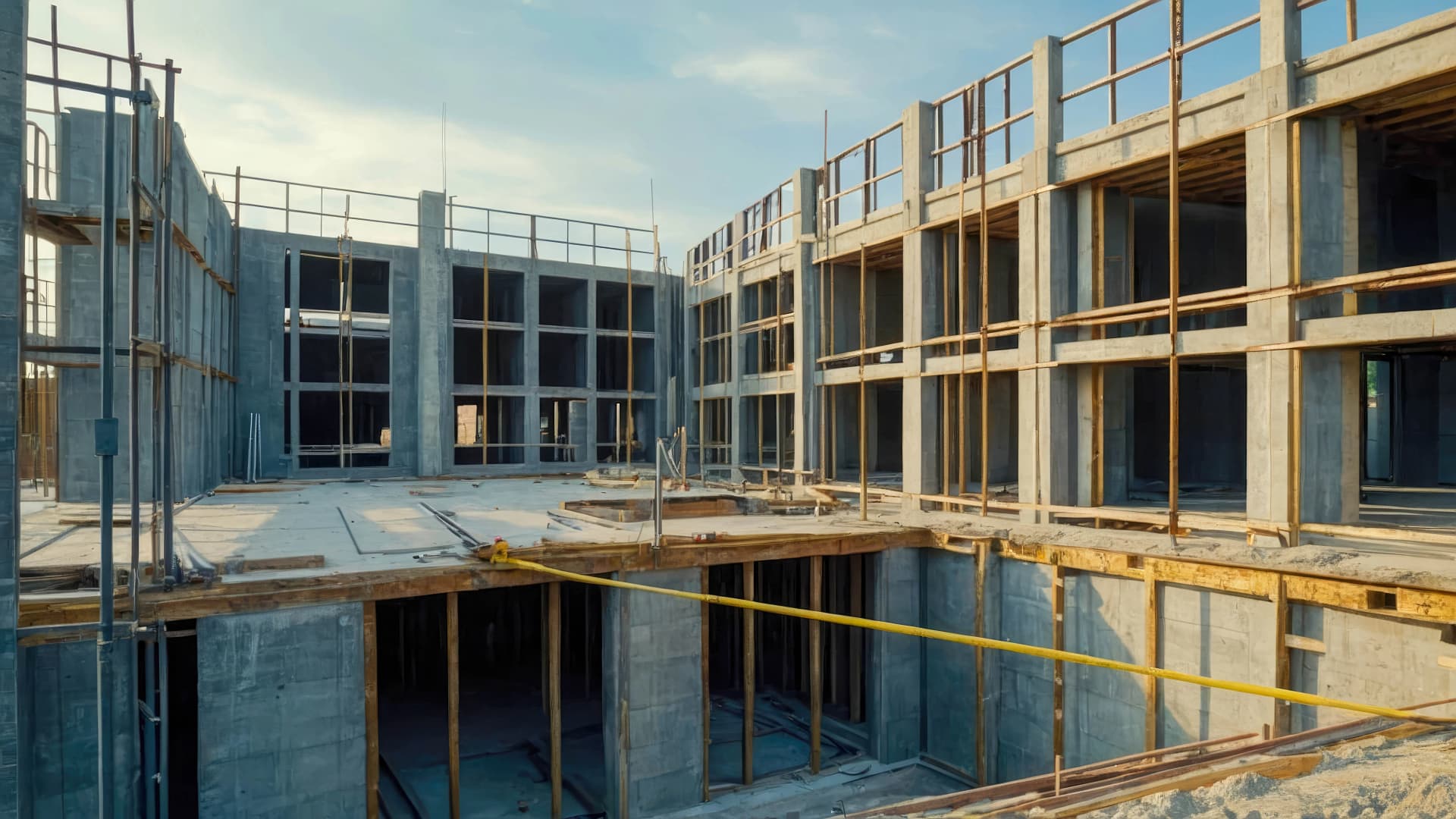
Advisory services under the National Land Planning Act are an important process for reviewing whether a district unit plan should be established for the systematic and reasonable development or management of a particular area.
A district unit plan is a detailed plan established as an urban or county management plan to comprehensively improve the appearance, environment, and function of a certain district within a city and to maximize land use.
It is necessary to review whether the area meets the requirements to be designated as a district unit planning zone, or whether it falls within an area that must be designated, and this serves as a key criterion for assessing project feasibility and development potential.
Discretionary Designation
A local government or the Ministry of Land, Infrastructure and Transport may designate areas that require various types of development or management, such as the following.
∙ Areas released from a development-restricted zone, an urbanization-adjustment zone, or similar designations
∙ Areas requiring mixed land use, such as station-influence areas
∙ Idle land or sites left after the relocation of large-scale facilities
∙ Other areas requiring improvement in function or appearance
Mandatory Designation
The areas listed below must be designated as district unit planning zones.
(However, some exceptions may apply.)
∙ Areas of 300,000 m² or more released from an urbanization-adjustment zone or a park
∙ Areas of 300,000 m² or more being changed from a green-belt area to a residential, commercial, or industrial area
Advisory Points
▷ Assessing the applicable criteria, the degree of design freedom, available incentives, and the scope of development when establishing a plan
▷ Analyzing any overlap with other urban planning projects and the relationship with related laws, such as development and redevelopment statutes
▷ Explaining the procedure for drafting a district unit plan to advance the project and the expected time required
3. Advisory Services Under the National Land Planning Act | Specific-Use Areas, Districts, and Zones

Advisory services under the National Land Planning Act treat identifying the designation status of the development site's 'specific-use area, specific-use district, and specific-use zone' and the associated restrictions on activities as an important preliminary step.
These designations are key factors that determine the usability of the land and the permissible scope of development, and they directly affect the future direction of planning and the licensing strategy.
Use District
Use districts are designated through urban and county management plans, and they classify the basic direction of land use.
They are divided into four major categories, namely urban areas, management areas, agricultural and forestry areas, and natural environment conservation areas, and urban areas are further subdivided into residential, commercial, industrial, and green-space zones.
Major Category | Subcategory | Description |
Urban Area | Residential Zone | Protection of residential peace and the living environment |
Commercial Zone | Promotion of commercial and business convenience | |
Industrial Zone | Efficient support of industrial activity | |
Green-Space Zone | Environmental protection and prevention of disorderly sprawl | |
Management Area | Conservation Management Area | Conservation of the natural environment required |
Production Management Area | Support of agriculture, forestry, and fisheries | |
Planned Management Area | Planned management of areas where urbanization is possible | |
Agricultural and Forestry Area | Agricultural and Forestry Area | - |
Natural Environment Conservation Area | Natural Environment Conservation Area | - |
※ For areas where no use district has been designated, the restrictions applicable to a ‘natural environment conservation area’ apply.
※ Where an urban or management area has not been subdivided, the standards for a ‘conservation green-space zone’ and a ‘conservation management area,’ respectively, apply.
Use Districts
A use district is an area designated within a use zone to impose additional behavioral restrictions or guiding regulations in order to achieve a specific objective.
Category | Description |
Scenic District | Preservation and formation of scenery |
Height District | Restriction on building height |
Fire Prevention District | For the purpose of fire prevention |
Disaster Prevention District | For the purpose of disaster prevention |
Protection District | Protection of national heritage, key facilities, and the like |
Settlement District | Improvement of settlements in non-urban areas |
Development Promotion District | Concentrated development of specific functions |
Specific Use Restriction District | Restriction on the location of harmful facilities |
Mixed-Use District | Promotion of mixed land use |
※ The building-to-land ratio, floor area ratio, height, color, landscaping, and similar matters may be separately restricted by ordinance for each district.
※ In districts such as Height Districts and Disaster Prevention Districts, construction is not permitted where it exceeds the matters set forth in the plan.
Use Areas
A use area is a spatial unit designated for the efficient management of a city and the achievement of specific objectives, and within such an area, restrictions may apply that are stronger than those of ordinary use zones or districts.
Category | Description |
Development Restriction Area | Prevention of urban sprawl, environmental preservation |
Urban Natural Park Area | Securing of leisure and rest space |
Urbanization Adjustment Area | Deferral of urbanization and phased development |
Fishery Resources Protection Area | Protection of fishing grounds and fishery resources |
Urban Innovation Area | Creative restructuring of space |
Mixed-Use Area | Improvement of deteriorated areas and mixed use of land |
Urban or Gun Planning Facility Three-Dimensional Mixed-Use Area | Three-dimensional use of infrastructure |
Specific Use Restriction District | Restriction on the location of harmful facilities |
Mixed-Use District | Promotion of mixed land use |
Advisory Points
▷ Organizing whether development activities are possible and any applicable restrictions
▷ Analyzing the applicable regulations and development capacity where detailed use designation is lacking
▷ Reviewing the need to modify the district unit plan or the urban or gun management plan
4. Advisory on the National Land Planning Act | Permit for Development Activity

Advisory on the National Land Planning Act is the stage of determining whether the planned activity at a development site falls within the scope subject to a development activity permit and reviewing the related procedures and requirements.
This is a necessary review item for identifying the likelihood of permits and approvals, the time required, and administrative risks before a project proceeds. Because the scope ranges widely from the installation of small structures to large-scale site development, the type, scale, and location of the activity, as well as the interpretation of the relevant statutes, must be accurate.
Types of Development Activity
Under Article 56 of the National Land Planning Act, a person who intends to carry out the following activities must obtain a development activity permit from the head of the competent local government.
Category | Description of Activity |
Construction of buildings | New construction, extension, reconstruction, and other work on buildings under Article 2 of the “Building Act” |
Installation of structures | Installation of artificial structures that are not buildings |
Alteration of land form and quality | Cutting, filling, leveling, paving, reclamation, and the like (excluding cultivation purposes) |
Extraction of earth and stone | Extraction of soil, gravel, rock, and the like (provided that alteration of land form and quality is excluded) |
Division of land | Division without permission under the relevant statutes, division below the restricted division area, a width of 5m or less, and the like |
Piling of objects | Piling objects on land outside a designated area for one month or longer |
※ Activities under an urban or county planning project are excluded from the scope subject to a development activity permit.
Minor Activities Exempt from Permit Requirements
The following minor development activities may be carried out without a permit; however, in the case of emergency measures, a report is required within one month.
Category | Exemption Details |
Buildings | Small buildings not subject to a permit or report, and certain temporary buildings |
Structures | Small-scale structures below the standard |
Alteration of land form and quality | Cutting or filling within a height or depth of 50cm, and the like |
Extraction of earth and stone | Small-scale extraction |
Division of land | Incorporation into public facilities, division permitted for the construction of a private road, and the like |
Piling of objects | Piling of objects within the area and weight standards (green-belt areas, management areas, and the like) |
※ The specific standards may be strengthened by local ordinance.
Summary of the Permit Procedure
Submission of a plan that includes the securing of infrastructure, the prevention of hazards, and landscape and planting
② Decision on whether to grant the permit
In principle, processed within 15 days (excluding the period for deliberation and consultation)
③ Conditional permit possible
Conditions such as the installation of infrastructure may be imposed
④ No re-permit required for minor changes
A reduction within 5% of the total floor area, correction of errors, and the like are exempt from a re-permit
Completion Inspection and Performance Guarantee
Upon completion of a development activity (installation of a structure, alteration of land form and quality, or extraction of earth and stone), a completion inspection must be obtained, and the deposit of a performance guarantee may be required if necessary.
A performance guarantee is a system intended to secure the performance of the installation of infrastructure, the prevention of environmental pollution, planting, and the like, and it is exempted for projects of the State or local governments.
Areas Restricted from Development Activity Permits
In the following areas, a development activity permit may be restricted for up to 3 years according to urban planning needs, and in some areas an extension of 2 years is also possible.
Areas Subject to Possible Restriction
∙ Areas with a risk of damage to the landscape or environment
∙ Areas with a high likelihood of change while an urban or county plan is being established
∙ District unit planning zones and infrastructure burden zones
Advisory Points
▷ Review of activities that may be carried out without a permit and the scope under local ordinances
▷ Advance determination of the conditions for installing infrastructure and whether a performance guarantee will be borne
▷ Confirmation of whether the area is included in a restricted zone and the status of the urban planning that has been established
5. National Land Planning Act Advisory | Checklist

National Land Planning Act advisory is the process of legally reviewing the development feasibility of a project site and identifying licensing and permit risks in advance.
Organizing the main review items through the checklist below before establishing a plan can minimize unexpected regulations or procedural delays and allow the project to proceed efficiently.
Category | Main Review Items |
1. Confirmation of Basic Status | Confirmation of basic land information, such as lot number, land category, area, and owner |
Review of the land use plan confirmation document, including confirmation of the use zone, district, and area | |
Confirmation of whether special areas, such as a district unit plan zone or a development restriction zone, are included | |
2. Analysis of Designation Status | Review of the urban or county master plan and confirmation of the long-term spatial structure and direction |
Confirmation of the urban or county management plan and identification of the content regarding use designation, infrastructure, and urban development | |
Whether urban planning facilities are designated and whether the site falls within planned facilities, such as roads or parks | |
Confirmation of consistency with higher-level plans and analysis of connectivity with metropolitan and national plans | |
3. Whether Development Activity Permission Applies | Determination of whether the activity constitutes a development activity, such as construction, change of land form, extraction of earth and stone, or placement of objects |
Review of items exempt from permission, including confirmation of minor activities and exception provisions | |
Review of the possibility that a permission restriction zone may be designated | |
Conditions for installing infrastructure, including whether securing infrastructure such as roads and water and sewage systems is necessary | |
Whether a performance guarantee obligation applies | |
4. Review of the District Unit Plan | Review of whether the site is subject to discretionary or mandatory designation |
Confirmation of the feasibility of drafting a plan, including the procedure, degree of freedom, and incentives for establishing a district unit plan | |
Whether an existing plan applies | |
Review of the development scope and overlap, including whether there is overlap with other plans and the determination of the development boundary line | |
5. Adjacent Plans and Overlapping Regulations | Review of the relationship with adjacent projects and the possibility of boundary overlap and plan duplication |
Distinction in application between the Urban Development Act, the Maintenance Act, and others | |
Confirmation of incidental licensing and permit items, such as environmental impact assessment and traffic impact analysis | |
Confirmation of the possibility of linking with adjacent roads, infrastructure, and public facilities | |
6. Setting Strategy and Implementation Direction | Determination of whether the development plan complies with the current statutes |
Prediction of amendable ordinances and the time required for plan changes | |
Establishment of a strategy to minimize project risks, including licensing and permit procedures and consultations on infrastructure |
Assistance System of Construction Specialist Attorneys
This law firm has many construction specialist attorneys registered with the Korean Bar Association, as well as specialist attorneys with an average of more than 10 years of experience.
Accordingly, the firm can provide practical advisory on matters ranging from development restrictions and the rejection of licenses and permits to charges for compelling performance.
If you need assistance with legal review and risk prevention from the early stages of a project, you may request the assistance of a construction specialist attorney at any time.
See More


Watch related video content
for this case study.

What is your strategy for compensation for construction defects?