




CONTENTS
- 1. School Violence Countermeasures Deliberation Committee | Legal Basis for the Establishment of the School Violence Committee

- - Elements of the Composition of the Deliberation Committee's Members
- - Disqualification in Composing the Members
- 2. School Violence Countermeasures Deliberation Committee | Operation of the School Violence Committee and the Manner of Deliberation
- - Matters and Manner of Deliberation by the School Violence Committee
- 3. School Violence Countermeasures Deliberation Committee | Response Strategy from the Offending Student's Standpoint
- - Measures Among the School Violence Committee's Measures That May Be Deleted
- - Record the Facts From the Day You Are Identified
- - Preparing for Appearance Before the School Violence Committee and Points to Note
- - Procedures for Contesting Measures, Such as Administrative Adjudication and Administrative Litigation
- 4. School Violence Countermeasures Deliberation Committee | Response Strategy from the Victimized Student's Standpoint
- - Objective Proof of the Facts Is Key
- - You Must Appear in Person and Give a Statement
- - Contesting the School Violence Committee's Measures and Additional Responses
- 5. School Violence Countermeasures Deliberation Committee | Common Checklist

1. School Violence Countermeasures Deliberation Committee | Legal Basis for the Establishment of the School Violence Committee
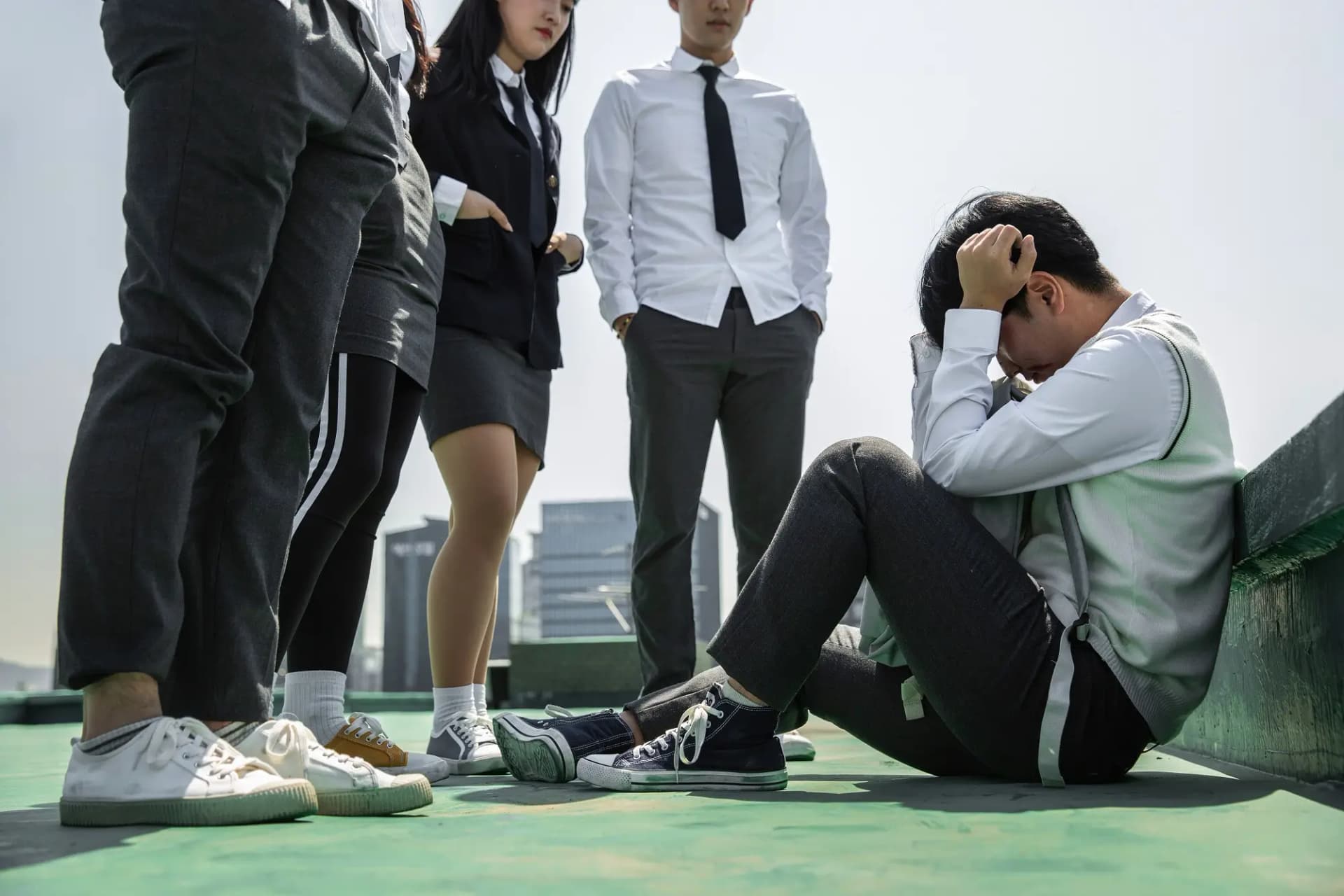
The School Violence Countermeasures Deliberation Committee is a committee established pursuant to Article 12 of the 🔗School Violence Prevention Act.
When a school violence case arises, the school violence committee investigates the facts, determines measures for the protection of the victimized student and the guidance and discipline of the offending student, and performs a quasi-judicial role in mediating the dispute.
Where the offending student and the victimized student belong to the jurisdictions of different District Offices of Education, two or more District Offices of Education may jointly constitute the school violence committee after reporting to the Superintendent of Education.
 Elements of the Composition of the Deliberation Committee's Members
The deliberation committee is composed of not fewer than 10 and not more than 50 members, and at least one-third of all members must be appointed from among the parents of students at schools within the jurisdiction of the relevant District Office of Education.
- The director-general or division head in charge of student guidance affairs at the relevant District Office of Education
- A person who has served as a teacher or education specialist
- Parents
- A judge, prosecutor, or attorney
- A police officer within the jurisdiction (mandatory)
- A person with a physician's qualification
- Other persons with specialized knowledge of school violence
Disqualification in Composing the Members
To ensure fair deliberation, a member is disqualified where the member, or the member's spouse or relative, has a direct relationship with the victimized or offending student in the case.
If a party to the dispute has grounds to doubt a member's fairness, such as a personal relationship, the party may file a written application for challenge, and the deliberation committee determines whether to grant the challenge by resolution.
A member subject to disqualification or challenge may not participate in the relevant resolution and may also recuse themselves.


2. School Violence Countermeasures Deliberation Committee | Operation of the School Violence Committee and the Manner of Deliberation
The deliberation committee must be convened where any of the following grounds exists.
• A request by one-quarter or more of the members, the principal, or a victimized student or guardian
• Where a report or notification of school violence has occurred
• Where a threat or retaliation by the offending student has been reported or notified
• Where the chairperson deems it necessary
When convening a meeting of the school violence committee, the Superintendent of the District Office of Education must notify the offending student and the victimized student and their guardians of the date and time, place, agenda, requested measures, and other results.
A meeting is opened with the attendance of a majority of the members on the register, and a resolution is passed with the affirmative vote of a majority of the members present.
Minutes are mandatorily prepared and preserved, and at the request of a victimized or offending student or guardian, they may be inspected and copied with personal information excluded.
Matters and Manner of Deliberation by the School Violence Committee
The school violence committee deliberates on the prevention of and countermeasures against school violence, the protection of victimized students, the education and discipline of offending students, and the mediation of disputes between victims and offenders.
Deliberation is, as a rule, conducted in person; however, in unavoidable cases such as remote island and mountainous regions, it may also be conducted by telephone, video, or in writing.
During the deliberation, the opinions of experts such as pediatric and adolescent medicine physicians, psychiatric specialists, and psychologists may be heard, and where a victimized student or guardian so requests, the opinions of experts must be heard.
In all deliberation proceedings, persons concerned may not disclose secrets or personal information learned in the course of their duties, and meetings relating to measures for victims and offenders are not open to the public.
A person who discloses a secret is liable to imprisonment for not more than one year or a fine not exceeding 10 million won.
3. School Violence Countermeasures Deliberation Committee | Response Strategy from the Offending Student's Standpoint

Following deliberation by the School Violence Countermeasures Deliberation Committee, a decision of either no measures or 🔗school violence committee disciplinary measures is rendered against the offending student.
1. A written apology to the victimized student
2. A prohibition on contact, threats, and acts of retaliation (including acts using an information and communications network) against the victimized student and the reporting or accusing student
3. Service at the school
4. Community service
5. Completion of special education or psychological treatment by experts within or outside the school or by an institution designated by the Superintendent of Education
6. Suspension from attendance
7. Transfer to another class
8. Transfer to another school
9. Expulsion (excluding offending students in the compulsory education process)
Measures must be taken within 14 days, and measures from suspension from attendance through expulsion may be imposed concurrently or have their content aggravated.
Measures Among the School Violence Committee's Measures That May Be Deleted
In the case of an offending student, the deletion of the school violence committee's measures from the school records is naturally a matter of concern.
Among the measures, measures Nos. 1, 2, and 3 may be deleted upon graduation.
Measures Nos. 4 through 7 may be deleted upon graduation after deliberation by the dedicated body immediately before graduation, in which case the degree of the student's remorse and positive behavioral change are taken into account.
In addition, measure No. 8 is deleted four years after the date of graduation, and No. 9, expulsion, cannot be deleted at all.
Record the Facts From the Day You Are Identified
If you are a 🔗school violence offender who has been required to appear before the school violence committee, you should first record the facts, by date, regarding the case identified as school violence.
You should organize, without omission, the situation as you remember it, the presence of surrounding witnesses, whether there is CCTV, and the like, and, before preparing a written statement, discuss the matter fully with your parents to distinguish, consistently, the facts to be admitted from the facts to be denied.
Preparing for Appearance Before the School Violence Committee and Points to Note
If you have been notified of the school violence committee's schedule, you must appear.
In this case, appearance by proxy is not permitted, and an attorney may attend together.
What to prepare before appearing is 1) a written statement, a written opinion, and evidentiary materials, and 2) statements of classmates, CCTV captures, and SNS messages.
When appearing, avoid emotional words and conduct and explain logically, focusing on the facts.
The guardian should help reduce the level of the measures by explaining the student's will to reflect, the guidance plan within the home, and the like.
Procedures for Contesting Measures, Such as Administrative Adjudication and Administrative Litigation
If a school violence committee's measure is deemed unjust, you may request remedy of your rights through administrative adjudication (within 90 days from the date of becoming aware / within 180 days from the date it occurred) or administrative litigation (within 90 days from the date of becoming aware / within one year from the date it occurred).
When contesting a measure, you must gather new evidence and again assert the remedy of your rights, and if you miss the deadline, it is difficult to obtain remedy.
4. School Violence Countermeasures Deliberation Committee | Response Strategy from the Victimized Student's Standpoint
The school violence committee has provided protective measures for the victimized student.
Such measures are carried out within 7 days, with the consent of the victimized student's guardian.
- Psychological counseling and advice by experts within or outside the school
- Temporary protection
- Treatment and recuperation for treatment
- Transfer to another class
- Other measures for the protection of the victimized student
Objective Proof of the Facts Is Key
If you are to appear on the victimized student's side before the School Violence Countermeasures Deliberation Committee, gathering 🔗school violence evidence to prove the facts is key.
You should gather all available supporting materials, such as text and SNS capture images, CCTV footage, and recordings of witness statements, and prepare a consistent written statement of harm.
In particular, it is also advisable to communicate with the school, the homeroom teacher, and the parents' association and check that the content of the investigation is not distorted.
You Must Appear in Person and Give a Statement
Facing the offending student will not be easy, but the victimized student must also appear in person before the school violence committee and give a statement.
Using a written statement or notes, state the facts without omission, and if there was additional harm or secondary offending, be sure to emphasize it.
If the victimized student is experiencing psychological difficulties, it is also advantageous to prepare and submit a physician's or counselor's medical certificate, opinion, or the like.
🔗Referral to a school violence attorney—if you have received one and retained an attorney, the victimized student's side may also bring an attorney to the school violence committee.
Contesting the School Violence Committee's Measures and Additional Responses
If the measures against the offender are deemed unjust or insufficient, the victimized student may also contest them through administrative adjudication or administrative litigation.
If, during the proceedings to contest the measures, an application for a stay of execution of the measure against the offending student is granted, the victimized student and the student's guardian may request separation from the offender.
The dedicated body determines the method of separation as follows.
In addition, consolation money, treatment costs, and the like may be claimed through a separate 🔗school violence civil suit, and apart from deliberation by the School Violence Countermeasures Deliberation Committee, you may request criminal punishment of the offending student through a criminal complaint or the like.
5. School Violence Countermeasures Deliberation Committee | Common Checklist

A school violence matter is a serious matter that can shake the future of both the victimized and offending students.
If you are to respond on your own, we recommend that you at least be thorough with recording the facts, strictly observing deadlines, and securing materials.
If necessary, we hope you will refer to the guidelines and forms of the Office of Education website, the school counseling room, and public institutions, and actively establish a response plan.
Should you need professional consultation with an attorney, you may turn to Daeryun's School Violence Response Group.
Specialist attorneys with experience as school violence deliberation committee members, Office of Education student disciplinary mediation committee members, and the like will advise you on your matter through a 🔗school violence attorney legal consultation booking.










