
CONTENTS
- 1. School Violence Victim | Signs Shown by a Victim Student

- - Signs of Harm Shown by a Victim Student
- 2. School Violence Victim | Response Measures When Harm Occurs
- - Measures to Secure Evidence of School Violence Harm
- - Who May Report School Violence and How
- 3. School Violence Victim | Responding to the School Violence Countermeasures Committee
- - Victim Student's Statement and Preparation of Materials
- - The Committee's Protective Measures for the Victim
- - How to Contest the Committee's Measures Against the Assailant Student?
- 4. School Violence Victim | Coordinated Response Through Civil Litigation and Criminal Complaint
- - The Subject of a Criminal Complaint and the Applicable Laws
- - Civil Claim for Damages
- - Points of Caution When Settling with the Assailant's Side
- 5. School Violence Victim | Protecting the Victim Student Is the Top Priority

1. School Violence Victim | Signs Shown by a Victim Student
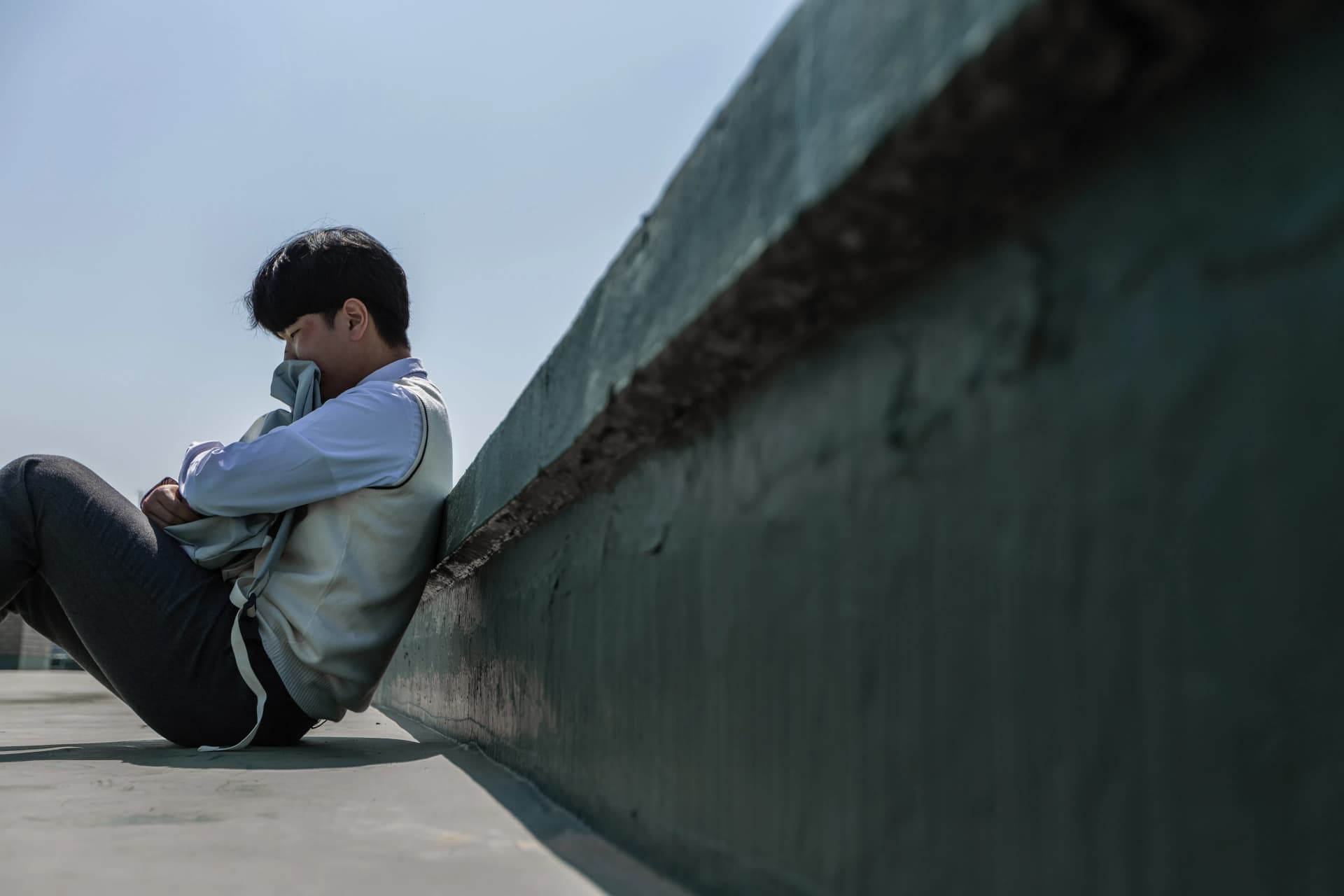
A school violence victim may suffer serious physical and psychological wounds and may experience severe aftereffects.
School violence takes many forms, including assault, ostracism, verbal abuse, and cyber harassment, and the harm may be sustained over the long term throughout school life, so signs such as the victim student's discontinuation of schooling, depression, and avoidance of social contact tend to appear.
The victim student and the parents should bear in mind the possibility that the internal school procedures alone may not provide sufficient measures, and should accurately understand the step-by-step flow of response, from reporting within the school and responding to the School Violence Countermeasures Committee, through to subsequent civil and criminal complaints.
 Signs of Harm Shown by a Victim Student
- The child's expression is darker than usual and the child is startled even by trivial things.
- The child is reluctant to go to school or wishes to be absent or transfer schools.
- Wounds or bruises appear frequently for no apparent reason.
- The child wants to be alone and makes extreme doodles.
- The child reacts indifferently even to gossip about friends and is excluded.
- During breaks, the child avoids people and hides in places such as the restroom.
- Loss or damage of belongings becomes frequent, and supplies often go missing.
- The child tries to avoid participating in group activities or school events.
- The child checks the mobile phone frequently and appears anxious, and reacts sensitively when family members try to look at it.
- The child's SNS posts or profile suddenly turn gloomy or negative.


2. School Violence Victim | Response Measures When Harm Occurs

If you have resolved to respond after school violence has occurred, we advise that you first organize the facts and secure evidence before reporting the school violence.
Because such evidence is used in the same way in the subsequent School Violence Countermeasures Committee procedure and in civil and criminal complaints, it is advisable to organize even seemingly trivial materials without omission.
[How a School Violence Victim Should Organize the Facts of the Harm]
Measures to Secure Evidence of School Violence Harm
- Photograph wounds or bruises immediately, and obtain a hospital medical certificate, treatment confirmation, and prescription
- Capture messages, SNS posts, and chat room content as screenshots together with the dates
- Do not discard damaged belongings, torn uniforms, and other physical evidence; preserve them as they are
- Secure written statements from witnesses or testimony from classmates
- Request official documents such as the school records and the homeroom teacher's counseling log, inspect them, and save copies
Who May Report School Violence and How
🔗The school violence reporting procedure may be initiated by anyone, including the school violence victim student, a guardian, or a teacher.
Typically, the matter is first reported to the homeroom teacher, and once the principal receives the report, the dedicated school violence body or the School Violence Zero Center must investigate the matter without delay.
The school promptly carries out interim protective measures, such as investigating the facts of the harm, separating the assailant and victim students, and providing temporary protection and treatment; and where it is difficult to resolve the matter through the principal alone, or where dispute mediation fails, the 🔗School Violence Countermeasures Committee must be convened to investigate the matter and respond.
In this case, because the protection of the victim student's right to learn takes priority under the statutes on the prevention of and response to school violence, the victim student may request measures such as a change of class or counseling and treatment.
During the reporting process, the assailant student or his or her parents may offer inducements to the effect that the matter should not be escalated; however, in such a case you should not compromise or give up evidence, but should carry the procedure through to the end.
3. School Violence Victim | Responding to the School Violence Countermeasures Committee
The School Violence Countermeasures Committee is composed of teachers; external experts in fields such as law, medicine, and education; and parent members. The Committee deliberates on the following matters.
- Prevention of and countermeasures against school violence
- Protection of the victim student
- Education, guidance, and discipline of the assailant student
- Dispute mediation between the victim student and the assailant student
- Other matters prescribed by Presidential Decree
Victim Student's Statement and Preparation of Materials
A school violence victim must give a statement of the facts at the meeting of the School Violence Countermeasures Committee.
At this time, it is important to give a statement consistent with the initial report, and care must be taken that it does not contradict the evidentiary materials that have been submitted.
It is helpful for a parent and a trustworthy guardian to attend together to reduce psychological anxiety, and to rehearse the flow of the statement in advance.
The Committee's Protective Measures for the Victim
After deliberating on the matter, the School Violence Countermeasures Committee carries out the following protective measures for the victim.
1. Psychological counseling and advice by experts within or outside the school
2. Temporary protection
3. Treatment and recuperation for treatment
4. Change of class
5. Deleted
6. Other measures necessary for the protection of the victim student (referral to a medical institution, support for the deletion of cyber-violence footage, etc.)
In this case, the costs of the victim student's psychological counseling, temporary protection, and treatment and recuperation, etc., must be borne by the assailant student's guardian. (The principal, the School Safety Mutual Aid Association, etc., may pay them first and then exercise a right of reimbursement.)
Where absences are necessary for such measures, they may be counted as included in the days of attendance.
In addition, it is ensured that the very fact of having received protective measures does not operate to the disadvantage of the school violence victim in matters such as grade assessment.
How to Contest the Committee's Measures Against the Assailant Student?
The School Violence Countermeasures Committee imposes on the assailant student dispositions up to the ninth category, including a written apology; a prohibition on contact with, threats against, or retaliation against the victim student; service within the school; community service; completion of special education or psychological treatment; suspension of attendance; change of class; transfer of schools; and expulsion.
It may also render a “no measure” decision following deliberation.
From the school violence victim's perspective, if the assailant receives a “no measure” decision, or a disposition that is excessively lenient in relation to the matter, the victim may contest it through an administrative appeal (adjudication) or 🔗school violence administrative litigation.
If an application for a stay of execution of the measure against the assailant student is granted, the school violence victim may request separation from the assailant student.
See More
4. School Violence Victim | Coordinated Response Through Civil Litigation and Criminal Complaint
Internal school discipline alone makes it difficult to eradicate the assailant student's violent conduct, and compensation for the harm is likewise limited.
Accordingly, separately from the measures of the School Violence Countermeasures Committee, cases of pursuing 🔗a school violence criminal complaint in parallel with civil litigation are increasing.
The Subject of a Criminal Complaint and the Applicable Laws
School violence may be subject to 🔗assault (Article 260 of the Criminal Act), infliction of bodily injury (Article 257), intimidation (Article 283), coercion (Article 324), and the like.
In addition, cyber violence carried out on SNS or in chat rooms may be the subject of an additional complaint for violation of the Network Act.
A school violence victim files a criminal complaint with the competent police station or the like.
The complaint must specifically attach the facts of the harm and evidentiary materials, and where the victim student is a minor, a legal representative such as a parent prepares it jointly.
Thereafter, the police investigate the victim and the assailant student separately.
During the investigation, an attorney may be retained and asked to be present, and the statements should be organized so that the school investigation and the criminal investigation are not at odds.
Civil Claim for Damages
🔗Through school violence civil litigation, not only the assailant student but also the parents (legal representatives) may bear liability for damages.
Ordinarily, medical expenses, consolation money for emotional distress, and additional losses arising from the discontinuation of schooling are the subject of the claim.
If harm was suffered because the teacher and the school responded passively to the school violence matter, a claim for damages may also be brought against the teacher, the school corporation, and the local government.
The court assesses consolation money by comprehensively considering the degree of the assailant's violence, the victim student's emotional distress, and the possibility of recovery from the harm.
The repetitiveness and deliberateness of the school violence, and the assailant's parents' responsibility for neglect, are also reflected in the amount of consolation money.
However, since the burden of proving the harm in civil litigation rests on the victim's side, all materials, such as the School Violence Countermeasures Committee's investigation report and the homeroom teacher's written statement, should be used as evidence.
Points of Caution When Settling with the Assailant's Side
In criminal proceedings, the assailant student's side may offer a settlement amount in advance in order to avoid excessive punishment.
A settlement depends on the will of the student victim's side, and even if a settlement is reached, the civil right to claim damages exists separately, so a damages action is possible apart from the settlement amount.
5. School Violence Victim | Protecting the Victim Student Is the Top Priority
A school violence victim may not be sufficiently protected by the internal school procedures of the School Violence Countermeasures Committee alone.
Therefore, attention should be paid to gathering evidence and organizing the facts from the reporting stage, and where necessary, criminal complaints and civil litigation should be actively used so that substantive recovery from the harm becomes possible.
Above all, what matters most is the substantive remedy and psychological recovery of the victim student.
If you are not satisfied with the outcome of the School Violence Countermeasures Committee, you should protect your rights through subsequent procedures such as an administrative appeal (adjudication) and litigation, and the school violence victim student should not bear it alone; parents, teachers, and experts should join their efforts together.
It is a time when society as a whole should take an interest, provide the victim with a substantive opportunity for recovery, and hold the assailant strictly accountable.
So that the victim student and the family can respond to the end without becoming worn down, accurate information and legal support must be firmly in place, and to that end 🔗an attorney specializing in school violence will do its utmost.
Our firm provides, for the first time among law firms, services such as the dispatch of security personnel to protect the personal safety of school violence victims and a 🔗security service, which you may wish to take into account in your consultation and retention of an attorney.