
CONTENTS
- 1. Partition of Co-owned Property Lawsuit | In What Cases Is It Needed?

- - Need Arising from Inheritance
- - Need Arising from Disposal of a Jointly Purchased Property
- 2. Partition of Co-owned Property Lawsuit | Who May File It and By When?
- - Party Entitled to File
- - Time of Filing
- - Restriction Possible by Prior Agreement
- 3. Partition of Co-owned Property Lawsuit | By What Method Is the Property Partitioned?
- - Partition in Kind
- - Partition by Payment
- - Partition by Auction
- 4. Partition of Co-owned Property Lawsuit | By What Procedure Does It Proceed?
- - Preparation and Filing of the Complaint
- - Preparation for Pleading and Hearing
- - Judgment and Execution
- 5. Partition of Co-owned Property Lawsuit | How Is the Registration of Ownership Transfer Applied For?
- - Joint Application as the Principle
- - Attached Documents
- - Application Procedure
- 6. Partition of Co-owned Property Lawsuit | How Should It Be Prepared?
- - Assistance System of Real Estate Specialist Attorneys

1. Partition of Co-owned Property Lawsuit | In What Cases Is It Needed?

A partition of co-owned property lawsuit is a lawsuit filed where real estate or an asset is co-owned by two or more persons and the co-ownership can no longer be maintained or there is no need to maintain it.
 Need Arising from Inheritance
Where real estate is inherited property, the co-heirs inherit the property in the form of co-ownership shares.
In this case, if no partition by agreement is reached among the heirs, the property remains in a state of co-ownership, and any of them may file a lawsuit claiming partition of co-owned property.
In particular, where the property is physically difficult to divide, as with real estate, the court determines whether partition in kind is possible and, if not, proceeds with liquidation by the method of partition of the proceeds following an auction.
Need Arising from Disposal of a Jointly Purchased Property
Where, after jointly purchasing real estate for purposes such as investment, a dispute arises among the co-owners over differences of opinion or matters of disposal, a partition of co-owned property lawsuit may be necessary.
Conflicts over the distribution of profits, the timing of disposal, and the like readily arise among investors, and in many cases it is realistically difficult to continue joint holding.


2. Partition of Co-owned Property Lawsuit | Who May File It and By When?
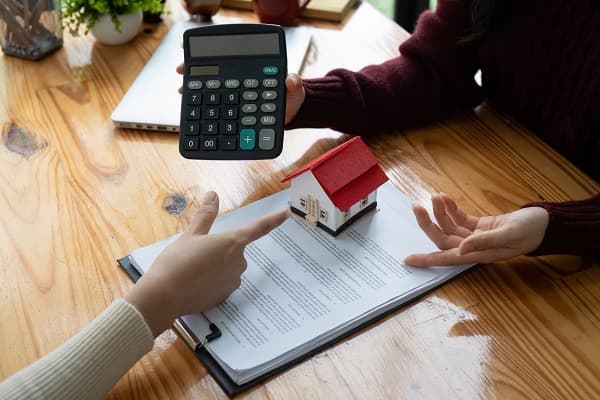
A partition of co-owned property lawsuit may be filed by any co-owner, and there is no legal restriction on the time of filing.
In other words, any one of the co-owners may file the lawsuit at any time when seeking to clarify his or her own share.
Party Entitled to File
The right to claim partition of co-owned property is a right recognized for every co-owner.
A co-owner may file the lawsuit independently without needing the consent of the other co-owners, and the claim for partition itself is valid even if the other co-owners object.
Category | Party Entitled to Claim |
Plaintiff | Any co-owner |
Defendant | All remaining co-owners in the co-ownership relationship |
Time of Filing
The right to claim partition of co-owned property is a right that may be exercised at any time, and under Article 268 of the Civil Act, even where there is an agreement to prohibit partition, it is valid so long as its term does not exceed 5 years.
However, where partition has been prohibited for a certain period by agreement or by statute, a lawsuit may not be filed during that period.
Restriction Possible by Prior Agreement
By agreement among the co-owners, partition may be prohibited for a maximum of 5 years, and once this period has elapsed, a lawsuit may be filed again.
In particular, for real estate or commercial premises intended for a joint business, such agreements are frequently used in practice.
3. Partition of Co-owned Property Lawsuit | By What Method Is the Property Partitioned?

Prior to a partition of co-owned property lawsuit, the co-owners may, in principle, freely determine the matter by agreement.
However, where no agreement is reached, a lawsuit claiming partition of co-owned property is necessary in order to hear the court's determination (Article 269 of the 「Civil Act」).
At this point, the court selects the most appropriate method among partition in kind, partition by payment, and partition by auction, depending on the case.
Partition in Kind
Partition in kind is the method of actually dividing the co-owned property so that each co-owner holds sole ownership.
This is the principal method of partition of co-owned property and is given priority consideration where it is possible to divide the co-owned property without damaging it.
▷The area or value may vary depending on each co-owner's share
▷ Not permitted where the partition would significantly impair the overall value
Partition by Payment
Partition by payment is the method whereby some co-owners receive the property in kind and the others are settled for their shares in money.
It is also commonly referred to as mixed partition and is a compromise solution for preserving a certain degree of value.
▷ Applied where partition in kind is incomplete or the imbalance is significant
▷ Each party must be able to secure substantive value corresponding to its share after the partition
However, partition by payment is permitted only where partition in kind is possible but a settlement of shares is required, and if payment is delayed, it may lead to a new dispute.
Partition by Auction
Partition by auction is the method of compulsorily auctioning the co-owned property and distributing the proceeds of the sale among the co-owners according to their shares.
Where partition in kind is impossible or the value of the co-owned property would be significantly impaired, the court selects this method.
▷ Where the real estate has unity in terms of its use, or partition would cause it to lose value
▷ Where, as with residential buildings, methods of partition other than auction are practically difficult
4. Partition of Co-owned Property Lawsuit | By What Procedure Does It Proceed?

A partition of co-owned property lawsuit begins with the filing of a complaint with the court of jurisdiction.
Preparation and Filing of the Complaint
In order to file a lawsuit claiming partition of co-owned property, a complaint containing the following must be prepared.
∙ Personal particulars of the defendant
∙ Purport of the claim (method and purport of partition of the co-owned property)
∙ Cause of the claim (to be stated in detail)
∙ Supporting documents
- Certified copy of the real estate registration record
- Certified copy of the land cadastre
- Contract concerning the co-ownership
- Notice
- Certified copy of the cadastral map, etc.
∙ Attached documents
- The above means of proof
- Duplicate of the complaint
- Receipt for payment of service fees
∙ Description of the real estate
∙ Indication of the co-owners and their shares
For a lawsuit for partition of co-owned property concerning real estate, the court of the place where the real estate is located is the court of jurisdiction.
See More
Preparation for Pleading and Hearing
The court designates a date for pleading, hears the arguments of both sides, and examines the evidence.
At this stage, an appraisal procedure may be conducted as necessary to assess the value of the real estate.
Judgment and Execution
The court renders judgment by various methods such as partition in kind, partition by payment, and partition by auction.
Once the judgment becomes final, the co-owners acquire sole ownership and the like in the partitioned portion.
In this case, the partitioned ownership must be registered through the registration procedure.
5. Partition of Co-owned Property Lawsuit | How Is the Registration of Ownership Transfer Applied For?

Once the partition of co-owned property lawsuit is finalized, each co-owner acquires sole ownership of the partitioned real estate.
At this stage, in order to legally confirm the ownership, the registration of ownership transfer procedure must be carried out, which is the final step of the partition of co-owned property.
Joint Application as the Principle
Registration of ownership transfer by partition of co-owned property is, in principle, a joint application.
Person Entitled to Registration | The person who newly acquires another's share |
Person Obligated to Register | The person who transfers his or her own share |
In other words, both parties to the transfer must jointly apply for registration (Article 23(1) of the 「Registration of Real Estate Act」).
However, where the judgment in the partition of co-owned property lawsuit has become final or a judicial conciliation has been established, the co-owner concerned may apply for the registration of ownership transfer independently by attaching the final and conclusive written judgment or the conciliation protocol.
Attached Documents
In order to apply for registration of ownership transfer, the following attached documents must all be furnished together with the application.
∙ Registration revenue stamps
∙ Power of attorney
∙ Certificate of seal impression
∙ Certified copy (abstract) of the resident registration record
∙ Certified copy of the land cadastre
∙ Co-ownership partition agreement (or the final and conclusive written judgment or conciliation protocol)
Application Procedure
Registration of ownership transfer by partition of co-owned property may be applied for via the internet or by visiting in person.
An electronic application may be made by the party directly, or by an attorney, a judicial scrivener, or the like on the party's behalf.
② Affix the registration revenue stamps
③ Submit the application
④ Receive the registration completion information notice or the registration completion notice
⑤ Confirm the certified copy of the registration record
6. Partition of Co-owned Property Lawsuit | How Should It Be Prepared?

A partition of co-owned property lawsuit is a procedure for requesting, through the court, a compulsory partition where the co-ownership relationship is not dissolved or an agreement is impossible.
To file the lawsuit, you must prove in detail the co-ownership shares, the current status of the subject real estate, the prior negotiation process, and the like.
Item to Prepare | Details and Method of Confirmation |
Confirmation of Co-owners | Confirm the shares and number of persons through a certified copy of the register |
Confirmation of the share ratios is essential | |
Current Status of the Co-owned Property | Survey of the location, area, and current status of the real estate (cadastral map, building register, on-site photographs, etc.) |
Affects the determination of the possibility of partition | |
Organizing the Course of Negotiations | The fact of having attempted partition negotiations, contact records, circumstances of refusal/objection, etc. |
Failure of negotiations must be proved in order to file the lawsuit | |
Preference as to the Method of Partition | Organize the method you prefer among partition in kind, partition by payment, and auction |
The court takes this into account, but the final decision rests with the court | |
Appraisal and Confirmation of Market Value | Ascertain the market value through an appraisal report or actual transaction price information, etc. |
Needed for the method of partition and the distribution | |
Complaint and Supporting Materials | State the purport of the claim and the cause of the claim, and attach a certified copy of the register, materials on the course of negotiations, a location map, photographs, etc. |
Assistance System of Real Estate Specialist Attorneys
Our law firm has on staff a substantial number of certified real estate specialist attorneys registered with the Korean Bar Association, as well as experienced attorneys with an average of more than 10 years of practice.
We are able to provide substantive legal support spanning the entire process, from determining the merits of a claim for partition of co-owned property and designing the method of partition to filing the lawsuit and executing the judgment where partition negotiations fail.
If it is difficult to handle all of the procedures on your own, we recommend proceeding more accurately and promptly with the assistance of a real estate attorney.
See More


Watch related video content
for this case study.

How to respond to auction/encumbrance lawsuits