
CONTENTS
- 1. Key Money Lawsuit | The Concept of Key Money

- - Legal Definition of Key Money
- - Nature of a Key Money Agreement
- 2. Key Money Lawsuit | When a Lawsuit Is Necessary
- - Landlord's Acts Obstructing the Opportunity to Recover Key Money
- - Where a Loss Has Occurred
- 3. Key Money Lawsuit | Requirements and Time Limits for the Lawsuit
- - Requirements for Establishing the Lawsuit
- - Extinctive Prescription
- 4. Key Money Lawsuit | If You Are the Tenant
- - Structure of Proof in the Lawsuit
- - Key Items of Evidence
- 5. Key Money Lawsuit | If You Are the Landlord
- - Response Strategy
- - Proof of Justifiable Grounds
- - Evidence
- 6. Key Money Lawsuit | Checklist
- - Assistance System of Real Estate Specialist Attorneys

1. Key Money Lawsuit | The Concept of Key Money

In a key money (권리금) lawsuit, key money refers to the money paid in consideration for transferring to a new tenant the tangible and intangible value of property that the tenant has built up through business operations, such as its client base, locational advantages, goodwill, and business know-how.
 Legal Definition of Key Money
‘Key money’ refers to the consideration paid by a tenant operating a business in a commercial building, or a person intending to operate such a business, for transferring, or allowing the use of, the tangible and intangible value of property formed by business facilities and equipment, the client base, goodwill, business know-how, the location of the commercial premises, and the like (Article 10-3(1) of the Commercial Building Lease Protection Act).
This is a concept distinct from the deposit and rent.
Nature of a Key Money Agreement
A key money agreement is a civil contract concluded between the existing tenant and the new tenant (Article 10-3(2) of the Commercial Building Lease Protection Act).
Its purpose is for the new tenant to pay a certain sum to the existing tenant and succeed to the value of the business.
Accordingly, the landlord is under no obligation to return the key money, but must not obstruct the tenant's opportunity to recover key money.


2. Key Money Lawsuit | When a Lawsuit Is Necessary

A key money (권리금) lawsuit may be filed where the landlord unjustly obstructs or infringes upon the tenant's opportunity to recover key money.
Article 10-4 of the Commercial Building Lease Protection Act prohibits certain acts by the landlord, and where such a violation occurs, the tenant may claim damages.
Landlord's Acts Obstructing the Opportunity to Recover Key Money
Around the time the lease ends, the landlord must not unjustly obstruct the key money transaction between the tenant and the new tenant arranged by the tenant.
If the landlord commits any of the following obstructive acts, it is deemed an infringement of the opportunity to recover key money.
2. Preventing a person seeking to become a new tenant arranged by the tenant from paying key money to the tenant
3. Demanding from a person seeking to become a new tenant arranged by the tenant rent and a deposit that are significantly higher than warranted in light of the taxes, public charges, the rent and deposit of neighboring commercial buildings, and other burdens relating to the commercial building
4. Otherwise, without justifiable grounds, refusing to conclude a lease agreement with a person seeking to become a new tenant arranged by the tenant
Where a Loss Has Occurred
If the tenant has suffered a pecuniary loss because it was actually unable to recover key money due to the landlord's unlawful obstruction as described above, the tenant may claim damages through a key money lawsuit (Article 10-4(3) of the Commercial Building Lease Protection Act).
The scope of the loss recognized in this case is as follows.
(Provided that the amount is limited to the lower of the key money offered by the new tenant and the key money as of the time the lease ended.)
3. Key Money Lawsuit | Requirements and Time Limits for the Lawsuit

In order to file a key money (권리금) lawsuit, certain legal requirements must be met, and the claim must be brought within the period of extinctive prescription to be afforded legal protection.
Requirements for Establishing the Lawsuit
In order for a tenant to file a claim for damages for key money against the landlord, the following requirements must be satisfied.
: The tenant must arrange a new tenant for the landlord during the period from six months before the end of the lease until the date the lease ends.
② The new tenant's intention to pay key money
: The new tenant arranged by the tenant must have the intention to pay key money to the existing tenant, and that expression of intention must be clear.
③ Existence of an obstructive act by the landlord
: There must be an act by which the landlord obstructs the recovery of key money, such as refusing, without justifiable grounds, to conclude a contract with the new tenant or demanding an excessive deposit or rent.
④ Actual occurrence of a key money loss
: The fact that the tenant was unable to receive key money from the new tenant due to the landlord's obstruction, that is, that a loss actually occurred.
⑤ Causation
: There must be a causal relationship between the landlord's obstructive act and the tenant's key money loss.
In order to prove these requirements, various forms of evidence are needed, such as text messages, emails, draft contracts, recordings of negotiations, and key money proposals.
Extinctive Prescription
The legal time limit within which a tenant whose opportunity to recover key money has been infringed may file a lawsuit is as follows.
: The right to claim damages for key money must be exercised within three years from the date the lease ended; if this period is exceeded, the claim becomes impossible due to extinctive prescription.
4. Key Money Lawsuit | If You Are the Tenant
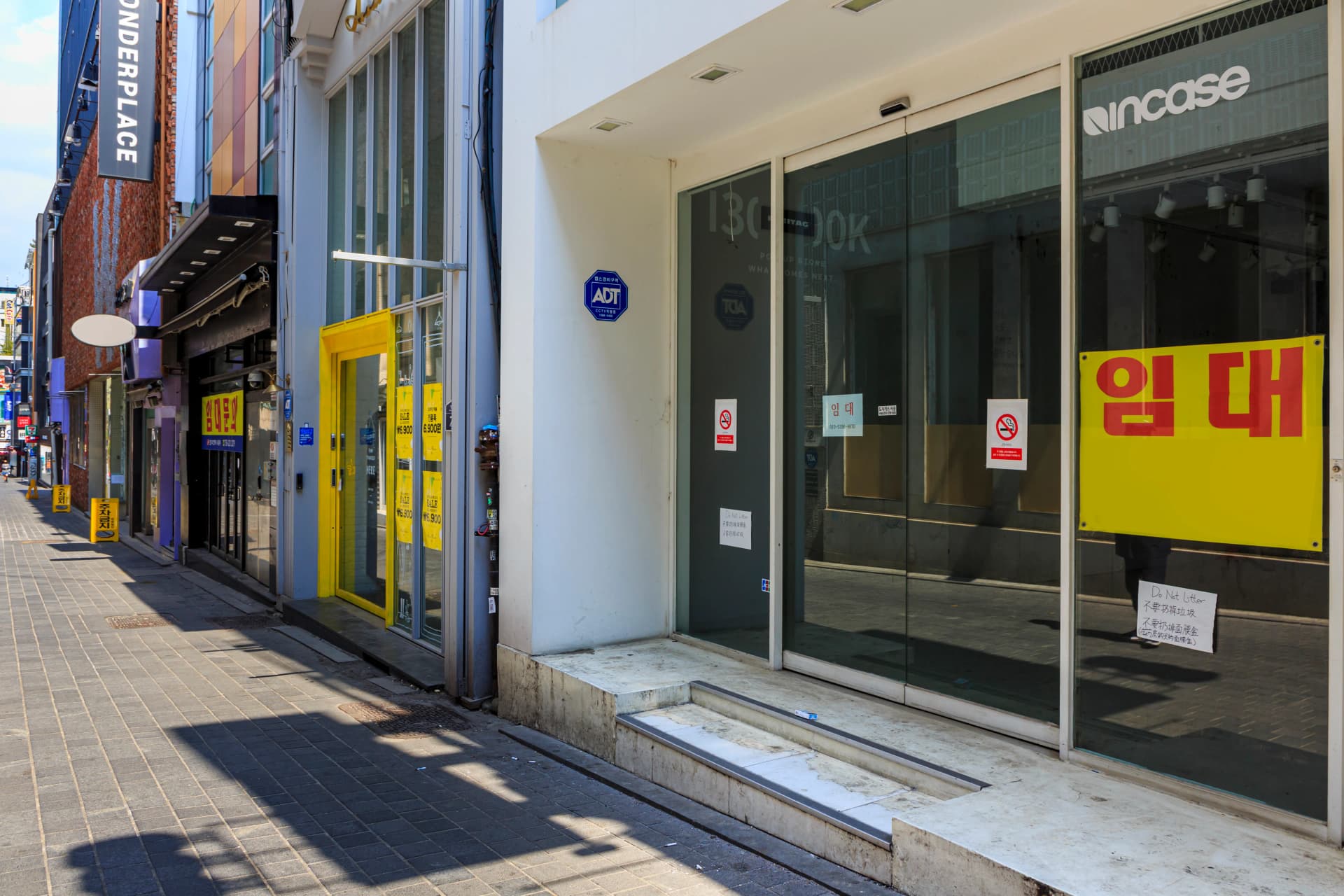
In a key money (권리금) lawsuit, the tenant must assert and prove the fact that there was an obstruction of the recovery of key money, and in this process must gather sufficient key materials and circumstances.
Since the burden of proof rests primarily on the tenant whose opportunity to recover key money was obstructed, it is important to prepare evidence thoroughly before the lawsuit.
Structure of Proof in the Lawsuit
Category | Matters to Be Proved |
① Attempt to recover key money | Whether the tenant contacted a new tenant or attempted to conclude a key money agreement |
② Existence of a legitimate new tenant | Whether a new tenant who intended to pay key money actually existed |
③ Obstructive act by the landlord | Whether the landlord refused to conclude a contract with the new tenant without justifiable grounds |
④ Occurrence of a loss | Whether a loss occurred because the key money was not recovered |
※ The landlord may rebut the question of whether the grounds for refusing the new tenant were justifiable, and in such a case the landlord's counter-proof also becomes an important issue.
Key Items of Evidence
A tenant preparing for a lawsuit should secure, as far as possible, the following materials.
▶ A certificate of intended business registration or business plan of the new tenant
(to prove the new tenant's ability to pay the deposit and rent, or the new tenant's intention and ability to perform its obligations as a tenant, and the like)
▶ A document or statement of account setting out the amount and breakdown of the key money
▶ Text messages, emails, recordings, and the like that confirm the landlord's refusal to conclude a contract
▶ Materials that can prove the loss resulting from the actual failure to recover key money
5. Key Money Lawsuit | If You Are the Landlord

In a key money (권리금) lawsuit, the landlord may respond to the tenant's claim for damages by proving that its own conduct was justifiable or by disputing the facts asserted by the tenant.
In particular, the key is to actively assert and prove that the grounds for refusing the new tenant constituted justifiable grounds.
Response Strategy
Where a landlord is sued over an act obstructing the recovery of key money, the landlord may defend in the following ways.
: The landlord may assert that the tenant did not actually arrange a new tenant, or that no key money agreement was formed.
② Proving that the new tenant was ‘not a legitimate person’
: For example, if the new tenant lacked the ability to pay the deposit or had a poor business plan posing a risk of rent default, this constitutes justifiable grounds for refusal.
③ Proving that the landlord had justifiable grounds
: The landlord may assert that the ‘justifiable grounds’ provided for in Article 10-4(2) of the Commercial Building Lease Protection Act existed.
Proof of Justifiable Grounds
If there were justifiable grounds, such as the following, for refusing to conclude a contract with the new tenant, the landlord may prove them and defend against the lawsuit.
▶ Where the person seeking to become a new tenant arranged by the tenant is likely to breach the obligations of a tenant, or there are otherwise substantial grounds making it difficult to maintain the lease
▶ Where the commercial building that is the subject of the lease has not been used for profit-making purposes for one year and six months or more
▶ Where a new tenant selected by the landlord has concluded a key money agreement with the tenant and paid that key money
Evidence
As examined above, the landlord too can defend against the lawsuit through appropriate rebuttal if there are justifiable grounds for refusal or if there are flaws in the tenant's assertions.
However, for effective proof, the following evidence must be prepared thoroughly.
Category | Key Evidence |
Ineligibility of the new tenant | Credit report, certificate of tax delinquency, records of poor financial transactions, and the like |
Proof of lack of means | Materials confirming the new tenant's lack of funds, certificate of account balance, and the like |
Absence of a purpose of use | The landlord's future plan for using the commercial premises, a report on change of use, and the like |
Confirmation of key money payment by a third party | A contract or transfer receipt showing that a third party actually paid key money to the existing tenant |
6. Key Money Lawsuit | Checklist

When preparing for a key money (권리금) lawsuit, it is important to systematically review whether the recovery of key money was obstructed, whether a loss occurred, and the evidence.
The table below is a checklist summarizing the key items that must be confirmed when preparing for the lawsuit.
Category | Items to Confirm |
Whether a key money agreement exists | Confirm whether a key money agreement exists between the existing tenant and the new tenant |
Attempt to recover key money | Confirm whether the tenant attempted to recover key money with the new tenant |
Obstructive act by the landlord | Whether the landlord obstructed the opportunity to recover key money without justifiable grounds |
Eligibility of the new tenant | Confirm whether the new tenant has sufficient ability to pay the deposit and rent |
Whether a loss occurred | Confirm whether the tenant suffered a loss because it was actually unable to recover key money |
Securing of evidence | Confirm whether relevant evidence such as contracts, text messages and emails, and recordings has been secured |
Assistance System of Real Estate Specialist Attorneys
This law firm has a substantial number of attorneys, including real estate specialist attorneys registered with the Korean Bar Association and experienced attorneys with an average of more than ten years of practice.
We can provide tailored legal support suited to each matter, such as claims for damages arising from a landlord's obstruction of key money recovery, responses to a tenant's unjust demand for key money, and the drafting of contracts and the formulation of strategies for securing evidence.
If it is difficult to handle the entire process on your own, we encourage you to proceed more accurately and promptly with the assistance of a real estate attorney.


Watch related video content
for this case study.

How to avoid being scammed by real estate? (feat. lease scam)