
CONTENTS
- 1. Remedies Against Drunk Driving Penalties | Definition

- - What Is Drunk Driving?
- 2. Remedies Against Drunk Driving Penalties | Sanctions for Violation
- - Standards for Suspension and Revocation of Driver's Licenses
- - Driving Under the Influence of Drugs
- - Conditional License with an Alcohol Interlock Device
- - Criminal Punishment
- - Cases in Which a Driver's License Is Suspended
- 3. Remedies Against Drunk Driving Penalties | Concept of Driver's License Suspension
- - Grounds for Driver's License Suspension
- - Procedures for Driver's License Suspension
- 4. Remedies Against Drunk Driving Penalties | Concept of License Revocation for Drunk Driving
- 5. Remedies Against Drunk Driving Penalties | Remedy Methods
- - Remedy 1. Objection System
- - Remedy 2. Administrative Appeal System
- - Remedy 3. Administrative Litigation System
- 6. Remedies Against Drunk Driving Penalties | Key Issues

1. Remedies Against Drunk Driving Penalties | Definition
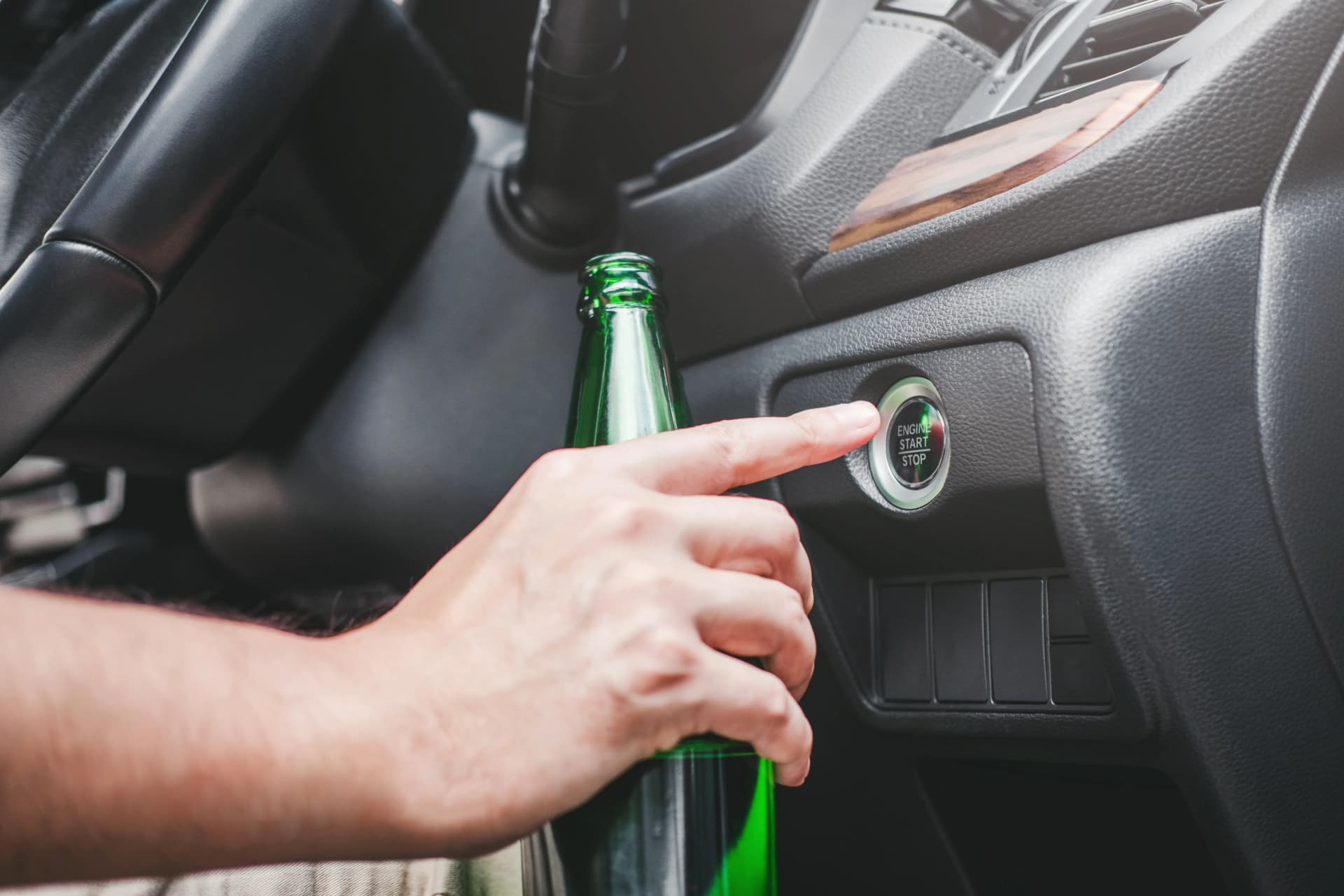
Drunk driving relief refers to the procedure for drunk driving license revocation relief, by which the disposition is revoked or reduced through procedures such as filing an objection, administrative adjudication, and administrative litigation with respect to an administrative disposition such as revocation or suspension of a driver's license imposed due to drunk driving.
The administrative disposition imposed separately from criminal punishment is at issue, and because a driver's license is often directly tied to one's livelihood, a system is in place to contest the disposition when it is judged to be unjust or excessive.
The administrative agency renders the administrative disposition by comprehensively considering the driver's alcohol concentration, prior drunk driving record, whether an accident occurred, and the like, and where certain requirements are met, relief from that disposition may be applied for.
 What Is Drunk Driving?
No person may drive an automobile, motorcycle (including a motorized bicycle), or the like while in a state of intoxication.
Here, "automobiles and the like" include not only ordinary vehicles but also certain construction machinery.
▶What is the standard for drunk driving?
-If the driver's blood alcohol concentration is 0.03% or higher, the driver is deemed to be in a "state of intoxication," and driving is prohibited.
▶The police's authority to conduct a breath test
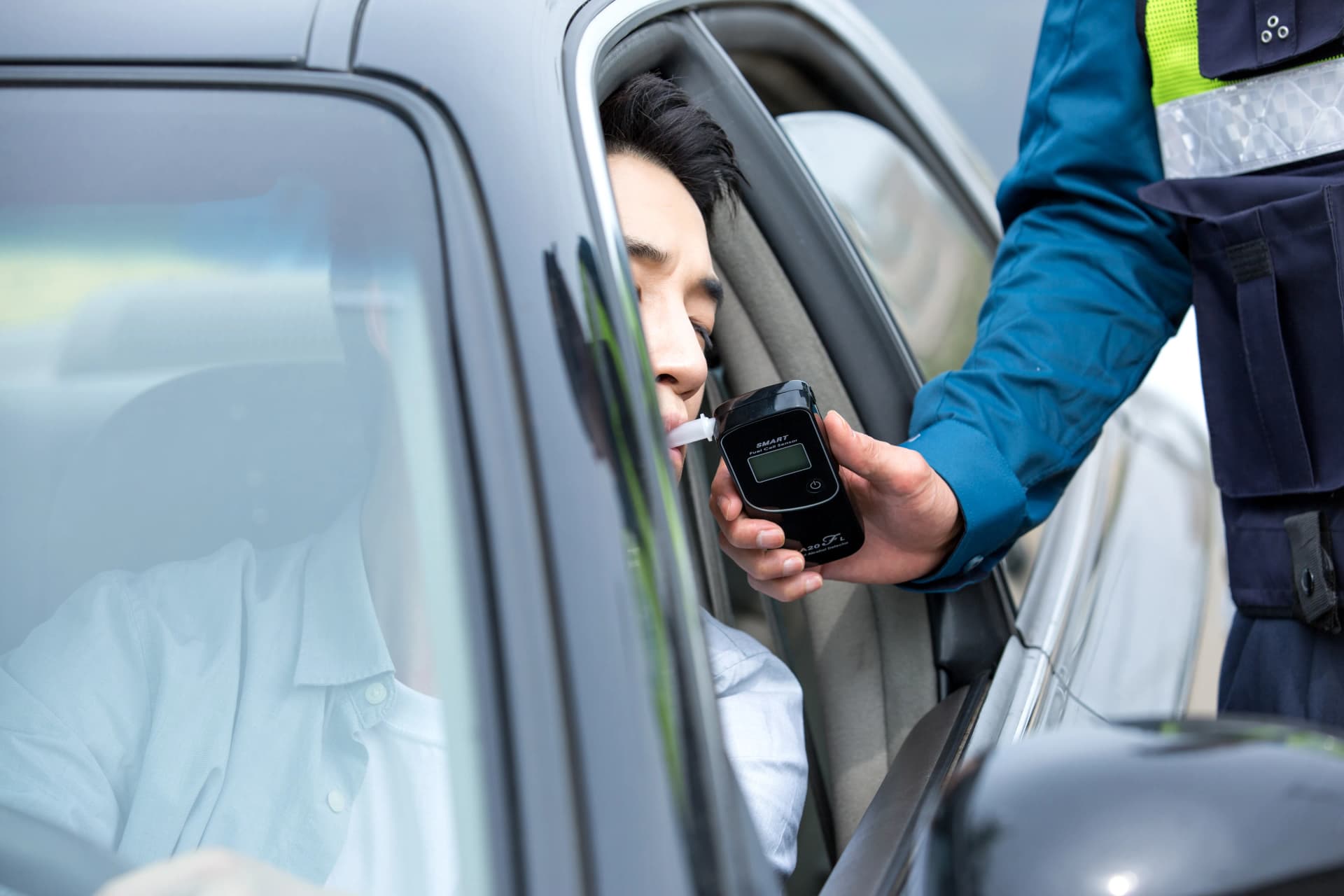
-The police may use a breath analyzer to confirm whether a driver has been drinking when they determine that it is necessary for traffic safety or when there are grounds to believe that the driver appears to be intoxicated.
-At this time, the driver must comply with the testing request, and if the driver refuses without justifiable grounds, their driver's license is revoked.
▶Disadvantages of refusing a breath test
-A person who refuses a breath test without justifiable grounds may be subject to imprisonment for not less than one year and not more than five years, or a fine of not less than five million won and not more than twenty million won.
The driver's license is also revoked.
▶Acts of obstructing the test are also subject to punishment
-A person who, for the purpose of obstructing a breath test, drinks additional alcohol or uses a drug that can affect the blood alcohol concentration (for example, erythromycin or verapamil hydrochloride) may be subject to a fine of not more than 200,000 won, detention, or a minor fine.
-Even where such an act of obstruction occurs, the driver's license may be revoked.
▶What if you contest the breath test?
-If a driver does not agree with the result of a breath test, the test may be conducted again by methods such as blood sampling.
However, the driver's consent is required in that case.


2. Remedies Against Drunk Driving Penalties | Sanctions for Violation
The sanctions imposed for violations requiring drunk driving relief are reviewed below.
Standards for Suspension and Revocation of Driver's Licenses
A driver’s license is revoked if one of the following applies.
-Where a person drives with a blood alcohol concentration of 0.08% or higher
-Where a person with a prior history of drunk driving or refusal of a breathalyzer test again drives with a concentration of 0.03% or higher
Driving Under the Influence of Drugs
If a person drives while it is difficult to drive normally after using any of the following substances (narcotics, cannabis, psychotropic drugs, or hallucinogens), the license is revoked.
In addition, if a person causes an accident under the influence of alcohol or drugs, violates the duty to take measures, and is sentenced to a fine or higher (including a suspended sentence), the reacquisition of a driver's license becomes impossible for the following 5 years.
Conditional License with an Alcohol Interlock Device
A person falling under the following must, in order to drive a motor vehicle again, obtain a conditional license restricted so that they may only drive a vehicle equipped with a ‘drunk driving prevention device.’
Criminal Punishment
The punishment for drunk driving is classified according to the blood alcohol concentration level as follows.
Blood alcohol concentration | Penalty |
0.2 percent or more | Imprisonment for not less than 2 years and not more than 5 years, or a fine of not less than 10 million won and not more than 20 million won |
0.08 percent or more but less than 0.2 percent | Imprisonment for not less than 1 year and not more than 2 years, or a fine of not less than 5 million won and not more than 10 million won |
0.03 percent or more but less than 0.08 percent | Imprisonment for not more than 1 year, or a fine of not more than 5 million won |
Cases in Which a Driver's License Is Suspended
If a driver's license holder violates a traffic law while driving or causes a traffic accident, the holder is unable to drive for a certain period.
3. Remedies Against Drunk Driving Penalties | Concept of Driver's License Suspension

The following reviews the suspension of a driver's license for which relief from drunk driving penalties may be needed.
A driver's license suspension disposition is issued where one of the following two cases applies.
-Where an individual violation such as drunk driving meets the suspension criteria
Grounds for Driver's License Suspension
1. Suspension Disposition Due to Accumulated Penalty Points
-When penalty points from a traffic law violation or an accident accumulate to 40 points or more, a suspension disposition is issued.
-Penalty points are imposed through a single violation or multiple accumulated violations.
Examples of Major Penalty Points (Based on Statutory Violations)
Violation | Penalty Points |
Drunk driving with a blood alcohol concentration of 0.03 to 0.08% | 100 points |
Speeding (exceeding 100 km/h) | 100 points |
Traffic signal violation | 15 points |
Violation in a no-overtaking zone | 15 points |
Failure to maintain a safe distance | 10 points |
2. Immediate Suspension Disposition Due to a Specific Violation
-Drunk driving: blood alcohol concentration of 0.03 to 0.08% → license suspension (100 points imposed)
-Joint dangerous conduct, reckless driving, and the like leading to criminal booking → 40 or more penalty points may be imposed
-A violation of the duty of safe driving arising from collective action or the like → up to 40 points imposed
Procedures for Driver's License Suspension
1. Notice before the disposition
The police send a prior notice before a suspension disposition.
-The content of the disposition
-The deadline for submitting opinions
-Notice including guidance on rights such as an administrative appeal
2. Submission of opinions and surrender of the license
-The driver may submit a statement of opinion after receiving the notice, and once the suspension disposition becomes final, the driver must surrender their driver's license.
-If the driver refuses to surrender it, the police may recover it
-Failure to surrender it results in a fine of 30,000 won
4. Remedies Against Drunk Driving Penalties | Concept of License Revocation for Drunk Driving
Let us look at the concept of license revocation, for which relief from a drunk driving charge may be needed.
▶Revocation of a license for drunk driving
This is an administrative disposition in which the commissioner of the local police agency revokes a driver's license where the driver has committed a serious violation of the law or where accumulated penalty points exceed a certain standard.
Once the license is revoked, the driver is without a license, and if the driver subsequently drives, the driver is subject to criminal punishment for driving without a license.
▶Main grounds for revocation of a driver's license
A driver's license is immediately revoked in the following cases.
-Drunk driving with a blood alcohol concentration of 0.08% or higher
-Refusal of a breathalyzer test
-Driving under the influence of drugs such as narcotics or psychotropic substances
-Causing the death or injury of a person while under the influence of alcohol or drugs
-Driving without a license three or more times
-A serious violation such as failure to take relief measures after an accident
-Being caught again within five years after a license was revoked for drunk driving
5. Remedies Against Drunk Driving Penalties | Remedy Methods
Let us review the methods for relief from drunk driving license revocation.
Remedy 1. Objection System
The objection system is a system under which, if a person receives a disposition revoking or suspending their driver's license due to a violation of traffic regulations while driving, and the person considers that disposition to be unlawful or unjust, they may raise an objection.
Item | Content |
Eligible applicants | A person who has received a disposition revoking or suspending a driver's license |
Application deadline | Within 60 days from the date the disposition was received |
Receiving agency | Application to the Commissioner of the City or Provincial Police Agency |
Deliberating agency | Deliberation by the Driver's License Administrative Disposition Objection Review Committee |
▶Cases in which mitigation is possible (grounds for consideration of circumstances)
A person who meets the following conditions may receive mitigation of the administrative disposition.
-A case in which driving is the family's means of livelihood
-A case in which, as a model driver, the person has engaged in traffic volunteer activities for 3 years or more
-A case in which the person has received a commendation from a chief of a police station or higher
▶Cases in which mitigation is restricted (grounds for which mitigation is not possible)
If the following applies, the person is not eligible for mitigation even if they file an objection.
❌ Mitigation restrictions related to drunk driving
-Blood alcohol concentration exceeding 0.1%
-Casualties resulting from an accident while drunk
-Refusal to comply with a breath test request, flight, or assault of a police officer
-A record of drunk driving within the last 5 years
-3 or more traffic accidents causing personal injury within the last 5 years
❌ Mitigation restrictions related to accumulated penalty points
-A record of driver's license revocation within the last 5 years
-3 or more suspension dispositions within the last 5 years
-A case in which mitigation has already been received through a prior objection review or administrative appeal or litigation
Remedy 2. Administrative Appeal System
An administrative adjudication is a procedure by which an unjust disposition of an administrative agency can be corrected quickly and simply.
Subject of the application: administrative dispositions under the Road Traffic Act, such as revocation or suspension of a driver's license
Filing deadline:
① Within 90 days from the date of becoming aware of the disposition
② Up to the earlier point, within 180 days from the date of the disposition
*Advantages of administrative adjudication
An advantage of administrative adjudication is that the result can be learned within a much shorter period than in an administrative lawsuit.
After filing for an administrative adjudication, the result can be learned within 60 days at the earliest and within 90 days at the latest.
Remedy 3. Administrative Litigation System
If you wish to object to the result of an administrative appeal, you may file an administrative litigation.
A point to note is that an administrative appeal must necessarily be gone through before administrative litigation.
If this is violated, the litigation is rejected.
When an administrative appeal has been gone through, the litigation must be filed within 90 days from the date one became aware that the disposition existed.
It cannot be filed once 1 year has passed from the date the disposition existed, so this point must be kept in mind.
6. Remedies Against Drunk Driving Penalties | Key Issues
Relief in drunk driving cases is not judged solely by the blood alcohol concentration figure. It also considers how accurately that figure was measured, whether legal procedures were observed during the measurement, and various circumstances such as the driver's livelihood and willingness to reflect, all taken together.
Past history, such as prior drunk driving records or the circumstances of an accident, also serves as an important factor, and even with the same figure, the outcome may differ between suspension, revocation, mitigation, or dismissal depending on the specific circumstances.
Relief in drunk driving cases thus requires a careful response that takes into account the facts, procedural lawfulness, and the proportionality and scope of discretion of the administrative disposition.
At this firm, attorneys experienced in administrative matters and attorneys experienced in drunk driving matters work together to provide drunk driving relief strategies tailored to each situation.
The firm operates branch offices in regions throughout the country and provides an emergency consultation system available at all hours as well as non-face-to-face video consultation services, which you may wish to note when scheduling a legal consultation at your convenience.


Watch related video content
for this case study.

How to deal with drunk driving from a lawyer