
CONTENTS
- 1. International Trade | Meaning and Recent Trends

- 2. International Trade | Import and Export Customs Risk Management
- - Flow and Key Points of Import and Export Customs Clearance
- - Import and Export Customs Clearance Flowchart
- - Grounds for Suspension of Customs Clearance
- - AEO Certification Consulting
- 3. International Trade | FTA Country-of-Origin Verification
- - Country-of-Origin Verification Procedure
- - Measures Following FTA Verification Results
- 4. International Trade | Responding to International Trends Under Adverse Conditions
- - Responding to Anti-Dumping Duties
- - Customs Attorneys and What Companies Should Prepare

1. International Trade | Meaning and Recent Trends
International trade spans the transactions, disputes, and regulations that arise as goods, services, capital, and technology cross national borders.
As the free trade order has weakened in recent years and protectionism and supply chain restrictions have intensified, the legal risks that companies face have grown more complex.
In the wake of the Russia-Ukraine war and U.S.-China strategic competition, economic sanctions such as export controls, financial sanctions, and investment restrictions are being tightened.
Against this backdrop, companies must comprehensively review multilateral and bilateral agreements such as FTAs (free trade agreements) and BITs (bilateral investment treaties), together with each country's trade regulations, customs laws, and economic sanctions, and respond on a proactive basis.
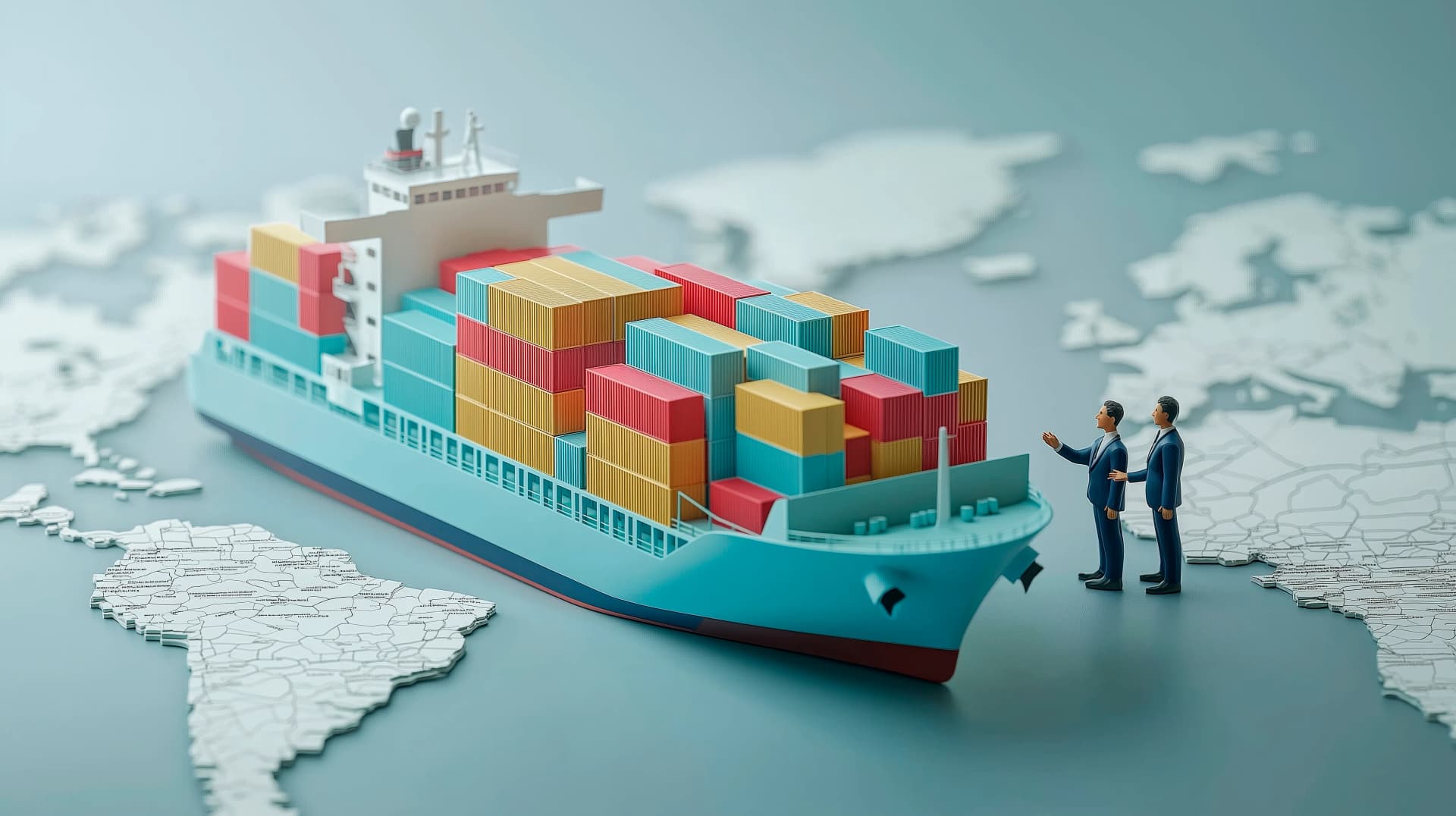


2. International Trade | Import and Export Customs Risk Management
In international trade, disputes arise most often in connection with import and export contracts and customs clearance.
When trade laws, trade norms, and customary practices that differ from one country to another are overlooked, a range of problems can follow, including delays in customs clearance, taxation disputes, and delays in collecting payment.
Our firm's task force of customs attorneys and customs specialists provides the following advisory services, drawing on the relevant governing law, including the UN Vienna Convention on Contracts for the International Sale of Goods (CISG), the ICC Uniform Customs and Practice for Documentary Credits (UCP600) and Incoterms (INCOTERMS), maritime law, and international arbitration law.
- Types of trade contracts and the methods of concluding each type
- Identification of the party that bears the costs and risks under standard trade terms
- Review of basic terms such as quality, quantity, price, payment, shipment, packaging, and insurance
- Review of dispute resolution clauses, including force majeure, claims, arbitration, jurisdiction, and governing law
- Review of special provisions, such as exclusive supply contracts and liability for errors in FTA application
 Flow and Key Points of Import and Export Customs Clearance
In practice, customs clearance is the most consequential stage of the import and export process.
The customs clearance procedure is an area where layered risks can arise, including HS codes (commodity classification), calculation of the customs value, satisfying import requirements, and review of FTA preferential tariff requirements.
It is also closely tied to royalties, foreign exchange transaction reporting, and customs duty reduction or exemption.
For import and export customs clearance, companies should prepare the following items carefully and retain supporting documentation in case of any later investigation.
Import and Export Customs Clearance Flowchart
Bringing in Goods | -After foreign goods arrive, they are stored in a bonded area |
Meeting Requirements | -Importer (cargo owner): verification of requirements, recommendation of the tariff rate, and preparation and submission of the reduction or exemption recommendation |
Import Declaration | -Declarant: transmission of the import declaration to the customs clearance system -Customs clearance system: after selecting items for inspection and items requiring document submission, notice of receipt is sent to the declarant |
Processing of the Declaration | -Customs: customs clearance review after inspection and verification of the actual goods -If there are no irregularities, registration for approval |
Provision of Security (Advance Payment) | -Provision of tax security to customs and advance payment |
Acceptance of the Declaration | -After advance payment or the provision of security, the declaration is accepted automatically in the customs clearance system |
Release of Goods | -Importer (cargo owner): request to the operator of the bonded area (storage location) for release of the goods |
Payment of Taxes | -Importer (cargo owner): payment of taxes within 15 days after acceptance of the declaration |
[Export Customs Clearance Flowchart]
Export declaration → C/S system (cargo selectivity system) → automatic acceptance or inspection of goods (inspection before acceptance) → document review → transport → inspection of goods (inspection before loading) → loading (shipment)
Grounds for Suspension of Customs Clearance
Under the Customs Act, where the entries on an export, import, or re-export declaration need to be supplemented, or where the documents to be submitted have not been properly prepared, the declaration is not accepted immediately and customs clearance is suspended.
The customs clearance of imported goods may also be suspended in situations such as a violation of an obligation, a concern that public health may be harmed, a need for safety inspection, importation by a delinquent taxpayer whose disposition for default has been entrusted, or an accusation and investigation on suspicion of violating the Customs Act.
If the reason for the suspension is not clearly identified and steps to lift it are not taken, the goods may be returned or destroyed.
To obtain prompt acceptance of a declaration, it is often advisable to seek advice in advance from a specialist such as a customs specialist.
AEO Certification Consulting
Obtaining AEO (Authorized Economic Operator) certification confers various benefits, such as a reduced rate of customs inspections and priority inspection.
The Korea Customs Service grants AEO certification after examining matters such as compliance with laws and regulations, internal control systems, financial soundness, and the adequacy of safety management.
The certification generally remains in effect for about five years and can be renewed.
[Entities Eligible for AEO Certification]
- Exporters
- Importers
- Customs brokers
- Operators of bonded areas
- Bonded transport operators
- Freight forwarders
- Stevedoring operators
- Shipping companies
- Airlines
Documents to Be Submitted for AEO
3. International Trade | FTA Country-of-Origin Verification

To qualify for FTA preferential tariffs, the country of origin of the imported or exported goods must satisfy the requirements set out in the relevant agreement.
The customs authorities of each country examine whether the agreed tariff has been applied appropriately through country-of-origin verification, and a violation can lead to the imposition of additional customs duties and criminal penalties.
Companies generally benefit from a structured approach to country-of-origin compliance that relies on regular and ad hoc inspections.
To that end, our customs attorneys and customs specialists review the formal and substantive requirements of certificates of origin, assess whether the procedure for applying the agreed tariff is appropriate, and assist with customs self-inspections of country of origin.
Country-of-Origin Verification Procedure
Export Verification (Korea → Partner Country) | Indirect verification: at the request of the partner country's customs authority, the Korea Customs Service investigates the exporter |
Import Verification (Partner Country → Korea) | Indirect verification: at the request of the Korea Customs Service, the partner country's customs authority investigates that country's exporter |
Direct verification: the Korea Customs Service makes a request directly to the partner country's exporter, and that exporter investigates the partner country's producer |
[Methods of Country-of-Origin Verification by FTA]
- EFTA: indirect verification at the request of the exporting party's customs authority
- ASEAN and China: indirect verification at the request of the exporting party's issuing authority, with on-site investigation in exceptional cases
- United States: request to the exporting party's customs authority (limited to textiles and clothing), along with written inquiries, requests for information, and on-site investigations
- EU: indirect verification at the request of the exporting party's customs authority
Measures Following FTA Verification Results
For certificates of origin, whether the formal requirements are met is assessed through the appropriateness of the issuing entity, the expiration of the validity period, the form, and the requirements of the parties to the transaction.
Following FTA country-of-origin verification, the application of the agreed tariff may be suspended or restricted.
1) Suspension of Application of the Agreed Tariff
Where additional imports of the same goods occur while country-of-origin verification is in progress, the application of the agreed tariff is suspended temporarily until the verification is complete
2) Restriction on Application of the Agreed Tariff
Where supporting documents are not submitted, the results of country-of-origin verification are not returned, or the country of origin is reported falsely, the agreed tariff does not apply and the general tariff is collected as a back duty
-Where country-of-origin certification is unfaithful two or more times within five years, the party may be designated as a person subject to restriction on application of the agreed tariff for up to five years
3) Administrative Sanctions and Penalties
Amount of Administrative Fine | Subject Conduct |
Up to 10 million won | Failure to submit documents requested by the Korea Customs Service (head of the customs office) within the period without justifiable grounds |
Up to 5 million won | Refusal, obstruction, or evasion of a country-of-origin investigation |
Other | Failure to correct, supplement, or amend the declared tax amount after notice of an error in the country-of-origin supporting documents, and similar conduct |
Sentence / Fine | Subject Conduct |
Imprisonment for up to 3 years or a fine of up to 30 million won | Disclosure of confidential information, or issuance of, or application for, country-of-origin supporting documents by deception or other unlawful means |
A fine of up to 20 million won | Using or transferring goods subject to an end-use tariff rate for another purpose |
A fine of up to 3 million won | Violation of the obligation to retain related documents, submission of false data, and other violations |
4. International Trade | Responding to International Trends Under Adverse Conditions
With the start of the second Trump administration in the United States and the resulting intensification of the U.S.-China trade conflict, global export sanctions on items such as semiconductors, secondary batteries, rare earth elements, and defense materials continue to tighten.
Responding smoothly often calls for a careful review of the export country and items, the counterparty to the transaction, and the circumstances of the transaction, based on export controls under the U.S. Export Administration Regulations (EAR), financial sanctions administered by the Office of Foreign Assets Control (OFAC), and various executive orders.
Companies may find it helpful to prepare with a specialist for the review of whether items fall within the EAR, the expert classification of strategic (dual-use) items and items subject to catch-all controls, and the determination of whether brokering authorization is required.
Responding to Anti-Dumping Duties
An ‘anti-dumping duty’ is a trade-remedy duty imposed when foreign goods are sold at a price below their normal value in the exporting country, causing or threatening material injury to a domestic industry in the importing country.
A finding of dumping turns on 1) whether an act of dumping has occurred, 2) whether the dumped imports have injured the domestic industry, and 3) whether a causal link exists between the dumping and that injury.
The government of the importing country may protect its domestic industry against dumped imports through measures such as the imposition of anti-dumping duties.
From a company’s perspective, the following proactive preparations can help.
Customs Attorneys and What Companies Should Prepare
- Establishing an internal control system: continuous monitoring across the entire process of contracts, customs clearance, country of origin, and export controls
- Updating relevant laws and regulations: tracking each country’s trade measures and economic sanctions trends on an ongoing basis
- Drawing on a network of experts: close cooperation with attorneys, customs specialists, and trade advisory institutions
- Establishing a rapid-response system for disputes: considering complaints to bodies such as the WTO when disputes such as anti-dumping or countervailing duty matters arise
International trade attorneys and customs specialists do not confine their work to legal review alone.
They can provide comprehensive advisory that runs from the design of a corporate client’s trade contracts through to dispute prevention and prompt resolution, as well as customs clearance, sanctions, tax, and foreign exchange matters.
This firm forms an international trade task force to provide advisory in a systematic way, preparing for country of origin, customs clearance, export controls, and sanctions responses from the contract stage, and putting follow-up measures in place, such as prompt objections, litigation, and international arbitration, where problems arise.