
CONTENTS
- 1. The Crime of Online Defamation, an Incident Occurring Within a Mobile Game

- - The Assistance of an Attorney Specializing in Criminal Cases
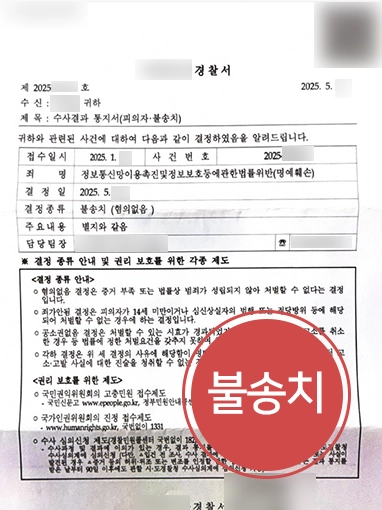
- - The Result of the Attorney Specializing in Criminal Cases' Assistance, "Non-Referral"
- 2. The Requirements for the Establishment of the Crime of Online Defamation and the Sentencing Range
- 3. The Crime of Online Defamation, How to Respond If You Are Charged
- - Response Strategy for an Online Defamation Complaint 1. Establishing a Settlement Strategy
- - Response Strategy for an Online Defamation Complaint 2. Fact-Based Statements

1. The Crime of Online Defamation, an Incident Occurring Within a Mobile Game
The client, who is charged with the crime of online defamation, came to know the other party through a mobile game and naturally built a friendship while playing the game together.
The two people exchanged conversations using the chat function within the mobile game during the course of play, and at first the conversation mainly consisted of game-related content and everyday talk.
However, as differences of opinion and emotional conflict arose, the client, through a momentary burst of anger and a failure of emotional control, came to use aggressive expressions such as "I want to kill you" and "an idiot who cannot do it alone and leaves it to others."
Afterward, the other party, on the ground that the statements damaged the other party's reputation and infringed the other party's dignity, filed a complaint for online defamation, and accordingly the client became subject to an investigation by the investigative agency.

 The Assistance of an Attorney Specializing in Criminal Cases
In response, the attorney specializing in criminal cases focused on demonstrating the absence of "publicness" and "identifiability" among the requirements for the establishment of the crime of online defamation under the Network Act.
Assistance 1. Argument on the Absence of Publicness
The conversation at issue took place through a chat function called "friend chat" within the mobile game. Identifying that friend chat is a function that can be seen only by a small number of people in a friendship relationship, the attorney argued that it was a private conversation function effectively equivalent to a one-on-one conversation.
Accordingly, the attorney argued that, because the client and the victim had a conversation in a limited space with no possibility of dissemination to an unspecified number of people, publicness could not be established.
Assistance 2. Rebuttal of the Establishment of Identifiability
In addition, the attorney emphasized that what the client said in a one-on-one conversation was merely an expression of displeasure, without a subject, indicating only that the client felt offended.
Furthermore, the attorney rebutted the establishment of identifiability by stressing that the game has more than ten million generated nicknames, that the victim's nickname is also common, and that it is difficult to know whether the client specifically referred to the victim.
Assistance 3. Absence of Intent
Emphasizing that the client sent the chat message in a chat window that could be seen only by a small number of people, where the other party was not visible and there was no possibility of dissemination, the attorney argued that the client had no intent whatsoever to disparage the victim.
The Result of the Attorney Specializing in Criminal Cases' Assistance, "Non-Referral"
The attorney specializing in criminal cases specifically demonstrated to the investigative agency that the statements at issue did not meet the elements of the crime of online defamation.
It was comprehensively accepted that, given the nature of the conversation, it was a limited space with no possibility of external dissemination, that it amounted to no more than an expression by which a specific victim could not be identified, and that, furthermore, intent to disparage was also difficult to recognize.
As a result, the investigative agency determined that the crime of online defamation was difficult to establish, and the client received a disposition of non-referral, bringing the case to a successful conclusion.


2. The Requirements for the Establishment of the Crime of Online Defamation and the Sentencing Range
The crime of defamation is established when a person damages another person's reputation by alleging a false fact or a true fact that may undermine that person's social reputation.
It may be established when a person posts a fact or a false fact for the purpose of disparaging a specific person in an online space such as an internet community, a game, or social media.
The requirements for the establishment of the crime of online defamation are as follows.
1. Publicness
The state must be one in which an unspecified number of people can perceive it.
Even in cyberspace, if the other party has the possibility of disseminating the content to an unspecified number of people, publicness may be recognized.
2. Intent
If it is confirmed that the person, with the purpose of disparaging and harming the other party's social reputation, intentionally alleged a specific fact or a false fact, the crime is established.
3. Identifiability
The person whose reputation is damaged must be identifiable.
Even in the case of an online comment or post, if an individual is identified through the content, identifiability may be established.
If the charge of the crime of online defamation is established, the person may be punished under Article 70 of the Act on Promotion of Information and Communications Network Utilization and Information Protection, etc. (hereinafter the "Network Act").
(1) A person who, for the purpose of disparaging another person, damages another person's reputation by openly alleging a fact through an information and communications network shall be punished by imprisonment for not more than three years or a fine not exceeding 30 million won.
(2) A person who, for the purpose of disparaging another person, damages another person's reputation by openly alleging a false fact through an information and communications network shall be punished by imprisonment for not more than seven years, suspension of qualifications for not more than ten years, or a fine not exceeding 50 million won.
However, the crime of online defamation is a crime not punishable against the victim's will, so prosecution cannot be instituted against the explicitly stated intent of the victim.
3. The Crime of Online Defamation, How to Respond If You Are Charged
If you have written a comment or post for the purpose of disparaging another person online, you may be charged with the crime of online defamation.
In addition, it may lead to a civil claim for damages, so caution is required.
Response Strategy for an Online Defamation Complaint 1. Establishing a Settlement Strategy
The crime of online defamation is a crime not punishable against the victim's will, for which prosecution cannot be instituted when the victim clearly expresses the intention not to seek punishment.
Therefore, a strategic approach with the possibility of settlement in mind is very important from the early stage of the case.
Beyond merely attempting to make contact, you must prepare a realistic compensation plan that the victim can actually accept and prepare a response suited to the gravity of the matter.
Along with this, it is necessary to prepare a sincere letter of apology and a written reflection showing that you are fully aware of the harm caused by your own words and conduct.
Furthermore, presenting a specific recidivism prevention plan so that the same problem does not recur can have a positive effect on easing the victim's emotional burden and restoring trust.
Response Strategy for an Online Defamation Complaint 2. Fact-Based Statements
One of the most important factors in the investigation process is the consistency of statements.
If content that differs from the facts is mixed in or a statement is reversed, that alone may reduce credibility and be interpreted in an unfavorable direction.
Therefore, it is essential to exclude as much as possible any speculation based on memory or emotional expressions and to maintain statements grounded in facts that actually occurred.
In addition, because the content of statements may be used as important evidence in the subsequent investigation and determination process, you are not necessarily required to answer every question.
For parts that may operate unfavorably, a determination to protect yourself by appropriately exercising the right to remain silent is needed.
Before undergoing the investigation, it is helpful to closely review the flow and issues of the case together with an attorney specializing in criminal cases and to organize which parts should be clearly explained and which parts should be responded to cautiously.
Drawing on its experience handling numerous online defamation cases, Daeryun Law Firm quickly organizes the issues of a case from the early stage and presents a realistic response direction suited to the situation.
We encourage you to confirm a response strategy suited to your current situation through a consultation.
This content is based on actual case studies of Daeryun Law LLC with some adaptations, and the copyright belongs to our firm.
Unauthorized reproduction, duplication, or distribution and other copyright infringements may result in legal action under applicable laws.