
CONTENTS
- 1. The Client Who Came for a Construction Payment Lawsuit

- - Construction Payment Lawsuit: The Firm's Assistance
- 2. Unpaid Construction Payment: What Was the Result of the Lawsuit?
- 3. What Is the Procedure for a Construction Payment Lawsuit?
- - Unpaid Construction Payment: If You Need Legal Assistance

1. The Client Who Came for a Construction Payment Lawsuit
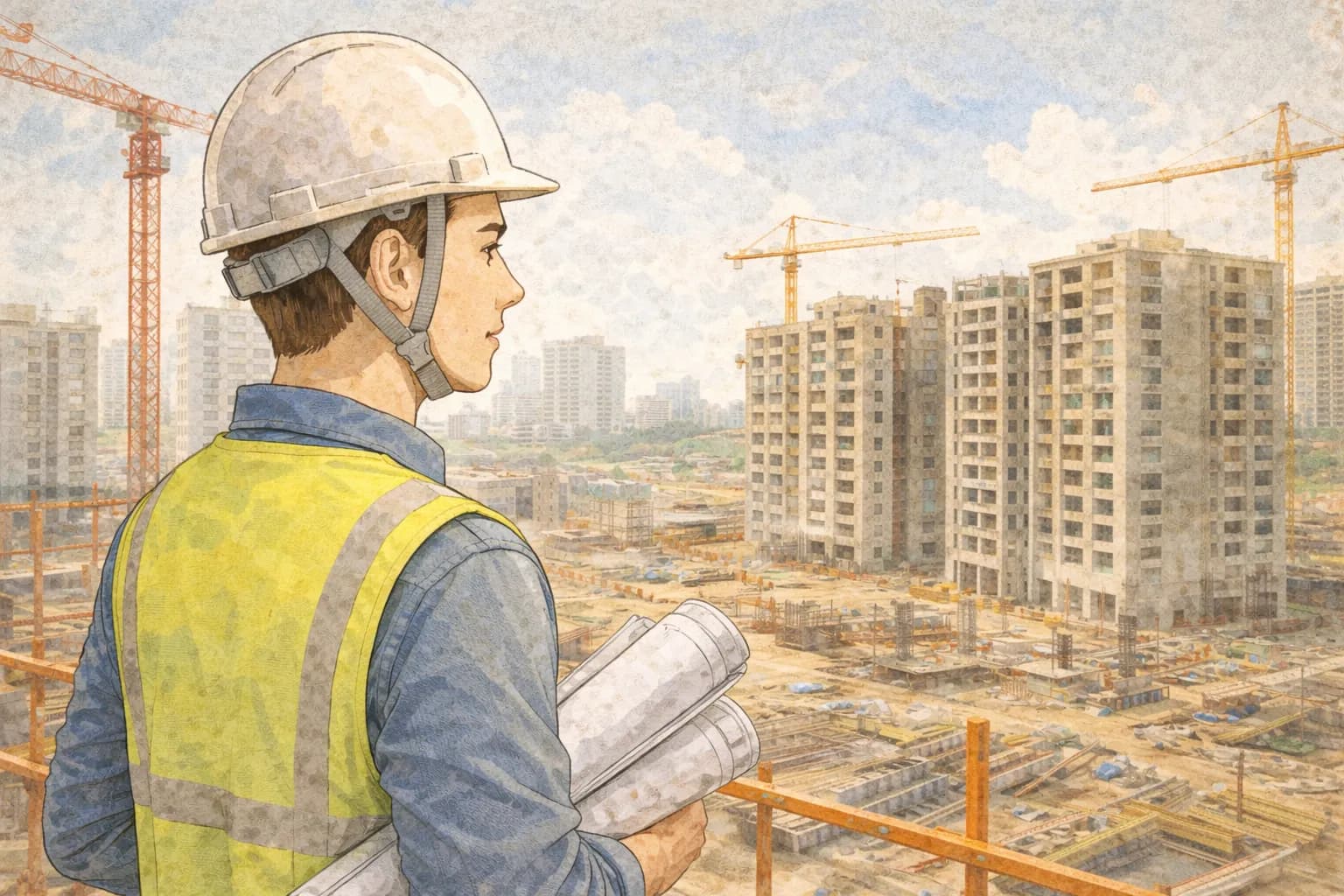
The client who came for a construction payment lawsuit was a contractor who had carried out interior finishing work at construction sites, and the client had entered into a contract for the first phase of construction and additional construction for certain apartment units with Construction Company B (hereinafter the defendant).
In accordance with the agreed terms, the client supplied materials and carried out on-site construction, and after completing the first phase of construction, the client also finished all of the additional construction at the defendant's request.
However, after the construction was completed, the defendant paid only a portion of the amount and began to delay payment of a substantial remaining construction payment.
The client issued tax invoices and requested payment several times, but the defendant delayed payment, citing settlement and a review of defects.
In the end, when the rightful construction payment was not made even after a considerable period had passed following the completion of the construction, the client engaged the construction specialist attorney of this firm for a consultation regarding the unpaid construction payment in order to recover the unpaid amount
 Construction Payment Lawsuit: The Firm's Assistance
To proceed with the construction payment lawsuit, this firm formed a task force that included construction specialist attorneys who had handled many related cases, and the firm set out to respond.
Assistance 1. Rebutting the Claim of Nonperformance through Analysis of Materials
The defendant argued that the client had demanded payment without having properly carried out the construction.
In response, the construction specialist attorney analyzed the messages and email records exchanged with the defendant in collaboration with the firm's internal evidence investigation center.
Accordingly, the attorney established that, of the four buildings the client had worked on, the parties had agreed that two would be handled directly by the defendant's on-site management agent, and the attorney emphasized that the defendant's claim of nonperformance was unjustified.
Assistance 2. Rebutting the Claim That the Client Caused Harm
The defendant argued that the client had not properly carried out the construction at the site, that the client had caused significant losses to the defendant, and that the harm caused by the client was substantial.
In response, the construction specialist attorney reviewed the facts and proved, through construction records, work logs, and similar documents, that the client had merely followed the defendant's unilateral notice and had not caused any harm in the process.
Assistance 3. Rebutting the Claim of Defective Construction
The defendant argued that issues such as cross-sectional defects had occurred due to the client's defective construction.
In response, the construction specialist attorney reviewed the related case and conducted an on-site inspection.
Through the inspection, the attorney discovered that, although the insulation work was originally supposed to proceed three days after the concrete pour, the construction had been carried out in less than two days because of the defendant's unreasonable demand to finish the work.
On this basis, the construction specialist attorney made clear that the defect in question had arisen from the defendant's unreasonable demand and was not attributable to any fault of the client.


2. Unpaid Construction Payment: What Was the Result of the Lawsuit?
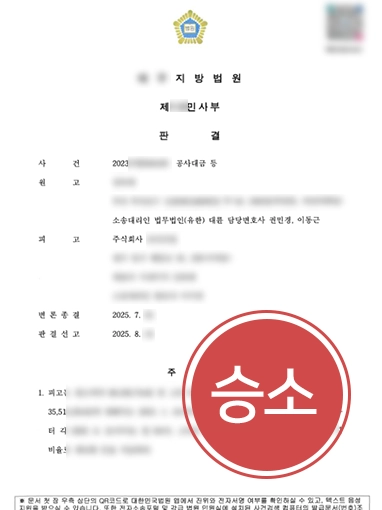
As a result of the construction specialist attorney's assistance, the court found that the construction performed by the client had been lawfully completed in conformity with the terms of the contract and the site conditions, and it determined that the defendant's claims regarding defects and a reduction of the construction payment lacked sufficient grounds and therefore did not accept them.
Accordingly, the court rendered a judgment ordering the defendant to pay approximately 170 million won in construction payment, together with delay damages thereon.
3. What Is the Procedure for a Construction Payment Lawsuit?
A construction payment lawsuit is a civil action that a contractor files with the court when the owner fails to pay the amount due under a construction contract.
The procedure is as follows.
Procedure | Description |
Filing and Service of the Complaint | The plaintiff files the complaint with the court → The complaint is served on the defendant |
Submission of the Answer and Briefs | The defendant submits an answer to the complaint → Both parties organize their arguments in writing |
Submission of Evidence and Examination of Evidence | Supporting evidence such as documents and witnesses is submitted → The court admits the evidence |
Hearing Dates and Concentrated Examination of Evidence | Full courtroom proceedings are conducted based on both parties' arguments and evidence |
Pronouncement and Finalization of the Judgment | The judge pronounces the judgment → If no appeal is filed, the judgment becomes final 2 weeks later |
Compulsory Execution (If Necessary) | If the other party still fails to pay, the procedure to recover the claim is carried out based on the judgment |
To file a construction payment lawsuit, it is necessary to prove ▲the fact that a contract for work was entered into, ▲the fact that there was an agreement to receive payment for the construction in question, and ▲the fact that the construction specified in the contract was completed.
Unpaid Construction Payment: If You Need Legal Assistance
A construction payment lawsuit is subject to a short extinctive prescription of 3 years under Article 163 of the Civil Act, so leaving an unpaid construction payment unaddressed for a long period may result in the extinguishment of the claim itself.
Therefore, if payment is being delayed after the construction has been completed, it is important to prepare for and proceed with a construction payment lawsuit as promptly as possible.
• Estimates and statements of change
• Photographs and video materials of the construction site
• Work logs and process schedules
• Tax invoices and payment records
These materials serve as the basis for determining whether the construction was actually performed and whether the amount claimed is reasonable, and depending on how they are organized, they can have a significant effect on the outcome of a construction payment lawsuit.
Daeryun Law Firm assists clients by accurately identifying the scope of the necessary supporting evidence in the course of a construction payment lawsuit, organizing it in accordance with the applicable legal principles, and systematizing the structure of the arguments so that the client's rights can be protected.
A construction specialist attorney will personally review the terms of the contract and the course of the construction through a consultation and will guide you toward a response suited to your current situation.
After organizing the issues specific to each case, we will work together to reduce unnecessary disputes and to find ways to protect the client's rights.
This content is based on actual case studies of Daeryun Law LLC with some adaptations, and the copyright belongs to our firm.
Unauthorized reproduction, duplication, or distribution and other copyright infringements may result in legal action under applicable laws.