
CONTENTS
- 1. The Story of the Client Who Came to the Child Abuse Attorney

- - The Client Who Encountered the School Violence Perpetrator Who Had Tormented the Client's Child
- - The Child Abuse Attorney's Assistance to Secure a Non-Referral Decision
- - Result of the Child Abuse Attorney's Assistance, Concluded with a Non-Referral Decision
- 2. The Concept of a Violation of the Child Welfare Act as Explained by the Child Abuse Attorney
- - Types of Child Welfare Act Violations
- - Level of punishment for violation of child welfare law
- - If an Ordinary Person Becomes a Child Abuse Suspect?
- 3. Child Abuse Charges Should Be Resolved by Retaining a Child Abuse Attorney
- - The Child Abuse Attorney's Assistance

1. The Story of the Client Who Came to the Child Abuse Attorney
The story of the client who came to the child abuse attorney is as follows.
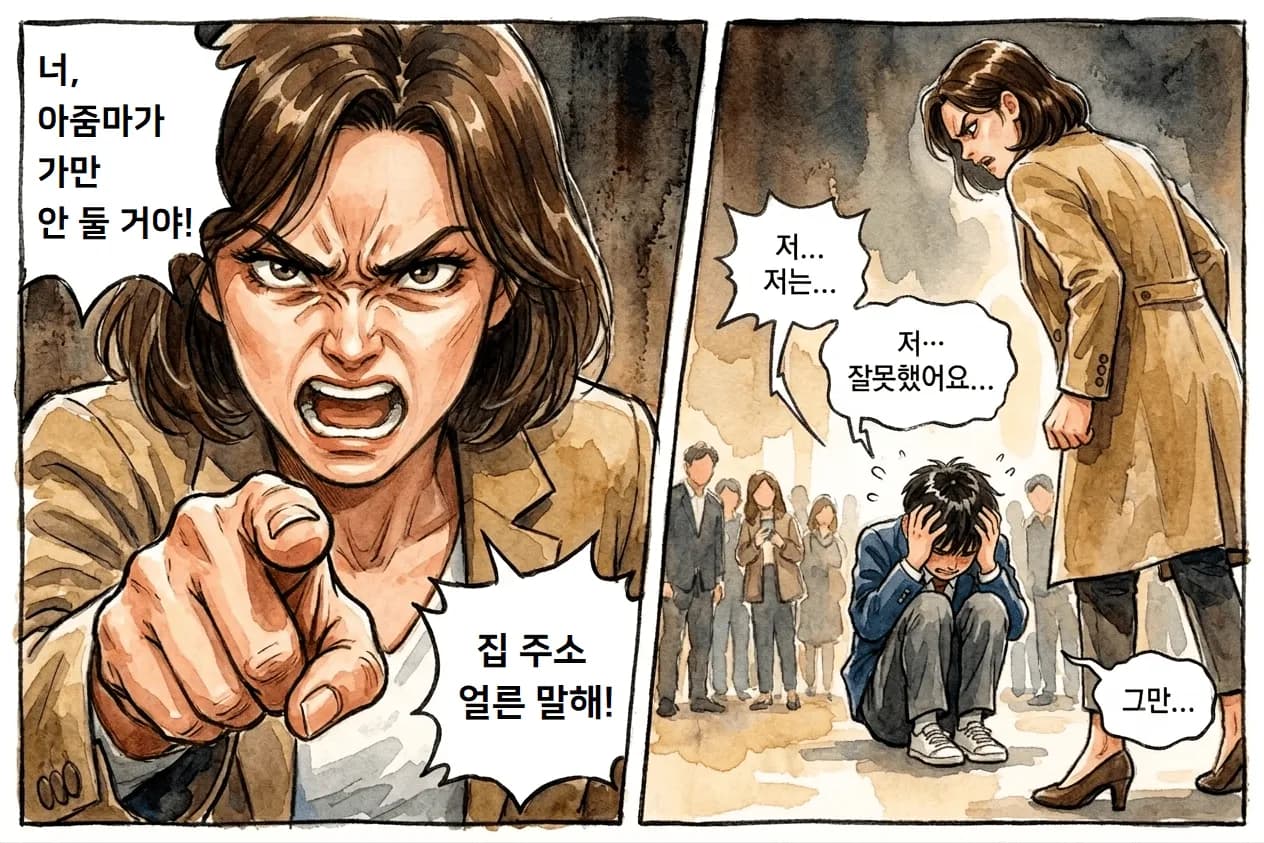
 The Client Who Encountered the School Violence Perpetrator Who Had Tormented the Client's Child
The client had one daughter, a middle school student, as a child.
One day, the client learned that the child had been tormented for more than a year by a male student, A, in the same class (hereinafter the victimized child), and that the child had ultimately reported this as school violence.
Accordingly, a dedicated school violence body was established at the school, and the client attended as the child's guardian.
On the day of the inquiry, the client, who encountered the victimized child at the school, momentarily lost composure and approached the victimized child, shouting words such as “If you keep this up, I will not let it go” and “You will be punished as much as you did to my child.”
In response, the victimized child's parents filed a criminal complaint against the client on charges of violating the Child Welfare Act, and the client came to a child abuse specialist attorney to respond.
The Child Abuse Attorney's Assistance to Secure a Non-Referral Decision


1) The Client's Unstable Psychological State and Deep Reflection
The child abuse attorney made clear that the circumstances giving rise to the case stemmed from a school violence incident between the client's child and the victimized child.
Accordingly, using a psychiatrist's opinion and records of medication treatment as evidence, the attorney emphasized that the client's psychological state remained considerably unstable due to the harm suffered by the child, and asserted that the conduct upon encountering the victimized child was an act committed by momentarily losing composure as a result of this psychological state.
The attorney also submitted the client's letter of reflection, emphasizing that the client was deeply reflecting and had conveyed a sufficient apology to the victimized child.
2) Emphasizing the Need to Maintain the Client's Employment
The client was currently serving in public office, and was in a situation in which the client could lose employment if a sentence of a fine or heavier became final.
Accordingly, the child abuse attorney collected and organized the client's pay statements, statements of maintenance fees, and bankbook records.
Through this, the attorney emphasized that the client was solely responsible for the family's livelihood and that, if convicted, the family's livelihood would become very difficult, and appealed for these circumstances to be taken into account.
3) Submission of Petitions from Family and Acquaintances
The child abuse attorney gathered and submitted petitions from the client's family and colleagues.
In submitting the petitions, the attorney also submitted, as a written opinion, points such as that the client had lived diligently as a member of society and that the family and colleagues strongly wished for leniency, emphasizing that the client was the head of a household and a diligent member of society.
Result of the Child Abuse Attorney's Assistance, Concluded with a Non-Referral Decision
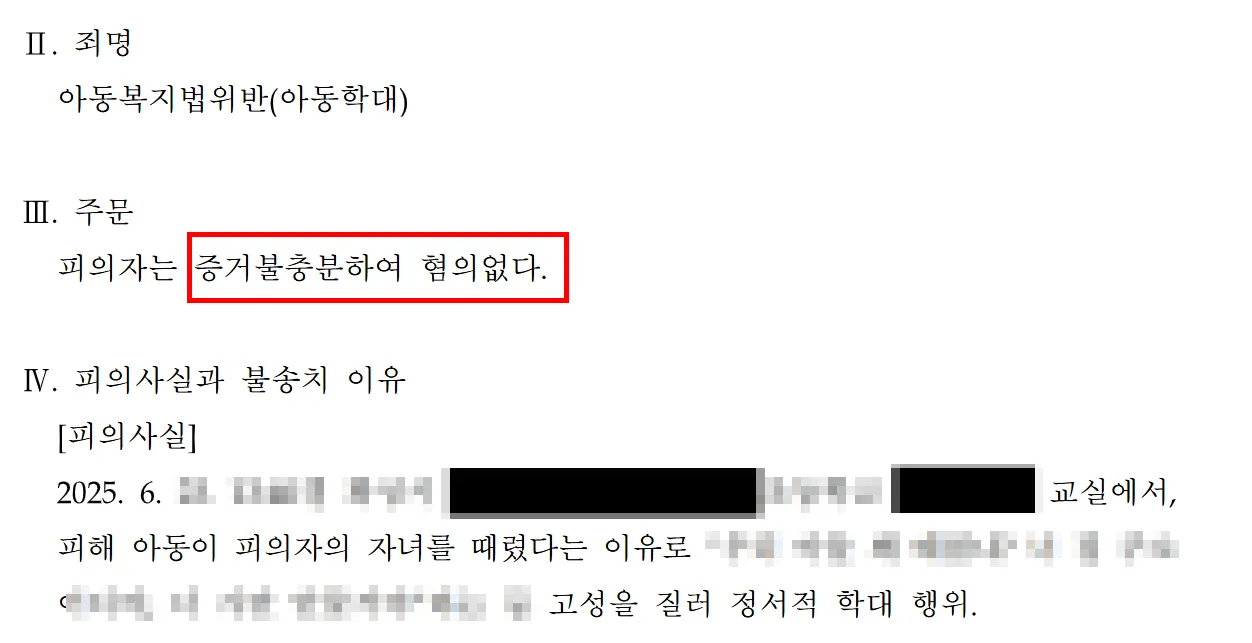
As a result of the child abuse attorney's assistance, the investigative agency recognized that the client committed the act under particular circumstances in an unstable psychological state, and that the client was a first-time offender who was deeply reflecting.
Accordingly, a non-referral decision was issued, and the client was able to conclude the case without incident.
What Is a Non-Referral Decision?
A non-referral is when the police, during the investigation at the police stage, conclude the case without referring it to the prosecution.
Because a non-referral decision is not recorded as a criminal record (criminal history data), it does not cause disadvantages in social activities.


2. The Concept of a Violation of the Child Welfare Act as Explained by the Child Abuse Attorney
The Act on the Protection and Welfare of Children, that is, a violation of the Child Welfare Act, refers to a criminal act that harms or endangers the life, body, or mind of a child.
The Child Welfare Act regards a child as a special being who must be legally protected, and its significance lies in providing minimum protective safeguards.
Types of Violations of the Child Welfare Act
- The act of trafficking a child
- The act of having a child engage in or mediating obscene acts, and acts of sexual abuse such as sexual harassment
- The act of physical abuse that injures a child's body or harms the child's health or development
- The act of emotional abuse that harms a child's mental health and development
- The act of neglect by abandoning a child under one's protection and supervision or by failing to provide basic protection, care, or education
- The act of putting a child with a disability on public display
- The act of having a child beg or begging using a child
- The act of forcing a child to perform harmful acrobatics for entertainment or amusement purposes, or delivering the child to a third party
- The act of arranging child-rearing without authorization and receiving, demanding, or promising money or goods
- The act of using money or goods donated or paid for a child for purposes other than intended
Trafficking a child or sexually abusing a child may be punished by imprisonment for up to 10 years or a fine of up to 100 million won.
In addition, acts of physically or emotionally abusing or neglecting a child, or forcing a child to beg, may be punished by imprisonment for up to 5 years or a fine of up to 50 million won.
Furthermore, in the case of a conviction, the court may impose, in addition to criminal punishment, an order to attend a course of up to 200 hours or an order to complete a child abuse treatment program to prevent reoffending.
In particular, as with the client in this case, if a charge of emotionally abusing a child is recognized, criminal punishment was foreseeable, and therefore prompt retention of a child abuse attorney is necessary.
Types of Child Welfare Act Violations
Types of Child Abuse and Prohibited Behaviors |
|---|
The act of selling children |
Acts of sexual abuse such as causing or mediating children to perform obscene acts, sexual harassment, etc. |
Physical abuse that damages the child's body or impairs his or her health and development |
Emotionally abusive behavior that harms a child’s mental health and development |
A neglectful act of abandoning a child under protection or supervision or neglecting basic protection, parenting, and education. |
The act of showing a disabled child in public |
Asking a child to beg or using a child to beg |
Forcing children to perform harmful acrobatics for entertainment or entertainment purposes or delivering them to a third party |
The act of arranging child care and receiving, requesting, or promising money or valuables without permission. |
The act of using money or valuables given as a gift to a child for purposes other than those intended. |
Level of punishment for violation of child welfare law
Trafficking or sexually abusing childrenImprisonment of up to 10 years or a fine of up to 100 million wonmay be punished.
Additionally, acts such as physically or emotionally abusing or neglecting children, or forcing children to beg are prohibited.Imprisonment of up to 5 years or a fine of up to 50 million wonmay be punished.
Additionally, if found guilty, the court not only imposes criminal punishment but also imposes criminal punishment.An order to attend classes or complete a child abuse treatment program to prevent recidivism within the scope of 200 hours.can be ordered together.
If an Ordinary Person Becomes a Child Abuse Suspect?
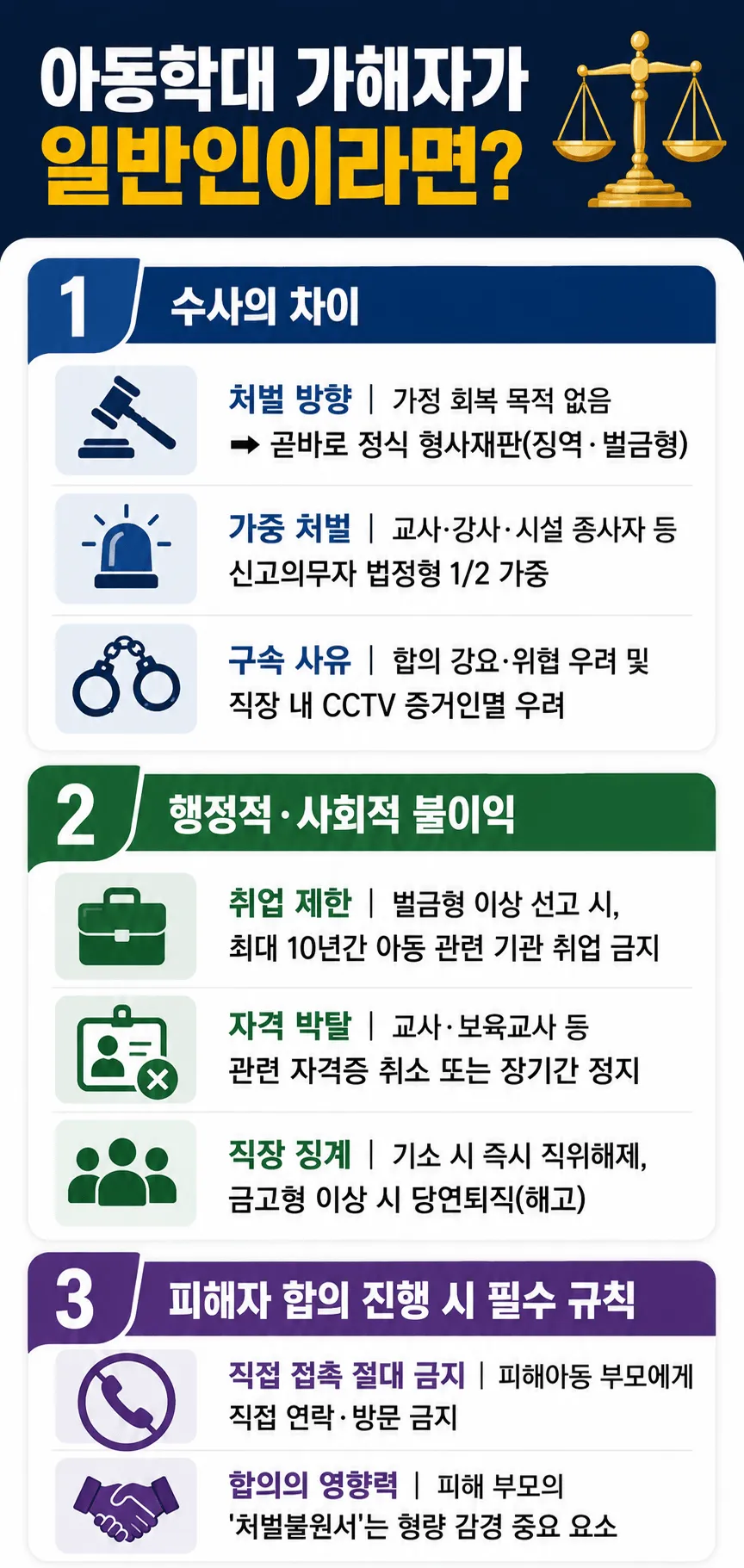
When the perpetrator of child abuse is not a parent with parental authority but an ordinary person such as a teacher, a neighbor, or a relative, the approach of the judicial authorities and the points of risk management differ greatly from those in a parent's case.
The characteristics and additional disadvantages faced from the standpoint of an ordinary-person perpetrator are as follows.
3. Child Abuse Charges Should Be Resolved by Retaining a Child Abuse Attorney
Because investigative agencies apply strict criteria to cases involving children, there is a possibility of an unfavorable outcome if an individual responds alone.
The child abuse attorney comprehensively analyzes the nature of the case and the client's situation, and responds with the following strategy.
The Child Abuse Attorney's Assistance
1) Legal Screening as to Whether the Conduct Constitutes Child Abuse
The child abuse attorney first examines whether the conduct at issue actually constitutes an ‘act of abuse’ under the Child Welfare Act.
Because emotional remarks, momentary words or conduct, and conduct occurring in the course of protection or guidance must be distinguished from abuse under the law, the attorney judges the possibility that the charge is established and designs the defense logic with a focus on whether the elements are satisfied.
2) Systematic Explanation of the Degree, Continuity, and Intent of the Conduct
In a child abuse case, the intensity, repetitiveness, and intentionality of the conduct become important factors in the determination.
The child abuse attorney distinguishes and organizes whether the conduct was accidental, whether it constitutes continuous abuse, and whether there was intent, and logically conveys to the investigative agency that the need for punishment is low.
3) Active Defense Through the Submission of Written Opinions and Materials at Each Investigation Stage
The written opinions and materials submitted during the police investigation and at the stage of determining whether to refer the case can determine the direction of the case.
The child abuse attorney organizes the statement strategy in advance and composes a written opinion centered on grounds for mitigation and the low risk of reoffending, responding so that the matter does not lead to unnecessary criminal proceedings.
Daeryun Law Firm, the 9th-ranked law firm in the Republic of Korea (based on 2025 value-added tax filings), forms a task force of 1 to 20 members, including a child abuse specialist attorney and a criminal law specialist attorney, depending on the nature of the matter, and reviews a stage-by-stage response.
If you are in a situation that requires the assistance of a child abuse specialist attorney, please use the 🔗Legal Consultation Booking to consult on a review of the overall case and the direction of the response.

This content is based on actual case studies of Daeryun Law LLC with some adaptations, and the copyright belongs to our firm.
Unauthorized reproduction, duplication, or distribution and other copyright infringements may result in legal action under applicable laws.