CONTENTS
- 1. The Client Who Requested a Lawsuit for Return of Unjust Enrichment

- - What Is a Lawsuit for Return of Unjust Enrichment?
- 2. Assistance for the Lawsuit for Return of Unjust Enrichment
- 3. The Result of the Lawsuit for Return of Unjust Enrichment: Success in Recovering Part of the Deceased's Claimed Property

1. The Client Who Requested a Lawsuit for Return of Unjust Enrichment
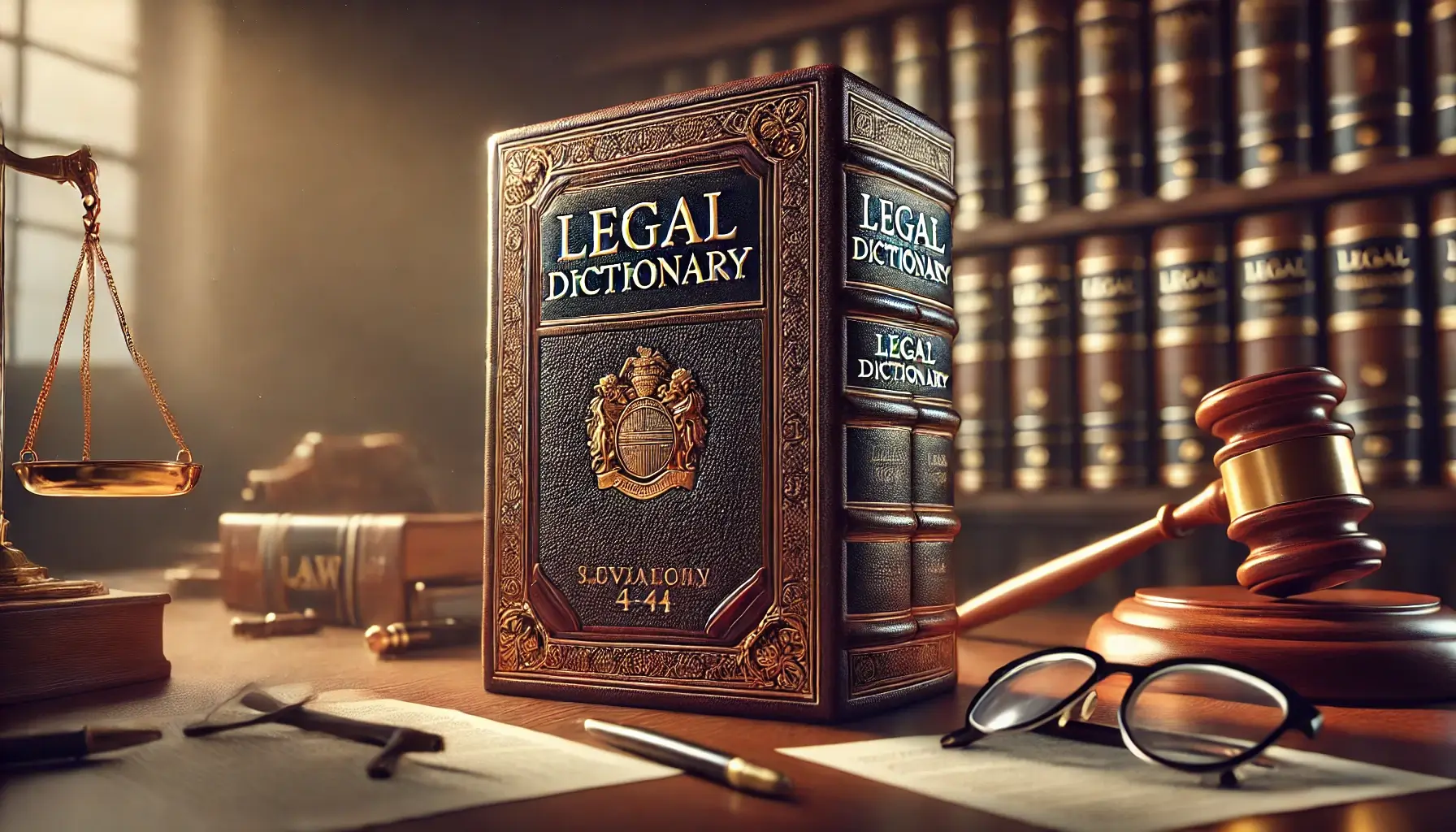
This is the story of how we assisted a client who requested a lawsuit for the return of unjust enrichment.
The client was the deceased's uncle, who had served as a de facto father figure.
After the deceased suddenly passed away, the deceased's biological mother, whom the client had never once met, came to inherit the deceased's property.
The client argued that it was unjust for the defendant (the deceased's biological mother) to inherit all of the deceased's property, and he requested advice from a Daeryun attorney.
The Daeryun attorney advised that, through a lawsuit for the return of unjust enrichment, they recover part of the deceased's property, and the attorney assisted the client and set about preparing the lawsuit.
 The Circumstances of the Client Who Requested Assistance With the Unjust Enrichment Lawsuit
The story of the client who requested assistance with the return of unjust enrichment is as follows.
The client was the deceased's uncle. After the client's older brother divorced, the brother asked the client to raise the deceased, who was then a newborn, and left as if fleeing, so the client and his wife came to take sole charge of raising the deceased.
At the time, the defendant said to the client, "Tell the child that his mother is dead. I do not have the means to raise him, so put him in an orphanage," and then cut off all contact.
So that the deceased would not feel the absence of his biological parents, the client and his wife devotedly cared for him for twenty-five years.
However, the deceased suddenly passed away in a traffic accident.
The deceased's biological father had already passed away, and under current law the defendant, who had fled as if abandoning the deceased, was the first-priority heir, so the defendant came to inherit all of the deceased's property.
The client felt that it was not right for the defendant, who had abandoned and left the deceased, to inherit all of the property, and he resolved to recover a portion through a lawsuit for the return of unjust enrichment.
What Is a Lawsuit for Return of Unjust Enrichment?
A lawsuit for the return of unjust enrichment is a lawsuit that legally seeks the return of a benefit from a person who has obtained a benefit by using another's property or labor without a legal cause.
A lawsuit for the return of unjust enrichment is a lawsuit that arises in various areas of everyday life.
What is important in a lawsuit for the return of unjust enrichment is proving that loss occurred through the use of my property or real estate, beyond the fact that the other party obtained a benefit.
In other words, to bring a lawsuit for the return of unjust enrichment, the following requirements must be met: ▲there is no legal cause, ▲loss occurs to me, ▲the other party obtains a benefit, and ▲there is a causal relationship between the two.
Even though there was the defendant as the person entitled to inherit, the client bore all of the deceased's funeral expenses and the like.
The attorney in charge emphasized that the defendant has an obligation to return those expenses to the client, who had paid the funeral expenses and the like on the defendant's behalf.


2. Assistance for the Lawsuit for Return of Unjust Enrichment
The attorney set about providing assistance for the lawsuit for the return of unjust enrichment.
Arguing That the Client Had Been the De Facto Caregiver of the Deceased
The attorney argued that the client had been the de facto caregiver of the deceased.
The attorney submitted as evidence past photographs taken by the client and his wife while raising the deceased over the years, along with the fact that the contact details of the client and his wife had always been listed as the deceased's emergency contacts at his school and elsewhere.
In addition, through the testimony of the deceased's friends, the attorney submitted as further evidence the fact that the deceased had grown up in the home of the client and his wife and that they were no different from his actual parents.
Arguing That the Defendant Had No Qualification to Inherit
The client's attorney argued that, based on the restriction of inheritance rights for a person disqualified from inheritance, the defendant had no qualification to inherit.
On August 28, 2024, the so-called Gu Hara Act, which strips the inheritance rights of a parent who has abandoned the duty to raise a child, passed the plenary session of the National Assembly and is scheduled to take effect in 2026.
Cases arising after the Constitutional Court's ruling of nonconformity with the Constitution regarding the legally reserved portion (April 25, 2024) may also have the Gu Hara Act applied to them.
The act, commonly known as the Gu Hara Act, is a statute that restricts the inheritance rights of a person disqualified from inheritance who has not fulfilled the duty to raise a child.
Under the amendment, if a parent abandons or abuses a child and fails to fulfill the duty of care, the parent may lose the right of inheritance.
Previously, there was insufficient basis to restrict inheritance rights, but with this amendment it has become possible to restrict inheritance rights where a person has abandoned a familial duty.
This means that not merely inheritance based on blood ties, but whether the duties of care and responsibility have been performed has been included in the criteria for determining inheritance.
The client's attorney argued that the defendant, as a mother, had not cared for the deceased at all, and emphasized that the defendant had no qualification to inherit the deceased's property.
3. The Result of the Lawsuit for Return of Unjust Enrichment: Success in Recovering Part of the Deceased's Claimed Property
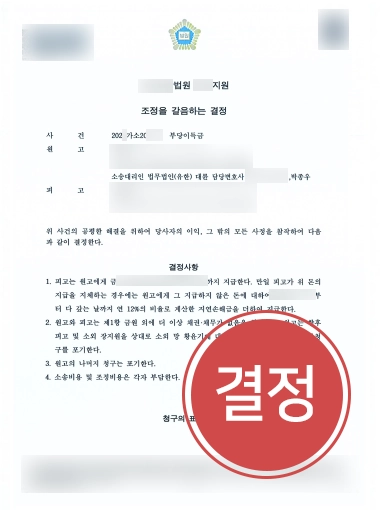
As a result of the lawsuit for the return of unjust enrichment, the client succeeded in recovering part of the claimed property of the deceased.
As with the client in the case above, there are cases where a parent who has not fulfilled the duty of support claims inheritance rights upon the sudden death of a child.
Before the case of the late Ms. Gu, there was the controversial case in which the biological mother of a soldier, A, who died in the 2010 Cheonan ship incident, appeared after twenty-eight years and demanded inheritance of the survivors' compensation.
If a dispute arises regarding the inheritance of a deceased person's property in a situation like the above, it is recommended to review the case from a legal perspective through a consultation with an attorney and to devise an appropriate response.
At Daeryun Law Firm, attorneys provide response strategies tailored to the client's situation by using AI that has learned from hundreds of thousands of precedent data points.
If you are seeking a referral to an attorney in connection with unjust enrichment, we hope you will turn to Daeryun Law Firm.
This content is based on actual case studies of Daeryun Law LLC with some adaptations, and the copyright belongs to our firm.
Unauthorized reproduction, duplication, or distribution and other copyright infringements may result in legal action under applicable laws.