
CONTENTS
- 1. Client Who Gave Notice of Contract Termination for Violation of the Trade Secret Protection Act

- - Account of a Client Who Sought Contract Termination for a Trade Secret Protection Violation
- - What Is the Trade Secret Protection Act?
- 2. Assistance for a Claim in the Damages Lawsuit by a Plaintiff That Violated the Trade Secret Protection Act
- - Trade Secret Infringement 1. Argument That the Fault Lies with the Plaintiff
- - Trade Secret Infringement 2. Criminal Proceedings Related to Trade Secrets in Progress
- 3. Judgment That the Termination of Dealings Was Justified for a Violation of the Trade Secret Protection Act

1. Client Who Gave Notice of Contract Termination for Violation of the Trade Secret Protection Act
The corporate client who gave a business partner notice of contract termination for violating the Trade Secret Protection Act was sued by that business partner with a claim for damages on the ground of a fair trade violation.
The business partner claimed that the client had unilaterally refused the contract and filed a claim for damages amounting to about 600 million won.
In particular, the business partner argued that the client's company had terminated the contract on improper grounds and that this constituted a violation of the Monopoly Regulation and Fair Trade Act.
The client explained that the contract termination had been justified and requested a response to the business partner's claim for damages.
Although the business partner had its claim dismissed at the first instance, it had filed an appeal.
For the first-instance judgment to be upheld, the legal grounds had to be strengthened further, and a defense strategy refuting the grounds of appeal had to be established.
Daeryun Law Firm also re-examines the litigation conducted by other law offices and proposes correctable measures.
The client requested a defense at the appellate stage, and Daeryun Law Firm formed a response team of attorneys experienced in fair trade, corporate matters, and damages and responded immediately.
 Account of a Client Who Sought Contract Termination for a Trade Secret Protection Violation
To provide a defense strategy best suited to the situation, Daeryun Law Firm set out to understand the case through a thorough consultation.
The client's company is a manufacturer that makes products such as industrial glass, and the business partner (hereinafter the plaintiff) is a wholesale and retail seller.
The plaintiff entered into a dealership contract with the client and had done business for a long time.
At one point, the client's company discovered that the plaintiff had established a manufacturer in the same industry and had taken the company's proprietary technology.
In response, the client's company gave notice of contract termination to the plaintiff, which had taken its trade secrets, and stopped supplying its products.
The plaintiff claimed that the taking of trade secrets was entirely untrue, asserted that it had been unilaterally refused the contract, and filed a claim for damages of about 600 million won.
What Is the Trade Secret Protection Act?
🔗A trade secret refers to technical or managerial information that is not disclosed to the public and is confidentially managed within a company, such as production methods, sales strategies, or other information useful for business operations.
We will explain the representative types of information that can be protected as trade secrets.
-Technical information
Product and facility design drawings, product manufacturing methods, raw material formulation information, test data, and the like
-Managerial information
Customer lists, key plans, management information, manuals, and the like
For information to qualify as a trade secret, it must be not publicly known, hold technical or managerial value, and be managed as confidential.
If a person infringes a trade secret, the person may be punished by imprisonment for not more than 10 years or a fine not exceeding 500 million won.
If an amount equal to 10 times the financial gain from the infringing act exceeds 500 million won, a fine of not less than twice and not more than 10 times that financial gain may be imposed, and aggravated punishment applies in the case of disclosure abroad.


2. Assistance for a Claim in the Damages Lawsuit by a Plaintiff That Violated the Trade Secret Protection Act

This is the client's company, which gave notice of contract termination to the plaintiff that had violated the Trade Secret Protection Act.
However, the plaintiff instead claimed that it had been improperly given notice of contract termination and filed a 🔗damages lawsuit over this.
The attorney team in charge of the client's case argued to establish the plaintiff's infringement of trade secrets and to assert that the resulting contract termination had been justified.
Trade Secret Infringement 1. Argument That the Fault Lies with the Plaintiff
The attorney in charge argued that the fault for the refusal of dealings lay with the plaintiff.
The plaintiff secretly established Company A without the client's knowledge and then planted Outsider 1 in the client's company under false pretenses in order to extract the client company's manufacturing process.
Outsider 1 took up disguised employment in the R&D team of the client's company while concealing the fact of having co-founded the plaintiff's Company A.
Afterward, Outsider 1 stated that he wished to learn not only his original assigned duties but also techniques such as raw material formulation and analysis, and diverted all trade secret materials related to them.
The special glass manufacturing process of the client's company cannot be used to develop, manufacture, and produce products in a short period without specific knowledge of that technology.
The plaintiff's Company A manufactured and sold the glass in question only three months after establishing its factory.
The Daeryun attorney in charge argued that trust had been broken by acts such as the disguised employment and explained the reasons why the client's company had no choice but to stop dealing with the plaintiff.
Trade Secret Infringement 2. Criminal Proceedings Related to Trade Secrets in Progress
The client's company has filed a criminal complaint against the plaintiff for offenses such as disclosure of trade secrets, and criminal proceedings are currently in progress.
The attorney in charge argued that the plaintiff's claim for damages was without merit and requested that the claim be dismissed.
3. Judgment That the Termination of Dealings Was Justified for a Violation of the Trade Secret Protection Act
This is the client's company, which gave notice of termination of dealings for a violation of the Trade Secret Protection Act.
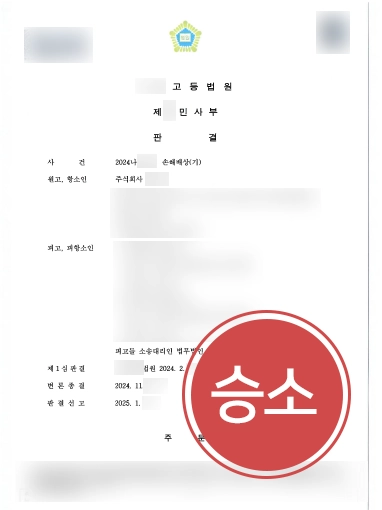
The court issued a judgment stating, "The cause of the client company's contract termination lies with the plaintiff, and the contract termination appears to be an act based on managerial necessity. The plaintiff's claim, filed as a damages lawsuit on the ground that it was unilaterally refused the contract, is without merit."
In this case, the key issue was to prove that the contract termination had been lawful and to refute the grounds for the claim for damages presented by the plaintiff.
Through the assistance of a response team made up of attorneys experienced in fair trade, corporate matters, and damages, Daeryun Law Firm proved that the contract termination against the business partner that had infringed trade secrets had been justified.
This content is based on actual case studies of Daeryun Law LLC with some adaptations, and the copyright belongs to our firm.
Unauthorized reproduction, duplication, or distribution and other copyright infringements may result in legal action under applicable laws.