
CONTENTS
- 1. Unauthorized Intrusion upon Habitation | Case Background

- - The Reason for Entering the Victim's Residence
- - Reported for Intrusion upon Habitation
- 2. Unauthorized Intrusion upon Habitation | Case Review
- - The Issues
- - Review of the Relevant Legal Principles
- 3. Unauthorized Intrusion upon Habitation | Details of the Assistance
- - The Client Is Remorseful
- - No Intent
- - Efforts to Prevent Reoffending
- 4. Unauthorized Intrusion upon Habitation | Concluded With Suspension of Indictment After Clarifying the Client's Position

1. Unauthorized Intrusion upon Habitation | Case Background
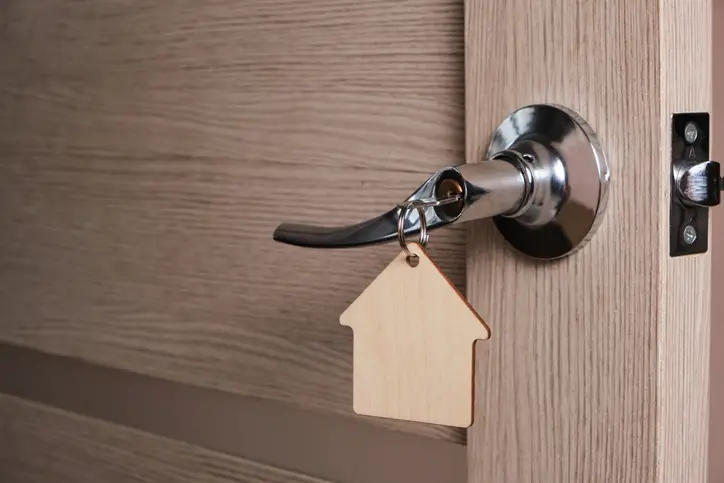
The client, who was alleged to have committed an unauthorized intrusion upon habitation, stated that he had visited the home of his former girlfriend but, hearing no sign of anyone inside the room, opened the door and entered out of concern that she might be in a serious situation.
The reason, he said, was that because the victim had until recently sent messages suggesting suicide or had actually attempted suicide, he had no choice but to open the door and enter to check on her condition.
He added that, in the past, he had similarly entered the home in such situations to check on the victim's condition.
 The Reason for Entering the Victim's Residence
The client stated that, having broken up with the victim a short while later, he had visited her home to say a final goodbye.
He stated that, seeing from outside that the lights inside the home were on but there being no sign of anyone even after he rang the doorbell, he hurriedly opened the door and went in out of concern that an emergency might have occurred.
However, the victim expressed great displeasure at the client's act of intrusion upon habitation and reported it to the police.
The client claimed that he had acted out of a desire to help the victim, but the victim regarded it as an intrusion, stating that the client had entered her home without permission, and reported it to the police.
Reported for Intrusion upon Habitation
Recalling the circumstances at the time, the client felt deeply wronged.
He asserted that he had urgently opened the door and entered to check on the complainant's safety, but the complainant regarded the client's conduct as offensive and took legal action.
In the end, after investigating the case, the police determined that there was a basis for the charge and referred the client to the prosecution.
2. Unauthorized Intrusion upon Habitation | Case Review
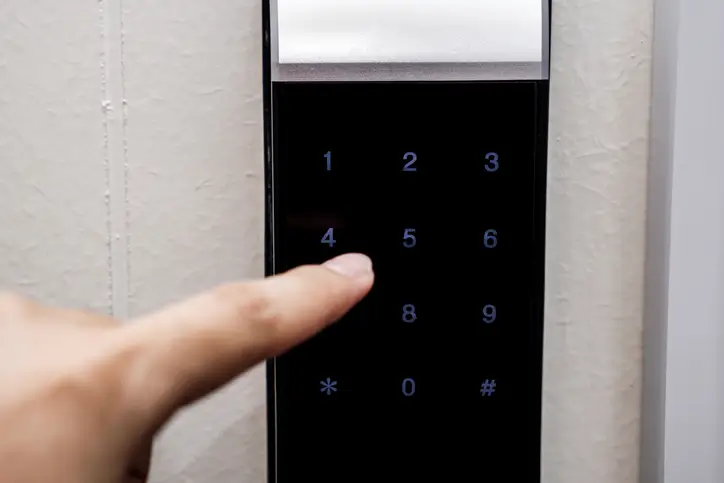
After examining the situation of unauthorized intrusion upon habitation, the attorney identified the issues and then reviewed the legal principles related to intrusion upon habitation in order to mount a defense.
The Issues
The client explained that the reason he opened the door and entered was an urgent situation to check on the victim's condition.
Therefore, whether the client's act of intrusion upon habitation was intentional, or an unavoidable act in an urgent situation, became a key issue.
For an intrusion upon habitation charge to be established, an act of 'entering another person's residence without permission' is required.
The client could argue that, considering his past relationship with the victim and the urgent situation, the act of entering another person's residence was carried out without illegality.
In other words, whether illegality was negated even though permission was not obtained from the other party at the time of entering the residence was an important issue.
Whether the reason the victim reported the client's intrusion had a legal basis, or whether the legal response was an emotional reaction, also became an important issue.
Review of the Relevant Legal Principles
🔗Intrusion upon habitation is the act of entering another person's residence without that person's consent or trespassing on a place where that person legitimately resides.
Through this, it had to be determined whether the client's conduct constituted intrusion upon habitation.
In particular, according to Supreme Court Judgment 2020Do12630, the crime of intrusion upon habitation is not determined merely by whether the resident consented, but rather whether the 'de facto peace of the residence' was infringed has become a primary criterion for the determination.
In other words, it can be seen that, even if there was outward entry, the determination focuses on whether the psychological stability and peace that the victim feels in the living space were substantially infringed.
Accordingly, if the client's conduct were recognized as intrusion upon habitation, he could face imprisonment for up to 3 years or a fine of up to 5 million won, and, in particular, considering that the victim strongly demanded severe punishment, the possibility of an actual custodial sentence could not be ruled out.
3. Unauthorized Intrusion upon Habitation | Details of the Assistance

The Daeryun Law Firm attorney who took on the unauthorized intrusion upon habitation case sought to assist the client by arguing as follows.
In particular, the attorney sought to defend against an actual custodial sentence by emphasizing that there was no intent to commit intrusion upon habitation.
The Client Is Remorseful
The client deeply reflects on his conduct and, after the incident occurred, sincerely conveyed an apology to the victim.
In particular, the client deeply regrets having unlawfully entered the home out of concern for the condition of his ex-girlfriend.
He expressed that he acknowledges having misjudged the situation in a state of heightened emotion, and is seriously reflecting on the fact that the victim may have felt discomfort.
No Intent
The client emphasized that they had not intentionally attempted to commit intrusion upon habitation.
The client explained that the reason they opened the door and entered was simply concern for the victim's condition, and that, thinking a serious situation might arise, they urgently opened the door and entered.
The client argued that, because the act prioritized the victim's safety above all in the circumstances at the time, it was not an intentional intrusion.
Efforts to Prevent Reoffending
Since the incident, the client has been making efforts to maintain mental stability and to support self-reflection in order to prevent reoffending.
In particular, the client completed a law-abiding awareness education program and once again felt a renewed sense of caution regarding criminal conduct and reflected on it.


4. Unauthorized Intrusion upon Habitation | Concluded With Suspension of Indictment After Clarifying the Client's Position
The client, who committed an unauthorized intrusion upon habitation, entered the home out of concern that his former girlfriend might take her own life, and it was not an intentional unauthorized intrusion.
The Daeryun attorney who took on this case explained the course of events in detail and emphasized that the conduct stemmed from the client's affection.
In the end, thanks to the attorney's assistance, the client was able to receive a suspension of indictment disposition.
As in this case, when reported for an unintended criminal act, people sometimes panic and miss the early response.
To prevent this, it is important to establish a response strategy with a specialist attorney through a 🔗legal consultation reservation from the early stages of the case and to defend thoroughly.
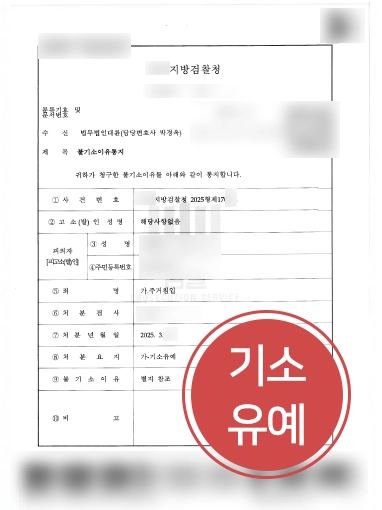
This content is based on actual case studies of Daeryun Law LLC with some adaptations, and the copyright belongs to our firm.
Unauthorized reproduction, duplication, or distribution and other copyright infringements may result in legal action under applicable laws.