
CONTENTS
- 1. Client Who Received a First-Instance Suspended Sentence for Violation of the Medical Service Act

- - What Is a Violation of the Medical Service Act?
- 2. Assistance Toward Dismissal of the Appeal for the Client Charged with Violation of the Medical Service Act
- - Medical Service Act Attorney: Argument on the Motive for Performing the Work
- - Medical Service Act Attorney: Argument on the Facts
- - Medical Service Act Attorney: Emphasizing the Attitude of Remorse
- 3. Client Charged with Violation of the Medical Service Act; Prosecutor's Appeal Dismissed
- - Violation of the Medical Service Act: Why an Attorney May Be Needed

1. Client Who Received a First-Instance Suspended Sentence for Violation of the Medical Service Act
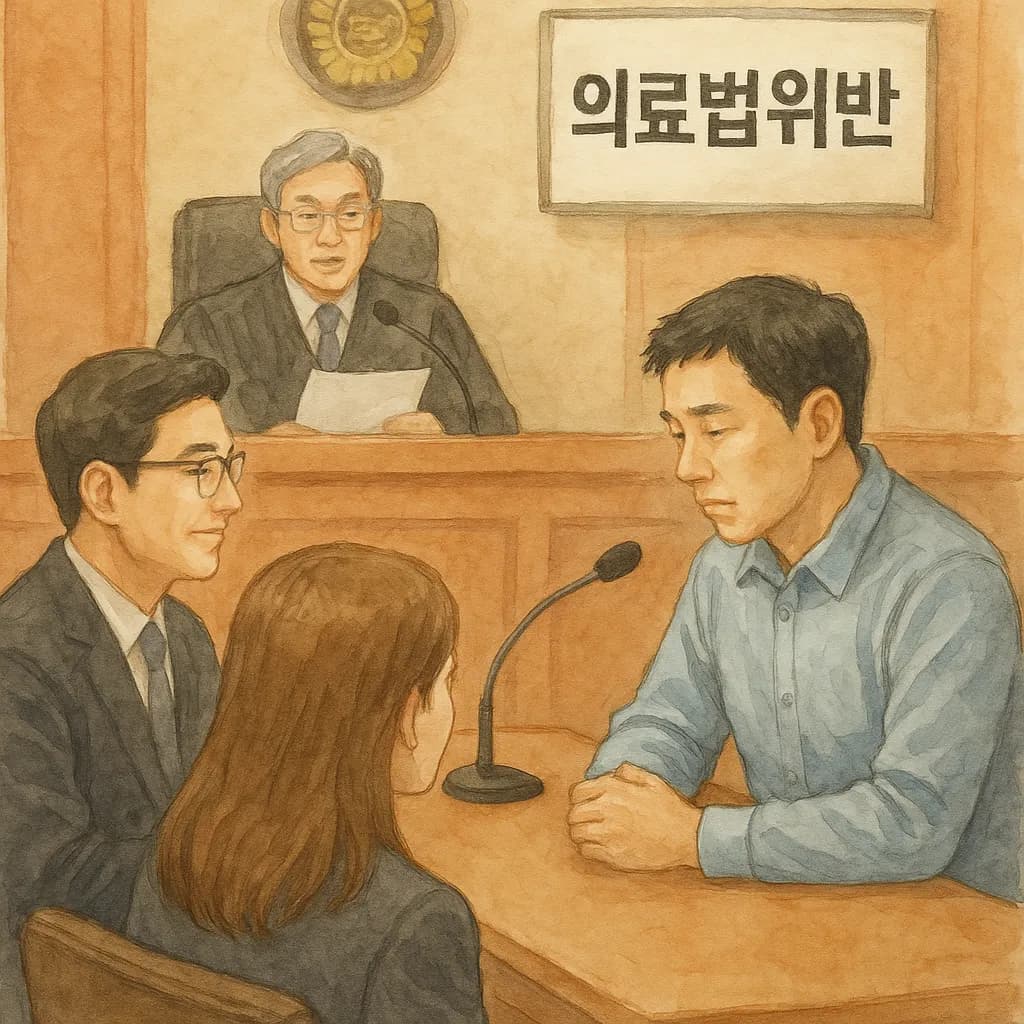
This is the account of a client who received a suspended sentence at the first instance for violation of the Medical Service Act.
The client is a nurse who had been in charge of pain management duties at a pain treatment center.
The hospital hired the client as a mid-level manager in the department of pain medicine and, internally, gave him the title of head of the department of pain medicine.
Following the hospital's instructions, the client had performed overall pain treatment assistance duties, such as preliminary assessment of pain patients' condition, preparation before procedures, and recovery management after procedures, and had also directly performed specialized injection procedures to a certain extent.
However, the client's acts were medical acts that only a doctor may perform, and accordingly the client was indicted for violation of the Medical Service Act and received a suspended sentence at the first instance.
However, the prosecutor, judging the sentence to be light, filed an appeal, and the client again requested that Daeryun Law Firm, which had defended against an imprisonment criminal punishment at the first instance, respond to the appellate trial.
 What Is a Violation of the Medical Service Act?
🔗Violation of the Medical Service Act refers to a case in which a medical professional commits an act prohibited by the Medical Service Act, or violates the provisions concerning the establishment and operation of a medical institution.
Medical professionals as defined under the Medical Service Act are doctors, dentists, oriental medical doctors, midwives, and nurses.
If a person without one of these five licenses performs medical acts such as diagnosis, treatment, prescription, or surgery, this naturally constitutes 🔗unlicensed medical practice and a violation of the Medical Service Act.
Even a medical professional, however, may likewise be punished for a violation of the Medical Service Act if the person performs an act beyond the scope of their license.
As in the case of the client, a nurse may perform nursing and assist a doctor's medical treatment as prescribed by the Nursing Act, but may not perform medical acts independently.
Let us examine the acts that may readily constitute a violation of the Medical Service Act at a medical institution.
However much a patient may request it, if an employee who is not a doctor directly performs a procedure such as high-frequency treatment, this may be regarded as unlicensed medical practice prohibited under Article 27 of the Medical Service Act.
Moreover, even a medical professional may not perform a medical act beyond the scope of the license granted to them. A violation of this may result in imprisonment with labor for up to 5 years or a fine of up to 50 million won.
There was also a case in which the director of Medical Institution B, at the request of a fellow doctor working as a commissioned physician at a social welfare facility, intermittently treated elderly people in care and a violation of the Medical Service Act was then raised.
In this case, the issue was that the person performed medical acts outside a medical institution even though they were not a formally designated commissioned physician.
Under the Medical Service Act, a doctor may practice medicine only within the medical institution where they are registered, and exceptions are recognized only where the State or the head of a local government requests it as being necessary for the public interest, or where an emergency patient is treated.
If medical treatment is performed outside a medical institution without meeting these requirements, this may constitute a violation of the Medical Service Act and result in a fine of up to 5 million won or a 3-month suspension of qualification.


2. Assistance Toward Dismissal of the Appeal for the Client Charged with Violation of the Medical Service Act
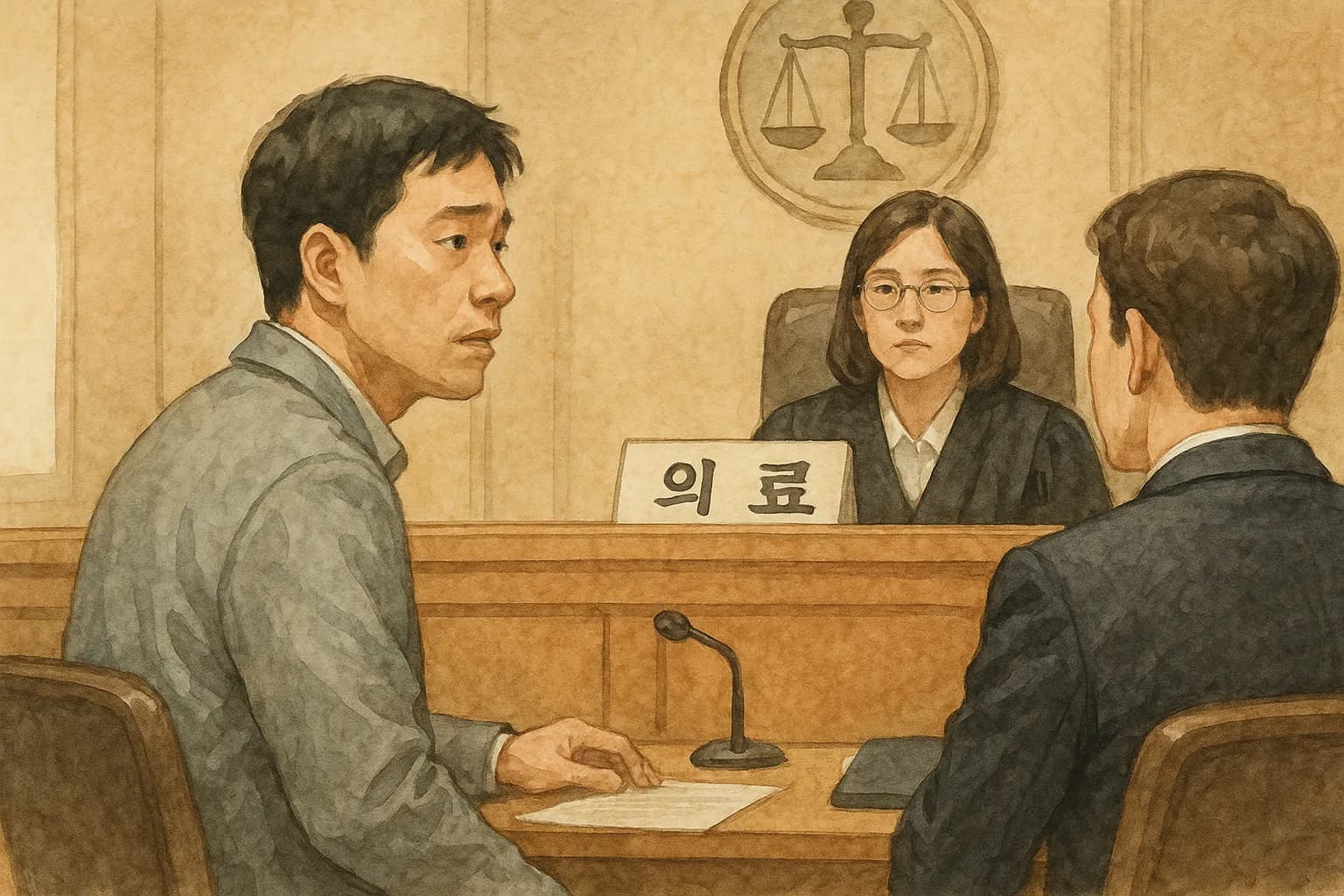
We assisted the client charged with violation of the Medical Service Act and set out to establish a defense strategy to have the prosecutor's appeal dismissed and the first-instance judgment maintained.
The medical-field attorney with relevant expertise first examined the grounds of the prosecutor's appeal.
2. The medical act in this case is a specialized medical act, and the absence of a timely diagnosis by a doctor could cause serious aftereffects.
3. There is no sign of remorse whatsoever.
Medical Service Act Attorney: Argument on the Motive for Performing the Work
The medical law specialist attorney rebutted the prosecutor's ground of appeal that the nature of the offense was grave because the work had been performed over a long period.
The client had not engaged in unauthorized medical practice for personal gain, but had performed the procedure work in accordance with the hospital's chain of command and supervision and its work instructions.
The medical law specialist attorney emphasized that the client was in a structurally subordinate relationship in which refusing such instructions could result in a disadvantage in the employment relationship.
The attorney also emphasized that the client had not independently planned or led the work, nor operated it for profit, and rebutted that the nature of the offense could not be assessed as grave on the sole basis of having performed it over a long period.
Medical Service Act Attorney: Argument on the Facts
The medical law attorney rebutted the prosecutor's grounds for appeal, which claimed that the absence of timely diagnosis by a doctor could cause serious aftereffects.
The client was a specialist nurse who, over several years, had assisted with the procedure in question and had acquired proficiency through sufficient education and practice, and there had been no case whatsoever of a serious complication or harm to a patient.
The medical law attorney emphasized that all essential medical judgments, such as the decision on whether to perform the procedure, the establishment of the procedure plan, and the handling of emergency situations, were carried out by the doctor, and that the client carried out only the technical performance in accordance with the doctor's decisions.
Medical Service Act Attorney: Emphasizing the Attitude of Remorse
The prosecutor argues that the client denied the offense before the investigative agency and only confessed after receiving the assistance of defense counsel in the court of first instance, so it cannot be regarded as genuine reflection.
The medical law attorney argued that the client had merely given work instructions and had not been aware that his conduct was a significant unlawful act.
Afterward, the client came to reflect seriously on his conduct and acknowledged that the offense he had committed was a clear act of unlicensed medical practice deserving of censure, and came to repent deeply.
The medical law attorney emphasized that the client was deeply reflecting and that he had been compelled to act under the instructions of the hospital director, and requested dismissal of the prosecutor's appeal.
3. Client Charged with Violation of the Medical Service Act; Prosecutor's Appeal Dismissed
As a result of assisting the client charged with violation of the Medical Service Act, the appellate court maintained the first-instance judgment as it was and dismissed the prosecutor's appeal.
The court likewise recognized that the client had performed the duties in accordance with the structural instructions within the hospital, and it positively assessed the fact that no patient safety accident had occurred and that follow-up management had also been carried out without problems.
The court also determined that, considering the client's reflection and efforts to prevent recurrence, there was no reason to impose a heavier punishment.
Violation of the Medical Service Act: Why an Attorney May Be Needed
A charge of violation of the Medical Service Act does not merely take issue with the treatment conducted by an unlicensed person; it is a very complex and sensitive area in that even a medical professional may incur criminal liability where they perform diagnosis, procedures, or treatment beyond the scope of their license.
In particular, in medical settings, there are many cases in which a person comes to perform work beyond the scope of their own qualifications due to internal hospital instructions, established practices, or patient requests.
When a charge of violation of the Medical Service Act is raised, the defense must thoroughly review whether the work fell within the scope of one's own license or within the scope of assisting in treatment.
Daeryun Law Firm has a 🔗medical specialist attorney with experience in numerous medical-related cases who handles ▲ criminal defense for violations of the Medical Service Act ▲ responses to medical professional license and administrative dispositions, and provides one-stop legal services extending to subsequent consulting for medical institutions.
Related News


Watch related video content
for this case study.

Complex and difficult medical litigation, what is the success strategy?

This content is based on actual case studies of Daeryun Law LLC with some adaptations, and the copyright belongs to our firm.
Unauthorized reproduction, duplication, or distribution and other copyright infringements may result in legal action under applicable laws.