
CONTENTS
- 1. The Client Facing a Detention Warrant Review Hearing

- - The Client Who Sought Assistance From the Military Law Attorney
- - The Charges Applied to the Client
- 2. What Is a Detention Warrant Review Hearing?
- - The Review Procedure
- - Average Detention Warrant Dismissal Rate
- 3. The Defense Strategy Presented at the Detention Warrant Review Hearing
- - Military Law Attorney's Strategy ① | Supplementing the Background and Context of the Statements
- - Military Law Attorney's Strategy ② | Arguing the Absence of Malicious Purpose and Intent
- - Military Law Attorney's Strategy ③ | Raising Legal Questions About the Special Prosecutor's Investigative Authority
- - Military Law Attorney's Strategy ④ | Arguing the Absence of Any Need for Detention
- - Military Law Attorney's Strategy ⑤ | Ensuring Safety During the Appearance
- 4. Result of the Detention Warrant Review Hearing: Dismissal of the Detention Warrant
- - What It Takes to Have a Detention Warrant Dismissed

1. The Client Facing a Detention Warrant Review Hearing

The client, who was facing a substantive review of a detention warrant, was a person who had served as a senior military official and carried out major national defense matters during a former president's term in office.
In connection with a particular matter within the military, the client appeared as a witness at a National Assembly hearing and stated that they had not directly heard about the allegation of political external pressure, and had refused to give some testimony on the ground of their status as a suspect.
However, the special prosecution team determined that the statement was inconsistent with the facts and that the refusal to testify had also been made without justifiable grounds, and applied for a detention warrant on charges of perjury intended to harm and violation of the Act on Testimony, Appraisal, etc. before the National Assembly (perjury).
 The Client Who Sought Assistance From the Military Law Attorney
This case is a matter with significant political and social repercussions related to a soldier who died in the line of duty, and the testimony at the hearing was treated all the more seriously because it drew attention as a key basis for gauging whether there had been external intervention.
Accordingly, in order to establish the genuineness and legitimacy of his statements and to fully exercise his right of defense, the client thoroughly prepared for the examination of the detention warrant together with a military attorney.
During the interrogation, the client sought to supplement the context of his statements by adding an explanation to the effect that, although he remembered hearing the remarks at the time, their clear source could not be confirmed.
The Charges Applied to the Client
The charges applied to the client were violation of the National Assembly Testimony and Appraisal Act and aggravated perjury intended to harm.
The client appeared as a witness at a National Assembly hearing and made false statements after taking an oath, which constituted a violation of Article 14, Paragraph 1 of the "Act on Testimony, Appraisal, etc. before the National Assembly," the offense of perjury charge was applied.
At the same time, that statement was deemed to have been made for the purpose of harming a specific person, so the charge of aggravated perjury intended to harm under Article 152, Paragraph 2 of the "Criminal Act" was also applied.
Both charges are regarded as serious crimes that undermine judicial order, and aggravated perjury intended to harm in particular carries a heavier sentence than ordinary perjury.
Level of Punishment
Legal Provision | Level of Punishment |
Aggravated perjury intended to harm (Criminal Act Article 152, Paragraph 2) | Imprisonment for up to 10 years |
Perjury and related crimes (National Assembly Testimony and Appraisal Act Article 14) | Imprisonment for not less than 1 year and not more than 10 years |


2. What Is a Detention Warrant Review Hearing?
A substantive review of a detention warrant is a procedure in which, before the court issues a detention warrant upon the prosecutor's request, the court directly examines the suspect and determines whether detention is necessary.
This is a constitutional system intended to guarantee the suspect's physical freedom and to prevent arbitrary detention by investigative agencies.
Significance of the System
Purpose | Description |
Guarantee of the right of defense | Guarantees the suspect an opportunity to make a statement and the assistance of counsel |
Prevention of arbitrary detention | Checks unreasonable detention requests by investigative agencies |
Substantive determination | The judge decides after directly examining the suspect and related parties |
The Review Procedure
For a suspect who has not been arrested, the judge may, as needed, first issue a detention warrant to bring the suspect in and then conduct the questioning.
After the suspect is brought in, the date and place of questioning are notified immediately, and the questioning proceeds.
At this stage, the questioning procedure proceeds as follows.
Procedure | Description |
Notice of the right to remain silent | The suspect is informed that he may refuse to make a statement |
Identity questioning | Confirmation of the suspect's information, such as name, address, and occupation |
Notice of the alleged facts | Notice of the contents of the detention warrant application |
Questioning of the suspect | The judge directly questions the necessary matters, and assistance of defense counsel is available |
Statements by related persons | The prosecutor, defense counsel, legal representative, victim, and others may state their opinions |
Decision on detention | After the questioning ends, the court determines whether to issue the detention warrant |
Average Detention Warrant Dismissal Rate
The examination of a detention warrant is an important procedure for safeguarding the suspect’s physical liberty, but filing for the examination does not necessarily mean that the warrant will be dismissed.
In practice, a substantial portion of cases in which a detention warrant has been requested are issued as requested after the court’s examination.
According to statistics from the National Court Administration, the average dismissal rate for detention warrants at district courts nationwide over the past 3 years is as follows.
∙ 2022 : 18.6%
∙ 2023 : 20.5%
Although the dismissal rate is rising slightly, about 80% of all requests still result in the issuance of a detention warrant.
In other words, although the examination of a detention warrant is a procedure for safeguarding the rights of the suspect, the court still issues warrants under a strict standard only where the necessity of detention is recognized.
3. The Defense Strategy Presented at the Detention Warrant Review Hearing

The client, who came to face a substantive review of a detention warrant, with the help of a military specialist attorney thoroughly prepared for the examination based on the following defense strategy regarding the suspicion of perjury and perjury intended to harm in connection with statements made at the hearing.
Because this case takes issue with the testimony of a high-ranking figure in connection with allegations of external pressure regarding a particular matter within the military, it was important to guarantee the right of defense and to accurately clarify the context of the statements.
Military Law Attorney's Strategy ① | Supplementing the Background and Context of the Statements
Regarding the specific remarks that became the core background of the detention warrant request, the client initially stated that he had ‘not heard them directly,’ but during the questioning he explained that having said so was a judgment made in order to handle prudently an informal rumor within the military.
That is, out of concern that it might be mistaken for an official direction or order, he could not state definitively in court matters whose truth was uncertain.
Military Law Attorney's Strategy ② | Arguing the Absence of Malicious Purpose and Intent
The attorney emphasized that the statement did not arise from an intent to harm any specific person.
The attorney made clear that the client had testified within the limited scope of his memory and perception, and that the portion in which he declined to testify was also an exercise of a right under the Criminal Procedure Act.
The attorney reiterated that this was not conduct intended to conceal external direction or involvement, but the result of exercising caution with respect to matters he did not clearly know.
Military Law Attorney's Strategy ③ | Raising Legal Questions About the Special Prosecutor's Investigative Authority
The charges of perjury and perjury with intent to harm applied in this case arose from a separate trial (the insubordination case before the military court).
Accordingly, there is room for a legal dispute over whether these charges fall within the scope of investigation set by the current special prosecutor act.
In response, the military law attorney pointed out that the special prosecutor was exceeding the scope of investigation by taking issue with statements not directly related to its original purpose (investigating allegations of undue pressure within the military) and raised the possibility of an abuse of legal jurisdiction.
Military Law Attorney's Strategy ④ | Arguing the Absence of Any Need for Detention
The attorney explained, considering the client's status, that there was no risk of flight, and that, because the materials and the testimony of related persons concerning the hearing statement at issue had already been secured, there was no possibility of destruction of evidence.
The military attorney also emphasized that, taking into account the suspect's identity and career, as well as his cooperative attitude in the investigation, it was reasonable to allow him to exercise his right of defense without detention.
In addition, in accordance with the fundamental principle under the Criminal Procedure Act that 'detention is the exception and investigation without detention is the rule,' the attorney supported the determination that this matter did not satisfy the requirements for detention.
Military Law Attorney's Strategy ⑤ | Ensuring Safety During the Appearance
The client was in a situation where, owing to a matter related to a former president, the mere fact of attending court drew the attention of the media and a particular organization, and the client had previously experienced repeated threats and exposure.
Accordingly, the military law counsel cooperated with the Daeryun security center to provide assistance through a tailored protection strategy, including an advance review of movement routes, the establishment of measures to respond to the media and threats, and the deployment of professional protection personnel, so that the client could safely complete attendance on the day of the examination.
4. Result of the Detention Warrant Review Hearing: Dismissal of the Detention Warrant
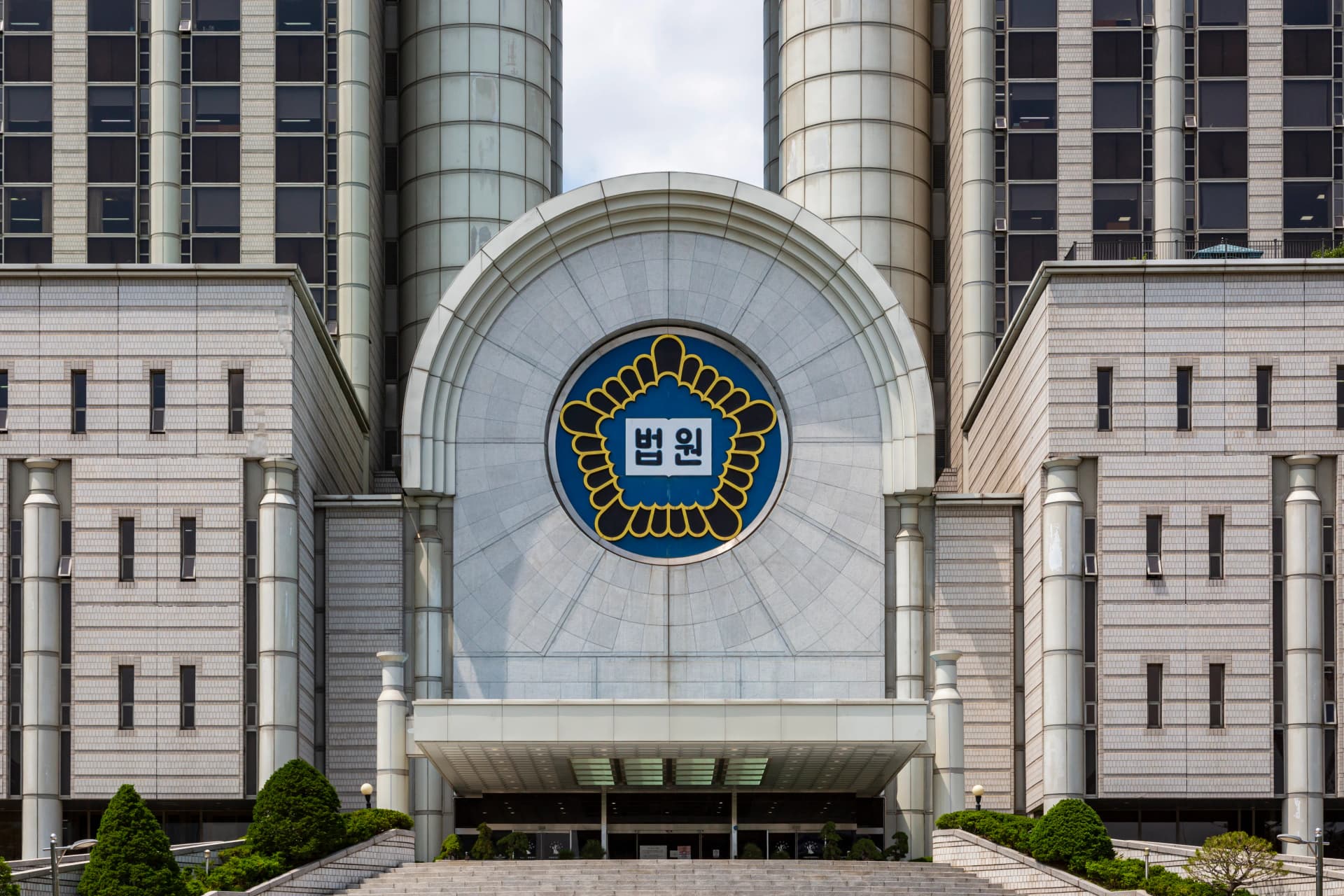
As a result of the substantive review of the detention warrant, the court acknowledged the following points and dismissed the detention warrant against the client.
▲ In light of the overall context of the statement and the circumstances at the time, it is difficult to conclude that there was an intent to commit perjury or to harm
▲ Taking into account the suspect's status, cooperative attitude toward the investigation, career, residence and family relationships, and attendance record during the investigative process, the risk of flight and destruction of evidence is low
This determination is assessed to be a result in which the explanation of the background of the statement and the thorough substantiation of the legal issues prepared by the military specialist attorney played a major role in the court's favorable determination.
What It Takes to Have a Detention Warrant Dismissed
The dismissal of a detention warrant is a very difficult decision that must pass through the court's strict review.
In cases involving serious charges in particular, the necessity of detention is often strongly recognized, so dismissal is not easily obtained.
Therefore, to fully protect the client's rights and to bring about the result of a dismissal of the detention warrant through a careful and systematic legal response, the assistance of a specialized attorney is necessary.
Daeryun Law Firm has numerous specialized attorneys with an average of more than 10 years of experience.
In addition, through the operation of a separate security center, the firm can also provide a tailored personal protection service against physical threats that may arise when attending court.
If you are in a situation where such assistance is needed, please request a consultation.

This content is based on actual case studies of Daeryun Law LLC with some adaptations, and the copyright belongs to our firm.
Unauthorized reproduction, duplication, or distribution and other copyright infringements may result in legal action under applicable laws.