
CONTENTS
- 1. Copyright Act Crime Requiring a Complaint to Prosecute | Case Details

- - Case Issues Identified by the Copyright Attorney
- 2. Copyright Act Crime Requiring a Complaint to Prosecute | Explanation of the Concept of Copyright
- - Explanation of the Concept of a Crime Requiring a Complaint to Prosecute
- - Level of Punishment
- 3. Copyright Act Crime Requiring a Complaint to Prosecute | The Need for a Settlement
- - The Attorney's Process of Handling the Settlement
- 4. Copyright Act Crime Requiring a Complaint to Prosecute | Case Result

1. Copyright Act Crime Requiring a Complaint to Prosecute | Case Details
The client, who said they needed a consultation regarding the crime requiring a complaint to prosecute under the Copyright Act, was a university student attending a local private university who was also working a night part-time job to cover tuition and living expenses on their own.
The client split and scanned a textbook required for a compulsory major course and made it into a PDF file.
The client says that, on impulse, they came to think that if students in the same department wanted the file, selling it for a fee might help cover living expenses.
The client then posted a listing to sell the textbook PDF on a secondhand trading platform, and sold the file several times at a rate of 80,000 won per copy.
Not long afterward, the publisher of the textbook filed a criminal complaint against the client for violation of the Copyright Act (reproduction, distribution, and transmission).
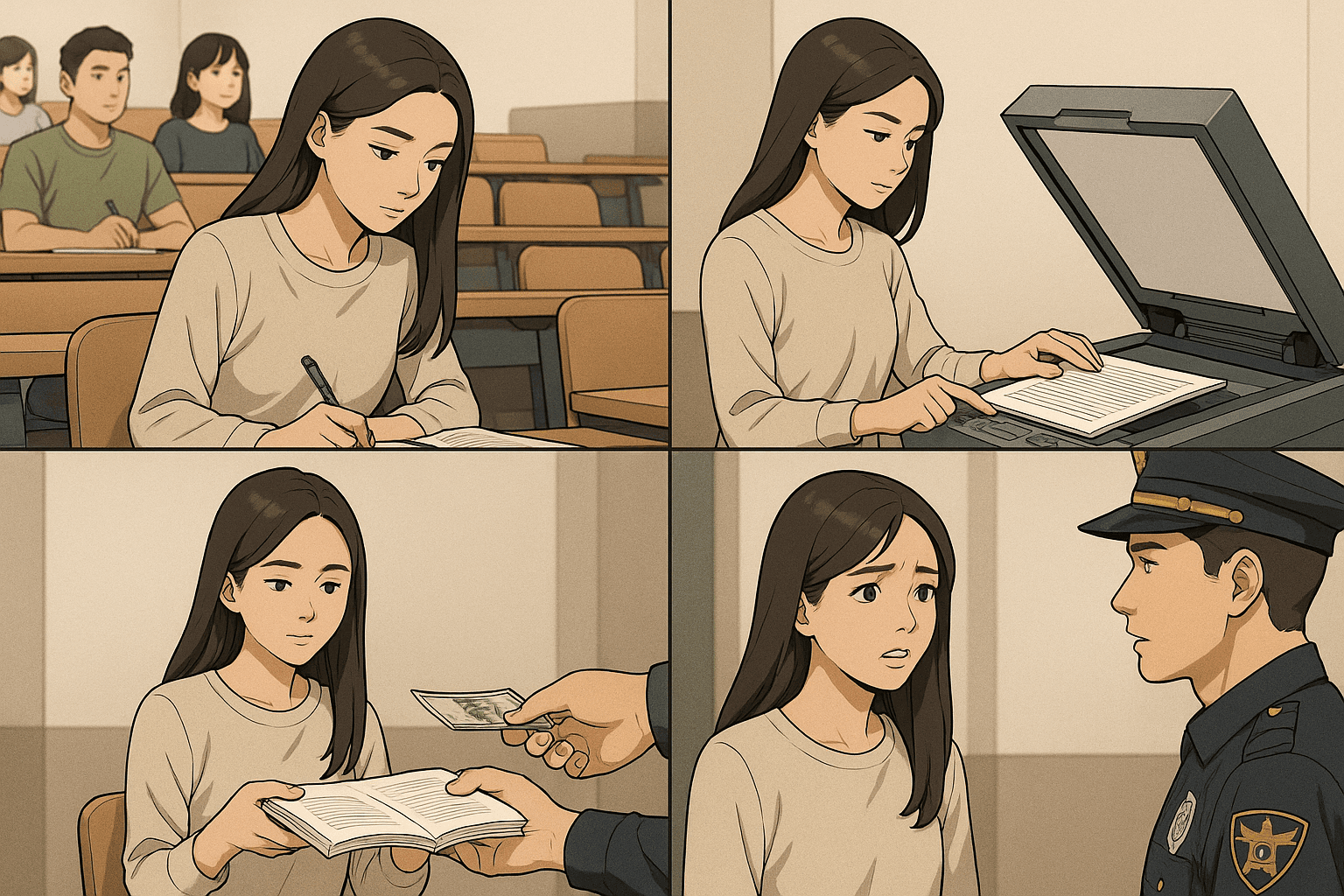
With the desperate wish to conclude the case without punishment, the client came to our firm's copyright attorney.
 Case Issues Identified by the Copyright Attorney
As the copyright attorney conducted the consultation with the client, the first issues that came to mind were two.
First, whether the client's conduct met the elements of ‘profit-making purpose’ and ‘habitual nature,’ the reason being that in such a case it could be found to be a crime that does not require a complaint to prosecute.
Second, if not, whether this matter constituted a crime requiring a complaint to prosecute under the Copyright Act, such that there was room to conclude the investigation itself through a settlement with the victim and withdrawal of the complaint.
Because this choice of direction would determine the course of the case, the copyright attorney decided to immediately reconstruct the facts and evidence as a timeline and to precisely ascertain the number of sales, the amounts, the buyers, and the scope of distribution.
2. Copyright Act Crime Requiring a Complaint to Prosecute | Explanation of the Concept of Copyright
🔗Copyright is the right that a creator holds with respect to their own work, and it is divided into author's economic rights (such as reproduction, distribution, public transmission, rental, and creation of derivative works) and author's moral rights (such as the right of attribution and the right to maintain integrity).
The Copyright Act was established to protect these rights and to promote the sound development of the cultural industry.
The conduct at issue in this matter was reproduction, namely scanning a paper book to make it into a digital file (PDF), and distribution and public transmission, namely selling that file to purchasers.
If such conduct is carried out without the prior permission of the copyright holder, it may be found to constitute copyright infringement and may be punished.
Explanation of the Concept of a Crime Requiring a Complaint to Prosecute
A crime requiring a complaint to prosecute is a crime for which public prosecution is possible only if the victim files a complaint.
A victim of a crime that requires a complaint to prosecute must file the complaint within six months from the day on which the victim learns of the offender, and if the victim withdraws the complaint, the criminal proceedings may be concluded.
Accordingly, in a case involving a crime requiring a complaint to prosecute under the Copyright Act, a settlement with the victim is the strongest means of resolution leading to the conclusion of the case.


Level of Punishment
Criminal punishment for copyright infringement is imprisonment for up to five years or a fine of up to 50 million won.
If repetition, profit-making, or large-scale distribution is found, the sentence tends to be aggravated.
Conversely, if a first offense, a small scale, recovery of the harm, and sincere remorse are proven, there is also room to expect leniency.
3. Copyright Act Crime Requiring a Complaint to Prosecute | The Need for a Settlement
In a crime requiring a complaint to prosecute, the victim's intent regarding punishment is a condition for prosecution.
If a settlement fails, the complaint is maintained and the investigation may proceed to the indictment stage, whereas if a settlement succeeds, the investigating authority may, through the victim's withdrawal of the complaint, issue a non-referral decision and conclude the case.
The Attorney's Process of Handling the Settlement
The client said that they had already once attempted a settlement with the publisher but had been refused.
In response, the copyright attorney decided to undertake the settlement on the client's behalf, as follows, in order to obtain a non-referral decision in the client's case.
1. The client's financial hardship
The copyright attorney emphasized that the client had made a mistaken judgment for the sake of their livelihood, and that this was fundamentally different from organized illegal reproduction and sale.
2. The limited number and amount of sales
It was proven, with materials such as screen captures from the secondhand trading platform, that this had amounted to small-scale sales rather than large-scale distribution.
3. Intent to recover the harm
The client clearly expressed the intent to return the entire profit earned and to additionally pay a settlement amount.
4. Measures to prevent recidivism
The client had completely deleted the relevant files from the computer, and even submitted a plan to complete copyright education.
After the attorney's mediation and persuasion, the publisher recognized that the client was a first offender with a clear intent to recover the harm, and ultimately agreed to the settlement.
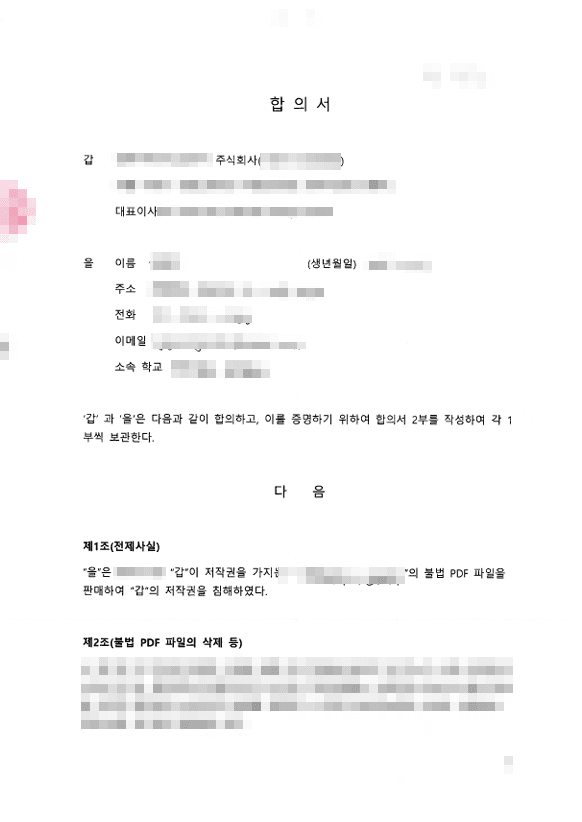
The settlement agreement drafted by the attorney included a clause on withdrawal of the complaint and a promise to prevent recurrence in the future.
4. Copyright Act Crime Requiring a Complaint to Prosecute | Case Result

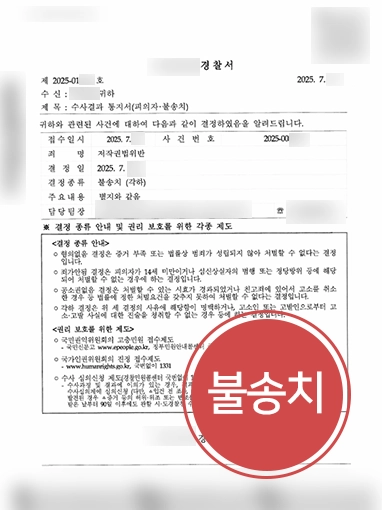
As soon as the settlement was reached, the copyright attorney submitted the settlement agreement and a statement of no desire for punishment to the police, and the police issued a non-referral (rejection) decision on the ground that the condition for prosecution of the crime requiring a complaint to prosecute under the Copyright Act had been extinguished.
As a result, the client was able to conclude the case before the police investigation and to continue their studies.
A crime requiring a complaint to prosecute under the Copyright Act is a crime for which even an actual custodial sentence may be imposed if a settlement is not reached.
Even where a settlement has been reached, if the settlement agreement does not include language stating that no further criminal or civil claims will be raised, one may again become entangled in a legal dispute despite having paid a settlement amount.
For this reason, if you are at risk of punishment for a crime requiring a complaint to prosecute under the Copyright Act, it is advisable to request assistance from a copyright attorney regarding handling the settlement and preparing a response strategy.
Our firm responds to cases through the collaboration of copyright attorneys, criminal law attorneys, and patent attorneys with high expertise in copyright.
If, like the client in this case, you are under suspicion of violating the Copyright Act, please proceed with a 🔗legal consultation booking.
This content is based on actual case studies of Daeryun Law LLC with some adaptations, and the copyright belongs to our firm.
Unauthorized reproduction, duplication, or distribution and other copyright infringements may result in legal action under applicable laws.