
CONTENTS
- 1. A Client Implicated in Forgery of an Official Document

- - Background of the Case
- 2. Assistance Provided to Defend Against the Charge of Forgery of an Official Document
- - Concrete Explanation of the Work Environment and the Background of the Conduct
- - A Plea Regarding Remorse and the Absence of Any Risk of Reoffending
- - Proof of the Sincerity of the Humanitarian Motive and Social Solidarity
- 3. Result of the Assistance With the Forgery of an Official Document, Non-Prosecution
- - The Level of Punishment for Forgery and Use of an Official Document
- - Daeryun's Assistance System
- - FAQ Concerning Forgery of an Official Document

1. A Client Implicated in Forgery of an Official Document
The client, who was referred to the prosecutors' office for forgery of an official document, came to our firm in order to prevent the matter from leading to criminal punishment.
 Background of the Case
The client was a manager at a small or medium-sized enterprise in charge of managing foreign workers.
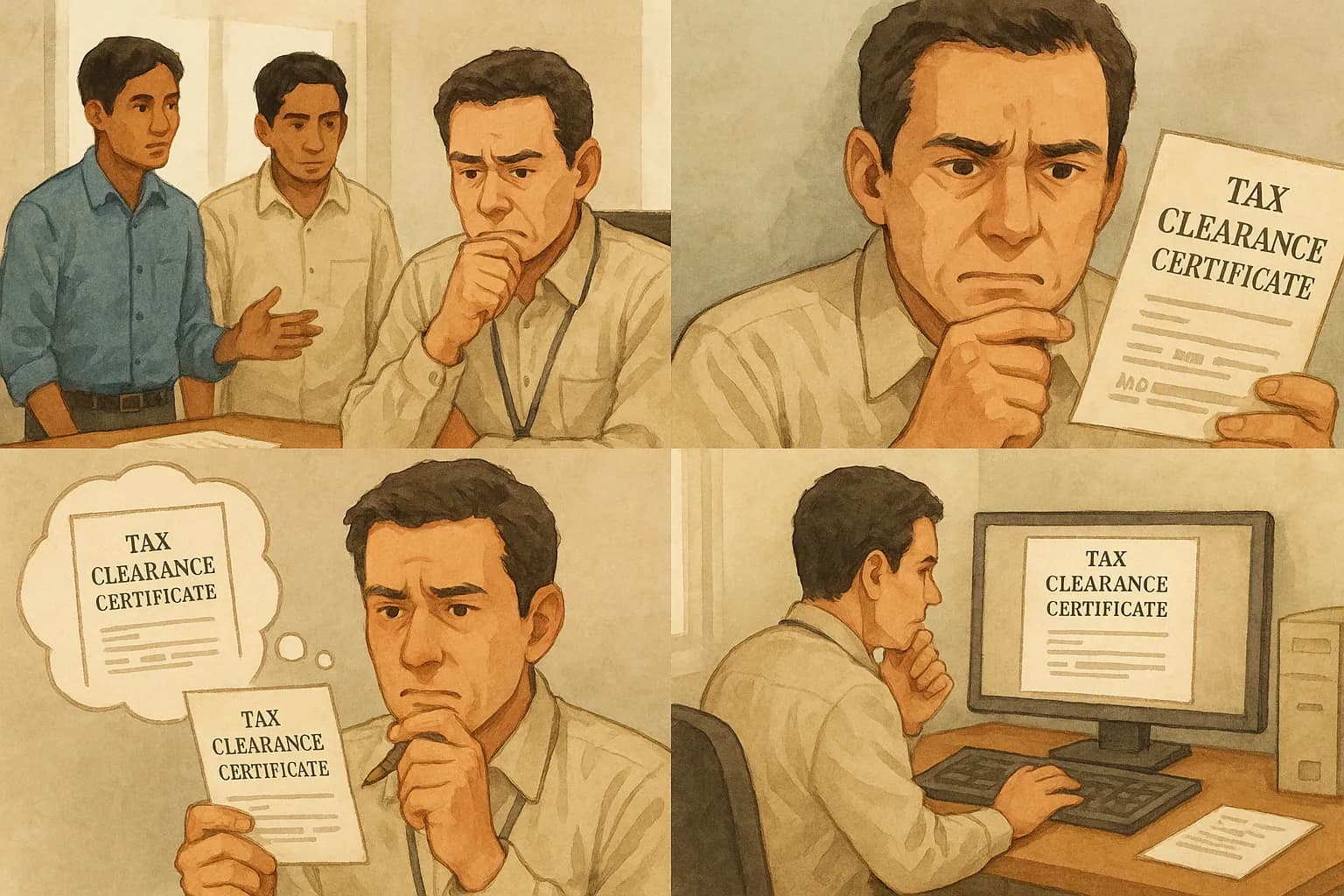
At the time, two foreign workers asked the client to change their visa status, and in this process the submission of certificates confirming full payment of the company's national and local taxes was essential.
However, the company was in arrears on its taxes at the time, which made it impossible to obtain the full-payment certificates.
The client was well aware that, if the visa change were not possible, the workers risked becoming undocumented upon expiration of their period of stay or being forced to return to their home country.
Above all, he found it deeply unfortunate that the workers' visa changes could be frustrated through no fault of their own, but rather because of the company's tax arrears.
At this point, the client recalled that another foreign worker at the same company already held a full-payment certificate that had been issued.
He then edited the company name and address on that certificate so that it appeared to be a new full-payment certificate, attached it to the visa change applications, and filed them online.
Because of this, the client was referred to the investigative authorities on suspicion of forgery of an official document, use of a forged official document, and violation of the Immigration Act.


2. Assistance Provided to Defend Against the Charge of Forgery of an Official Document
For the client, who was referred to the prosecutors' office on suspicion of forgery of an official document, the criminal law attorney closely analyzed the full circumstances of the case and persuasively explained that the client's conduct had not arisen from any criminal intent but was an unavoidable mistake stemming from his work environment and humanitarian considerations.
Accordingly, so that the investigative authorities could reassess the overall context of the case, the attorney comprehensively organized the materials and statements and provided assistance as follows.

Concrete Explanation of the Work Environment and the Background of the Conduct
The criminal law attorney emphasized that the client had not forged the document simply at the company's direction or for his own personal benefit, but that the matter had arisen in the course of trying to resolve the residence problem of the foreign workers amid the company's structural limitations, such as its tax arrears.
To explain this, the criminal law attorney submitted the following materials.
▷ A list of foreign workers whose visas were due to expire and an employment status table
Through these, the attorney objectively explained that the suspect's conduct had arisen from a humanitarian judgment rather than from systematic criminal activity.
A Plea Regarding Remorse and the Absence of Any Risk of Reoffending
The criminal law attorney emphasized that there was little to be gained from criminal punishment, on the grounds that the client fully admitted the offense and was deeply remorseful, had no prior criminal record whatsoever, and had worked diligently at a single workplace for a long time.
In addition, through petitions and statements voluntarily submitted by fellow foreign workers, the attorney highlighted that the client was a diligent worker who had ordinarily worked devotedly for the sake of his colleagues.
Grounds for Mitigating Circumstances
▷ A trusted employee in charge of managing foreign workers
▷ Submission of the foreign workers' handwritten petitions and audio recordings
▷ No economic benefit; conduct arising from pure camaraderie
▷ No likelihood of reoffending
Proof of the Sincerity of the Humanitarian Motive and Social Solidarity
The criminal law attorney emphasized in particular, referring to the civil war situation in the foreign workers' home country, that the client had sought to help extend their residence status on humanitarian grounds, going beyond merely providing convenience.
In addition, to support the fact that the foreign colleagues regarded the suspect as “someone who had protected them,” the attorney submitted audio recordings, a signature campaign, petitions, and the like, and persuasively presented that the suspect's motive for his conduct had been pure.
3. Result of the Assistance With the Forgery of an Official Document, Non-Prosecution

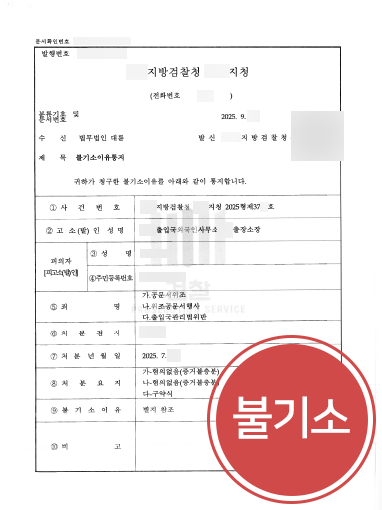
As a result of the criminal law attorney's systematic assistance in this case of forgery of an official document, the client was ultimately able to receive a non-prosecution disposition of “no suspicion of crime” on the charges of forgery of an official document and use of a forged official document.
In addition, on the charge of violation of the Immigration Act, he received a minor summary indictment for a fine, and was thus able to defend against a heavier punishment.
This was the result of the criminal law attorney's active explanation of the substantive context, including the work environment in which the client came to commit the act, his humanitarian motive, and the absence of any economic benefit.
The Level of Punishment for Forgery and Use of an Official Document
Forgery of an official document is a crime that is established when, with the intent to use it, a person forges or alters a document or drawing of a public official or public office.
If the client's offense were recognized, he faced a situation in which he could be subject to the following punishment.
Level of Punishment
Statutory Provision | Level of Punishment |
Article 225 of the Criminal Act | Imprisonment for up to 10 years |
Article 229 of the Criminal Act provides that the same level of punishment may be imposed even where such a forged official document is actually used.
In other words, not only the act of forging a document but also the act of submitting or attempting to use it is treated as a serious crime, and this was a matter in which the possibility of an actual custodial sentence was very high.
However, through the criminal law attorney's active explanation and concrete materials, it was possible to defend against punishment on the charges of forgery and use of an official document.
Daeryun's Assistance System
Daeryun LLC has a substantial number of attorneys, including criminal law specialist attorneys registered with the Korean Bar Association as well as attorneys who have handled a wide range of criminal cases.
Through a dedicated consultation attorney system, the firm quickly grasps the issues and the gravity of a case, and through the assignment of a dedicated attorney, it systematically supports the entire process, from analysis of the facts and collection of evidence to responding to the investigative authorities.
In addition, even after a case concludes, the firm operates a follow-up management system to help clients recover socially and professionally.
If you need legal assistance in a similar situation, please feel free to entrust your case to us through a 🔗legal consultation reservation.
FAQ Concerning Forgery of an Official Document
A. For forgery of an official document to be established, there must be “intent to forge,” that is, an awareness that the official document is being prepared contrary to the intention of its genuine author. If it amounts merely to a clerical error in the course of work, mechanical processing at a superior's direction, or a temporary modification of a document for administrative convenience, there is a possibility that “intent” will not be recognized. In such cases, one must analyze in detail the circumstances of preparation, the purpose of using the document, the scope of the modification, and the internal approval process to prove that the client had no intent to forge. Q. I have been suspected of forgery of an official document. Can an argument that “there was no intent” be accepted?
A. Forgery of an official document is established where there is an “intent to use” it, so even if you did not actually use the document, you can be punished if only the intent to use it is recognized. However, if there was no concrete “act of use,” such as submitting the forged document or showing it to a third party, the “purpose of forgery” may not be clearly proven, and so the possibility of a finding of no suspicion exists. Accordingly, you must establish a strategy of explaining the absence of any purpose of use by closely analyzing the storage condition of the document after its preparation, whether it was delivered to a third party, the internal reporting procedure, and the like. Q. Can I be punished for forgery of an official document even if I did not actually use the forged document?
This content is based on actual case studies of Daeryun Law LLC with some adaptations, and the copyright belongs to our firm.
Unauthorized reproduction, duplication, or distribution and other copyright infringements may result in legal action under applicable laws.