
CONTENTS
- 1. Disciplinary Nullity Lawsuit | Case Content

- 2. Disciplinary Nullity Lawsuit | Issues in the Case
- - Assistance Provided by the Civil Litigation Attorney
- 3. Disciplinary Nullity Lawsuit | Case Result
- 4. Disciplinary Nullity Lawsuit | Points for Responding to a Disciplinary Nullity Lawsuit

1. Disciplinary Nullity Lawsuit | Case Content
This is the case of a client who sought the assistance of this firm's civil litigation attorney in order to contest a disciplinary nullity lawsuit.
The client was the representative of a fisheries cooperative and had imposed a dismissal disposition on an employee working within the cooperative (hereinafter the “plaintiff”).
However, the plaintiff filed a disciplinary nullity lawsuit, claiming that the disciplinary action against the plaintiff was unjust and that the “dismissal disposition is void.”
The court of first instance accepted the plaintiff's claim and rendered a judgment revoking the dismissal disposition, and accordingly the cooperative respected the judgment, revoked the dismissal disposition, and instead imposed a suspension from duty.
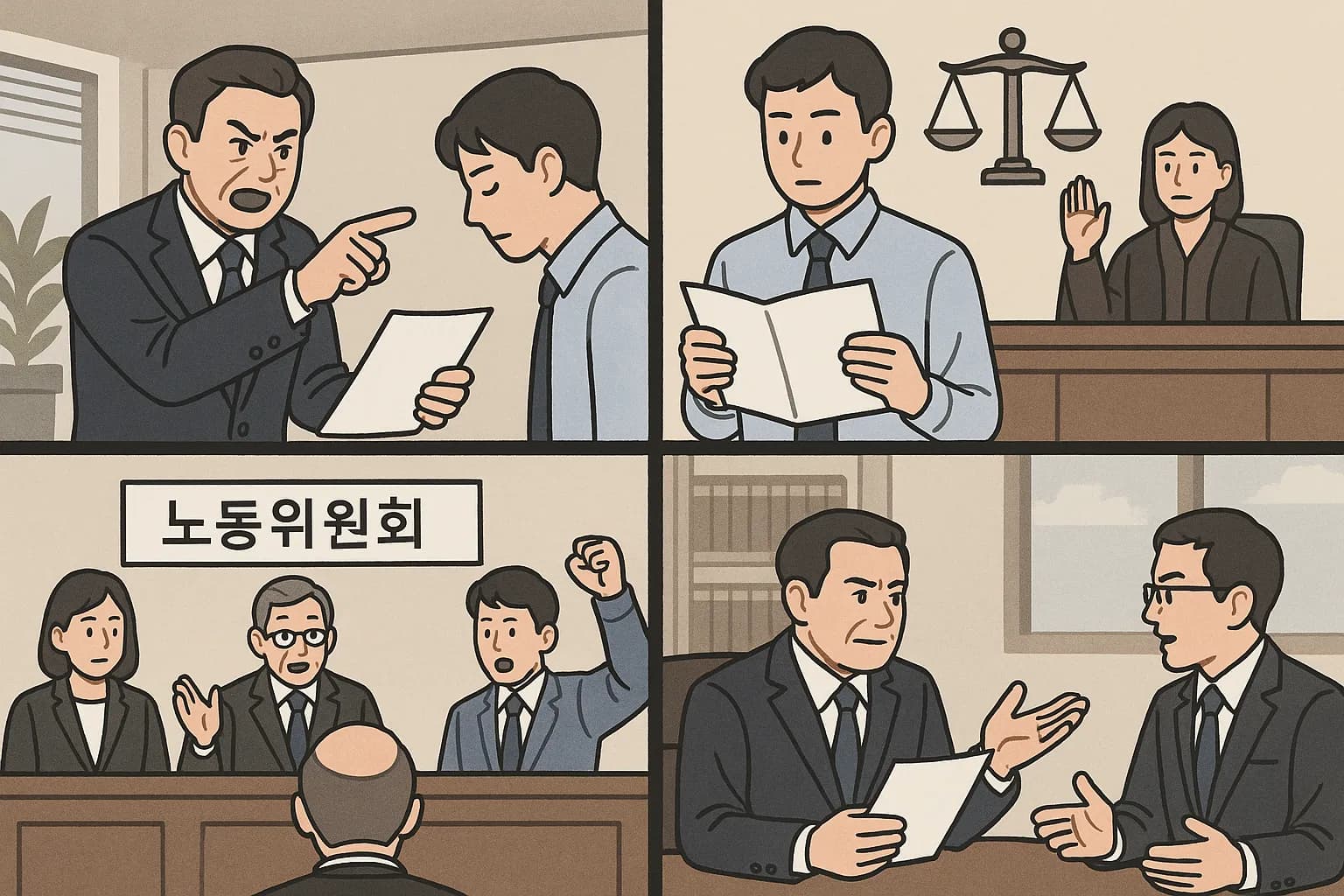
However, the plaintiff again filed an application for remedy against unfair suspension from duty with the Labor Relations Commission, claiming that the suspension disposition was unjust.
The Labor Relations Commission rendered a decision ordering revocation of the suspension, stating that “the suspension disposition is excessive,” and the plaintiff thereafter filed a disciplinary nullity lawsuit against the cooperative for confirmation of the nullity of the suspension from duty.
The court of first instance ruled in favor of the plaintiff, holding that “the suspension disposition imposed by the client's cooperative is void, and that an amount equivalent to the wages not paid during the suspension period shall be paid”.
In response, the client's cooperative filed an appeal and requested the assistance of a civil litigation attorney.
2. Disciplinary Nullity Lawsuit | Issues in the Case
The civil litigation attorney summarized the key issues of this case as the following three points.
· The lawfulness of the re-disciplinary action and whether the statute of limitations on disciplinary action applies
The issue was whether the newly imposed “suspension disposition” following the judgment revoking the dismissal disposition is subject to the statute of limitations on disciplinary action.
The plaintiff's side argued that “because the statute of limitations on disciplinary action has already expired, the suspension disposition is void.”
· The effect of the Labor Relations Commission's decision and the scope of the disciplinary authority's discretion
An issue arose as to the extent to which the Labor Relations Commission's decision finding unfair suspension is binding in the disciplinary nullity lawsuit.
· The repetitiveness of the grounds for disciplinary action and whether the negligence of duty was justified
Even though the plaintiff repeatedly engaged in negligence of duty, the plaintiff repeatedly filed lawsuits on the ground of procedural defects in the disciplinary process, which conflicted with the cooperative's exercise of its disciplinary authority.
 Assistance Provided by the Civil Litigation Attorney
In the appellate proceedings, the civil litigation attorney focused on demonstrating the legitimacy of the disciplinary action and the lawfulness of the re-disciplinary action.
To this end, the attorney developed the following three core arguments.
· Argument on the impropriety of applying the statute of limitations on disciplinary action
Article 6, Paragraph 3 of the cooperative's disciplinary regulations provides that “where it is difficult to establish the facts due to an investigation or trial, the statute of limitations on disciplinary action may be suspended.”
The civil litigation attorney argued that, because this case was precisely a “disciplinary action carried out in the course of correcting the prior disciplinary action in accordance with the result of the trial,” the new disciplinary action did not constitute an independent disposition but rather a procedural supplementary act to justify the existing disciplinary action.
Accordingly, the attorney emphasized that there was no room to discuss the statute of limitations on disciplinary action and that the plaintiff's argument was improper as a matter of legal principle.
· Denial of the legal binding force of the Labor Relations Commission's decision
The civil litigation attorney logically explained that the Labor Relations Commission's determination is merely an administrative determination and does not bind the court's assessment of the reasonableness of the disciplinary action and its validity under generally accepted social norms.
In other words, the attorney maintained the position that the Labor Relations Commission's remedy order is merely a reference material, and that if the disciplinary authority imposed the suspension within the scope of its discretion, the suspension itself is not unlawful.
· Proof of the plaintiff's negligence of duty and repeated misconduct
The civil litigation attorney submitted as evidence the cooperative's regulations on the handling of disciplinary and indemnity matters, the rules of employment, and the plaintiff's disciplinary disposition documents, and specifically demonstrated that the plaintiff had repeatedly engaged in conduct such as prolonged negligence of duty, failure to submit reports, and noncompliance with the instructions of superiors.
In addition, the attorney highlighted that the plaintiff's filing of the lawsuit was not an “argument that the level of the disciplinary action was excessive” but merely an “argument of procedural defects,” and that the plaintiff did not contest at all the legitimacy of the grounds for the disciplinary action itself.


3. Disciplinary Nullity Lawsuit | Case Result

The appellate court accepted all of the civil litigation attorney's arguments.
The court held that “the disciplinary action in this case was a correction made through reconsideration following the revocation of the prior dismissal disposition, that the provisions on the statute of limitations on disciplinary action cannot be applied, and that the disciplinary procedure was also lawfully conducted.”
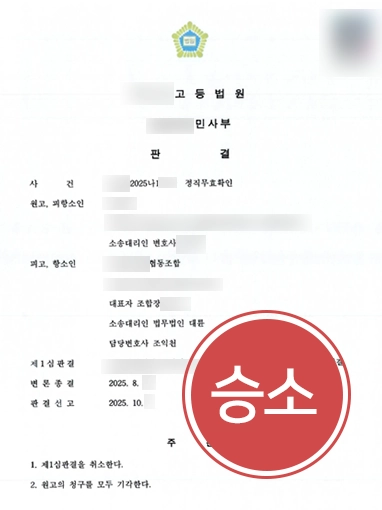
In the end, the appellate court revoked the entire judgment of the first instance and recognized that the suspension disposition by the client's cooperative was a lawful act.
As a result, the cooperative was relieved of the burden of the wage-equivalent amount that it had been ordered to pay unjustly, and the legitimacy of its internal disciplinary system was confirmed once again.
4. Disciplinary Nullity Lawsuit | Points for Responding to a Disciplinary Nullity Lawsuit
When a company or public institution is sued by an employee in a disciplinary nullity lawsuit, such as one seeking nullity of a disciplinary action or revocation of a personnel disposition, it should respond as follows.
Step | Legal Response Point |
① Preservation of disciplinary records | Organize personnel committee resolutions, statements of grounds for disciplinary action, related reporting materials, and the like to secure an objective basis for the grounds for disciplinary action |
② Review of the consistency of internal regulations | Examine in advance whether the rules of employment and personnel regulations conform to the statutes and whether there are any procedural defects |
③ Securing transparency in the disciplinary committee procedure | It is necessary to demonstrate the lawfulness of the procedure, such as the composition of the disciplinary committee and the provision of an opportunity to present a defense |
④ Evidence management in preparation for repeated litigation | In preparation for the possibility of multiple lawsuits regarding the same matter, organize the disciplinary history systematically |
⑤ Use of expert assistance | Disciplinary nullity lawsuits involve many issues of legal principle, so it is necessary to establish a strategy for responding to appeals and final appeals with the assistance of a specialized attorney |
A disciplinary nullity lawsuit is not a procedure that contests only “whether the disciplinary action was appropriate,” but a process in which lawfulness, procedural legitimacy, and the scope of discretion are comprehensively assessed.
As in this case, where an employee files disciplinary nullity lawsuits one after another, it is important to clearly demonstrate, at the initial response stage, whether the requirements under the Administrative Procedures Act were met and whether the internal regulations were not unlawful or contradictory.
If you require the legal assistance of a legal expert, such as a civil litigation attorney, a corporate attorney, or a certified labor attorney, in a situation similar to this case, please proceed with a 🔗legal consultation reservation with a civil litigation attorney.
This content is based on actual case studies of Daeryun Law LLC with some adaptations, and the copyright belongs to our firm.
Unauthorized reproduction, duplication, or distribution and other copyright infringements may result in legal action under applicable laws.