
CONTENTS
- 1. Objection to Disciplinary Action | Objecting to Unjust Disciplinary Action

- - Duties of Public Officials Under the State Public Officials Act
- - Types of Disciplinary Action
- 2. Objection to Disciplinary Action | Procedure for Processing Disciplinary Records
- - Determination of the Degree of Disciplinary Action
- - Restrictions on Resignation for Public Officials Wishing to Resign
- - Effect Through Enforcement of Disciplinary Action and Other Measures
- 3. Objection to Disciplinary Action | Appeals Review and Administrative Litigation
- - Filing a Review Request with the Appeals Review Committee
- - Lawsuit to Nullify or Revoke a Disciplinary Action
- 4. Objection to Disciplinary Action | Key Requirements for Objecting to Disciplinary Action
- - Tips for Responding in Order to File an Objection

1. Objection to Disciplinary Action | Objecting to Unjust Disciplinary Action

An appeal against disciplinary action is a remedy procedure that a public official raises when believing that a disciplinary action received is improper.
A disciplinary action refers to an administrative sanction that the State imposes, in its capacity as employer, for a public official's breach of duty.
Grounds for disciplinary action refer to acts breaching a public official's duties under the State Public Officials Act.
- Violation of orders such as the State Public Officials Act
- Breach of official duties and neglect of duty
- Damage to a public official's dignity and reputation, whether on or off duty (drunk driving, prostitution, adultery, assault, etc.)
 Duties of Public Officials Under the State Public Officials Act
The duties of public officials under the State Public Officials Act are as follows.
Eight duties
① duty to take an oath, ② duty of good faith, ③ duty of obedience, ④ duty of kindness and fairness, ⑤ duty of religious neutrality, ⑥ duty to maintain confidentiality, ⑦ duty of integrity, ⑧ duty to maintain dignity
Four prohibitions
① prohibition of leaving one's post, ② prohibition of for-profit business and concurrent positions, ③ prohibition of political campaigning, ④ prohibition of collective action
As long as such grounds for discipline are recognized, a disciplinary action may be imposed even while a criminal case is under investigation and even if guilt has not been established.
In particular, a disciplinary action may be imposed in a criminal case even if an acquittal has been rendered.
Types of Disciplinary Action
Disciplinary action against a public official falls into six types: removal, dismissal, demotion, suspension, salary reduction, and reprimand.
Removal, dismissal, demotion, or suspension are referred to as heavy disciplinary action, and salary reduction or reprimand as light disciplinary action.
The disciplinary level known as a "warning without record" corresponds to a reprimand, but it is mitigated where there is a record qualifying for mitigation, or where the misconduct of the person under suspicion amounts to negligence occurring in the course of handling duties.
Although it is not a disciplinary action under the law, it is entered on the personnel record card for one year, so it carries a disadvantage that is in effect equivalent to disciplinary action.


2. Objection to Disciplinary Action | Procedure for Processing Disciplinary Records

A disciplinary disposition against a public official is issued through the following procedure for handling the matter.
Detection of misconduct | -Misconduct is detected through the Board of Audit and Inspection, the prosecution, the police, an internal investigation, and the like -The details are notified to the head of the administrative agency holding the authority to request a disciplinary resolution |
Request for a disciplinary resolution | -Within 1 month, the head of the administrative agency classifies the matter as a heavy or light disciplinary action for the person subject to discipline -Requests a disciplinary resolution from the disciplinary committee |
Disciplinary resolution | -The disciplinary committee investigates the facts and gives notice of attendance 3 days before the committee is held -The resolution must be made within 30 days from the date of receipt of the request for a disciplinary resolution (60 days for the Central Disciplinary Committee) |
Notification of the disciplinary resolution | -The written disciplinary resolution is notified without delay |
Disciplinary disposition | -The disciplinary disposition is carried out within 15 days -A written statement of the grounds for the disposition is delivered |
Appeal and administrative litigation | -If contesting the discipline, a request for review may be filed with the Appeals Commission within 30 days -If contesting the decision of the Appeals Commission, administrative litigation may be filed within 90 days |
Determination of the Degree of Disciplinary Action
Where heavy disciplinary action serious enough to warrant an objection to the disciplinary action is imposed, you may have dissatisfaction with such a decision.
When deliberating on a disciplinary or similar case, the disciplinary committee takes the following matters and circumstances into account.
Restrictions on Resignation for Public Officials Wishing to Resign
Even where a public official voluntarily wishes to resign, the appointing authority and others must, where there are grounds for discipline such as removal, dismissal, or demotion, confirm the matter with investigative agencies such as the Board of Audit and Inspection and the prosecution.
Where the confirmation reveals that there are grounds for discipline, or that an indictment in a criminal case or an investigation is in progress, they must, where the case warrants removal up to suspension, immediately request a disciplinary resolution, and must not permit resignation.
Effect Through Enforcement of Disciplinary Action and Other Measures
A resolution of the disciplinary committee takes external effect as a disciplinary action when the disciplinary action is carried out.
After executing the disciplinary resolution, the authority with power over the disciplinary action must, without delay, deliver a statement of reasons together with a notice for payment of any disciplinary surcharge.
If the original disciplinary action is revoked or modified, it is not executed again but is modified or revoked retroactively to the date of the original disposition.
Where a person under a disciplinary action receives a further disciplinary resolution during the period of the disciplinary action, the execution is as follows.
- Suspension from office or reduction of pay imposed during the execution of a suspension from office : the subsequent disciplinary action is executed from the day following the completion of the prior suspension from office
- Suspension from office imposed during the execution of a reduction of pay : the subsequent suspension from office is executed from the day following the completion of the prior reduction of pay
3. Objection to Disciplinary Action | Appeals Review and Administrative Litigation
A person subject to disciplinary charges may file an objection with the person authorized to request a disciplinary resolution.
- Review or re-review : A request may be filed with the disciplinary committee established in the immediately superior agency within 15 days from the date of receiving notice of the disciplinary resolution (for dismissal or removal, the head of the superior supervisory agency)
- Resolution by a disciplinary committee established under the Prime Minister : A request for re-review with that disciplinary committee
- A disciplinary committee established in a central administrative agency : A request for review with the disciplinary committee established under the Prime Minister
However, a request for re-review is not possible after a disciplinary action or the like has been carried out.
Filing a Review Request with the Appeals Review Committee
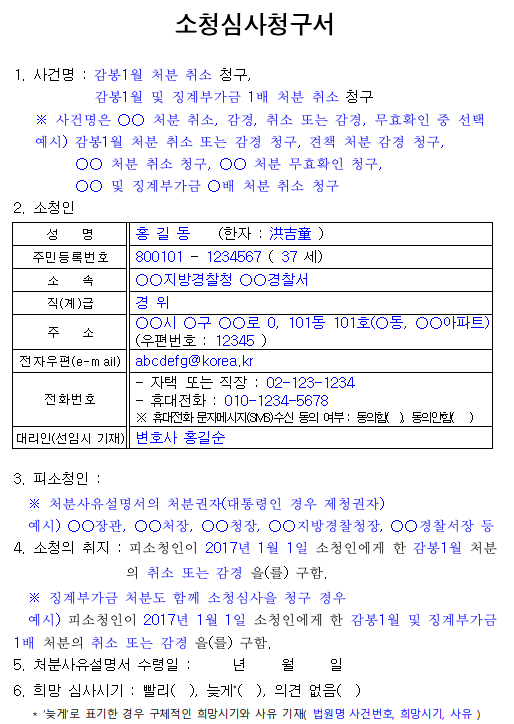
A person subject to a disposition who wishes to contest a disciplinary action or other disposition may request a review by the Appeals Review Commission within 30 days from the date of receiving the statement of grounds for the disciplinary action or other disposition.
The appeal review system is a type of administrative appeal system and refers to a remedy against an unlawful or unfair unfavorable disposition.
The Appeals Review Commission decides cases by the attendance of at least two-thirds of the enrolled members and the agreement of a majority of the members present, and the types of decision are as follows.
- Revocation
- Modification
- Confirmation of invalidity
- Dismissal
- Rejection
- Decision granting the request
Points to note in an appeal review
In the case of removal, dismissal, or discharge, a successor may not be appointed within 40 days.
In addition, a person must not receive any unfavorable disposition or treatment on the ground that the person filed a request for review with the Appeals Review Commission.
Lawsuit to Nullify or Revoke a Disciplinary Action
An administrative litigation concerning a disciplinary disposition, an unfavorable disposition, or an omission may not be filed without going through review and decision by the Appeals Review Committee.
In the case of an objection, an administrative litigation may be filed within 90 days from the date the decision is received.
In the litigation, the public official may assert the non-existence of grounds for disciplinary action, a procedural defect, or a deviation from or abuse of discretion in the disciplinary level, and as evidence may use audit reports, the disciplinary decision, statements of colleagues, emails, and recordings.
Where, however, a decision or judgment of invalidity or revocation of the disciplinary disposition is rendered in the appeal or the administrative litigation, the person with authority over the disposition may request a renewed disciplinary resolution.
If, in order to contest the disciplinary action, an administrative litigation is conducted as an action for invalidity or revocation of the disposition and a judgment of invalidity or revocation is obtained, a disciplinary resolution must be requested again.
See More
See More
4. Objection to Disciplinary Action | Key Requirements for Objecting to Disciplinary Action

In an objection to disciplinary action by a public official, the most frequent disputes can be divided largely into three issues.
Whether grounds for disciplinary action exist
- Whether the grounds for disciplinary action are sufficiently proven by objective facts
- Whether intent or gross negligence is recognized
The legality of the disciplinary procedure
- The legality of the composition of the disciplinary committee
- Whether the person subject to disciplinary action was guaranteed a sufficient opportunity to explain
- Whether the period of limitations has lapsed
If there is a serious procedural defect, the disciplinary action becomes void.
Whether the level of the disciplinary measure violates the principle of proportionality
- An excessively heavy measure relative to the misconduct constitutes an abuse of discretionary power
Tips for Responding in Order to File an Objection
A person under suspicion who is preparing to contest disciplinary action should secure as much exculpatory evidence on the facts as possible, even before the stages of review and the appeals review.
In particular, because an attorney may be designated and retained as a representative before the Appeals Review Committee, the person may, if necessary, consult promptly with an attorney to obtain advice on written statements and opinions and fully exercise the right of defense.
The person should thoroughly secure evidence that can prove the facts, such as official documents, emails, recordings, and CCTV footage, and in particular, if the contents of the investigation report and the disciplinary decision are contradictory or exaggerated, evidence to prove this may be needed.
In addition, if the likelihood of the appeals review being granted is judged to be low, the person should begin preparing for litigation as soon as the appeals review result is issued, so as not to miss the filing period.
A public official's challenge to disciplinary action is not resolved solely by whether the grounds for discipline are true.
Legal issues such as the lawfulness of the disciplinary procedure, compliance with the principle of proportionality, and abuse of discretionary power operate in combination.
In particular, because there is a preliminary appeals-review procedure and a strict filing period, it may be advisable to seek out a firm capable of professional legal review and prompt response, such as one with attorneys specializing in labor law, attorneys specializing in administrative law, and labor consultants.