CONTENTS
- 1. Obstruction of Official Duties | Overview of the Case

- - The Lower Court's Determination
- 2. Obstruction of Official Duties | The Supreme Court's Determination
- - The Principle of Voluntary Investigation and the Limits of Compulsory Investigation
- - An Unlawful Arrest Amounting in Substance to a Compulsory Investigation
- - The Unlawfulness of the Demand for a Urine Sample
- - Denial of the Establishment of the Crime of Obstruction of Official Duties
- 3. Obstruction of Official Duties | Criteria for the Establishment of Obstruction of Official Duties
- - Criteria for the Lawfulness of Investigation and the Execution of Official Duties
- - Significance of the Judgment
- 4. Obstruction of Official Duties | Practical Response Strategy
- - Daeryun's Assistance

1. Obstruction of Official Duties | Overview of the Case
Together with an attorney handling obstruction of official duties matters, we will review the overview of this case.
While the defendant in this case was with an acquaintance at a hotel, he moved to a guest room at the request of police officers, and he subsequently became a subject of investigation in the course of his companion being arrested on suspicion of drug possession.
The police officers handcuffed the defendant, searched his body, and then repeatedly demanded a urine test to determine whether he had used narcotics.
The defendant refused the test and ultimately submitted another detainee's urine as if it were his own, and because this act was deemed problematic, he was indicted for obstruction of official duties by deceit.
 The Lower Court's Determination
The lower court held that the police officers' demand for a urine sample constituted a lawful execution of official duties.
That is, it found that because the urine the defendant submitted was false, he had obstructed the police's narcotics investigation by means of deception, and it accordingly recognized the establishment of the crime of obstruction of official duties by deceit.
The lower court recognized the lawfulness of the act relatively broadly, in particular on the ground that the demand for a urine sample was made as part of the investigation.
2. Obstruction of Official Duties | The Supreme Court's Determination

The gist of the Supreme Court's determination, as reviewed by an attorney handling obstruction of official duties matters, is as follows.
The Principle of Voluntary Investigation and the Limits of Compulsory Investigation
Relying on Article 199 of the Criminal Procedure Act, the Supreme Court held that an investigation must, in principle, proceed by voluntary investigation, and that compulsory dispositions are permitted only under strict requirements.
In particular, it held that, even in the case of voluntary accompaniment, voluntariness must be assessed on the basis of whether the suspect could in fact freely refuse or leave, rather than on the basis of formal consent.
An Unlawful Arrest Amounting in Substance to a Compulsory Investigation
The Supreme Court focused on the following points.
- The fact that the body search was conducted while the defendant was handcuffed
- The fact that control was maintained within the hotel guest room for a considerable period of time
- The fact that a urine test was repeatedly demanded
Taking these circumstances together, the court held that the defendant should be regarded as having been placed in a state substantially similar to arrest, and that this was highly likely to constitute an unlawful compulsory disposition carried out without a warrant.
The Unlawfulness of the Demand for a Urine Sample
The Supreme Court held that the demand for a urine sample should not be viewed in isolation, but should be assessed as part of the entire sequence of “unlawful arrest → conduct of the investigation → demand for a urine sample.”
As a result, it held that the demand for a urine sample made during the unlawful arrest must likewise be regarded as an unlawful execution of official duties.
Denial of the Establishment of the Crime of Obstruction of Official Duties
The Supreme Court reaffirmed the established legal principle that the crime of obstruction of official duties presupposes a lawful execution of official duties by a public official.
Accordingly, holding that the crime of obstruction of official duties premised on an unlawful demand for a urine sample cannot be established, it reversed the lower court's judgment and remanded the case.


3. Obstruction of Official Duties | Criteria for the Establishment of Obstruction of Official Duties
The criteria for the establishment of the crime of obstruction of official duties may be summarized as follows.
For the crime of obstruction of official duties, the mere existence of the performance of official duties is insufficient; the act in question must have been carried out lawfully on the basis of statutory authority.
In this regard, the assessment of lawfulness must be made objectively and reasonably on the basis of the specific circumstances at the time, rather than on the basis of the formal existence of authority.
In particular, where, in the course of an investigation, the limits of voluntary investigation are exceeded and the conduct amounts in substance to a compulsory disposition, the entirety of the ensuing investigative conduct may be assessed as an unlawful execution of official duties, and the crime of obstruction of official duties premised thereon does not arise.
Criteria for the Lawfulness of Investigation and the Execution of Official Duties
The Criminal Procedure Act provides that an investigation must, in principle, proceed by voluntary investigation, and that compulsory dispositions are permitted, on the basis of statute, only to the minimum extent necessary.
In addition, the crime of obstruction of official duties presupposes that the official act of the public official is lawful; it is insufficient that the act merely falls within the scope of the official's duties, and the specific manner and procedure must also be lawful.
Significance of the Judgment
This judgment is significant in that it strictly interpreted the “lawfulness of the execution of official duties,” which is the most crucial element in the establishment of the crime of obstruction of official duties.
In particular, it made clear that, even where an investigative agency adopts the form of a voluntary investigation, if the conduct is in fact coercive, the entire investigative process may be assessed as unlawful, and the establishment of a crime based thereon may likewise be denied.
This appears likely to serve as a standard requiring stricter control over the sequence of investigative procedures, such as demands for urine samples, voluntary accompaniment, and body searches, carried out in narcotics investigations and the like going forward.
4. Obstruction of Official Duties | Practical Response Strategy
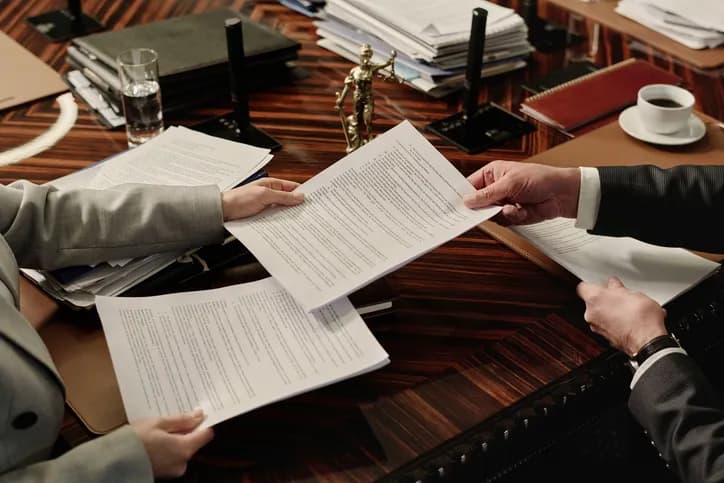
In obstruction of official duties cases, closely examining the lawfulness of the execution of official duties that serves as the premise of the act is key.
In particular, the conclusion of the entire case may differ depending on whether the accompaniment, arrest, search, and demand for a test carried out in the early stages of the investigation were conducted in accordance with lawful procedures.
Therefore, in obstruction of official duties cases, one should work with an attorney handling obstruction of official duties matters to comprehensively examine whether the investigation was voluntary, whether it amounted to a compulsory disposition, the lawfulness of the arrest and search, and the continuity of the investigative procedures, and to establish a defense strategy on that basis.
Daeryun's Assistance
In obstruction of official duties cases, where the procedures carried out during the investigation, such as accompaniment, arrest, search, and demand for a test, were conducted unlawfully, this may have a significant effect on all subsequent investigative results and on the facts charged.
An attorney at Daeryun handling obstruction of official duties matters analyzes the investigative procedures as a whole from the early stages of the case, comprehensively examining the boundary between voluntary and compulsory investigation, the lawfulness of the arrest and search, and whether the evidence-gathering process was unlawful.
Through this, the attorney precisely identifies the aspects that fail to satisfy the requirements for the establishment of the crime of obstruction of official duties, and designs a legal response strategy capable of overturning the case as a whole.
In particular, in cases where an indictment is based on an unlawful investigation, the strategy established at the initial response stage can determine the outcome.
If you need the assistance of an attorney handling obstruction of official duties matters in a related case, you are welcome to contact our firm to request assistance.