Page title background (PC version)Page title background (mobile version)

Press Coverage

Numerous media outlets recognize the expertise of Daeryun Law LLC.
Explore interviews, legal commentary, and columns by Daeryun lawyers.

6 places including Jose Ilbo
2025-07-28
법무법인 대륜, 美 특허 로펌 브릿지웨이 IP와 MOU 체결
Daeryun Law Firm signs an MOU with Bridgeway IP, a U.S. patent law firm
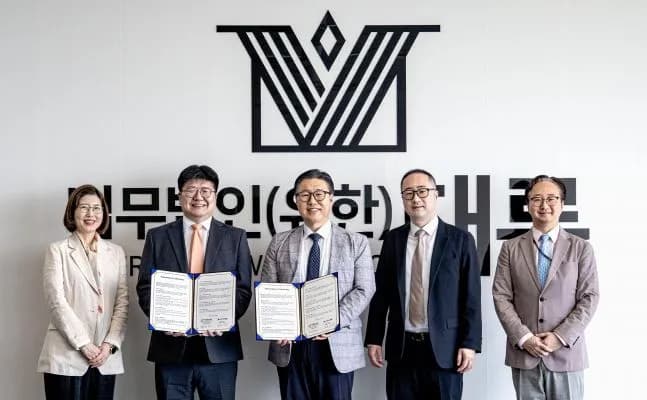
Daeryun Law Firm announced on the 28th that it has signed a business agreement (MOU) with Bridgeway IP Law Group, PLLC, a law firm specializing in the field of intellectual property rights in the United States, and will begin full-fledged support of global intellectual property (IP) strategies for domestic companies. The signing ceremony was held on the 23rd at Daeryun Seoul Headquarters Yeouido Branch Office with Daeryun Kim Kuk-il, CEO of Bridgeway IP, and Bridgeway IP's Corey Shin. It was held with the attendance of key figures such as Partner Attorney Shin and David Jung. Bridgeway IP is a Virginia-based law firm specializing in intellectual property rights specializing in patent, trademark, design, and copyright applications and related litigation and legal services. Its experts include U.S. patent attorneys, former examiners at the U.S. Patent and Trademark Office (USPTO), U.S. law school professors, and doctoral-level technical experts. Based on its expertise in technology fields such as IT, AI, software, semiconductors, communications, automobiles, biochemistry, pharmacy, medical devices, and heavy equipment, Daeryun has successfully represented domestic and foreign companies, universities, national research institutes, and startups. Through this agreement, Daeryun plans to provide three-dimensional advice linked to business strategies, including not only domestic clients' U.S. patent applications, but also overseas IP licensing, overseas clinical trials, review of manufacturing and distribution contracts, technology-based M&A, and IP consulting advice on investment attraction. In addition, the two companies plan to closely evaluate the value of the IP portfolio and cooperate in eliminating potential risks in advance. In addition, along with applications in Korea and the United States, both companies will △ provide prior art analysis and IP strategy advice in the early stages of R&D △ provide patent attorney opinions in preparation for IP due diligence and value evaluation during technology-based M&A △ write invalidation, infringement/non-infringement, and FTO (Freedom to Operate) opinions in accordance with patent trials and infringement lawsuits at the U.S. Patent Office and court stages, etc. We plan to continue cooperation in various areas. Corey Shin, a partner lawyer at Bridgeway IP, said, "Korea's innovative companies have outstanding original or advanced technologies," and added, "Through cooperation with Daeryun, which is leaping forward as a global mega law firm, we will actively support Korean companies to properly recognize the value of their technology." Daeryun CEO Kim Kuk-il said, "IP assets are already a key management factor that determines the survival and value of a company," and added, "This cooperation will help domestic companies become global players." “We will continue to provide practical support to strengthen our ability to enter the market and respond to disputes, while acting as a strong shield to effectively respond to risks and expand into the global market,” he said. Eunhye Lee (zhses3@joseilbo.com)[View full article] Jose Ilbo - Daeryun Law Firm signed an MOU with Bridgeway IP, a U.S. patent law firm (Click here) Tax and Finance News - Daeryun, corporate global intellectual property strategy support... Agreement with U.S. patent law firm Bridgeway IP (Click here) Dailyan - MOU with Daeryun Law Firm and Bridgeway IP, an American patent law firm (Click here) Venture Square - Daeryun Law Firm signs a business agreement with Bridgeway IP Law Firm (Click here) Korea Economic Daily - Daeryun, business agreement with U.S. patent law firm (link) Legal Times - [Law Firm iN] Daeryun, MOU with US IP law firm Bridgeway and Payquery (Go here)
3 places including Tax and Finance Newspaper
2025-07-28
대륜, IT 벤처기업 AI·보안 법률대응 ‘원스톱 솔루션’
Daeryun, IT venture company AI/security legal response ‘one-stop solution’
Daeryun Law Firm announced on the 28th that it has signed a business agreement with PayQuery Co., Ltd. and will cooperate in providing legal advice specialized for technology companies. The signing ceremony on the 24th was attended by Daeryun Kim Kook-il, CEO of PayQuery, and Lee Soo-hyuk, CEO of PayQuery. PayQuery is an IT-based venture company established in 2023 and is commercializing various technologies such as a plastic surgery consultation platform using AI query analysis, architectural integration solutions, and security systems. Through its security solution ‘QueryPie’, it provides access control and sensitive information protection functions in various environments such as databases, servers, web applications, and clouds, and is attracting industry attention by developing technology that complies with domestic and international security regulations such as ISMS and GDPR. Through this agreement, Daeryun plans to proactively respond to legal issues in various industrial areas such as AI, security, construction, and medical care and provide integrated advice on legal risks that may arise during the global expansion process. Specifically, a customized legal support system will be established, including ▲preliminary review of AI learning data copyright and personal information issues, ▲establishment of technology patent and IP protection strategies for each industry, and ▲analysis of the legal system of the country of entry and optimization of contract structure. Lee Soo-hyuk, CEO of PayQuery, said, “For technology startups, legal advice goes beyond simple risk prevention and is the core of business strategy. Through cooperation with Daeryun, we feel very reassured as we can receive professional guidance in various areas such as IP security, data security, and overseas contracts. In particular, we expect to be able to stably expand projects targeting developing countries such as Vietnam.” Daeryun Kim Kook-il, CEO of Daeryun, said, “AI-based technology is growing rapidly, but the legal risks accompanying it are also becoming more diverse and complex. Through this MOU, we will establish a stable legal foundation for PayQuery to pursue technological innovation and actively support it so that it can grow sustainably and safely in domestic and international markets.” Daeryun provides a wide range of corporate legal services from startups to medium-sized and large corporations based on the experience accumulated through collaboration with companies in various industries.[View full article] Tax and Finance News - Daeryun, IT venture company AI/security legal response ‘one-stop solution’ (link) Sejeong Ilbo - Daeryun Law Firm signs MOU with PayQuery, an IT-based venture company (link) Money S - Daeryun Law Firm assists IT-based venture companies with legal response to AI, security, etc. (Go here)
Gyeonggi Ilbo
2025-07-28
경영 상황 속여 계약 체결한 공장장…항소심서도 ‘무죄’
The factory manager signed a contract by deceiving the management situation... ‘Not guilty’ on appeal
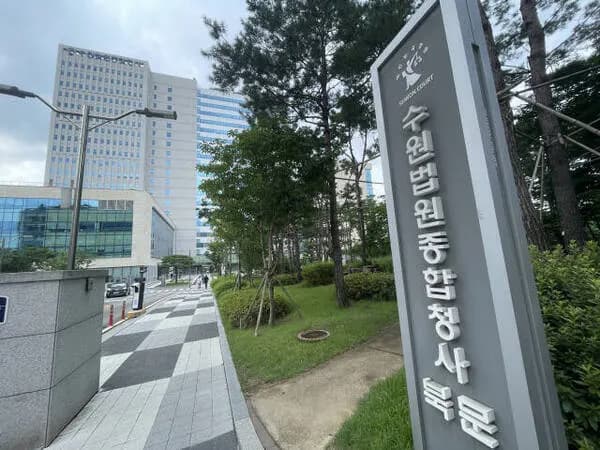
A contract was concluded on the condition of gas payment and gas supply credit… “Repayment was not made.” The court said, “I knew about the financial situation of the victim and the defendant… It was not a contract concluded for the benefit of the defendant.” A factory manager who was put on trial for failing to repay debts by concluding a contract by lying about the business situation was found not guilty in the first trial and also in the appeals court. On the 1st, Suwon District Court's 6-1 Criminal Division rejected the prosecution's appeal and declared him not guilty at the appeal trial of a man in his 40s on fraud charges. Maintained. Mr. A was accused of deceiving Mr. B, the president of a gas supplier, into paying overdue gas bills on his behalf in 2023. In addition, he was accused of failing to pay for gas after receiving gas from Mr. B's company. As a result of the investigation, it was confirmed that Mr. A became delinquent in gas payments as the management of the factory deteriorated, and subsequently signed a new contract with Mr. B's company. Mr. B claimed that at the time of the contract, Mr. A emphasized that his financial situation would soon improve and promised repayment, but did not keep this promise. The prosecution judged that Mr. A did not have the intention or ability to repay, given that the factory's management conditions were not good at the time and that this contract was signed while there were large separate debts. During the trial, Mr. A denied the charges. There was no mention of financial circumstances. He also refuted that he learned of Mr. B's company through the introduction of an existing gas company, and since the two companies were close friends, he would have been aware of his economic situation. Furthermore, it was argued that there may have been other reasons, such as sales performance, for concluding the contract despite knowing this. The first trial court found him not guilty. The first trial court said, "Given that the employee who signed the contract stated that he 'heard the entire story from the existing company,' it can be seen that he was well aware of the defendant's economic situation. It is also unconvincing that the victim would sign a contract while taking over the existing company's debt, believing only that 'the financial situation will improve soon'." The prosecution, which was dissatisfied with this, filed an appeal, but the second trial court upheld the original judgment. The appeal court said, "The existing company As payment delinquencies increased, he announced his intention to stop supplying gas and introduced the victim company, and it appears that he was significantly involved in the content and conclusion of the contract. Looking at this, it appears that this contract was concluded for the benefit of the existing company rather than because the defendant wanted it to be.” He added, “There is considerable scope to believe that the victim company signed the contract by taking the risk of not being paid for business performance based on trust in the existing company.” Representing Mr. A. Attorney Seongjin Yoon of Daeryun Law Firm explained, "The actual benefit that Mr. A gained through this contract was 16 million won in unpaid gas fees, and he did not lie about the specific conditions related to the gas contract. Rather, because it was the existing gas supplier that actually benefited from this contract, the court seems to have judged that it is difficult to say that Mr. A committed an act of deception." Reporter Seohyun Lee (sunshine@kyeonggi.com)[View full article] The factory manager signed a contract by deceiving the management situation... ‘Not guilty’ in the appeal trial (Shortcut)
2 places including News 1
2025-07-23
'VIP격노 인정' 김계환 측 "위증, 특검 수사대상 아냐…도주 우려 없다"
'VIP fury acknowledged' Kim Gye-hwan's side "Perjury is not subject to special prosecutor's investigation... There is no fear of flight"
"He attended without missing the special prosecutor's investigation, was harmed by meeting with his subordinates... There is no reason for arrest." Former Marine Corps Commander Kim Gye-hwan, who has denied the so-called 'VIP (former President Yoon Seok-yeol) fury theory', stated that he is not subject to investigation under the Special Prosecutors' Act on perjury charges and that there is no reason for detention. Daeryun, a law firm representing former commander Kim, said in a statement on the 23rd, "Colonel Park Jeong-hoon's charges of perjury during his trial for mutiny, and the National Assembly's audit of government affairs. They claimed that the charges do not amount to the 'death case of Marine Chae Soo-geun', which is specified as the subject of investigation by the special prosecutor, or to illegal acts such as dereliction of duty and abuse of power, such as concealment and ignorance, related to it. Former Commander Kim said, "It is difficult to say that the crimes for which the warrant is requested, such as conspiracy to commit perjury and violation of the National Assembly Testimony Act, are clearly established. Former Commander Kim is already banned from leaving the country, and there is no fear of flight as he always attends the special prosecutor's investigation." He emphasized, "Even if his subordinates contact him first, he is avoiding meeting, and he is not even talking on the phone with the people involved in the case. In relation to perjury, all the evidence, including witness interrogation records and National Assembly meeting minutes, has already been secured, so there is no possibility of destroying evidence." Previously, on the 18th, the Special Prosecutor's Team for Marines in the Line of Duty reported that former Commander Kim was furious after receiving a report on the results of the Marine Corps death case from the National Assembly and the Central Regional Military Court. An arrest warrant was requested on the 18th, claiming that he committed perjury by making a statement denying the 'fury theory'. Former Commander Kim appeared as a witness in the first trial of the head of the Marine Corps Investigation Team (Colonel) Park Jeong-hoon in February of last year on charges of mutiny and other charges, and is accused of perjury by perjury by stating that he never conveyed former President Yoon's anger to Colonel Park. Former Commander Kim was also accused of perjury by Park Eun-jung's Fatherland Innovation Party during the National Assembly Legislation and Judiciary Committee's military court audit in October last year. The lawmaker was also charged with perjury under the National Assembly Testimony Evaluation Act when he answered "no" to the question, "Have you ever told Colonel Park Jeong-hoon about the VIP fury rumor?" Nam Se-jin, chief judge in charge of warrants at the Seoul Central District Court, interrogated the suspect before the arrest of former commander Kim on the 22nd and said, "Considering the suspect's career, residence and family relations, the suspect's appearance during the investigation process, and his attitude in statements, it is difficult to acknowledge the concern about running away." Considering the progress of the investigation, the current status of the suspect, etc., it is difficult to say that there is a risk of destruction of evidence beyond the exercise of the right to defense at this stage," the special prosecutor's team dismissed the request for an arrest warrant. Meanwhile, in a briefing on the day, the special prosecutor's team said, "For the first time, (former Commander Kim) admitted in court that he was aware of former President Yoon Seok-yeol's anger. He said that he had never heard of former President Yoon's anger after being informed of the results of the Marine Corps Investigation Team during Colonel Park Jung-hoon's trial or during a National Assembly inquiry. He said, "We believe it is necessary to further investigate other allegations, including changes in the statement. We plan to summon former commander Kim again soon." Reporter Suyeon Yoo (shushu@news1.kr)[View full article] News 1 - ‘VIP fury acknowledged’ Kim Gye-hwan’s side, “Perjury is not subject to special prosecutor’s investigation… There is no fear of flight” (Shortcut) Gyeonggi Ilbo - Kim Gye-hwan's side "The perjury charge is not subject to the special prosecutor's investigation... There is no possibility of destroying evidence" (link)
international newspaper
2025-07-23
‘강제집행 피하려 재산 은닉’ 혐의 50대, 항소심서 무죄
Man in his 50s accused of ‘hiding assets to avoid compulsory execution’, acquitted on appeal
A man in his 50s who was indicted on charges of hiding property to avoid compulsory execution due to default was found not guilty at the appeal trial. The court overturned the sentence of fine for evading the first trial. The 3-2 Criminal Division of the Changwon District Court (Chief Judges Mi-yeon Kwon, Hyun-hee Jeong, and Taek-won Oh) on the 10th declared Mr. A, who was sent to trial on charges of evading compulsory execution, not guilty. The crime of evading compulsory execution means compulsory execution. It is a crime committed by concealing, damaging, or falsely transferring property for the purpose of avoiding the crime, or by injuring a creditor by incurring a false debt. According to Article 327 of the Criminal Act, he may be punished by imprisonment for up to 3 years or by a fine of up to 10 million won. Mr. A, who previously ran a firefighting facility management business, has been entrusted with the fire safety management service of a building since around July 2012. However, due to negligence in management, a large fire broke out, and a related damages lawsuit was filed, putting the company at risk of having to pay 400 million won. When Mr. A faced the threat of forcible execution of his property, he established a new company with his spouse as CEO. In addition, a contract was signed under a new name with some of the existing consignment management contract companies. The prosecution believed that Mr. A had concealed assets for the purpose of avoiding compulsory execution for damages, and charged him with evasion of compulsory execution. The first trial found Mr. A guilty on the charge and sentenced him to a fine. The first trial court said, “Mr. A concealed the assets of the existing company by falsely transferring business partners.” However, the appellate court found Mr. A not guilty. The appellate court ruled, “Considering various circumstances, such as the fact that the contract was canceled due to the deterioration of the company’s image after losing the related civil suit, and the fact that the existing company’s liability for damages was transferred to the new company, the submitted evidence alone cannot be considered to have proven that Mr. A had the purpose of avoiding compulsory execution.” Attorney Daeryun Koh Jeong-hang, a law firm representing Mr. A, said, “Mr. A terminated contracts with some customers and transferred them to a company under his spouse’s name to continue the business.” “It was for business reasons such as difficulty, that is, not for the purpose of avoiding debt,” he explained. “Accordingly, the liability for damages for the fire is also transferred to a new company, so the building that suffered the damage can receive a transfer execution order under Article 31 of the Civil Execution Act and take compulsory execution procedures.” He continued, “In the end, Mr. A’s actions of transferring the fire protection equipment business and transferring the business partner do not constitute false transfer or concealment of evasion of compulsory execution.” “We were able to get an acquittal by emphasizing that there was no risk of harming creditors,” he said. Digital Content Team[View full article] Man in his 50s accused of ‘hiding assets to avoid compulsory execution’, acquitted on appeal (link)
Medipana
2025-07-23
[기고] 비대면 의약품 주문 및 택배 배송에 대한 법적 쟁점
[Contribution] Legal issues regarding non-face-to-face drug ordering and courier delivery
Recently, there has been a lot of interest in warehouse-type pharmacies. The existing pharmaceutical industry is opposing warehouse-type pharmacies that promote distribution efficiency and cost savings, fearing misuse of medicines and ecosystem collapse. If these warehouse-type pharmacies attempt non-face-to-face sales, the impact is expected to be even greater. At this point, the Supreme Court ruling on non-face-to-face sales of pharmaceuticals was issued on the 12th of last month (Supreme Court ruling 2023Do9880). The ruling is a case dealing with a violation of the Pharmaceutical Affairs Act in the act of receiving reorders over the phone for diet herbal medicine sold after face-to-face interview and delivering it by courier. The appeals court in this case said that the above act did not violate Article 50, Paragraph 1 of the Pharmaceutical Affairs Act for the following reasons, saying, "The main part of the series of activities that make up the sale of medicines, such as ordering, manufacturing, delivery, and medication guidance, can be viewed in the same way as if they took place within a pharmacy." (Seoul Eastern District Court ruling 2021No1678). ① After conducting a face-to-face interview and selling the herbal medicine for the first time, he said over the phone that he wanted to take more of the herbal medicine, and the herbal medicine was resold through courier. ② The contents, composition, and price of the herbal medicine sold the first time and the herbal medicine sold again were all the same. ③ The buyer of the herbal medicine did not complain of any abnormal symptoms through the phone call, so the seller had to make an additional purchase. However, the Supreme Court ruled that Article 50, Paragraph 1 of the Pharmaceutical Affairs Act stipulates that 'pharmacy operators and drug dealers shall not sell drugs in places other than their pharmacies or stores,' and the reason for strictly restricting the places where drugs are sold is 'not only to prevent misuse and abuse of drugs through faithful medication guidance, etc., but also to block the possibility of deterioration and contamination of drugs during the storage and distribution process, and to make clear who is responsible in the event of a drug accident.' The decision was made to the effect that 'the series of actions of checking the physical changes after taking herbal medicine while facing the orderer, then receiving the order of herbal medicine suitable for the orderer's physical condition, dispensing it, and faithfully providing medication instructions were not properly carried out, and the seller did not directly deliver the herbal medicine to the orderer without any intermediate process. Therefore, all or major parts of the series of activities that constitute the sale of medicines, such as ordering, delivery, and medication guidance, cannot be considered to have been carried out within the pharmacy.' The above Supreme Court ruling is the warehouse pharmacy's next business. It shows that 'online ordering and courier delivery', which are considered models, are highly likely to be judged as a violation of Article 50, Paragraph 1 (Restrictions on Sales Places) of the Pharmaceutical Affairs Act at this point. However, non-face-to-face medical treatment and drug prescription systems are being activated in developed countries such as the United States, Japan, and the United Kingdom, and in Korea as well, in June 2022, it will be possible to purchase over-the-counter drugs through a remote control system after receiving consultation and medication guidance through a video call with a pharmacist through a monitor installed in front of a pharmacy. Considering that special regulatory provisions for verification purposes have been designated for vending machines, it seems likely that related regulations and precedents will change in Korea as well.[View full article] [Contribution] Legal issues regarding non-face-to-face drug ordering and courier delivery (link)
Money Today
2025-07-22
[기고] 속도 붙은 '李SG' 공시 의무화…기업 위험 요인은?
[Contribution] ‘Lee SG’ speeds up mandatory disclosure… What are the corporate risk factors?
With the recent introduction of the Corporate Sustainability Reporting Directive (CSRD) by the European Union (EU), mandatory ESG disclosure has become a global, irreversible trend. In this trend, President Lee Jae-myung, during his candidacy, argued that the mandatory ESG disclosure period should be brought forward from 2026 to 2025. The goal is to 'improve corporate transparency in line with global standards and resolve Korea's chronic discount'. This is expected to have positive effects in the long term, such as attracting global investment, improving corporate trust, and expanding sustainable management infrastructure. However, there are growing concerns that early implementation in situations where institutional and practical preparations are insufficient may result in serious burdens and risks for companies. In particular, in the case of small and medium-sized companies, the resources and capabilities required to establish an ESG disclosure system are not sufficient, so there is a high possibility of trial and error and side effects. So, what specific risk factors can early mandatory ESG disclosure pose to companies? First of all, various legal disputes may arise due to incomplete disclosure. Producing highly reliable ESG data requires significant time and cost, including improving existing systems and receiving verification from external professional organizations. However, if disclosure is rushed without sufficient internal system maintenance or external verification amid pressure for early implementation, the accuracy and reliability of the data will inevitably decline. Such unverified information or exaggerated performance can become a catalyst for shareholder lawsuits targeting management directly in accordance with Article 125 of the Capital Markets Act (liability for compensation due to false statements, etc.). In particular, 'greenwashing', which is packaging non-environmentally friendly activities as if they are eco-friendly, is not limited to a simple reputation issue and is highly likely to lead to actual sanctions, such as fines from the Fair Trade Commission for violating the Labeling and Advertising Act. Such unverified disclosures can spark legal disputes for companies. Second, excessive response burden occurs due to ambiguity in evaluation standards and inconsistency in standards for each institution. Currently, domestic and international ESG evaluations are carried out in different ways by various organizations without internationally unified standards. For example, global rating agencies MSCI, S&P Global, and Korea ESG Standards (KCGS) apply different evaluation indicators and industry-specific weights. In fact, according to a report analyzing 55 of the top 100 domestic companies in 2021, the ESG ratings of each institution differed by an average of 1.4 levels. In other words, a company that is rated ‘excellent’ by one agency may be judged ‘poor’ by another agency. Such inconsistencies and ambiguities are rapidly increasing the company’s response costs. ESG reports, audit data, improvement plans, etc. must be duplicated to suit the needs of each organization, and consulting costs and manpower burden also increase. This is a huge risk, especially for small and medium-sized businesses with limited financial and human resources. Third, 'disconnection risk' may occur throughout the supply chain. ESG disclosure is difficult to complete solely through the efforts of individual companies. Various indicators such as carbon emissions, human rights, safety, and ethics require securing and managing data throughout the entire supply chain. In particular, carbon emissions data requires information from partner companies. However, many partners lack understanding and preparation for ESG, and their manpower and capacity to build systems are limited. As a result, partner companies that have difficulty responding to ESG face the risk of being excluded from the supply chain of large companies. This could soon lead to the 'risk of supply chain disruption'. The discussion surrounding the timing of mandatory ESG disclosure is a process for our society to move in a better direction. Whether in 2025 or 2027, this huge wave of change is bound to come. The important thing is not ‘when to start’ but to gather wisdom on ‘how to prepare well.’ ESG will become a stepping stone for our companies and capital markets to take a leap forward only when we minimize the side effects caused by hasty implementation and fully realize the purpose of the system through thorough preparation. We need to navigate this important transition wisely. Small and Medium Business Team[View full article] [Contribution] ‘Lee SG’ speeds up mandatory disclosure… What are the corporate risk factors? (Shortcut)
Gyeonggi Ilbo
2025-07-22
"유명 건설사 시공” 허위 분양 광고에 속았다…법원 “계약금 전액 지급해야”
I was deceived by a false sales advertisement for “construction by a famous construction company”… Court: “Full deposit must be paid”
When I asked for ‘contract termination,’ both the housing association and the developer evaded responsibility. “A contract was concluded in error due to false advertising… The down payment must be returned.” Subscribers who complained of damages, claiming that they had signed up for a private rental apartment after seeing a false and exaggerated advertisement claiming that they had signed a construction contract with a famous construction company brand, won in trial. According to the legal community on the 22nd, the Suwon District Court ruled on the 26th of last month that two members of a local housing association filed against the union and the developer in the Suwon District Court as the plaintiffs. The court ruled in favor. “The union and the developer worked together to recruit contractors through false advertisements, so this can be seen as a case of deception or mistake. Therefore, the contract can be canceled or invalidated,” he said. “Even if the contracting party is the association, it can be confirmed that the developer also acts as a party to the contract text, etc.” The sale deposit is paid in full or in part as a penalty when the contract is terminated, and in principle, cannot be refunded. However, the court ruled that the contract must be returned because the contract was entered into by mistake due to false and exaggerated advertising. Previously, in October of last year, two subscribers signed a preliminary tenant contract with Union A on the condition of paying a rental deposit of about 200 million won and a down payment of 55 million won. At the time, the union encouraged subscribers to sign up by explaining that a famous construction company brand was in charge of construction. For the down payment, an advance deposit method was proposed instead of the existing two-month deposit method. If you deposit in advance, part of the down payment is returned. However, the construction company advertised by the union later posted a warning notice on its website saying, “There has been no agreement or contract for construction related to the new rental housing project.” Subscribers who saw this submitted applications for contract termination, but the union postponed contract termination without disclosing the exact reason. Even though the developer was designated as the recipient of the down payment, he also avoided responsibility by claiming that he was “not an actual party to the contract.” In relation to this, attorney Kim Tae-hwan of Daeryun Law Firm, who represented the plaintiff, pointed out, “The defendants delayed the return of the down payment on the grounds that they were not parties to the contract, making it difficult to clearly hold them legally responsible and dispersing the contracting parties.” He continued, “The defendants recruited subscribers with advantageous sales conditions, but in reality, the construction company was not determined and the land for the site was distributed.” “The defendants had to return the entire down payment and litigation costs as they were responsible for restoring the contract to its original state due to withdrawal of subscription,” he explained. Reporter Kim Mi-ji (unknown@kyeonggi.com)[View full article] I was deceived by a false sales advertisement for “construction by a famous construction company”… Court: “Full contract deposit must be paid” (Shortcut)
3 places including Legal Times
2025-07-22
배터리산업협회, '미국 OBBB 법률 및 비자 대응 전략 설명회' 개최
Battery Industry Association holds ‘U.S. OBBB Law and Visa Response Strategy Briefing’
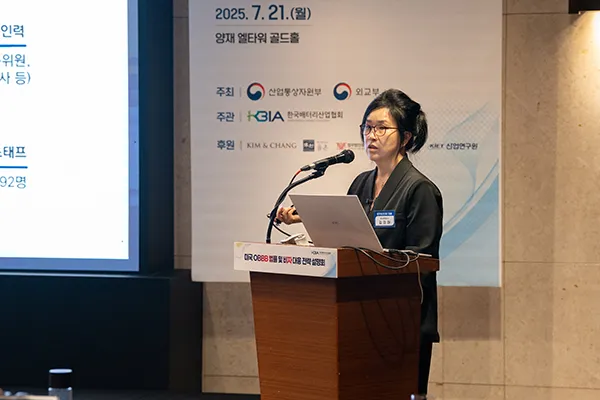
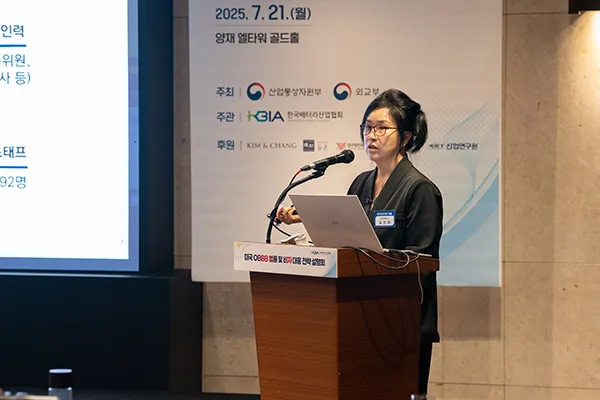
A presentation by lawyers from law firms such as Daeryun, Kim & Chang, and Yulchon As the U.S. administration led by President Trump implemented strong immigration policies such as restricting the entry of foreigners and cracking down on illegal immigrants, the domestic industry was also put on alert. Amid the strengthening of U.S. visa screening, an information session was held on July 21 at El Tower in Yangjae, Seoul to explore corporate response measures following the enactment of the so-called 'One Big Beautiful Bill Act (OBBBA)', which reflects President Trump's major national agendas such as tax cuts and strengthened crackdown on illegal immigration. At the 'U.S. OBBBA legal and visa response strategy briefing session' held by the Korea Battery Industry Association, lawyers from several law firms, including Kim & Chang Law Firm, Yulchon Law Firm, Daeryun Law Firm, and American law firm Covington & Burling, appeared as presenters and shared know-how on visa interviews and tax credit compliance. U.S. attorney Mia Kim introduces B1/B2 visa interview know-how. U.S. attorney Mia Kim of Daeryun Law Firm noted, "Recently, cases of visa approval delays or rejections in cases where there is a replaceable workforce in the U.S. or a history of repeated entry through ESTA and long-term stays are increasing," and introduced interview know-how for B1/B2 visas, which Korean companies frequently apply for but face difficulties among the major types of U.S. visas. The B1 non-immigrant visa is for short-term business purposes in the United States, and the B2 is for tourism, medical treatment, etc. Both visas are short-term visits and the length of stay is limited to 6 months. Attorney Kim explained, “You must prepare a specific and consistent business trip or research plan focusing on content directly connected to your professional field, such as career experience, business trip plan, research plan, and job relevance,” and “If the business trip is for the purpose, the specific schedule and work details must be revealed.” Foreign lawyer Koo Ja-min of Covington & Burling, foreign lawyer Hong Wook-seon of Yulchon Law Firm, and accountant Jeong Hyun explained the main contents of OBBB Law's tax reform in the battery sector. In addition, he said that eligibility requirements and compliance standards will be specified through the Ministry of Finance's enforcement regulations in accordance with the OBBB Act, and shared a tax credit compliance checklist, including eligibility review, construction start requirements, tax credit calculation and transfer, compliance obligations and sanctions related to Prohibited Foreign Entity (PFE), and contract and legal risk management. Foreign lawyers So-yeon Park, Yeon-woo Lee, and Eui-hyun Kim of Kim & Chang Law Firm presented the newly introduced definition of PFE, material assistance requirements, and corporate compliance matters for PFE to regulate supply chains in specific countries. If a PFE from a covered nation, such as China, North Korea, Russia, or Iran, invests, manufactures, and produces in the United States, it cannot receive tax credits such as the Advanced Manufacturing and Production Tax Credit (AMPC), Clean Power Investment Tax Credit (ITC), and Production Tax Credit (PTC). Legal Times Reporter Eunjae Lee (eunjae@legaltimes.co.kr)[View full article] Legal Times - Battery Industry Association holds ‘U.S. OBBB Law and Visa Response Strategy Briefing’ (Go here) Korea Economy - US visa screening has become stricter... “A strategic approach is needed to reduce entry risk” (link) Naeoe Economy TV - "U.S. Visa, now a strategy is needed"... Companies are on high alert due to strengthened screening (Click here)
blotter
2025-07-22
[상법개정안 여파] 사외이사에서 독립이사로…'거수기' 꼬리표 떼기 '글쎄'
[Aftermath of the Commercial Act Amendment] From outside director to independent director… ‘Well,’ to take off the ‘Geosugi’ label.
We examine the impact of the Commercial Act amendments on corporate management. There is an assessment that the independence and responsibility of the board of directors will be strengthened as the amendment to the Commercial Act includes the conversion of outside directors to independent directors and expansion of their size. In fact, the purpose is to lay the foundation for outside directors, who have been criticized as being the management's top movers, to raise their voice for checks and surveillance through the amendment. However, in the legal community, there are concerns that confusion may arise in the field because it is difficult to find a suitable person with independence and expertise or a company-specific strategy is not prepared, and it is pointed out that specific measures must be prepared to secure actual independence beyond name changes. The commercial law amendment bill recently passed at the cabinet meeting removes the existing outside directors. It includes changes to the name of independent directors and expansion of the mandatory appointment ratio from one-fourth to one-third of the total number of directors. An independent director is defined as 'a director who, as an outside director, performs functions independent of internal directors, executive officers, and business execution directives.' Accordingly, it is expected that independent directors will be required to have a higher degree of independence than existing outside directors. Changes in the existing management environment, which was greatly influenced by management, are also expected. Attorney Seok-Hyeon Yoo of the law firm Mission said, "It will be possible to increase the check on the company's management." Seung-Gyu Byeon, a lawyer at the law firm Seum, said, "In particular, in line with the main content of the Commercial Act Amendment Bill, which requires directors to directly bear a duty of loyalty to shareholders, when independent directors make decisions for major shareholders, the possibility of making decisions that take into account the interests of all shareholders will increase, considering the possibility of being sued by minority shareholders even if it goes against the interests of major shareholders." I looked ahead. It is necessary to secure candidates for independent directors and prepare customized strategies for each company. However, it may be difficult to achieve the practical effects of the amendment simply by changing the name to independent directors and expanding the size. First, there is the problem of finding appropriate independent director candidates. Kim Ji-ho, an attorney at Lin Law Firm (Limited), said, “If several companies increase the number of independent directors at once to meet the one-third appointment ratio requirement, it may become difficult to find suitable people who meet the qualifications for the relevant industry, and as the responsibilities of directors are strengthened, there is a possibility that candidates may avoid independent director positions.” To prevent this situation, a system for discovering and managing independent director candidates must be systematized. Attorney Yoo explained, “We need to prepare in advance for the appointment of new independent directors to prevent a situation where there is a shortage of candidates right before implementation.” Dong-Han Lim, a lawyer at Dongin Law Firm, emphasized, "Efforts must be made to increase the reliability of the selection of independent directors through an objective and professional director recommendation process and to establish an efficient decision-making system." Jong-Soo Shin, a lawyer at Daeryun Law Firm, said, "The selection process and qualification requirements must be strengthened to ensure the actual independence of independent directors." He added, "In line with the trend of strengthening requirements for independent directors, the candidate recommendation committee system must be practically operated and the independence verification process must be objective." “I do it,” he said. In particular, he advised receiving candidate recommendations through multiple channels. Attorney Kim said, “There is a need to actively consider recommendations from external experts and shareholders,” and added, “In the case of independent directors recommended and appointed through various channels, it is expected that they will contribute to securing independence.” In addition, a careful approach is needed depending on the circumstances of each company. Attorney Shin said, "The impact of the amendment to the Commercial Act will vary depending on each company, whether it is a listed or large-scale listed company, the distribution of shareholders' shareholding, the composition of the existing board of directors and outside directors, and transactions with affiliated companies with different shareholdings of controlling shareholders." He added, "The amendments must be reviewed in detail and responded to according to the company's situation." Attorney Byun also said, "As the effect of changing the name of an outside director of a listed company to an independent director is not explicitly and specifically set, what effect does this amendment to the Commercial Act have on actual corporate management? “We need to look at the accumulation of practice and precedents and the revision of the Enforcement Decree of the Commercial Act to see whether it will have an impact,” he said. If such supplementation is made, it is expected to ultimately have a positive impact on the capital market. Attorney Lim pointed out, "The change to the independent director system will send a positive signal to global investors about the improvement of the governance structure of Korean companies and will have a positive impact on resolving the chronic problem of Korea discounts." Attorney Kim said, "By increasing trust in companies externally and introducing the concept of independent directors, which is emphasized in the corporate governance structure of developed countries, it can contribute to strengthening the international competitiveness of Korean companies and increasing the share of foreign institutional investors in Korea." Reporter Park Seon-woo (closely@bloter.net)[View full article] [Aftermath of the Commercial Act Amendment] From outside director to independent director… Removing the ‘Geosugi’ label ‘Well’ (Shortcut)
Have more questions?
Quick Menu

KakaoTalk