CONTENTS
- 1. The Serious Accidents Punishment Act | Effective Response Under the Act and Its Enforcement Decree

- - How the Serious Accidents Punishment Act Is Categorized
- - The Scope of Substantial Control, Operation, and Management and the Expansion of Responsible Parties
- 2. Serious Accidents Punishment Act | Duties and Criminal Liability for Accident Prevention
- - Criminal Punishment and Administrative Dispositions Under the Serious Accidents Punishment Act
- - Administrative Fine for Failure to Complete Safety and Health Training
- - Punitive Damages Liability
- - Measures by the Business Owner When a Serious Accident Occurs
- 3. Serious Accidents Punishment Act | Actual Sentencing Cases and Corporate Response Measures
- - Key Points in Establishing a Response System
- - Scope of a Serious Accident Lawyer's Support for Responsible Managing Officers

1. The Serious Accidents Punishment Act | Effective Response Under the Act and Its Enforcement Decree
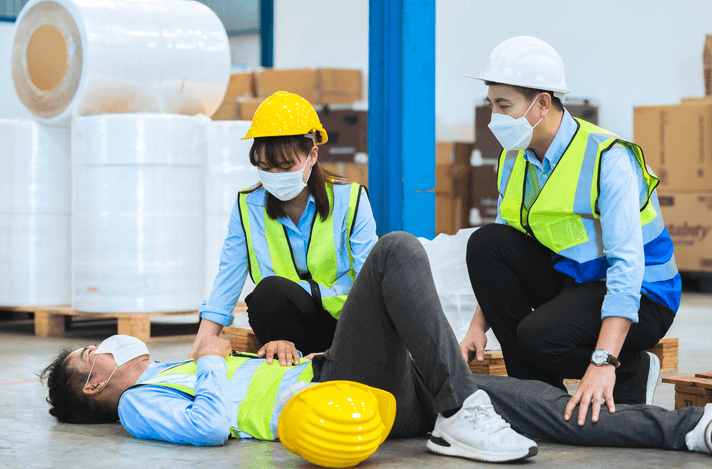
The Serious Accidents Punishment Act has reached its third year of enforcement.
The severity of recent industrial accidents in Korea and the repeated occurrence of large-scale civic accidents have fundamentally changed the level of social demand for corporate safety and health management.
Accordingly, the ‘Act on the Punishment of Serious Accidents’ (hereinafter the ‘Serious Accidents Punishment Act’), enforced since 2022, directly imposes on employers and business managers the obligation to secure the safety and health not only of workers but also of the general public, and provides for criminal liability, damages, and administrative disposition when a serious industrial accident or a serious civic accident occurs as a result of a violation of this obligation.
 How the Serious Accidents Punishment Act Is Categorized
The Serious Accidents Punishment Act is broadly divided into serious industrial accidents and serious civil accidents.
Serious industrial accident : an accident affecting workers that occurs at an industrial site
Serious civil accident : a casualty among the public caused by raw materials, manufactured products, public-use facilities, public transportation, and the like


The Scope of Substantial Control, Operation, and Management and the Expansion of Responsible Parties
Under the Serious Accidents Punishment Act, if a business or workplace substantially owns, possesses, or leases raw materials, manufactured products, facilities, or equipment, or carries out production, manufacturing, sale, or distribution through them, it is recognized as having a duty to control the hazards and risk factors arising from those facilities and products.
The party bearing this management duty ordinarily includes the representative director and the responsible managing officer holding representative authority, and executives who substantially hold decision-making authority over safety and health work are also included among the ‘responsible managing officers’ under the Serious Accidents Punishment Act.
If a serious accident occurs, a safety officer, CSO, or similar person who substantially oversees the safety and health system may be subject to punishment even if that person is not the representative director.
2. Serious Accidents Punishment Act | Duties and Criminal Liability for Accident Prevention
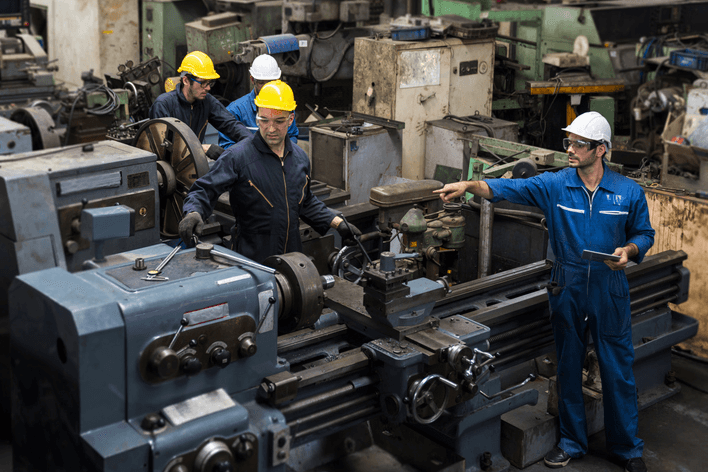
The Serious Accidents Punishment Act and its Enforcement Decree set out fairly specific measures for carrying out prevention duties.
These can be summarized as follows.
A. Establishing a safety and health management system
The business owner must set safety and health goals and policies and must periodically identify and improve hazards and risk factors.
A workplace with 500 or more full-time workers, or a construction company ranked among the top 200 in construction capacity, must establish a dedicated organization, and must conduct a risk assessment at least once every half year.
B. Management of raw materials and manufactured products
To prevent serious civil accidents, hazards and risk factors related to raw materials and manufactured products must be inspected periodically, and any warning sign must be addressed and reported immediately.
Safety and health management must be carried out systematically across the entire process of production, manufacturing, and distribution, and the personnel and budget needed for this must be secured.
C. Securing the safety of public-use facilities and public transportation
For public-use facilities (road bridges, tunnels, amusement facilities, and the like) and public transportation (railways, aviation, and the like), a safety plan must be established and reviewed at least once a year, and an emergency response manual and contingency plan must be prepared.
D. Training duties and management
The responsible managing officer and the safety management staff must complete safety and health training (within a total of 20 hours).
Training for workers engaged in hazardous or dangerous tasks must be checked periodically so that no participant is omitted.
E. Document retention duties
All records on the implementation of measures and inspections, including electronic documents, must be retained for 5 years.
Criminal Punishment and Administrative Dispositions Under the Serious Accidents Punishment Act
For both serious industrial accidents and serious civil accidents, where a breach of the duties imposed on business owners and responsible managing officers is found, criminal punishment and administrative dispositions such as an administrative fine are imposed.
Administrative Fine for Failure to Complete Safety and Health Training
If a serious industrial accident occurs, the responsible managing officer of the corporation or institution must complete safety and health training.
If the responsible managing officer fails to complete safety and health training without justifiable grounds, an administrative fine is imposed.
- First violation : 10 million won
- Second violation : 30 million won
- Third or later violation : 50 million won
However, the administrative fine may be reduced by up to one half (excluding delinquent payers).
- The violator suffered significant loss of property due to a natural disaster or similar cause
- A serious crisis to the business due to worsening business conditions
- The violation resulted from minor carelessness or error
- The violator made efforts to correct and resolve the state of violation of the law
- Other consideration of the degree and motive of the violation
In addition, the administrative fine may be reduced by about half for workplaces with fewer than 50 full-time workers, construction projects with a contract value of less than 5 billion won, and the like.
Punitive Damages Liability
Workers, members of the public, and others harmed by a serious accident may bring a claim for damages against the business owner based on a tort under the Civil Act.
In this case, the owner bears liability for damages not exceeding 5 times the amount of loss.
The following matters are taken into account in calculating the amount of damages.
Measures by the Business Owner When a Serious Accident Occurs
When a serious accident occurs, the business owner must stop the relevant work and take measures to evacuate workers.
The owner must also report to the Minister of Employment and Labor without delay, and even where an unavoidable reason arises, must report immediately once that reason ceases.
If, despite a serious accident having occurred, a person damages the scene or obstructs the cause investigation, that person is subject to imprisonment of up to 1 year or a fine of up to 10 million won.
In addition, failing to report a serious accident or filing a false report results in an administrative fine of up to 30 million won.
See More
3. Serious Accidents Punishment Act | Actual Sentencing Cases and Corporate Response Measures

During the 3 years since the Serious Accidents Punishment Act took effect, about 37 judgments were handed down, and 33 of these resulted in convictions.
The sentencing factors that the courts used to distinguish guilty from not-guilty outcomes are as follows.
Grounds for conviction | Grounds for acquittal |
History of similar accidents | Unclear causal link between the breach of duty and the accident |
Prior conviction of the representative for the same type of offense | Accident that was not foreseeable |
Neglect of issues raised in safety inspections | Worker responsibility, such as misoperation of equipment |
Goals and policies unrelated to the accident | Unclear party responsible for directing the work and deciding the work method |
Key Points in Establishing a Response System
The core of the Serious Accidents Punishment Act is that it requires not ‘formal procedures’ but ‘substantial preventive measures and continuity of management.’
Accordingly, for a business owner and responsible managing officer to put in place an effective response system, the following measures are necessary.
1) Making the dedicated safety and health organization substantive
The effective management that the law requires is not satisfied by placing a nominal ‘dedicated body.’
Safety and health managers, health managers, occupational physicians, and the like should be assigned beyond the statutory minimum, and given an independent budget and authority so that safety measures are reflected in the day-to-day work of each business unit.
2) Standardizing the procedure for identifying and improving hazards and risk factors
The risk assessment process and the measures to improve hazards and risk factors should not end as a ‘one-time inspection,’ and the procedure should be reflected in internal regulations so that an improvement order and budget execution are possible immediately when a warning sign is detected.
3) Strengthening management of partner companies and subcontractors
An accident at a subcontractor or partner company may result in liability for the principal contractor.
The Enforcement Decree of the Serious Accidents Punishment Act requires that, in the course of contracting, service, and consignment, the contractor evaluate the principal's ability to take safety and health measures and, on that basis, appropriately reflect the construction period and management costs.
4) Strengthening product and manufactured-goods management to prevent serious civil accidents
Measures to prevent civil accidents caused by product defects cannot be limited to the responsibility of the quality control team alone.
A company should strengthen hazard assessment from the production and design stages and prepare recall and pre-inspection procedures, and it should operate internal guidelines that allow immediate reporting and action when a risk arises.
5) Making the emergency response manual specific for when an accident occurs
If a serious accident occurs or there is an imminent danger, a manual covering worker evacuation, work stoppage, immediate rescue measures, and measures to prevent further harm must be in place.
Conducting regular drills so that all staff are familiar with the manual is also advisable.
Scope of a Serious Accident Lawyer's Support for Responsible Managing Officers
To comply with the Serious Accidents Punishment Act, which compels commitment and practice from top management, and ultimately to prevent the criminal punishment and damage to corporate reputation that a serious accident can cause, investment in an internal safety and health management system should be combined with ongoing advice from outside specialists.
If you need advice on maintaining the substantial standard required by the law on an ongoing basis, please request a consultation with a lawyer of our firm's Industrial Safety and Serious Accidents Group.
A serious accident lawyer with experience in many corporate litigation and labor cases, labor attorneys, and evidence investigation specialists capable of gathering related evidence will devote themselves to the corporate client's case.
▶Identifying the cause of a serious accident
▶Establishing a strategy for recovery measures
▶Responding to subsequent related litigation
▶Accompaniment through criminal investigation procedures and pleading
▶Responding to the media and labor organizations, and settlement with bereaved families
See More


Watch related video content
for this case study.

A to Z essential guide to serious accident punishment law from a serious accident lawyer