CONTENTS
- 1. Serious Industrial Accident | Analysis of a Judgment Acquitting the Principal Contractor and Convicting the Subcontractor

- - The Significance of the Serious Accidents Punishment Act's Enforcement
- 2. Serious Industrial Accident | Scope of Application of the Serious Accidents Punishment Act
- - Examples of Occupational Diseases Constituting a Serious Industrial Accident
- 3. Serious Industrial Accident | Key Duties of Business Owners and Responsible Managing Officers
- - The Same Duties Apply in Contracting, Service, and Consignment Relationships
- 4. Serious Industrial Accident | Criminal Punishment and Liability for Damages
- - Criminal and Administrative Liability of the Business Owner
- - Causation Issues Seen Through Acquittals in Serious Industrial Accident Cases
- - Liability for Damages and Protection of Victims
- - Secondary Disadvantages Such as Business Suspension and Operation Suspension
- 5. Serious Industrial Accident | Necessary Checklist for Business Owners and Management Officials
- - How an Industrial Accident Attorney Can Assist

1. Serious Industrial Accident | Analysis of a Judgment Acquitting the Principal Contractor and Convicting the Subcontractor
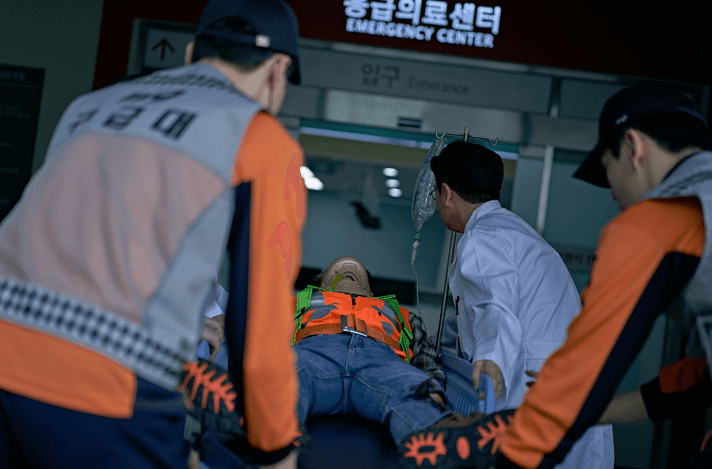
Let us first look at a case in which a serious industrial accident resulted in the acquittal of the principal contractor's representative and the conviction of the subcontractor.
In 2022, an incident occurred at a sewer pipe maintenance project site in Gunsan, Jeollabuk-do, where a subcontractor's worker was buried and died because backfilling was not carried out after removing the shoring.
In this case, the principal contractor's representative director and the site manager were indicted on charges of violating the Serious Accidents Punishment Act, but the court returned a verdict of acquittal.
However, the subcontractor's site manager and the corporation were each given a guilty verdict of 8 months' imprisonment suspended for 2 years and a fine, respectively.
The court found that the principal contractor had carried out its safety plan and training, and that the accident arose from the subcontractor's poor management and an unusual action, so it was not foreseeable.
This judgment is the first case to distinguish the scope of liability between the principal contractor and the subcontractor within a contracting structure.
It is regarded as reaffirming the principle of responsibility by which the law views serious industrial accidents.
 The Significance of the Serious Accidents Punishment Act's Enforcement
Out of an awareness that repeated large-scale industrial accidents could no longer be left unaddressed, Korea enacted the Serious Accidents Punishment Act and has been enforcing it in earnest since 2022.
The Serious Accidents Punishment Act directly imposes substantial and specific safety and health assurance duties on business owners and responsible managing officers, and where these are breached and a serious accident occurs, it strengthens both criminal punishment and damages liability at the same time.
2. Serious Industrial Accident | Scope of Application of the Serious Accidents Punishment Act
Most accidents that occur at industrial sites are classified as ‘industrial accidents’ under the Occupational Safety and Health Act.
Among these, the Serious Accidents Punishment Act separately defines the scope of serious industrial accidents, and it applies if even one of the following requirements is met.
If even a single worker dies, it immediately constitutes a serious industrial accident, and criminal liability and damages liability for the responsible managing officer may overlap, so caution is needed.
However, small individual workplaces with fewer than 5 full-time workers are classified as exempt from application.
Examples of Occupational Diseases Constituting a Serious Industrial Accident
Representative occupational diseases regarded as serious industrial accidents include the following.
• Central nervous system damage and acute poisoning caused by exposure to vinyl chloride
• Acute poisoning from exposure to hazardous substances such as lead, mercury, chromium, and benzene
• Loss of consciousness and pulmonary edema caused by exposure to hydrogen sulfide
• Legionellosis caused by contaminated cooling water
• Health disorders caused by exposure to high or low atmospheric pressure
• Oxygen deficiency in locations with insufficient oxygen concentration
• Acute radiation syndrome caused by ionizing radiation
• Heatstroke caused by extreme heat or high-temperature work
For these occupational diseases, safety measures and preventive training must be carried out thoroughly in advance.
3. Serious Industrial Accident | Key Duties of Business Owners and Responsible Managing Officers
To prevent serious industrial accidents, the law imposes the following safety and health assurance duties on the business owner or responsible managing officer.
Establishing and implementing a safety and health management system
• Organizing the personnel, organization, and budget needed for accident prevention
• Identifying and improving risk factors, and preparing an emergency response manual
• Mandating regular inspections and improvement measures
Rapid response when an accident occurs
• Conducting a cause investigation
• Establishing and implementing measures to prevent recurrence
• Faithfully carrying out improvement orders and corrective measures
Management measures for legal compliance
• Regularly inspecting duties under related laws such as the Occupational Safety and Health Act
• Confirming whether required safety training has been carried out
In particular, organizing a structure and preparing a manual alone cannot be regarded as fulfilling the duties.
It must be kept in mind that substantial measures, such as safety training, inspections, and the removal of risk factors, must actually be carried out on site.
The Same Duties Apply in Contracting, Service, and Consignment Relationships
Domestic industrial sites have complex and frequent contracting structures.
Under the Serious Accidents Punishment Act, even where the principal contractor has awarded a contract, service, or consignment, the same safety and health duties toward the subcontractor's workers apply.
However, this is limited to the equipment, places, and tools that the principal contractor substantially controls, operates, and manages.
A subcontractor management manual, supplier evaluation criteria, criteria for calculating the construction period and management costs, and the like must be prepared in advance and inspected at least once every half year.
4. Serious Industrial Accident | Criminal Punishment and Liability for Damages
When a serious accident occurs, the business owner must immediately stop the relevant work and evacuate workers from the worksite.
In addition, upon becoming aware that a serious accident has occurred, the business owner must report it to the Minister of Employment and Labor without delay.
The Minister of Employment and Labor may take the following measures against a worksite where a serious industrial accident or similar event has occurred.
Criminal and Administrative Liability of the Business Owner
If a serious industrial accident occurs because the duty to secure safety and health was not fulfilled, severe criminal punishment may be imposed on the business owner and the management official.
Worker fatality | Imprisonment of at least 1 year or a fine of up to KRW 1 billion |
Serious injury or disease | Imprisonment of up to 7 years or a fine of up to KRW 100 million |
Recurrence of the same accident within 5 years | Sentence increased by 1/2 |
Joint penalty provision | A separate fine is also imposed on the corporation (up to KRW 5 billion in case of death, and up to KRW 1 billion in case of serious injury or disease) |
Damaging the scene of a serious accident or obstructing the cause investigation | Imprisonment of up to 1 year or a fine of up to KRW 10 million |
Failure to report or false reporting of the occurrence of a serious accident | Administrative fine of up to KRW 30 million |
Failure to complete safety and health training after an accident |
Causation Issues Seen Through Acquittals in Serious Industrial Accident Cases
Acquittal 1 - Death During Work on a Compression Molding Machine
- Facts: A subcontractor's worker died after being struck in the head by a hand tool ejected from a compression molding machine
- Issue: Whether the prime contractor's representative violated the duty to establish a dedicated safety organization and to identify hazardous and dangerous factors
- Conclusion: The cause of the accident was the worker's use of the hand tool for a purpose other than intended
The court held that an unusual accident caused by use for an unintended purpose was not foreseeable, denied causation as to both the prime contractor's and the subcontractor's representatives, → and pronounced an acquittal
Acquittal 2 - Death by Overturning of a Dump Truck at a Coal Receiving Yard
- Facts: A subcontractor's worker died after being buried under coal when a dump truck bed overturned
- Issue: Whether the prime contractor's representative violated the duty to identify hazardous and dangerous factors and to take preventive measures
- Conclusion: The main causes were the dump truck driver's misoperation and the worker's entry into the work zone
The court found that the overturning of the dump truck was difficult to foresee and exceeded the scope of the duty to take preventive measures, → and entered an acquittal
The two cases reaffirmed that, under the Serious Accidents Punishment Act, a conviction requires that a ‘proximate causal relationship' be established between the management official's breach of the duty to secure safety and health and the accident.
In particular, they show that for an unforeseeable, unusual accident, causation between the breach of duty and the result may be denied.
Liability for Damages and Protection of Victims
If the business owner violated the duty to secure safety and health intentionally or through gross negligence, the injured worker may file a claim for damages for tort under the Civil Act.
In this case, liability to compensate for up to five times the amount of damages may arise.
The court comprehensively considers the degree of intent and negligence, the type and substance of the breaching conduct, its duration and frequency, the scale of the damage that occurred, the economic benefit gained from the violation, the financial condition of the business owner and others, and subsequent efforts toward remedying the harm and preventing recurrence.
In addition, in serious industrial accident cases, the court may examine the statements of the victim and the bereaved family ex officio, and it strengthens the fairness of the trial through the system of expert advisors.
Secondary Disadvantages Such as Business Suspension and Operation Suspension
The government carries out measures such as establishing comprehensive plans to prevent serious industrial accidents, analyzing causes, providing on-site technical support, and conducting preventive training.
In addition, once a sentence becomes final, the name of the worksite, the details of the accident, and similar information may be made public.
The mere fact that a serious industrial accident has occurred directly harms a company's image.
This may lead not only to social criticism but also to administrative sanctions such as an increase in the industrial accident insurance premium rate, business suspension or operation suspension, restrictions on government awards, or point deductions in pre-qualification screening for bidding.
5. Serious Industrial Accident | Necessary Checklist for Business Owners and Management Officials

A serious industrial accident is now a matter of the direct responsibility of management.
Regardless of the size of the worksite or the type of business, companies must build a safety and health management system that functions in practice and conduct ongoing management and inspection so that the safety of both prime contractor and subcontractor workers is secured.
How an Industrial Accident Attorney Can Assist
When a serious industrial accident occurs, our firm's Industrial Safety and Serious Accidents Group immediately activates a task force composed of attorneys specializing in industrial accidents, criminal matters, and corporate matters, together with labor consultants, to support companies in managing risk.
We provide legal services such as advisory on responding to the Serious Accidents Punishment Act, reviewing the duties of management officials, building risk assessment procedures, responding to investigations and trials, and designing safety management systems.
Through nearby branch offices where consultations are available on weekends and public holidays, you may receive prompt and practical solutions.
In particular, to improve convenience for corporate clients, we have set up a video consultation system, which you may keep in mind when requesting a consultation.
▶Advisory on distinguishing the entity directing work in a contracting structure
▶Preparing methods for risk assessment and establishing a safety management plan
▶Building a documented inspection system for the performance of duties by the safety and health manager
▶Securing records and evidence of advance safety meetings and training content
See More

Get a recommendation for a serious accident lawyer who can help you analyze a serious industrial accident

Sentenced on three counts of manslaughter through occupational negligence, violation of the Severe Wife Act, and the Sanan Act.
The number of fatal accidents in the construction industry is at its highest. What is the response strategy for small construction companies?


Watch related video content
for this case study.

Essential Guide to the Severe Accident Punishment Act A to Z