
CONTENTS
- 1. Insult | Case Details

- 2. Insult | Assistance Provided by the Criminal Law Attorney
- - Legal Interpretation of Posting a Composite Photo
- - Argument That the Elements of Insult Were Not Satisfied
- - Denial of the Elements of Defamation
- - Emphasis on the Nature of the Chat
- 3. Insult | Case Result
- - Insult: Elements and Level of Punishment
- - Defamation Under the Network Act: Elements and Level of Punishment
- 4. Insult | Key Response Points

1. Insult | Case Details
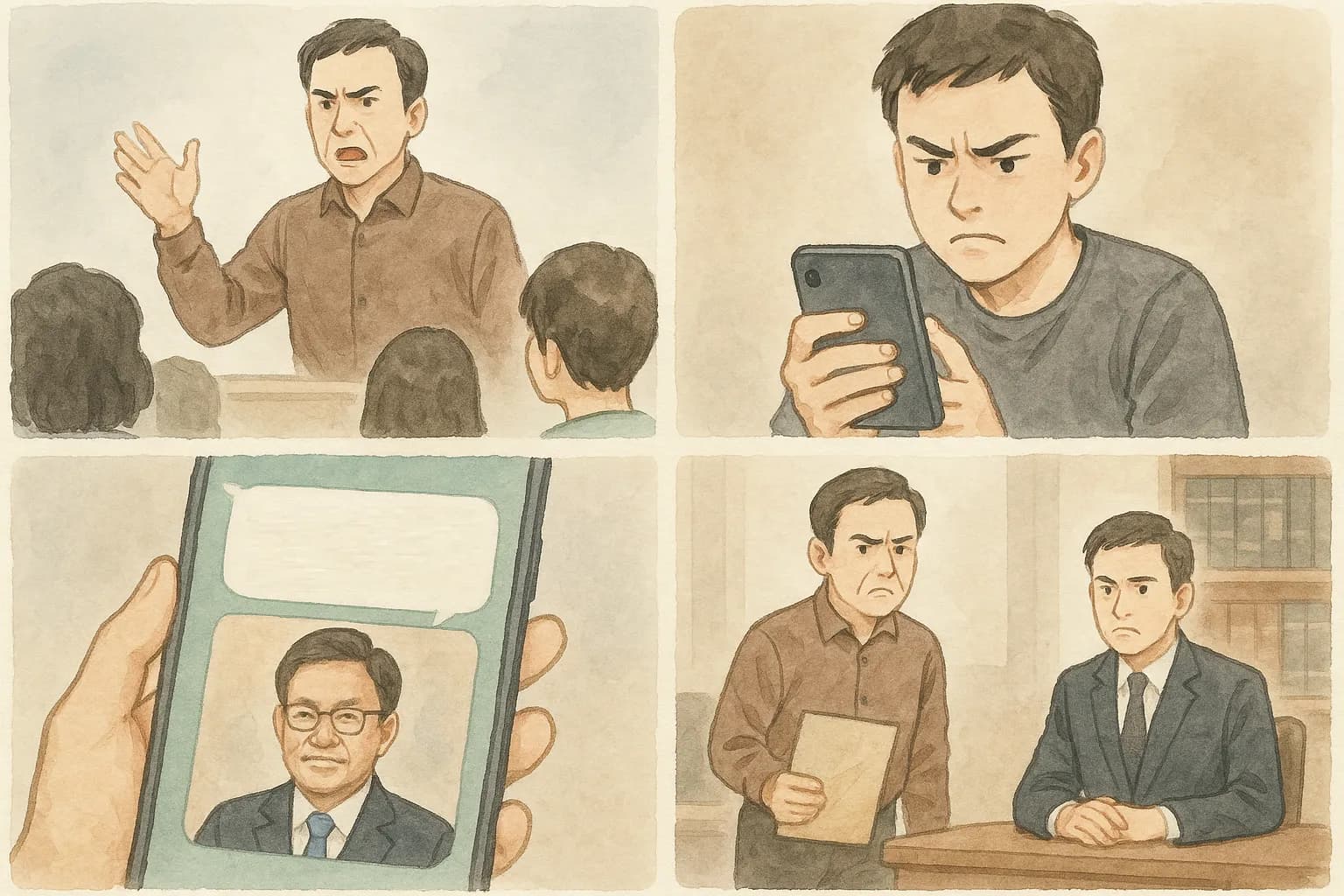
The client, who had been accused of insult and online defamation under the Network Act, was a student attending a computer academy and had a minor conflict with A, an instructor at the academy.
The client, who was dissatisfied that A frequently talked about politicians during class, expressed this dissatisfaction emotionally in a KakaoTalk group chat that the academy students shared.
In the course of this, the client sent messages referring to A to the effect of “Is he really a teacher? He seems like a fraudster,” and also posted an image that composited A’s face onto a photo of a politician in the group chat.
In response, A claimed that he had been ridiculed in front of several students and filed a criminal complaint against the client for insult and violation of the Act on Promotion of Information and Communications Network Utilization and Information Protection (defamation).
The investigative authorities confirmed the fact of the statements and the image posting and referred the case to the prosecutors’ office.
The client felt this was unfair, given that an emotional expression had led to criminal punishment, and requested assistance from an attorney specializing in criminal matters.
2. Insult | Assistance Provided by the Criminal Law Attorney
The attorney specializing in criminal matters approached this case by specifically dividing its issues into “whether the expression could lower social evaluation as an insult” and “whether the statement constituted a statement of fact for defamation.”
 Legal Interpretation of Posting a Composite Photo
The attorney specializing in criminal matters argued that the client’s compositing of the instructor’s face onto a politician’s photo was merely satire.
The client had only humorously expressed dissatisfaction with the instructor’s frequent mention of a particular politician during class, and had no intent to lower the instructor’s social evaluation.
In other words, the attorney emphasized that the purpose of the expression was not “disparagement” but “satire and the venting of emotion.”
The attorney also showed that the client had not used any profanity or vulgar language, and that the photo itself contained no “unlawful or false” elements.
Argument That the Elements of Insult Were Not Satisfied
Citing Supreme Court Decisions 2017Do2661 and 2019Do7370, the attorney specializing in criminal matters argued that “unless the language amounts to abuse that seriously harms the other person’s dignity or evokes disgust, merely rude or unpleasant expressions cannot be regarded as insult.”
The attorney assessed that the client’s statements were emotional words and conduct at a level that could be socially tolerated, and that it was difficult to view them as an act publicly intended to demean or hold another person’s dignity in contempt.
Denial of the Elements of Defamation
The client’s expression “he seems like a fraudster” was merely a subjective opinion, not a report of a specific fact that could be objectively proven.
Relying on Supreme Court Decisions 96Do1741 and 96Do2910, the attorney specializing in criminal matters explained that “a ‘statement of fact’ in defamation must be a past or present fact that can be proven by evidence, and a value judgment or evaluative expression does not fall under this.”
Accordingly, the attorney argued that the client’s statement was not a statement of false fact but an “emotional figure of speech,” which did not satisfy the elements of defamation under the Network Act.
Emphasis on the Nature of the Chat
The attorney specializing in criminal matters emphasized the nature of the KakaoTalk group chat.
The attorney established that the KakaoTalk chat was a space closed to the students and was not a public channel in which an unspecified number of people participated, and that there was no indication that the statements had been disseminated externally and caused actual harm to social evaluation.
3. Insult | Case Result
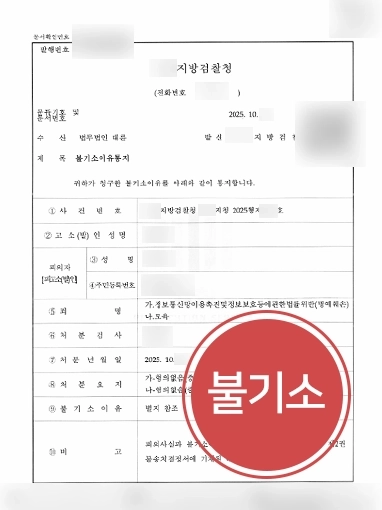
After comprehensively reviewing the reasoning and evidence presented by the attorney specializing in criminal matters, the prosecution determined that it was difficult to regard the client’s conduct as an “insulting expression” under generally accepted social norms.
Accordingly, the prosecution rendered a decision of non-prosecution (no suspicion of crime) regarding the client.
Insult: Elements and Level of Punishment
Category | Elements | Criteria for Judgment | Level of Punishment |
There must be words or conduct, made publicly, capable of lowering the social evaluation of a person’s dignity | · Context and place of the statement · Intensity of the expression · Social acceptability | Imprisonment with or without labor for up to 1 year or a fine of up to 2 million won |


Defamation Under the Network Act: Elements and Level of Punishment
Category | Elements | Level of Punishment |
Defamation by Statement of Fact | Where a person harms another’s reputation by stating a fact through an information and communications network | Imprisonment for up to 3 years or a fine of up to 30 million won |
Defamation by False Fact | Where a person harms another’s reputation by stating a false fact through an information and communications network | Imprisonment for up to 7 years, suspension of qualifications for up to 10 years, or a fine of up to 50 million won |
4. Insult | Key Response Points

If you are under suspicion of insult or online defamation under the Network Act, you should respond as follows.
1. Present the context and setting of the expression in concrete terms.
For private chat rooms such as KakaoTalk or social media, it is important to emphasize that the element of publicity (public exposure) is weak.
2. Clarify the intent and emotional background of the statement.
If the expression is permitted under generally accepted social norms, such as satire, humor, or the venting of dissatisfaction, the crime is difficult to establish.
3. Distinguish whether a fact was stated.
Expressions such as “seems like a fraudster” or “makes no sense” are subjective judgments and do not constitute defamation.
4. Build a defense rooted in precedent.
Supreme Court precedents have consistently held that minor profanity or critical opinions are difficult to regard as the crime of insult.
5. Early response with the assistance of a criminal defense attorney is important.
At the early investigation stage, the purport and context of the statement and the scope of the chat room participants should be clearly stated.
For the crimes of insult and defamation, the court comprehensively assesses the social context and intent of the statement.
Therefore, establishing the direction of statements with the assistance of a criminal defense attorney from the early stage of the investigation is central to resolving the case.
If you require legal assistance in a related matter, you may respond through a 🔗consultation booking with a criminal defense attorney of this firm.
This content is based on actual case studies of Daeryun Law LLC with some adaptations, and the copyright belongs to our firm.
Unauthorized reproduction, duplication, or distribution and other copyright infringements may result in legal action under applicable laws.