
CONTENTS
- 1. The Client

- - Circumstances of the Client's Case
- - The Client's Charges
- 2. Assistance for a Client Seeking an Attorney Referral in Busan
- - Attorney Referral Strategy in Busan: Arguing First-Time Offender Status
- - Attorney Referral Strategy in Busan: Arguing the Gain From the Offense Was Not Large
- 3. Client Who Sought an Attorney Referral in Busan Secures a Suspended Sentence

1. The Client

The client was in a situation where the client had been indicted on charges including false entry in public electronic records, interference with business, and violation of the Electronic Financial Transactions Act.
In the client's case, having been indicted on many counts, it was very difficult to avoid an actual sentence.
The Busan attorney responded to the case through careful consultation with the client.
 Circumstances of the Client's Case
The client, together with an unidentified person, applied for the registration of the establishment of a limited liability company for the purpose of committing fraud.
This amounted to establishing what is known as a “shell corporation.”
The client caused the responsible public official to enter such registration matters into the corporate registration computer system.
Through this, the client made a false report to the public official and caused false facts to be entered in the public electronic records, committing false entry in public electronic records and interference with business.
In addition, the client opened a mobile phone in the name of the corporation and provided it to the unidentified person. This constituted a violation of the Electronic Financial Transactions Act, as it amounted to providing telecommunications services offered by a telecommunications business operator for another person's communication use.
The client also violated the Electronic Financial Transactions Act by meeting an unidentified person posing as an employee of a lending company, opening a bank account at his direction, and then personally handing over the passbook, password, OTP card, and the like for that account to the unidentified person.
The Client's Charges
1. False Entry in Public Electronic Records / Uttering of Falsely Entered Public Electronic Records
The crime of false entry in public electronic records is a crime in which a person makes a false report to a public official and causes false facts to be entered in an authentic deed original or an electronic record equivalent thereto.
Examples of false entry in public electronic records include ▲submitting a false application for the registration of the establishment of a corporation to the responsible public official, and ▲storing and operating public electronic records identical to a commercial register in which false facts are recorded.
The objects in which false entry in public electronic records may be committed include authentic deed originals, electronic records and other special media records treated as equivalent to authentic deed originals, licenses, permits, registration certificates, and passports.
If the crime of false entry in public electronic records is recognized, a person is subject to imprisonment for up to 5 years or a fine of up to 10 million won.
This crime is a special case among the indirect principal offenders of the crime of preparing a false official document, defined as an independent crime, and it has the character of an indirect crime of preparing a false official document by using a public official.
It refers to an act that undermines the integrity and reliability of public electronic records (public records). It refers to an act of falsely entering or recording content that differs from the facts in an official document or in public electronic records.
Uttering of falsely entered public electronic records is a statutory provision intended to protect the reliability of public records, and it is intended to punish acts of falsely preparing public records or of using them to obtain an unjust benefit. To prevent this, the preparation of documents and the submission of records based on facts are important.
2. Interference With Business
🔗The crime of interference with business is a crime that is committed by spreading false facts or by interfering with a person's business through deception or force. The object of the crime of interference with business is “a person's business.”
A person who interferes with another person's business is subject to imprisonment for up to 5 years or a fine of up to 15 million won.
3. Violation of the Telecommunications Business Act
Violation of the Telecommunications Business Act refers to the act of providing or using telecommunications services offered by a telecommunications business operator for another person's communication use. A person who violates this may be subject to imprisonment for up to 1 year or a fine of up to 50 million won.
Examples of violation of the Telecommunications Business Act include ▲activating a terminal device in another person's name, ▲purchasing and installing a mobile phone SIM card opened in another person's name for use, and ▲transferring an activated mobile phone to another person for use.
3. Violation of the Electronic Financial Transactions Act
The Electronic Financial Transactions Act is a law established to clarify the legal relationships of electronic financial transactions and to secure the safety and reliability of electronic financial transactions.
The Electronic Financial Transactions Act defines access media as electronic cards and electronic information equivalent thereto, electronic signature generation information and certificates, user numbers registered with a financial company or electronic financial business operator, users' biometric information, passwords, and the like.
In the use and management of the above access media, the Electronic Financial Transactions Act prohibits acts such as ▲transferring or acquiring access media, ▲receiving on loan or lending access media, or storing, delivering, or distributing them, while receiving, demanding, or promising consideration, and ▲receiving on loan or lending access media, or storing, delivering, or distributing them, for the purpose of using them in a crime or while knowing that they will be used in a crime.
In the case of a 🔗violation of the Electronic Financial Transactions Act, the law provides for imprisonment for up to 3 years or a fine of up to 20 million won.
2. Assistance for a Client Seeking an Attorney Referral in Busan
We took action to defend a client who had sought an attorney referral in Busan against punishment.
The Busan attorney developed a defense strategy of admitting all of the charged facts and requesting leniency.
Attorney Referral Strategy in Busan: Arguing First-Time Offender Status
The Busan attorney emphasized that the client was a first-time offender with a low risk of reoffending.
The client supports the household in place of his parents, who are in poor health, and has lived positively and patiently despite difficult circumstances.
The client's father blames himself for not having properly taught his son which acts amount to crimes, because the son entered working life at too young an age.
The client also deeply regrets the wrong he committed and is remorseful. He recently completed a recidivism prevention program and is making his best efforts to avoid reoffending.
The Busan attorney requested leniency, emphasizing that the client was a first-time offender and that both the client and those around him showed deep remorse.
Attorney Referral Strategy in Busan: Arguing the Gain From the Offense Was Not Large
The Busan attorney argued that the gain the client obtained from the offense was not large.
This was because the client handed over most of the criminal proceeds obtained through the act to an unidentified person.
The Busan attorney requested leniency, emphasizing that the benefit the client obtained from the offense was not large.
3. Client Who Sought an Attorney Referral in Busan Secures a Suspended Sentence
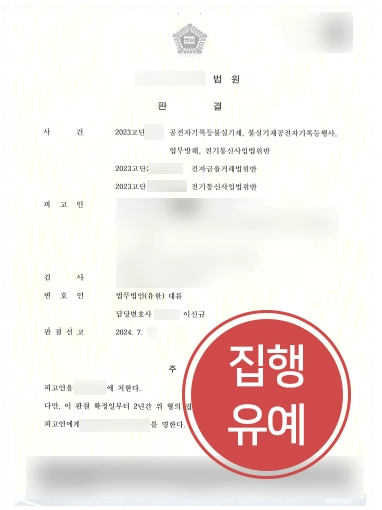
The client who had sought an attorney referral in Busan received a suspended sentence despite the charges and was able to avoid an actual custodial sentence.
When a person is indicted on multiple charges, as in the client's case, it is most important to develop a defense strategy with the help of an experienced attorney.
The more charges overlap, the more complex the legal issues become, and professional knowledge of the legal interpretation and precedents for each charge, as well as how they interact, is needed.
Daeryun Law Firm draws on its litigation database to quickly determine a response tailored to each client's situation and to provide a strategy.
If you are seeking an 🔗attorney referral within Busan in a situation like this, please visit the Daeryun Law Firm 🔗Busan attorney office.
This content is based on actual case studies of Daeryun Law LLC with some adaptations, and the copyright belongs to our firm.
Unauthorized reproduction, duplication, or distribution and other copyright infringements may result in legal action under applicable laws.