
CONTENTS
- 1. The Client Who Came to Face a Medical Negligence Charge

- - The Circumstances of the Occupational Negligence Causing Death Case
- 2. The Issues of the Medical Negligence Case
- - Establishing the Attorney's Strategy
- 3. Assistance Provided to Deny Medical Negligence
- - Emphasizing the Validity of the DNR Consent Form and the Principle of Trust in the Division of Labor
- - A Logical Explanation of the Absence of a Breach of the Duty of Care
- - Demonstrating That All Emergency Measures Except CPR Were Performed
- - Arguing the Severance of Causation
- 4. Successful Denial of Medical Negligence, 'Non-Referral'
- - How to Respond to a Medical Case

1. The Client Who Came to Face a Medical Negligence Charge
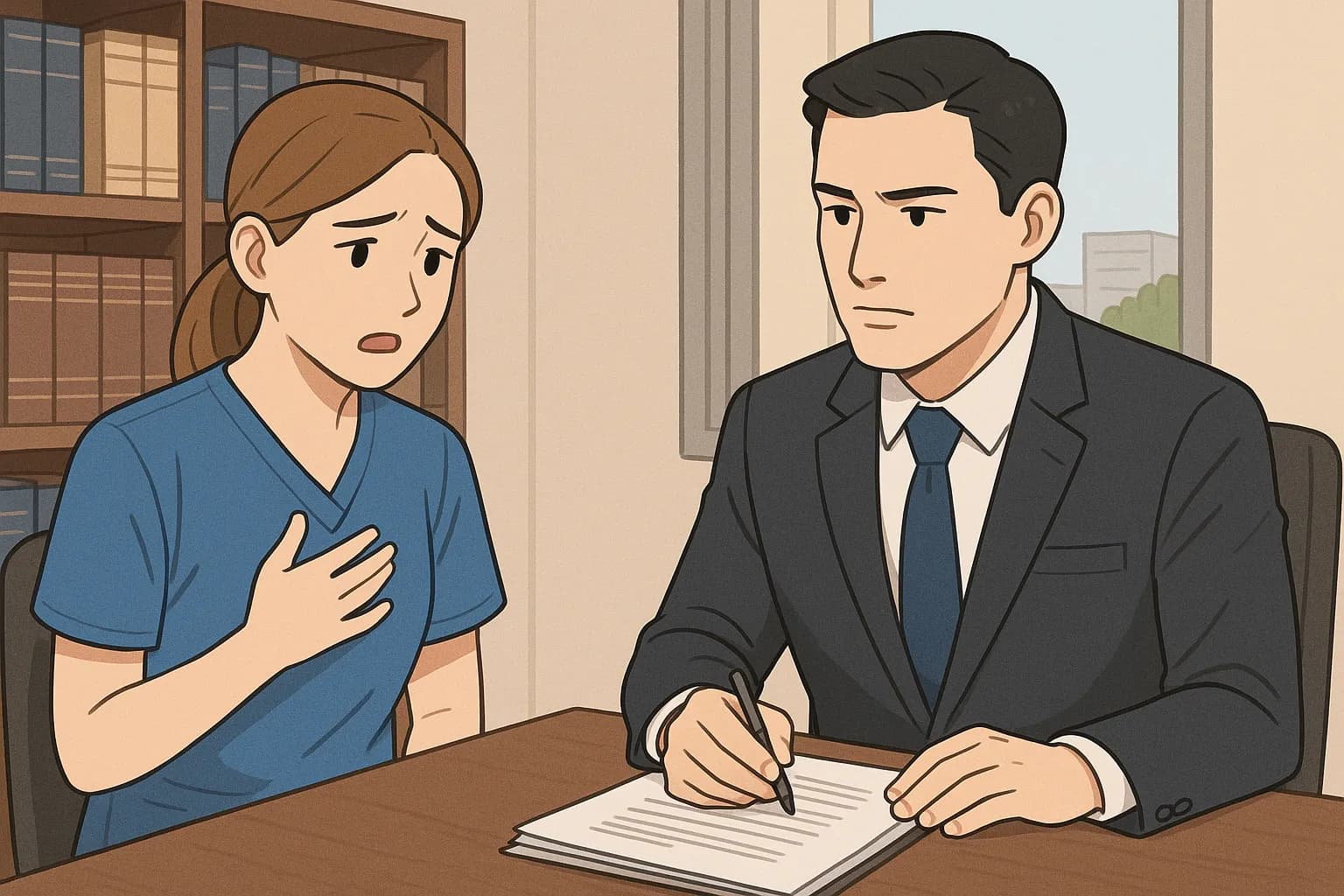
This is a case in which a nursing hospital nurse client who came to be charged with medical negligence, thanks to the assistance of a medical attorney, received a decision of "no suspicion of crime (non-referral)" at the police stage and concluded the case.
 The Circumstances of the Occupational Negligence Causing Death Case
The client was a nurse working at a long-term care hospital who, after a patient's death, was subjected to a complaint by the bereaved family on charges of occupational negligence causing death.
On the day of the incident, the client checked on a patient who was suffering from phlegm, but because it was right after a meal and the condition was not severe, she reportedly did not perform suction (aspiration treatment).
About 20 minutes later, the patient was found without consciousness or breathing, and the client immediately performed emergency measures such as oxygen supply and suction, but the patient died.
The issue was that because the patient harmed in this case had signed a do-not-resuscitate (DNR) consent form, the client performed only emergency measures and did not perform cardiopulmonary resuscitation.
In response, the bereaved family raised doubts about the effect of the DNR and filed a complaint against the client, asserting that there was negligence in the nurse's response.
Ultimately, the client, who came to face charges of occupational negligence causing death, requested legal assistance from a medical specialist lawyer.


2. The Issues of the Medical Negligence Case
The direct reason the client came to face a medical negligence allegation was that the client had not performed suction even though the patient showed symptoms of phlegm, and that cardiopulmonary resuscitation was not performed at the time of death.
The bereaved family alleged that this omission of measures was the cause of death and raised a charge of occupational negligence causing death against the client.
Level of Punishment for Occupational Negligence Causing Death
Criminal Act, Article 268 | Level of Punishment |
A person who causes the death of or injury to another through occupational negligence or gross negligence | Imprisonment without labor for up to 5 years or a fine of up to 20 million won |
However, for a charge of occupational negligence causing death to be established, the following requirements must be met.
② That duty of care must have been breached
③ There must be a causal relationship between the breach and the victim's death
Establishing the Attorney's Strategy
In response, the attorney specializing in medical law established a strategy of denying all three requirements.
First, the attorney determined that the client had not been involved in preparing the DNR consent form and that omitting cardiopulmonary resuscitation in accordance with the handed-over medical records was a legitimate measure within the ordinary division-of-labor structure of the medical field.
The attorney also noted that emergency measures such as oxygen supply and suction were carried out immediately after checking the patient's condition, and that the judgment to refrain from suction was likewise a clinically reasonable decision.
Ultimately, the attorney built the defense strategy around the points that the client's judgment was within the scope of the duty of care and that it was difficult to conclude that there was a direct causal relationship with the patient's death.
3. Assistance Provided to Deny Medical Negligence

In order to deny medical negligence and defend against the client's punishment, the medical specialist lawyer provided the following assistance.
Emphasizing the Validity of the DNR Consent Form and the Principle of Trust in the Division of Labor
The suspect, aware that the patient had signed a DNR consent form, performed emergency treatment excluding cardiopulmonary resuscitation.
In addition, the suspect was not involved at all in the signing of the DNR consent form, so even if there had been a procedural defect or a formal problem in the signing of the DNR consent form, it would have been difficult for the client to know this.
Accordingly, the medical specialist attorney, citing a Supreme Court precedent, argued that the suspect's judgment was justified in accordance with the usual division-of-labor structure and the principle of trust in the medical field.
Supreme Court, January 10, 2003, 2001Do3292 Judgment
A Logical Explanation of the Absence of a Breach of the Duty of Care
The medical attorney established that, in light of the circumstances at the time, the client's omission of suction was a clinically reasonable judgment.
▷ The amount of phlegm was at a minor level, and amid the COVID outbreak excessive contact carried a risk of infection
▷ The patient was conscious and able to communicate, and there were no particular abnormalities in vital signs
This judgment was a cautious approach based on medical judgment and experience, not a merely passive measure, and as a result made clear that it could not be concluded to be a breach of the duty of care.
Demonstrating That All Emergency Measures Except CPR Were Performed
In accordance with the DNR consent form, cardiopulmonary resuscitation was not performed, but the suspect carried out all the emergency measures possible at the scene.
Accordingly, the attorney persuasively developed the argument that the suspect's response was a sufficient measure appropriate to the situation, and that even including measures other than cardiopulmonary resuscitation, it is difficult to regard it as negligence.
Arguing the Severance of Causation
Ultimately, the medical specialist lawyer emphasized that it was difficult to recognize a clear causal relationship between the client's judgment and the patient's death.
That is, the lawyer strongly argued that it could not be concluded that the client's measures had a direct effect on the death, and that the causal relationship, which is a requirement for criminal punishment, was not established.
4. Successful Denial of Medical Negligence, 'Non-Referral'

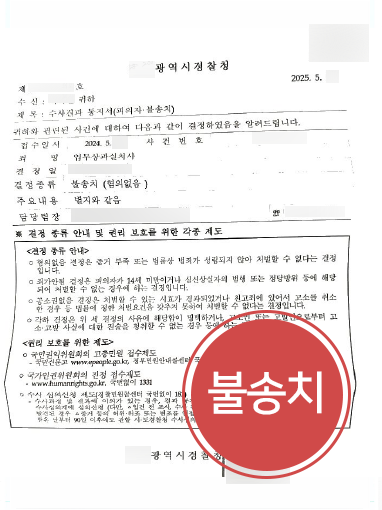
Through the prompt and precise response of the medical specialist attorney who handled the medical negligence case, the police rendered a decision of "no suspicion of crime (non-referral)" for the client and closed the case.
This was the result of a sufficient explanation of the special nature of the medical setting and the scope of treatment judgment, as well as a clear explanation of the limits of the nurse's responsibility within the division-of-labor structure.
How to Respond to a Medical Case
The above case is one in which the client, who had come to face charges of occupational negligence causing death on the allegation that the victim died due to medical negligence, obtained a finding of no charge thanks to the assistance of a medical specialist lawyer.
Daeryun LLC has many lawyers, ranging from lawyers with actual medical careers to specialist lawyers with extensive experience in medical litigation.
In addition, through collaboration with specialist lawyers by field, a one-stop response is possible, extending even to medical-related criminal, administrative, and civil litigation.
If you need assistance with a matter such as a medical negligence case, please feel free at any time to entrust your case through a 🔗legal consultation booking.


Watch related video content
for this case study.

Complex and difficult medical litigation, what is the success strategy according to a medical lawyer?
This content is based on actual case studies of Daeryun Law LLC with some adaptations, and the copyright belongs to our firm.
Unauthorized reproduction, duplication, or distribution and other copyright infringements may result in legal action under applicable laws.