
CONTENTS
- 1. Client Who Came to the Drunk Driving Law Firm

- - The Circumstances of the Drunk Driving Case
- 2. Statutes Relevant to the Case Explained by the Drunk Driving Law Firm
- - Penalty Levels for Repeat Drunk Driving
- 3. Assistance Provided by the Drunk Driving Law Firm
- - Drunk Driving Attorney: Argument That the Elements of Drunk Driving Were Not Met
- - Drunk Driving Attorney: Discrepancy Between the Time of Drinking and the Time of Measurement
- - Drunk Driving Attorney: Pointing Out Problems in the Process of Securing On-Scene Evidence
- 4. Result of the Drunk Driving Law Firm's Assistance: “Not Guilty”
- - If a Drunk Driving Charge Is Unfounded

1. Client Who Came to the Drunk Driving Law Firm
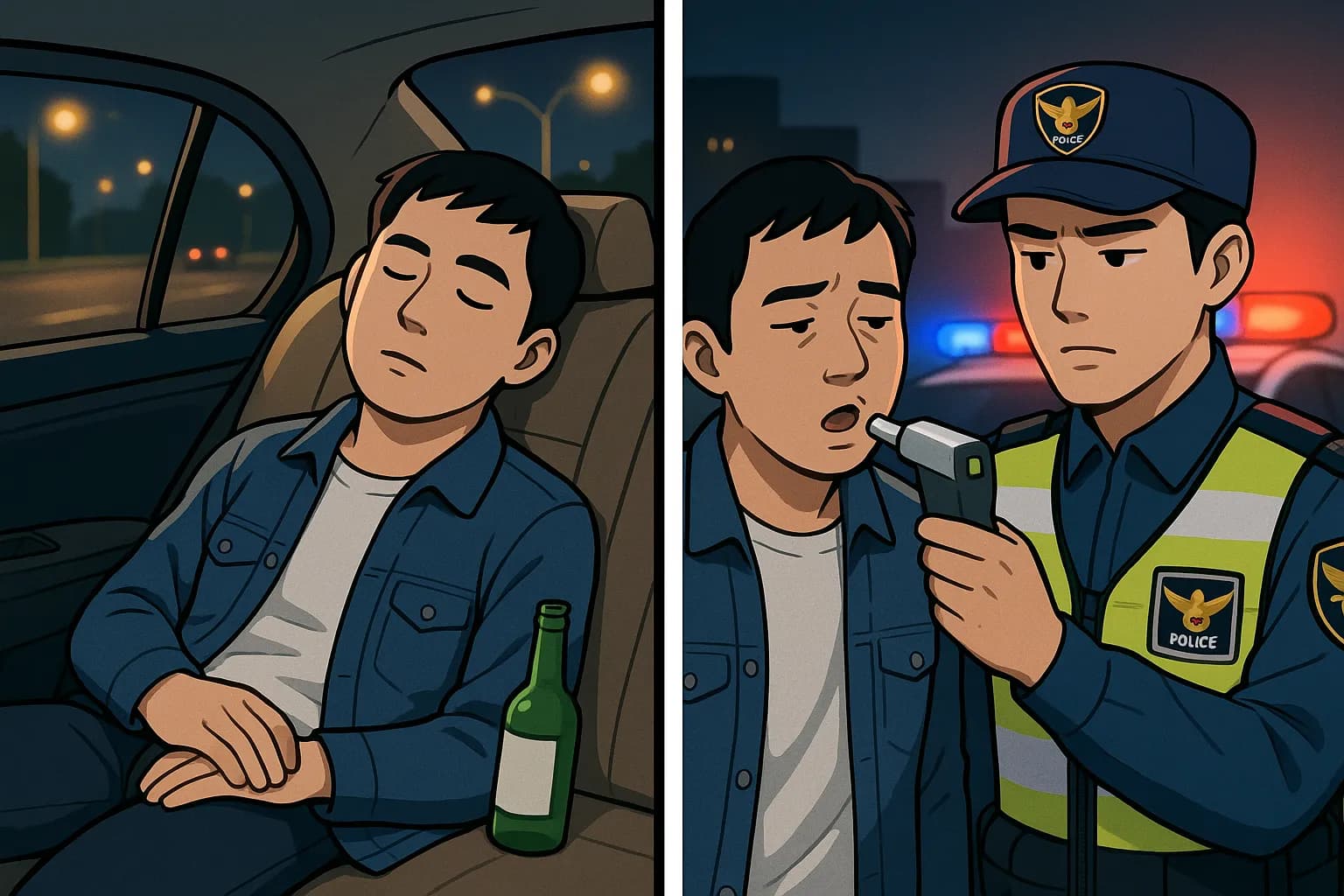
This is a case in which a client who came to a drunk driving law firm obtained an acquittal thanks to the assistance of a drunk driving attorney.
 The Circumstances of the Drunk Driving Case
While spending time with acquaintances, the client became emotionally upset and drove a vehicle out on his own.
After parking the vehicle in a safe place, in his distress he drank a bottle of soju that was inside the vehicle and fell asleep in the back seat.
Not long afterward, police who had been dispatched in response to a report woke the client and conducted a breath test, and the result showed a value exceeding 0.07%.
The client, who also had a prior record of drunk driving, was immediately booked on a charge of a repeat offense, and was at risk of losing the license needed for his livelihood.
The client asserted that he had not engaged in drunk driving and personally presented the soju bottle he had drunk inside the vehicle, but the police did not, he says, secure it as evidence.
Feeling that this was unfair and at a loss, the client ultimately sought out a drunk driving attorney to request assistance.


2. Statutes Relevant to the Case Explained by the Drunk Driving Law Firm
The drunk driving law firm has organized the laws relating to the client's case.
Drunk driving cases are punished very strictly under Article 44 of the Road Traffic Act.
This provision sets out the principle that "no person shall drive a motor vehicle or the like while in a state of intoxication," and a violation of it becomes subject to criminal punishment.
Article 44 of the Road Traffic Act (Prohibition of Driving While Intoxicated)
Penalty Levels for Repeat Drunk Driving
Where the client, like the client in this case, has a prior record of punishment for drunk driving, the law prescribes more severe punishment.
Road Traffic Act Article 148-2 (Penalties)
2. Among persons who violate Article 44 (1), a person whose blood alcohol concentration is 0.2 percent or higher shall be punished by imprisonment for not less than 2 years but not more than 6 years, or by a fine of not less than 10 million won but not more than 30 million won.
3. Among persons who violate Article 44 (1), a person whose blood alcohol concentration is not less than 0.03 percent but less than 0.2 percent shall be punished by imprisonment for not less than 1 year but not more than 5 years, or by a fine of not less than 5 million won but not more than 20 million won.
In the case of a repeat offense within 10 years, the following criminal punishment applies under Article 148-2 (1) of the Road Traffic Act.
Blood Alcohol Concentration | Level of Punishment |
0.2% or higher | Imprisonment for not less than 2 years but not more than 6 years, or a fine of not less than 10 million won but not more than 30 million won |
Not less than 0.03% but less than 0.2% | Imprisonment for not less than 1 year but not more than 5 years, or a fine of not less than 5 million won but not more than 20 million won |
In addition, beyond criminal punishment, administrative dispositions such as suspension and revocation of the driver's license may also follow.
Road Traffic Act Article 93 (Revocation or Suspension of Driver's License)
1. Where the person operated a motor vehicle, etc. while intoxicated in violation of Article 44 (1)
Because the client was in a situation where operating a vehicle was essential to making a living, thorough legal response was urgently needed to prevent criminal punishment and administrative disadvantages.
3. Assistance Provided by the Drunk Driving Law Firm
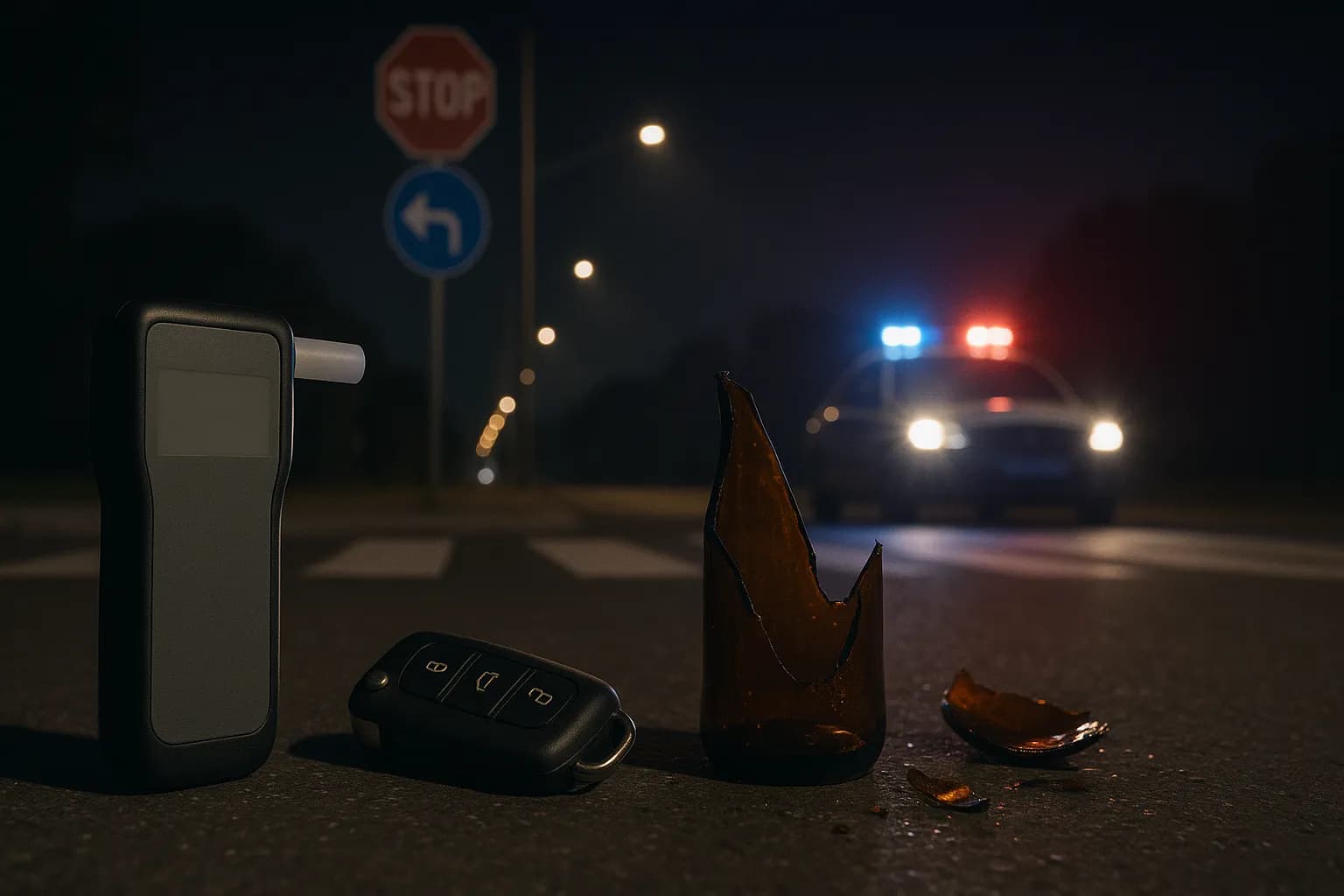
In this case, in which whether the client had actually driven while intoxicated became the issue, the attorney at the drunk driving law firm constructed a defense strategy centered on the following legal points.
Drunk Driving Attorney: Argument That the Elements of Drunk Driving Were Not Met
Under the Road Traffic Act, there must be “an act of driving while in a state of intoxication” for drunk driving to be punishable.
However, in this case the drinking took place after the vehicle had stopped, and before that there was no direct proof that the blood alcohol concentration exceeded the standard during driving.
Therefore, the issue became whether it had been proven without reasonable doubt that the defendant was actually in a ‘state of intoxication’ while driving, and the drunk driving attorney focused on pointing out the lack of proof on that point.
Drunk Driving Attorney: Discrepancy Between the Time of Drinking and the Time of Measurement
The drunk driving attorney emphasized the point that there was a time gap between the client’s point of drinking and the police measurement.
For this reason, it was unclear even whether the blood alcohol concentration was in a rising or falling phase, and the attorney actively cited precedent holding that the state at the time of driving cannot be conclusively determined from the post-driving reading alone.
Supreme Court Decision 2001Do1929, July 13, 2001
Drunk Driving Attorney: Pointing Out Problems in the Process of Securing On-Scene Evidence
The police did not secure the physical evidence presented by the client, who had voluntarily explained the fact that he had been drinking, and they disregarded it without any appropriate investigation or forensic procedure, judging the charge based solely on the measured figure.
At the time, the client himself found and showed the police officer the soju bottle he had drunk from inside the vehicle, but the officer in charge did not collect this as evidence and proceeded with the disposition while disregarding it at the scene.
This is a factor that could undermine the objectivity and reliability of the investigation, and the drunk driving attorney pointed out the fault of the investigative authority in this regard.
4. Result of the Drunk Driving Law Firm's Assistance: “Not Guilty”

The court, accepting the arguments of the drunk driving law firm, returned a verdict of 'not guilty' on the client's drunk driving charge.
This was the result of the drunk driving attorney comprehensively arguing the client's statement that he had drunk alcohol after parking the vehicle following driving, the circumstances supporting this, and the deficiencies in the investigation.
The attorney also actively pointed out that there was insufficient direct and clear proof of the facts charged, which was a key point of the defense.
If a Drunk Driving Charge Is Unfounded
Drunk driving cases are matters that are judged very sensitively, beyond the application of general law.
In particular, in complex situations such as drinking after parking or drinking inside a vehicle, there is room for the investigative authorities’ initial judgment to be distorted.
Daeryun LLC has many specialized attorneys with experience in a wide range of criminal cases.
In drunk driving cases, the firm analyzes the case from multiple perspectives, such as whether the person was actually driving, the time of drinking, and the measurement method, and designs a defense strategy.
The firm also responds to cases on a team basis rather than individually, providing systematic assistance to prevent the punishment of the innocent.
If you have been wrongly charged with drunk driving, we encourage you to entrust your case at any time through a 🔗legal consultation reservation.
Related News

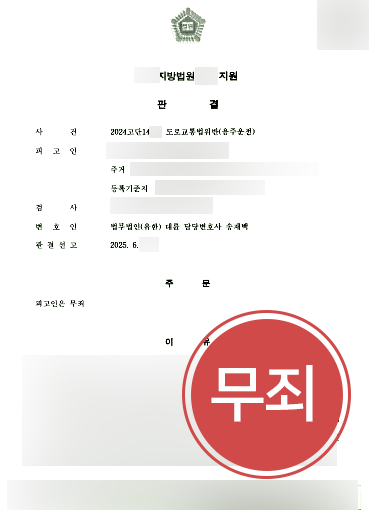
This content is based on actual case studies of Daeryun Law LLC with some adaptations, and the copyright belongs to our firm.
Unauthorized reproduction, duplication, or distribution and other copyright infringements may result in legal action under applicable laws.