
CONTENTS
- 1. The Client Charged With Occupational Breach of Trust and Other Offenses

- - What Is Occupational Breach of Trust?
- - What Is Fraud?
- 2. Assistance for the Client Charged With Occupational Breach of Trust and Fraud
- - Rebutting the Occupational Breach of Trust Charge: The Absence of a Contractual Relationship
- - Rebutting the Fraud Charge: The Absence of Intent
- 3. The Client Charged With Occupational Breach of Trust and Other Offenses: Successful Non-Prosecution
- - If You Are Implicated in Occupational Breach of Trust or Fraud Charges

1. The Client Charged With Occupational Breach of Trust and Other Offenses

This is the story of a client accused of occupational breach of trust and fraud.
The client was a person who worked as an administrative officer at a regional sales center in a cooperative relationship with Company A, a mid-sized company, and was in charge of tasks such as calculating employee salaries and preparing pay statements.
That center was under the management responsibility of a separate center head, B, who had concluded a consignment contract with Company A, and the client had been hired as the salary officer at B's recommendation.
The problem began when the complainant, who belonged to Company A's headquarters, filed a criminal complaint for occupational breach of trust and fraud, claiming that the client and B had conspired to leak business information to the outside and had intentionally omitted some employees' sales commissions, thereby causing monetary loss.
 What Is Occupational Breach of Trust?
Occupational breach of trust means a crime in which a person handling another person's affairs commits an act in violation of that duty, thereby obtaining a pecuniary benefit or causing a third party to obtain it, and causing damage to the principal.
1. The person must be one who handles another person's affairs
2. The person must intentionally violate that duty
3. Pecuniary damage must result therefrom
Occupational breach of trust is difficult to establish on the basis of a mere work error or an act outside the scope of the mandate alone, and a clear breach of duty, intent, and actual damage must be proven.
If occupational breach of trust is recognized, the person is subject under the Criminal Act to imprisonment for up to 10 years or a fine of up to 30 million won.
A feature of occupational breach of trust is that the sentence is higher than for ordinary breach of trust.
The Supreme Court held that even if a person took out company materials upon resigning from the company, if those materials are information at a level that is generally obtainable, they do not constitute a "major business asset" and occupational breach of trust is not established.
This is a precedent that shows the criteria for whether the materials taken out were generally obtainable information and, accordingly, whether they constitute a "major business asset" as provided for under occupational breach of trust.


What Is Fraud?
The crime of fraud is a crime of deceiving another and obtaining property or a pecuniary benefit.
1. There must be a deceptive act
2. The deceptive act must cause a mistake on the part of the victim
3. This must cause property damage to the victim
4. This must result in obtaining a benefit
If the crime of fraud is recognized, it is punishable under the Criminal Act by imprisonment for not more than 10 years or a fine not exceeding 20 million won.
2. Assistance for the Client Charged With Occupational Breach of Trust and Fraud
We undertook to assist a client implicated in charges of occupational breach of trust and fraud.
The handling attorney closely examined the contents of the complainant's complaint and gathered arguments and evidence to rebut it.
1. The client passed customer recruitment information to an outside company, and an outside sales representative used this to sell products and gain profit.
2. The client intentionally omitted the performance achieved by a sales representative belonging to Company A, causing the complainant a loss of property, and the client obtained a property benefit by improper means.
Rebutting the Occupational Breach of Trust Charge: The Absence of a Contractual Relationship
To rebut the charge of occupational breach of trust, the attorney in charge first argued that the client was not an employee of Company A.
In fact, the client had no direct employment or mandate relationship with Company A whatsoever.
This was because the client was external personnel entrusted with payroll work through a separate contract with the center operated by B.
Submitting the client's contract as evidence, the attorney in charge emphasized that, since the client did not qualify as a person handling the affairs of Company A, the requirement as to the subject of occupational breach of trust was not satisfied.
“The client concludes a service contract with B, the center head. The center workers are in a contractual relationship with B, the center head, and B, the center head, bears 100% of the responsibility for legal disputes.”
Rebutting the Fraud Charge: The Absence of Intent
The attorney in charge set about rebutting the fraud charge related to the omission of commissions.
The attorney emphasized that the client had simply received the settlement table as given and merely processed it routinely.
In fact, sales performance during the relevant period was uncertain due to returns and the like, and the standard for paying commissions itself was variable according to headquarters policy.
The attorney in charge also emphasized that it had not been proven that the client had obtained commissions by deception, and that no circumstances were found indicating that the client had obtained any objective monetary benefit.
3. The Client Charged With Occupational Breach of Trust and Other Offenses: Successful Non-Prosecution
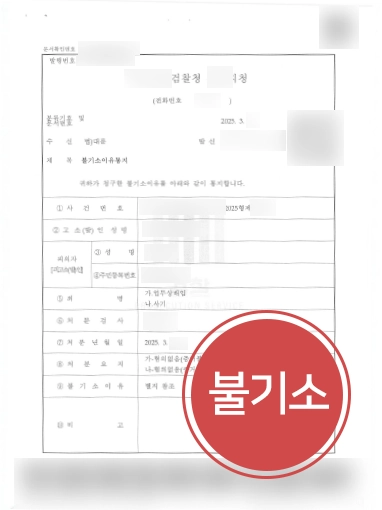
The client, who was implicated in charges including occupational breach of trust, succeeded in concluding the case by obtaining a non-prosecution disposition as a result of the assistance of the attorney in charge.
The prosecution decided on a non-prosecution disposition for the client on the following grounds.
▶It was confirmed that the client had no contractual relationship with Company A, and that all legal liability under the contract with B rested with B
▶The requirement that the client be the perpetrator of the occupational breach of trust asserted by the complainant was not satisfied
▶The circumstances that the client obtained a benefit were not clear
If You Are Implicated in Occupational Breach of Trust or Fraud Charges
If you are implicated in occupational breach of trust or the crime of fraud, various factors such as intent, the contractual relationship, the scope of affairs handled, and the occurrence of damage must be closely examined.
This case is one in which the client was relieved of unjust criminal liability by accurately establishing the actual contractual relationship and the scope of the work.
As in the situation above, if you are implicated in an unjust charge, an early response during the investigation is very important.
This is because mistaken statements, omitted evidence, and an unskilled response can lead to an unfavorable disposition.
At Daeryun LLC, attorneys who have handled numerous criminal cases involving occupational breach of trust and the crime of fraud provide a tailored response strategy for each situation through clear analysis of the facts and the contractual structure.
Operating branch offices in each region nationwide, maintaining an emergency consultation system 365 days a year and 24 hours a day, and providing remote video consultation services, Daeryun LLC welcomes your inquiries at any time.

This content is based on actual case studies of Daeryun Law LLC with some adaptations, and the copyright belongs to our firm.
Unauthorized reproduction, duplication, or distribution and other copyright infringements may result in legal action under applicable laws.