
CONTENTS
- 1. Foreign Trade Act | A Client Indicted for Violation of the Foreign Trade Act

- 2. Foreign Trade Act | A Look at the Statute
- - Violation of the Foreign Trade Act: Practical Q&A
- 3. Foreign Trade Act | Appellate Assistance for a Client Charged with Violation of the Foreign Trade Act
- - Emphasizing Confession and Remorse
- - Compliance with Administrative Sanctions
- - Demonstrating the Actual Scale of the Gain
- - Arguing Quality and Safety Issues
- 4. Foreign Trade Act | Violation of the Foreign Trade Act, Avoiding a Custodial Sentence and Reducing the Fine on Appeal
- - If You Need Help Defending Against Criminal Punishment and Administrative Sanctions

1. Foreign Trade Act | A Client Indicted for Violation of the Foreign Trade Act
This is the account of a client who was indicted on suspicion of violating the Foreign Trade Act.
A small or medium-sized enterprise engaged in both manufacturing and distribution, which imported parts from abroad and supplied them domestically, and the client, its representative, were indicted on the ground that they had defaced or removed the country-of-origin markings on the imported parts and then supplied them as though they were domestic products.
The court of first instance regarded this not as a mere violation of a labeling obligation but as a serious crime with the potential to deceive customers, and sentenced the client to two years' imprisonment as an actual sentence and the corporation to a fine of 100 million won.
The conduct at issue was the grinding off and removal of country-of-origin labels such as “Made in ○○” displayed on the surface of the products, and this is a representative type of violation that the Foreign Trade Act clearly prohibits.
See More


2. Foreign Trade Act | A Look at the Statute
The Foreign Trade Act is the basic statute that governs the import and export transactions of our country.
Its purpose is to ensure that transactions of goods and services between nations proceed smoothly while at the same time establishing a fair trade order and contributing to the development of the national economy.
That is, it can be understood as a law that sets out the basic rules that a company must follow when conducting exports and imports with other countries.
▶Main contents of the Foreign Trade Act
-Import and export procedures: provisions on the permission, approval, and restriction of the export and import of specific goods or technologies
-Country-of-origin marking: the obligation to mark the country of origin of imported goods, and the prohibition of false marking
-Trade management: sanctions against unfair trade acts, dumping, subsidies, and the like
-Industry protection: restrictions on imports and exports for national security, the environment, public health, and public safety
-Sanction provisions: criminal punishment, administrative fines, suspension of business, and other administrative sanctions in the event of a violation
▶Representative types of violations relating to country-of-origin marking under the Foreign Trade Act
-False marking/misleading marking: marking that makes goods of another country appear to be domestic goods, and the like
-Damage or alteration: the act of removing, defacing, or altering an already affixed country-of-origin marking
-Non-marking: the act of not marking the country of origin at all on goods subject to the marking obligation
▶Level of punishment for violation of the Foreign Trade Act (criminal + administrative)
-Criminal punishment: imprisonment for not more than 5 years or a fine of not more than 100 million won (which may also apply to a corporation)
-Administrative sanctions: a penalty surcharge of up to 300 million won (an administrative fine or a corrective order may also be imposed depending on the case)
 Violation of the Foreign Trade Act: Practical Q&A

Q. Which goods are subject to the country-of-origin marking requirement?
A. The goods subject to country-of-origin marking as prescribed by the Korea Customs Service are as follows.
-Imported goods listed in Annex 8 of the Foreign Trade Management Regulations
-674 items out of a total of 1,224 items under the HS 4-digit classification (501 manufactured goods and 173 agricultural and marine products)
Q. How should the marking be made?
A. Marking may be made in Korean, Chinese characters, or English, such as “Made in [country name]” or “Country of origin: [country name],” and it must be placed in a location easily visible to the consumer during the ordinary purchasing process and applied in an indelible manner, such as printing or engraving.
-“Country of origin : [country name],” “Product of [country name] (產),” “Made in [country name],” “Product of [country name],”
-“Made by [manufacturer’s company name, address, and country name],” “Country of Origin : [country name]”
-In a normal typeface and font size that the final purchaser can read with ease
-Marked in a location easily found during the purchasing process
-By printing, mimeographing, branding, casting, etching, stitching, or a similar method
Q. What happens if an already affixed label is removed or painted over?
A. This is a typical violation involving damage or alteration, and it is subject to criminal punishment (imprisonment or a fine) as well as administrative sanctions (such as a penalty surcharge).
Q. Can a corporation and its representative be punished at the same time?
A. This is a strong possibility. Both the actor (the company) and the supervising and decision-making party (the representative) may be subject to a determination of liability, so a fine on the corporation and criminal punishment of the representative may proceed in parallel.
Compliance checklist for country-of-origin marking under the Foreign Trade Act
□Marking text, location, and durability: apply “Made in [country name]/country of origin,” easily readable by consumers and in a manner resistant to removal or loss □Supply chain management: labeling standards for overseas partners, photographic evidence, and a pre-shipment inspection protocol □Internal approval procedure: compliance approval is required when intervening in label changes, repainting, or processing operations □Retention of evidence: maintain an audit trail, including transaction statements, customs clearance documents, packaging photographs, and label samples □Training and audits: quarterly training and regular or ad hoc sample audits (including on-site spot checks) □In the event of a violation: immediately halt shipment → restore to the original state (re-marking), recall, and notify counterparties → carry out administrative sanctions and activate a plan to cooperate with the investigation |
3. Foreign Trade Act | Appellate Assistance for a Client Charged with Violation of the Foreign Trade Act
The client, charged with a violation of the Foreign Trade Act, was sentenced to an actual custodial sentence in the first instance, and the attorney in charge immediately filed an appeal.
The Daeryun attorney chose a strategy of highlighting the grounds for sentencing as much as possible.
Emphasizing Confession and Remorse

From the early stage of the investigation, the client admitted all of the offenses and cooperated faithfully throughout the trial.
The attorney in charge submitted materials such as newly established internal regulations and an employee training plan that the client had prepared to acknowledge the wrongdoing and prevent recurrence.
Emphasizing that the client was reflecting deeply and was making every effort to prevent recurrence, the attorney requested leniency.
Compliance with Administrative Sanctions
The Daeryun attorney in charge emphasized the fact that the client had paid in full the penalty surcharge and the administrative fine imposed for the violation of the Foreign Trade Act.
Although administrative sanctions and criminal punishment are separate, the attorney requested leniency, emphasizing that the client had made efforts to make up for the mistake.
Demonstrating the Actual Scale of the Gain
The client demonstrated, together with supporting materials, that although the accounting gross profit from the violation of the Foreign Trade Act was recorded as large, the actual net profit was not significant.
The client also submitted as evidence that, in order to prevent the harm to business partners caused by the offense from spreading, the shipped products had been tracked and managed.
Arguing Quality and Safety Issues
The attorney in charge emphasized that there was no significant difference in the products themselves in terms of performance and safety.
In particular, at the trial in the original instance, the prosecutor stated for clarification that, “upon checking with the affected company, it was confirmed that there is no difference in performance between the products imported by the defendant and the domestic products.”
The attorney in charge requested that this be taken into account as a favorable circumstance, since the absence of a significant difference in performance had been confirmed by the prosecutor in the original instance.
4. Foreign Trade Act | Violation of the Foreign Trade Act, Avoiding a Custodial Sentence and Reducing the Fine on Appeal
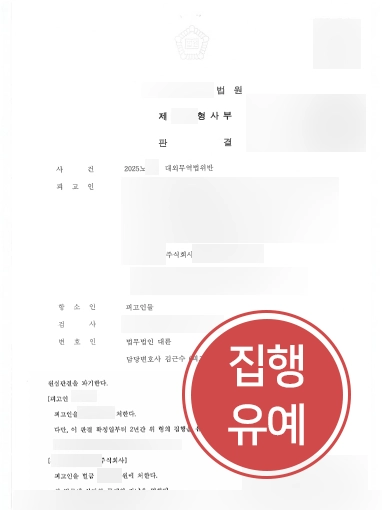
The client charged with a violation of the Foreign Trade Act succeeded, on appeal, in having the custodial sentence reversed and the fine reduced.
This was the result of the appellate court finding that the sentence imposed at the first instance was somewhat excessive.
While the act of damaging the country-of-origin marking is plainly unlawful so that punishment is unavoidable, the court took into comprehensive account that the client had already paid the penalty surcharge and the administrative fine, had admitted to the offense in full and was deeply reflecting on it, and had prepared measures to prevent recurrence during the trial.
If You Need Help Defending Against Criminal Punishment and Administrative Sanctions
A violation of the Foreign Trade Act requires a simultaneous response to criminal punishment and administrative sanctions.
If it is difficult to contest unlawfulness, the organization of sentencing factors (after-the-fact measures, defense against harm, demonstration of actual profit, and a system to prevent recurrence) determines the outcome.
As in this case, behind the conversion from an actual sentence and a high fine at the first instance to a suspended sentence and a reduced fine, there were an early shift in strategy and meticulous documentary support.
Violations of the Foreign Trade Act are, in many cases, processed with criminal and administrative procedures proceeding at the same time, and a proper response is possible only with a comprehensive understanding extending to country-of-origin regulations, customs clearance practice, and corporate internal compliance.
At Daeryun Law Firm, attorneys with experience in cases involving violations of the Foreign Trade Act and customs specialists holding licensed customs broker qualifications collaborate in an integrated manner.
Through this, clients of Daeryun can be provided with one-stop legal services extending from the interpretation of customs and trade regulations to responding to customs service investigations and establishing a corporate internal compliance monitoring system.
This content is based on actual case studies of Daeryun Law LLC with some adaptations, and the copyright belongs to our firm.
Unauthorized reproduction, duplication, or distribution and other copyright infringements may result in legal action under applicable laws.