
CONTENTS
- 1. The Client Who Sought Help for Obstruction of Official Duties and Violation of the Animal Protection Act

- - Frequently Asked Practical Questions About Obstruction of Official Duties
- - Frequently Asked Practical Questions About the Animal Protection Act
- 2. Assistance Toward Dismissal of the Prosecutor's Appeal in Obstruction of Official Duties and Related Charges
- - Arguing That the Incident Was Spontaneous
- - Arguing the Usual Relationship with the Companion Animal and Efforts to Prevent Recurrence
- - Arguing Recovery of the Harm and a Sincere Apology
- - Legal Rebuttal of the Prosecutor's Arguments
- 3. Obstruction of Official Duties and Related Charges: Successful Dismissal of the Prosecutor's Appeal

1. The Client Who Sought Help for Obstruction of Official Duties and Violation of the Animal Protection Act
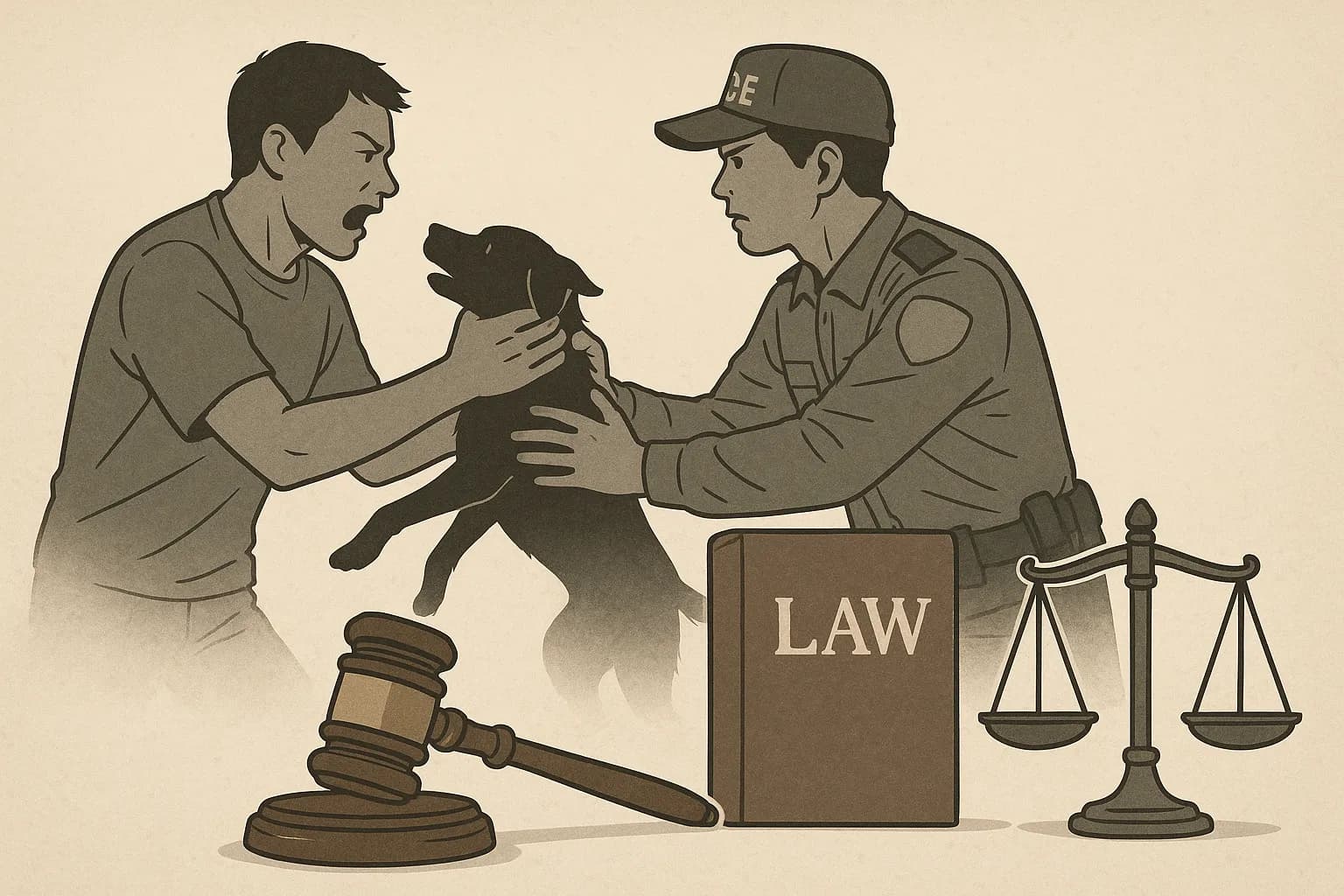
This is the story of a client who received a minor fine at the first instance for obstruction of official duties and violation of the Animal Protection Act.
While intoxicated, the client engaged in violent conduct toward a companion animal, and a police officer was dispatched after a report by a resident who witnessed it.
In the course of the officer restraining him, the client became momentarily enraged and used physical force, such as grabbing the officer by the collar, and as a result was brought to trial on charges of violation of the Animal Protection Act and obstruction of official duties.
The first-instance court, considering comprehensively that the client was a first-time offender, that he was deeply remorseful for his wrongdoing, and that he was economically responsible for his family's livelihood, imposed a fine.
 Frequently Asked Practical Questions About Obstruction of Official Duties
Q. In what circumstances is obstruction of official duties established?
A. Obstruction of official duties is established where assault or intimidation is committed against a public official in the course of performing their duties, thereby obstructing the proper performance of those duties.
There must be the exercise of physical force or serious intimidation that goes beyond mere noncompliance or protest.
Q. If obstruction of official duties is recognized, what is the sentence?
A. If obstruction of official duties is recognized, the punishment is imprisonment for not more than 5 years or a fine of not more than 10 million won.
Where, by displaying the collective force of a group or a multitude or by carrying a dangerous object, a person obstructs the duties and thereby causes injury to a public official, the punishment is imprisonment for a definite term of at least 3 years, and where it causes death, the punishment is life imprisonment or imprisonment for at least 5 years.
Q Is obstruction of official duties recognized even when it occurs while intoxicated?
A. Yes. The circumstance of being intoxicated does not constitute a ground for exemption from responsibility.
Rather, obstructing the performance of official duties while intoxicated may work unfavorably in sentencing.


Frequently Asked Practical Questions About the Animal Protection Act
Q. In what cases is a violation of the Animal Protection Act established?
A. Article 10 of the Animal Protection Act prohibits acts that cause physical suffering to an animal or inflict injury on it. For example, violence such as kicking or throwing, withholding food or water for an extended period, and unnecessarily inflicting injury may all constitute a violation.
Q. What is the sentence if I am punished for a violation of the Animal Protection Act?
A. A person who intentionally abuses an animal or causes its death may be subject to imprisonment for not more than 3 years or a fine not exceeding 30 million won.
An order to attend a course (within a range of around 200 hours) may also be imposed, so caution is required.
Q. Is even momentarily hitting or throwing a companion animal punishable?
A. Yes. Even a single act, rather than a repeated or habitual one, may be recognized as abuse if it caused suffering to the animal.
The circumstance that “I did it once out of anger” does not serve as a ground for exemption.
Q. What are the important sentencing factors in an Animal Protection Act violation case?
A. Important considerations include whether it is a first offense, the motive and circumstances of the offense, the degree of the conduct, whether there is reflection, and efforts to prevent recurrence.
In particular, whether protective and management measures for the companion animal were taken after the incident, and whether the environment was improved so that the same thing does not recur, have a significant influence on sentencing.
Q. How should I respond when indicted for a violation of the Animal Protection Act?
A. From the early stage of the case, it is important to receive the assistance of a specialist attorney and to prove the specific facts and an attitude of reflection.
If materials such as a veterinary diagnosis, materials on environmental improvements for the protection of the companion animal, and certification of completion of guardian education are submitted, the possibility of obtaining leniency increases.
2. Assistance Toward Dismissal of the Prosecutor's Appeal in Obstruction of Official Duties and Related Charges

To maintain the original judgment for the client in the case of obstruction of official duties and violation of the Animal Protection Act, the prosecutor's grounds of appeal were closely examined and a rebuttal strategy was established.
-The fact that the defendant directly assaulted a police officer is serious
-Because family members were present at the scene and witnessed the offense, the social repercussions are significant
-Exercising violence against a companion animal, which is comparatively vulnerable, is highly blameworthy
-Accordingly, a sentence of imprisonment should be imposed to prevent recidivism and to bring home the seriousness of the offense
Arguing That the Incident Was Spontaneous
The client's conduct occurred due to a momentary failure of emotional control while intoxicated.
The attorney emphasized that it was an impulsive act resulting from temporary agitation, rather than an assault on a police officer carried out with a particular purpose or plan.
Accordingly, the attorney emphasized that the social danger of the conduct and the degree of blameworthiness could not be regarded as being as great as the prosecutor asserted.
Arguing the Usual Relationship with the Companion Animal and Efforts to Prevent Recurrence
Even before the incident, the client had cared for the companion animal for the sake of the family, and had not been in a continuously hostile relationship with the animal.
Since the incident, the client has deeply reflected on their conduct and is making efforts to prevent recurrence, such as reviewing educational materials on the protection of companion animals and improving their living environment.
The attorney in charge emphasized the client's such efforts and argued that a heavier penalty would be excessive.
Arguing Recovery of the Harm and a Sincere Apology
The client conveyed an apology directly to the dispatched police officer and has admitted his wrongdoing from immediately after the incident.
The attorney in charge emphasized that the police officer, the victim, had likewise confirmed the client's sincere attitude, and that the fact that the conflict was concluded without escalating in that process should also be taken into account.
Legal Rebuttal of the Prosecutor's Arguments
The grounds cited by the prosecutor in the notice of appeal, namely the assault on a police officer and the abuse of a companion animal, had already been sufficiently taken into account as sentencing factors in the judgment of first instance.
Where no new unfavorable circumstances have come to light on appeal, increasing the sentence merely on the ground that it is too light does not accord with the basic principles of criminal trials.
Accordingly, it was argued that the determination of the court below was within a range reasonable by common social standards and that the prosecutor's appeal could not be accepted.
3. Obstruction of Official Duties and Related Charges: Successful Dismissal of the Prosecutor's Appeal
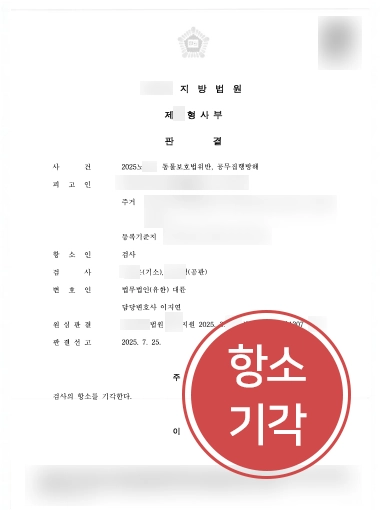
It was possible to have all of the assertions of the prosecutor, who had appealed on the ground of improper sentencing in relation to the offense of obstruction of official duties and the like, dismissed.
The appellate court did not accept the prosecutor's assertions.
The court determined that “the sentencing factors presented by the court of first instance appear already to have reflected the particular nature of this matter, and there are no new circumstances sufficient to overturn this.”
In the end, the prosecutor's appeal was dismissed and the client was able to maintain the fine imposed at first instance.
This case once again confirmed that, even where there is an appeal by the prosecutor, the judgment of the court below can be maintained where the sentencing factors were already sufficiently reflected at first instance.
On appeal, prosecutors often emphasize sentencing factors unfavorable to the defendant and request the imposition of an actual custodial sentence.
In such cases, it is difficult for an ordinary person to construct a rebuttal consistent with the law or to present mitigating sentencing factors persuasively on their own.
Daeryun LLC organizes the client's factors, such as the spontaneous nature of the act, whether the client is a first-time offender, the attitude of reflection, efforts at restitution, and family responsibilities, together with objective materials.
It also rebuts, point by point, the prosecutor's ‘improper sentencing’ appeal as being without basis, and assists so that the judgment below may be maintained or the sentence reduced.
If you require legal assistance in a situation such as the above, please request assistance from Daeryun LLC.
This content is based on actual case studies of Daeryun Law LLC with some adaptations, and the copyright belongs to our firm.
Unauthorized reproduction, duplication, or distribution and other copyright infringements may result in legal action under applicable laws.