
CONTENTS
- 1. The Client Involved in a Juvenile School Violence Matter

- - How the Case Arose
- 2. The Client in a Juvenile School Violence Matter
- - Juvenile Protection Trial Procedure
- - Types of Dispositions
- - Issues in the Case
- 3. Assistance Provided to the Client in the Juvenile School Violence Matter
- - Whether There Was Intent in the Assault
- - Efforts Toward Settlement
- - Confirming the Result of the School Violence Committee's Deliberation
- 4. Result of Assisting the Client in the Juvenile School Violence Matter: ‘Entrustment to Protective Custody’
- - If You Are Involved in a School Violence Case?

1. The Client Involved in a Juvenile School Violence Matter
The client, who was involved in juvenile school violence, was in a situation in which a heavy disposition could potentially be imposed, but through the systematic assistance of the school violence specialist attorney, the client was able to conclude the case by receiving a relatively light disposition of entrustment to protective custody.
 How the Case Arose
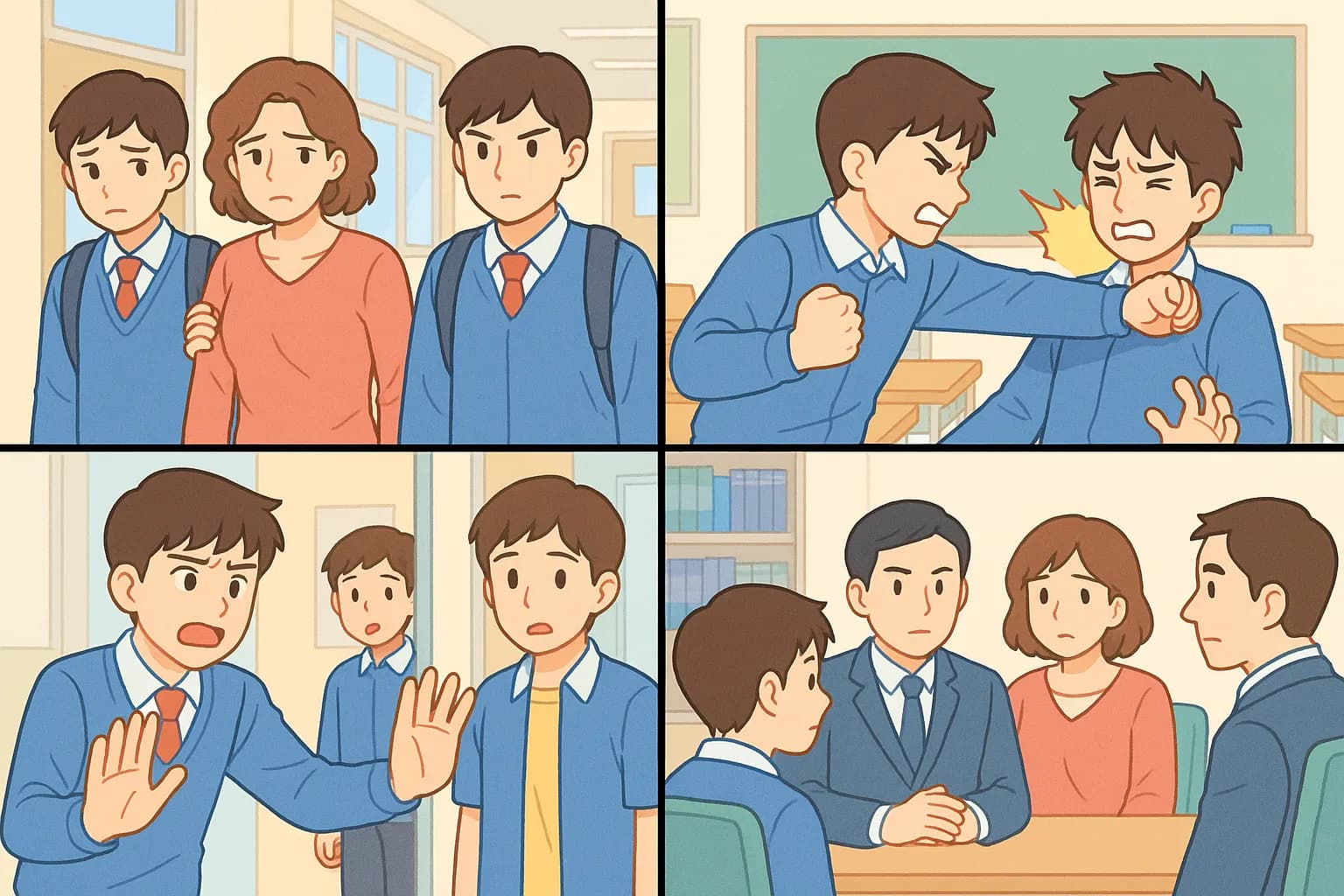
The client and the victim student were friends in the same class.
The client was reported on the allegation of having assaulted the victim student's upper body with a fist on the ground that the victim was playing around.
However, the client maintained that there had been no assault with a fist and that it was merely playing around, and appealed that the accusation was unfair.
The client, together with the parents, attempted to reach a settlement, but the victim student's side stated that there was no intention to settle at all.
In the end, the client, who was involved in a juvenile school violence case, urgently requested the assistance of a lawyer specializing in school violence ahead of the juvenile protection trial.


2. The Client in a Juvenile School Violence Matter
Where a person is reported for juvenile school violence, they may receive a protective disposition under the Juvenile Act.
However, caution is required, because a juvenile under the age of 19 who is not under the age of 14 (a juvenile exempt from criminal punishment) may receive the same criminal punishment as an adult and may have a criminal record.
A protective disposition is a measure carried out in cases such as criminal cases involving a juvenile under the age of 19, in order to improve the juvenile's environment and correct their character and conduct.
For example, there are various forms, such as having the parents as guardians care for the juvenile, an order to attend a course or a community service order, and spending a certain period in a juvenile reformatory.
Juvenile Protection Trial Procedure
A juvenile protection trial proceeds in the order of referral of the case -> investigation -> hearing -> decision.
① Referral of the case
② Investigation
③ Hearing
④ Decision
Types of Dispositions
The types of protective dispositions are as follows.
Juvenile protective dispositions, Nos. 1 to 10 | |
No. 1 | Entrustment to home custody |
No. 2 | Attendance order |
No. 3 | Community service order |
No. 4 | Short-term probation by a probation officer |
No. 5 | Long-term probation by a probation officer |
No. 6 | Entrustment to a juvenile protection facility |
No. 7 | Entrustment to a juvenile medical protection facility |
No. 8 | Referral to a juvenile reformatory for up to one month |
No. 9 | Referral to a juvenile reformatory for six months |
No. 10 | Referral to a juvenile reformatory for two years |
Issues in the Case
The most important issue in this juvenile school violence case was whether the client had the intent to assault the victim student.
In addition, whether the conduct of the two at the time of the incident amounted to mere horseplay, that is, whether it was play-level conduct of the kind that ordinarily occurs among friends, also served as an important factor in the determination.
Finally, whether the client attempted a settlement and made sincere efforts at reflection after the incident, and whether such an attitude affected the assessment of the likelihood of recurrence, also served as an important factor in the case.
3. Assistance Provided to the Client in the Juvenile School Violence Matter

In order for the client involved in juvenile school violence to obtain a light disposition in this school violence case, the following arguments were made.
Whether There Was Intent in the Assault
The victim student claimed that the client had struck their upper body hard with a fist.
The client stated, however, that this was not in fact a blow, but merely a light motion of tapping without applying force.
In response, the school violence attorney emphasized that this was no different from the playful exchanges the two ordinarily had with friends, and that the client had no intent whatsoever to assault the victim student.
Efforts Toward Settlement
The client had arranged a meeting with their parents to reach a settlement, but the victimized student's side suddenly canceled the appointment, and in the end no settlement was reached.
To prove the client's remorse and sincerity, the school violence attorney therefore submitted as evidence a letter that the client had tried to deliver directly to the victimized student but had been unable to deliver.
In addition, rather than stopping at a merely formal apology, the attorney assisted so that actual efforts at improvement, such as participation in a counseling program, could be made.
Confirming the Result of the School Violence Committee's Deliberation
The client had no prior record of juvenile school violence before this incident, and even after the incident deeply reflected on the wrongdoing and engaged diligently in school life.
To support this attitude, the school violence attorney submitted as evidence the materials on the result of the deliberation by the School Violence Countermeasures Autonomous Committee.
As a result, it was confirmed that the committee members had assessed the client's conduct as not highly intentional and as carrying a low likelihood of recurrence.
4. Result of Assisting the Client in the Juvenile School Violence Matter: ‘Entrustment to Protective Custody’
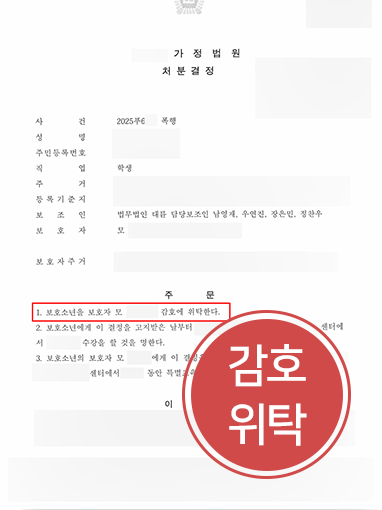
As a result of assisting the client in a juvenile school violence matter, the court rendered a disposition of entrustment to protective custody for the client.
The client subsequently expressed deep gratitude, stating that they were able to avoid a heavier disposition thanks to the efforts of the school violence attorney, who provided careful assistance from the early stages of the case, including gathering evidence and guiding the preparation of a letter of apology.
If You Are Involved in a School Violence Case?

As with the client in the case above, where a person becomes involved in a juvenile school violence case, it is difficult to resolve the matter smoothly merely by pleading that it is unfair.
In such cases, professional assistance from the early stage of the case is important, including gathering evidence, assisting with statements, guidance on preparing a letter of apology, and attempting a settlement.
This firm includes a number of school violence attorneys who have handled many juvenile school violence cases, and it provides the assistance a client needs from the early stage of the case, such as guidance on preparing a statement, the preparation of a letter of apology and an improvement plan, and the development of a settlement strategy.
If you have become involved in a juvenile school violence case in a situation such as the above, please promptly request assistance through 🔗Legal Consultation Booking.

This content is based on actual case studies of Daeryun Law LLC with some adaptations, and the copyright belongs to our firm.
Unauthorized reproduction, duplication, or distribution and other copyright infringements may result in legal action under applicable laws.