
CONTENTS
- 1. Framework Act on the Construction Industry, a Case Involving Restriction on Subcontracting Participation

- - Lawfulness of the Disposition Under the Framework Act on the Construction Industry, the Arguments of the Plaintiff and the Defendant
- 2. Framework Act on the Construction Industry, the Court's Determination on the Lawfulness of the Disposition
- - Does the Disposition at Issue Constitute an Administrative Disposition?
- - Is the Administrative Disposition at Issue Lawful?
- 3. Framework Act on the Construction Industry, Daeryun's Strategy

1. Framework Act on the Construction Industry, a Case Involving Restriction on Subcontracting Participation
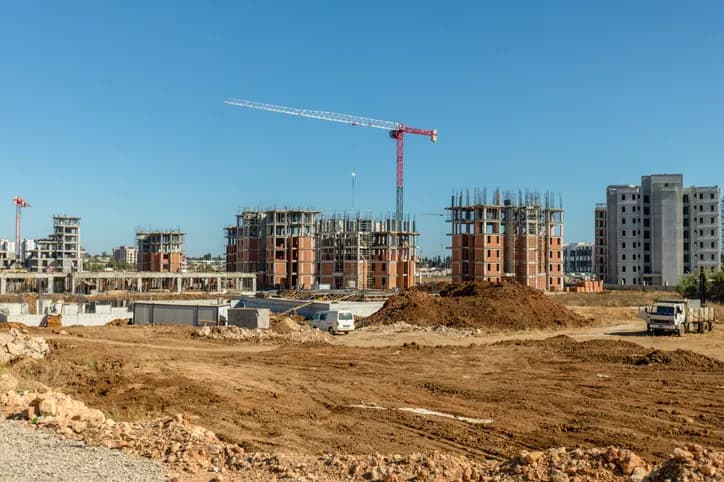
This is a case in which the lawfulness of a disposition under the Framework Act on the Construction Industry was at issue.
The case began when the plaintiff was restricted from participating in subcontracting for public construction by the Minister of Land, Infrastructure, and Transport.
Company B contracted out the construction of a new cold-storage facility (hereinafter the construction at issue) to Company D, and the plaintiff, Company A, was subcontracted by Company D for the steel-frame work portion.
On May 22, 2020, an accident occurred at the site of the construction at issue in which one worker died.
The Ministry of Employment and Labor classified it as a fatal accident and determined that it constituted a serious accident.
Accordingly, on November 24, 2023, the Minister of Land, Infrastructure, and Transport (hereinafter the defendant) issued a disposition restricting the plaintiff's participation in subcontracting for public construction works for one month (December 1, 2023, to December 31, 2023), on the ground that the plaintiff corresponded to “a workplace at which a serious accident under the Occupational Safety and Health Act occurred and whose industrial accident rate for the relevant year was at or above the average for the same type of business by scale.”
 Lawfulness of the Disposition Under the Framework Act on the Construction Industry, the Arguments of the Plaintiff and the Defendant
The following examines the arguments of the plaintiff and the defendant regarding the lawfulness of the disposition under the Framework Act on the Construction Industry.
■The Plaintiff's Argument
The plaintiff argued that the disposition restricting subcontracting participation was an unlawful disposition not grounded in the facts or the statutes.
▶Industrial Accident Rate of 0%
The plaintiff's industrial accident rate for 2020 was 0%, so it did not meet the statutory requirement of being “at or above the average for the type of business.”
▶Absence of Grounds for the Disposition
Issuing the disposition despite the failure to satisfy the statutory requirements constituted an unlawful administrative disposition for which no grounds existed.
▶Distrust of the Published Data
The defendant issued the disposition unilaterally, relying on the data published by the Ministry of Employment and Labor without any further substantive review of the data or any procedure to hear the party's opinion.
■The Defendant's Argument
The defendant argued that the disposition at issue could not be the subject of appeal litigation.
▶Argument That It Was a Mere Notice
The measure at issue merely notified the plaintiff of the fact that it fell within the criteria for restricting subcontracting participation; it was not an administrative disposition producing legal effects and therefore could not be the subject of a lawsuit.


2. Framework Act on the Construction Industry, the Court's Determination on the Lawfulness of the Disposition
The court's determination on the lawfulness of the disposition under the Framework Act on the Construction Industry is as follows.
Does the Disposition at Issue Constitute an Administrative Disposition?
The court determined that the measure at issue was not a mere notice but an act that produces legal effects directly affecting the plaintiff's legal rights (the opportunity to participate in subcontracting for public works).
The court determined that, because the disposition at issue actually deprived the plaintiff of its eligibility to participate in subcontracting, it constituted an administrative disposition subject to appeal litigation.
An administrative disposition means a public-law act performed by an administrative agency that directly affects the rights and obligations or the legal status of the people. Whether an act constitutes an administrative disposition must be determined on the basis of its substantive effect rather than its form.
Is the Administrative Disposition at Issue Lawful?
Under Article 29-3(1)4(b) of the Framework Act on the Construction Industry, for a disposition restricting subcontracting participation to be issued, all three of the following requirements must be satisfied.
-The industrial accident rate for the relevant year must be at or above the average for the same type of business
-It must be a workplace subject to publication of industrial accident statistics
The court determined that the evidence and materials submitted by the defendant did not, on their own, prove the second requirement above, namely that the “industrial accident rate was at or above the average.”
▶Content of the Ministry of Employment and Labor's Reply
The Ministry of Employment and Labor attached a note to the published data stating that “the reliability and accuracy of the data have limitations,” and there were in fact instances in which the accident rate exceeded 100%.
Nevertheless, the court determined that the defendant, without any further review of the data or verification of the facts, did not guarantee the plaintiff an opportunity to submit its opinion and appears to have decided on the disposition at issue.
▶Problems With the Statistical Calculation Method
The figures stated in the public notice at issue were calculated by applying only the number of workers and the number of accident victims at the single construction site where the accident at issue occurred, among the construction sites where the plaintiff performed work.
However, the court determined that, even examining the relevant provisions such as the Framework Act on the Construction Industry, it is difficult to conclude that the accident rate must be calculated by treating only the construction site at which the serious accident occurred as the workplace.
▶Conflicting Official Statistics
During the proceedings in this case, the defendant requested from the Minister of Employment and Labor data on “the annual average industrial accident rate, among the workplaces in which the plaintiff participated as a prime contractor or subcontractor in 2020, of those workplaces at which an accident victim occurred.”
In response, the Minister of Employment and Labor replied that “the plaintiff's accident rate for 2020 was 0.00%.”
The court determined that, where such conflicting data exist, it is difficult to find that the grounds for the disposition were proven on the basis of the content of the public notice at issue alone.
▶Absence of a Relationship With Criminal Punishment
Although the plaintiff received a fine by summary order on account of the accident, the court determined that this was punishment only for its responsibility as a joint contractor and had no direct legal connection with the present restriction on subcontracting participation.
Ultimately, the court found that no grounds for the disposition existed and that procedural safeguards, such as hearing opinions before the disposition, were also lacking, and accordingly held that the disposition at issue was unlawful.
3. Framework Act on the Construction Industry, Daeryun's Strategy
In this case, in which the lawfulness of a disposition under the Framework Act on the Construction Industry was at issue, the court found that the disposition restricting subcontracting participation issued by the defendant did not meet the statutory requirements and that the supporting evidence also lacked objectivity and reliability.
This case once again confirmed the need for legal scrutiny of the accuracy and use of industrial accident rate statistics.
The central issues were whether the requirements set out in Article 29-3 of the Framework Act on the Construction Industry were satisfied, and the reliability of the industrial accident rate statistics that served as the basis for that determination.
Daeryun Law Firm LLP provides legal services focused on responding to sanctions in the construction industry, administrative litigation, and advisory work on serious accident risks.
An 🔗attorney handling real estate matters and an 🔗attorney handling administrative matters, who have specialized knowledge of the Framework Act on the Construction Industry and extensive practical experience, collaborate to provide ▲responses to dispositions restricting subcontracting participation, ▲revocation of dispositions, administrative litigation, and stays of execution, and ▲legal advisory services tailored to the construction industry.


Watch related video content
for this case study.

Exploring the basic concepts of subcontracting law