
CONTENTS
- 1. The Client Who Requested Assistance for a Habitual Larceny Defense

- - Detailed Background of the Case
- 2. Assistance Provided by the Criminal Defense Attorney for the Habitual Larceny Defense
- - Recovery of the Victims' Losses and Pursuit of Settlements
- - Emphasizing a Sincere Attitude of Remorse
- - Establishing the Psychological Factors and the Need for Treatment
- 3. Result of the Habitual Larceny Case, a “Suspended Sentence”
- 4. Elements of Habitual Larceny and the Level of Punishment
- - Level of Punishment
- - FAQ
- 5. If You Need a Defense Against Habitual Larceny

1. The Client Who Requested Assistance for a Habitual Larceny Defense
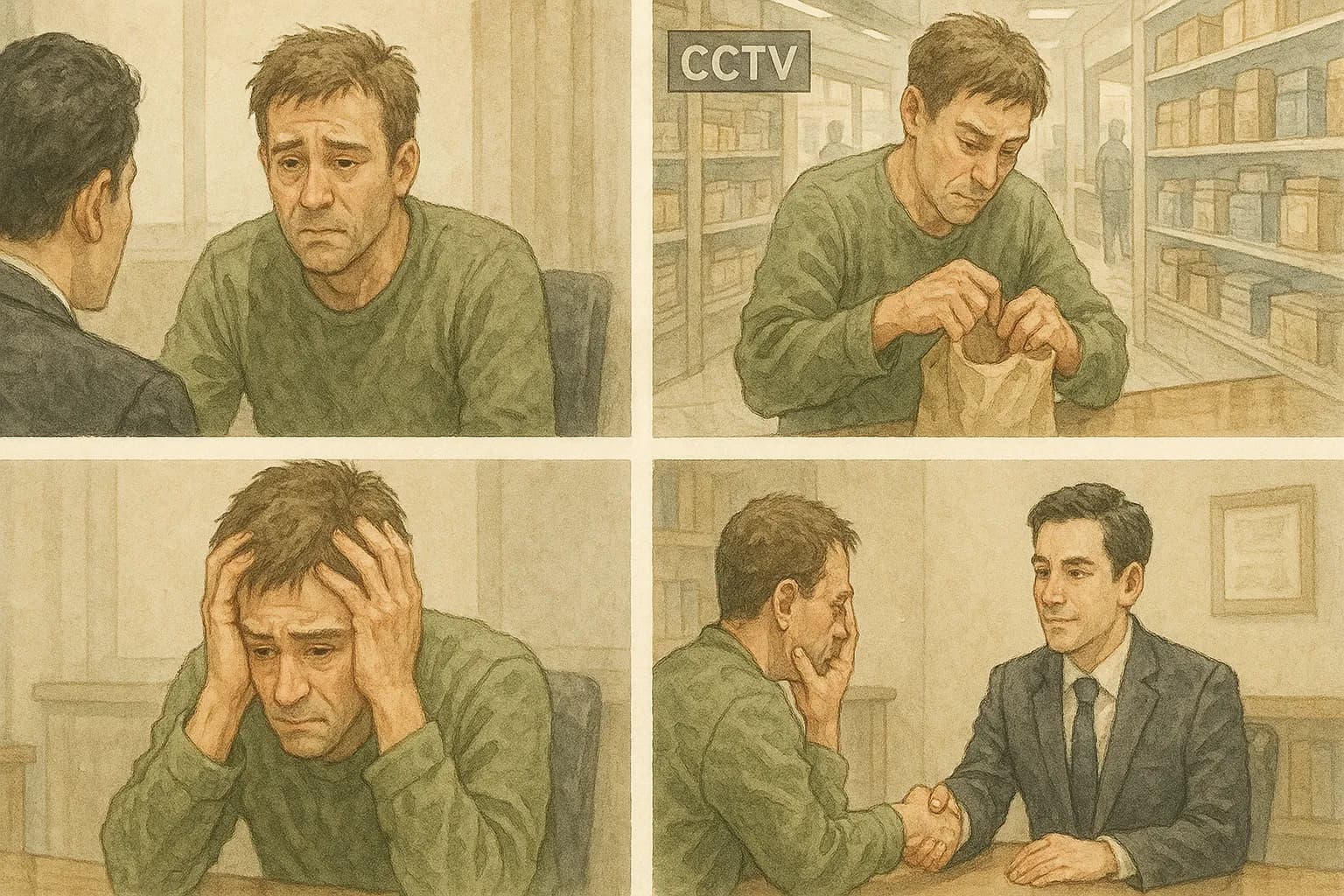
The client who came to be charged with habitual larceny was investigated on the charge of having taken goods on several occasions without paying for them at convenience stores and household goods stores.
Because there was a record of having previously been reported for the same type of matter, the possibility of applying habitual larceny was high, and the client came to request the assistance of a criminal law specialist attorney in a situation where an actual custodial sentence was feared.
 Detailed Background of the Case
The client who sought out a criminal defense attorney explained that, after recently losing his job and going through a prolonged period of financial and psychological hardship, he repeatedly engaged in the impulsive act of taking items in hand and walking out of stores.
Some of the incidents had all been captured on the in-store CCTV, and because multiple stores had been affected, the scale of the damage was considerable.
After being told that there was a high likelihood of an actual custodial sentence if a charge of habitual larceny were applied, the client recognized that the matter could become even more serious and felt anxious.
Accordingly, in order to carry out the initial response in a systematic manner, he came to a criminal defense attorney and requested assistance.


2. Assistance Provided by the Criminal Defense Attorney for the Habitual Larceny Defense
The client had repeatedly committed acts of larceny at several stores, some of which were clearly confirmed by CCTV footage, creating a high likelihood that he would be regarded as a habitual offender.
In addition, the key issues were that the scale of the damage was large because numerous stores were affected and a settlement would therefore be difficult to reach, and that the motive and circumstances of the offenses had not been sufficiently explained owing to past impulse-control problems.
Considering that these factors could lead to an actual custodial sentence, the criminal defense attorney designed the following defense strategy.
Recovery of the Victims' Losses and Pursuit of Settlements
The criminal defense attorney visited the affected stores in person to identify the scale of the damage and their demands, and promptly completed full restitution and settlements.
For the stores that expressed a wish not to have the client punished, written confirmations were obtained and submitted to the investigative authorities, ensuring thorough documentation.
At trial, it was emphasized that the losses had been substantially recovered and that the client had actively fulfilled his responsibility.
Emphasizing a Sincere Attitude of Remorse
The criminal defense attorney did not stop at the mere submission of a letter of apology, but guided the client in preparing a concrete plan to prevent reoffending.
Objective records of practical efforts, such as enrollment at a psychological counseling center, participation in a stress management program, and daily management logs, were secured and submitted to the court.
These materials served as key evidence showing that the client posed a low risk of reoffending and was making efforts toward structural improvement.
Establishing the Psychological Factors and the Need for Treatment
The criminal defense attorney systematically organized the client's past counseling records, related diagnostic histories, and medication prescription materials to demonstrate that he had experienced difficulty controlling his impulses at the time.
Through this, it was clearly explained to the court that the offenses were not planned or deliberately repeated, but rather conduct stemming from psychological factors that required treatment.
At trial, based on these materials, it was argued that reasonable consideration of the client's capacity for responsibility and the circumstances of the offenses was necessary.
3. Result of the Habitual Larceny Case, a “Suspended Sentence”

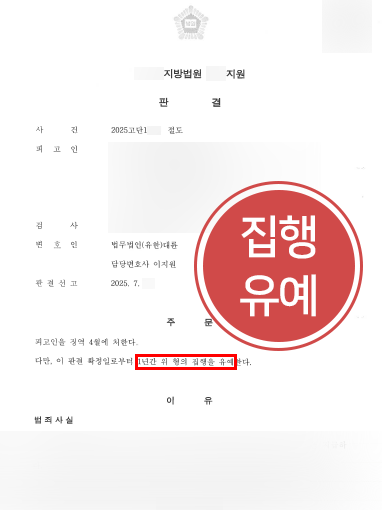
With the systematic assistance of the criminal defense attorney, the client was able to finalize a settlement with the victims and to submit sufficient materials to the court, including records of participation in counseling and treatment, objective evidence of his psychological difficulties, and a practical plan to prevent recurrence.
These materials became key evidence supporting recognition that the client had faithfully fulfilled his responsibility after the offenses and had made efforts to prevent reoffending.
As a result, the court ultimately imposed a suspended sentence.
The client also conveyed his deep gratitude, noting that this allowed him to return to a normal daily life.
4. Elements of Habitual Larceny and the Level of Punishment
Habitual larceny is assessed more seriously than simple larceny, and the court determines whether habituality exists by comprehensively reviewing not only the repetition of the offenses but also the defendant's lifestyle patterns and the motive for the offenses.
▶ Elements
① Repetition
Habituality is not automatically recognized merely because larceny was committed several times.
However, where offenses have been continued and repeated in a similar manner over a certain period, they may be assessed as habitual.
② Existence of a Propensity (an Ingrained Tendency to Offend)
This is the factor the court examines most closely.
The key criterion is whether the offenses are not an accumulation of accidental incidents, but rather a state that has hardened into a certain tendency or pattern of behavior.
③ Intent of Unlawful Acquisition
There must be an intent to take another person's property and to use or dispose of it as one's own for larceny and habitual larceny to be established.
Only when this intent is recognized does the entire structure of habitual larceny come into being.
Level of Punishment
If habitual larceny is recognized, it is punished more severely than ordinary larceny.
▶ Level of Punishment
Larceny (Article 329 of the Criminal Act) | Imprisonment for up to 6 years or a fine of up to 10 million won |
Habitual Larceny (Article 332 of the Criminal Act) | Aggravated punishment of up to one-half added to the statutory penalty for larceny |
However, the sentence may be mitigated if the following grounds exist.
▶ Grounds for Mitigation
ㄧ Mental and physical weakness
ㄧ Genuine remorse
ㄧ No prior criminal record
ㄧ Substantial recovery of the loss (including a deposit in court)
ㄧ The victim's wish not to punish or substantial recovery of the loss (including a deposit in court)
ㄧ Where there are particularly extenuating grounds regarding participation in the offense
FAQ
A. Larceny may be subject to aggravated punishment depending on the method of the offense and the degree of danger involved.
▶ Where the theft is committed by intruding into a structure at night (nighttime residential burglary)
→ Imprisonment for up to 10 years
▶ Where the theft is committed while carrying a deadly weapon, or where two or more persons jointly commit the theft (special theft)
→ Imprisonment for at least 1 year and up to 10 years
In this way, where the method of the offense is dangerous or organized, the sentence becomes heavier than for ordinary larceny.
A. Because repeated offenses are at issue when one is accused of habitual larceny, it is important to clearly organize the facts and the efforts made to prevent recurrence.
First, it is a priority to accurately record the circumstances in which each incident occurred, to ascertain the scale of the damage, and to prepare a plan for recovering the loss.
In addition, if personal factors such as impulses or stress had an influence, it is necessary to prepare objective materials, such as counseling records and a plan for improving one's life, in order to show efforts to reduce the risk of reoffending.
Such preparation may be reflected as a favorable mitigating factor during the investigation and trial.
5. If You Need a Defense Against Habitual Larceny

In a habitual larceny case, the likelihood of an actual custodial sentence is higher than in a simple larceny case, depending on the circumstances of the offense, its repetition, and the scale of the damage, so a very careful response is required.
From the early stage of the investigation, it is important to accurately ascertain the facts of the case and to systematically establish mitigating factors, such as recovery of the loss, remorse, and efforts to improve one's life.
In particular, where repeated offenses or a propensity are at issue, a mere explanation or expression of remorse is not sufficient, so a strategic response based on objective materials is necessary.
This firm closely analyzes the overall facts of the case and provides assistance so that all mitigating factors, such as recovery of the loss and settlement, a plan for improving one's life, and an account of the circumstances of the offense, can be systematically established.
In addition, through preliminary mock examinations and simulations, it provides support to prevent unfavorable statements from arising during the investigation and trial, and it offers comprehensive assistance to prepare for any additional disputes even after the case concludes.
If you are in a situation where you have been accused of habitual larceny and need a defense against punishment, please feel free to request assistance through 🔗Book a Legal Consultation.
See More

This content is based on actual case studies of Daeryun Law LLC with some adaptations, and the copyright belongs to our firm.
Unauthorized reproduction, duplication, or distribution and other copyright infringements may result in legal action under applicable laws.