
CONTENTS
- 1. The Client Facing Punishment for Retaliatory Driving

- - The Circumstances of the Retaliatory Driving Case
- 2. Charges Applied in Connection With Punishment for Retaliatory Driving
- - Level of Punishment by Charge Found to Apply
- 3. Assistance Provided to Defend Against Punishment for Retaliatory Driving
- - Emphasizing the Absence of Intent and of Any Intent to Threaten
- - Settlement With the Victim and Submission of a Letter of Reflection
- - Submission of a Statement of Opinion to the Investigative Agency and Active Explanation
- 4. Successful Defense Against Punishment for Retaliatory Driving: Suspension of Indictment
- - If You Need to Defend Against Punishment

1. The Client Facing Punishment for Retaliatory Driving
This is a case in which a client who had been at risk of punishment for retaliatory driving was able to defend against punishment through the assistance of a criminal law specialist attorney and obtained a suspension of indictment.
 The Circumstances of the Retaliatory Driving Case
While the client was entering an alley to return home, the client encountered a situation in which a motorcycle (the alleged victim) following behind overtook recklessly and cut across in front of the client's vehicle.
There had been many instances in which residents complained of anxiety due to the dangerous riding of motorcycles in that alley in the past.
Accordingly, the client states that, in order to caution the motorcycle rider, the client overtook the motorcycle, stopped the vehicle, and then attempted to have a conversation.
However, regarding this, the motorcycle rider reported the matter to the police, claiming that it was ‘retaliatory driving,’ and the client immediately became subject to an investigation concerning retaliatory driving.
Seeking to defend against punishment, the client requested assistance from an attorney specializing in criminal cases.



2. Charges Applied in Connection With Punishment for Retaliatory Driving
Punishment for retaliatory driving is imposed when a person engages in driving conduct that intentionally threatens another vehicle or driver.
Legally, it can lead to serious criminal offenses such as special intimidation, special assault, and special destruction of property.
: Where a person threatens another by showing the power of a group or multitude or by carrying a dangerous object
∙ Special (aggravated) bodily injury
: Where a person injures the body of another by showing the power of a group or multitude or by carrying a dangerous object
∙ Special (aggravated) assault
: Where a person inflicts assault on the body of another by showing the power of a group or multitude or by carrying a dangerous object
∙ Special destruction of property
: Where a person impairs the utility of another's property, document, or special medium record such as an electronic record by destroying or concealing it or by other means, by showing the power of a group or multitude or by carrying a dangerous object
Because an automobile is regarded as a 'dangerous object,' the above charges may be recognized depending on the threatening conduct during driving.
Level of Punishment by Charge Found to Apply
Where intent is found in such a threatening act during driving, the following punishment for retaliatory driving may be imposed.
Offense | Level of Punishment |
Special intimidation (Article 284 of the Criminal Act) | Imprisonment for up to 7 years or a fine of up to 10 million won |
Special (aggravated) bodily injury (Article 258-2 of the Criminal Act) | Imprisonment for 1 to 10 years |
Special assault (Article 261 of the Criminal Act) | Imprisonment for up to 5 years or a fine of up to 10 million won |
Special destruction of property (Article 369 of the Criminal Act) | Imprisonment for up to 5 years or a fine of up to 10 million won |
3. Assistance Provided to Defend Against Punishment for Retaliatory Driving

The investigative agency, which determined that the client was subject to retaliatory driving punishment and referred the case, was focusing on the following points.
▷ Deemed to have made a threat through a face-to-face conversation
∴ Application of the special intimidation charge
In response, the criminal law specialist attorney focused on the point that the client acted merely to give a warning, without any intent to threaten, and provided the following assistance.
Emphasizing the Absence of Intent and of Any Intent to Threaten
The criminal attorney mainly explained that the client had habitually practiced safe driving, and that the driving conduct in question likewise involved no intent to threaten the other party or to inflict bodily harm.
In particular, emphasizing that the lane change and the attempt to stop were not acts involving any intent of retaliation or threat, the attorney specifically explained the absence of the "intent to threaten," the core element of special intimidation.
Settlement With the Victim and Submission of a Letter of Reflection
From the early stage of the case, the attorney specializing in criminal law persuaded the client to recognize that the client's driving had caused an unnecessary misunderstanding and that the client needed to take corresponding responsibility.
In addition, the attorney accordingly assisted the client in offering a sincere apology to the victim and in making compensation for the harm.
Moreover, the attorney provided specific guidance on how to write a letter of apology so that the sincerity of the remorse could be conveyed, and ensured that the completed letter of apology was promptly submitted to the investigative agency so that it could be reflected as a mitigating factor.
Submission of a Statement of Opinion to the Investigative Agency and Active Explanation
The attorney specializing in criminal matters submitted to the investigative agency an opinion statement that logically structured the lack of intent on the basis of an explanation of the client’s normal driving route and conduct, the results of an analysis of the dashcam footage, and the like.
Also, in the course of responding to repeated summonses, the attorney assisted the client in maintaining consistent statements in accordance with the legal explanations.
4. Successful Defense Against Punishment for Retaliatory Driving: Suspension of Indictment

To defend against punishment for retaliatory driving, the client received the assistance of an attorney specializing in criminal matters from the early stage of the investigation and maintained a prompt and consistent position
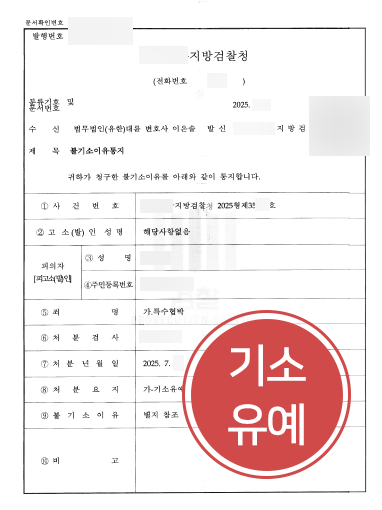
In particular, factors such as an attitude of remorse, a sincere settlement, the client being a first-time offender with no prior criminal punishment, and consideration of the circumstance that the offense resulted from momentary anger while driving were comprehensively reflected, and as a result, the prosecution issued a suspension of indictment.
What is a suspension of indictment?
If You Need to Defend Against Punishment
A traffic offense such as retaliatory driving is a case in which the level of punishment can vary greatly depending on the intent and circumstances of the conduct.
Rather than being judged solely on the facts apparent on the surface, it must be interpreted comprehensively in light of subjective and objective factors, such as the road conditions at the time, the relationship with the victim, and the credibility of the statements.
Daeryun LLC operates a system for assigning attorneys who design a tailored strategy for each field.
In addition, in conjunction with its evidence investigation center, it can provide systematic support extending to the analysis and use of key evidence, such as dashcam footage and the layout of the scene.
If you have been placed at risk of criminal booking or indictment for retaliatory driving or a similar matter, please entrust your case through a 🔗legal consultation booking.

This content is based on actual case studies of Daeryun Law LLC with some adaptations, and the copyright belongs to our firm.
Unauthorized reproduction, duplication, or distribution and other copyright infringements may result in legal action under applicable laws.