
CONTENTS
- 1. The Story of a Client Who Inquired About Drug Offender Sentencing

- - Definition and Concept of Narcotics
- - Frequently Asked Questions Regarding Drug Sentencing
- - A Look at the Classification of Psychotropic Drugs and Levels of Punishment
- 2. Daeryun's Assistance in Defending Against Drug Offender Sentencing
- - The Drug Defense Attorney's Argument That There Was No Purpose of Distribution or Profit
- - The Drug Defense Attorney's Emphasis on the Absence of Any Criminal Punishment Record
- - The Drug Defense Attorney's Argument of the Willingness to Undergo Treatment and Rehabilitation
- 3. Result of the Defense Against Drug Offender Sentencing: Successful Imposition of a Suspended Sentence
- - Facing Questioning by an Investigative Agency or Trial as a Drug Offender?

1. The Story of a Client Who Inquired About Drug Offender Sentencing
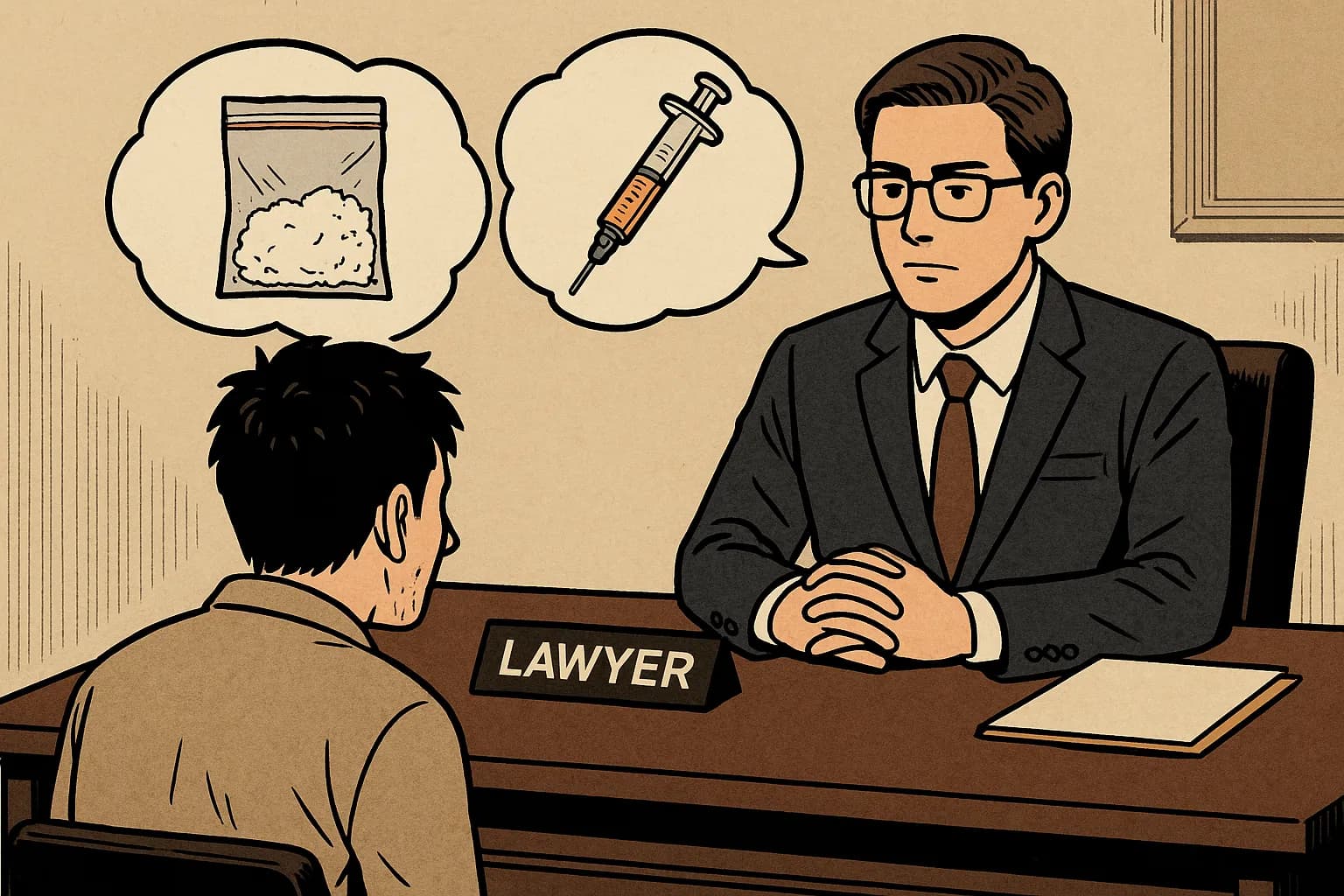
This is the story of a client who inquired about the sentencing range for a drug offender.
The client was facing trial on charges of having purchased methamphetamine (commonly known as philopon), a psychotropic substance, for the purpose of personal use, and then having used it approximately 10 times.
The client, who sought assistance from the law firm Daeryun, shared the situation and inquired about how heavy the sentence might be.
Daeryun's drug defense attorney conveyed that the firm would make every effort to defend against punishment as much as possible, and the client, feeling great trust in the law firm Daeryun, which has extensive practical experience handling drug cases, requested representation.
The drug defense attorney established a defense strategy with the goal of defending against punishment as much as possible, taking into account the facts of the case and the sentencing factors.
 Definition and Concept of Narcotics
The "narcotics" referred to in the law do not denote illegal drugs in general, but rather a specific group of substances that have strong addictiveness and hallucinogenic or analgesic effects.
Representative examples are as follows.
-Poppy: certain species of the poppy plant
-Opium: the sap collected from the poppy, hardened or processed
-Coca leaf: the leaves of the coca plant (excluding those from which the narcotic components have been removed)
-Extracted or synthesized narcotic substances: cocaine, heroin, morphine, codeine, fentanyl, methadone, and the like
-Mixtures or preparations containing these components
"Psychotropic drugs" refer to drugs that act on the central nervous system and alter consciousness, emotion, and behavior.
When misused or abused, strong psychological and physical dependence appears.
The law divides them into four groups based on their danger and their potential for medical use, and methamphetamine belongs to the second group.
It is characterized by extreme psychological and physical dependence and a high recidivism rate, and it causes the following side effects.
-Physical: appetite suppression, heart and blood pressure problems, decreased motor function, skin hallucinations ("meth bugs"), and extreme fatigue and depression after withdrawal
See More


Frequently Asked Questions Regarding Drug Sentencing
Q. If it is a first offense and involves a small amount for personal use, is a suspended sentence guaranteed?
A. If positive factors such as being a first-time offender, remorse, willingness to undergo treatment, and cooperation with the investigation are sufficiently established, there is a strong possibility that a suspended sentence will be imposed, but it cannot be assured.
In addition, because there have recently been frequent reports of serious drug-related crimes that shocked the public, such as the "Daechi-dong cram school district drugged drink threat case" and the "Apgujeong Station Rolls-Royce vehicle ramming case," it is anticipated that the court will impose severe punishment in connection with drug crimes.
The Sentencing Commission of the Supreme Court also held a plenary session in 2024, newly establishing a category for the sale and delivery of drugs to minors and raising the recommended sentencing range.
Even a first-time offender may receive severe punishment, so careful handling is necessary.
Q. How much is the retainer fee for an attorney specializing in drug cases?
A. The attorney's retainer fee varies depending on the nature of the case (use, purchase, distribution, smuggling, and the like), the degree of the charges (whether the person is a first-time offender, a repeat offender, or habitual), and the stage of the proceedings (the investigation stage, the first instance, the appellate review, and so on).
In general, a simple use case by a first-time offender tends to have a relatively low retainer fee, while the more serious the crime, such as cases involving distribution, profit-making purposes, or smuggling, the greater the attorney's workload becomes and the higher the cost rises.
In addition, if further procedures such as evidence analysis, digital forensics, or the submission of an expert opinion are required, a separate cost may be set.
Therefore, the exact retainer fee must be confirmed through a consultation that examines the difficulty and scope of the case.
Q. What kinds of evidentiary materials are advantageous to submit at trial?
A. The following evidence is helpful for mitigation of the sentence or for a suspended sentence in a drug case.
-Letter of apology and letters of appeal: materials showing sincere remorse and social ties submitted by the person and by family members, coworkers, and others
-Treatment and rehabilitation intent materials: hospital counseling records, certificates of participation in psychological treatment or addiction treatment, and drug test results (hair and urine)
-Plan to prevent repeat offense: a plan to return to work, a plan for protection and supervision by the family, and a plan to participate in counseling and rehabilitation programs
-Investigation cooperation materials: records showing that the person admitted the facts of the offense and actively cooperated with the investigation
These materials serve as key grounds for persuading that the defendant is a person with the potential for reintegration into society.
Q. In a drug case, is the sentence mitigated if a person turns himself in?
A. Yes. Under the Narcotics Control Act, voluntary surrender is an important factor to be considered in sentencing.
When a person voluntarily reports the facts of the offense to the investigative authorities, the court evaluates this as a positive factor.
In fact, "voluntary surrender" is also specified as a positive factor in the sentencing guidelines.
However, the scope of mitigation is greater when the surrender is made sincerely while there is no risk of detection, than when the person appears voluntarily just before being caught in the investigation.
A Look at the Classification of Psychotropic Drugs and Levels of Punishment
Psychotropic drugs are classified into types (a), (b), (c), (d), and (e) based on criteria such as physical and psychological dependence, safety, and potential medical use.
▶Type (a): LSD, methoxy, bufotenine, psilocybin, psilocin, and others
▶Type (b): amphetamine-class substances, ketamine, MDMA, and others
▶Type (c): barbital, pentazocine
▶Type (d): zolpidem, propofol, phentermine
The level of punishment varies depending on the drug administered or possessed.
Drug administered or possessed | Level of punishment |
Psychotropic type (d), cannabis | Imprisonment for up to 5 years or a fine of up to 50 million won |
Psychotropic type (b), psychotropic type (c) | Imprisonment for up to 10 years or a fine of up to 100 million won |
Heroin, salts, compounds | Imprisonment for at least 1 year |
The client in this case, charged with the administration and sale of methamphetamine, faced a situation that could result in imprisonment for up to 10 years or a fine of up to 100 million won.
2. Daeryun's Assistance in Defending Against Drug Offender Sentencing

The firm set out to establish a defense strategy to defend against the sentencing range for the drug offender.
Daeryun's drug defense attorney established a defense strategy focusing on the points that the client admitted all of the charges, actively cooperated with the investigation, and did not act for distribution or profit-making purposes.
The Drug Defense Attorney's Argument That There Was No Purpose of Distribution or Profit
In a drug case, whether there was a purpose of distribution makes a large difference in the sentence.
Accordingly, the defense counsel analyzed the transaction history and digital materials to establish the following.
-That there were no circumstances of sale whatsoever
-That the transaction counterparties were extremely limited
-That the quantity possessed and the transaction amount were small in scale
This objectively demonstrated that the client's conduct was unrelated to any profit-seeking distribution network and was purely for personal use.
The Drug Defense Attorney's Emphasis on the Absence of Any Criminal Punishment Record
The drug defense attorney emphasized that the client was a first-time offender with no prior record of criminal punishment whatsoever.
In addition, the attorney submitted a handwritten letter of apology drafted by the client himself, along with letters of appeal from family members and coworkers, requesting leniency.
In particular, the attorney emphasized that the client had admitted the facts and actively cooperated during the investigation by the investigative authorities, and that the client showed no attitude of denying or evading the offense whatsoever.
The Drug Defense Attorney's Argument of the Willingness to Undergo Treatment and Rehabilitation
Because remorse alone is not sufficient, the drug defense attorney also prepared materials demonstrating the client's substantial willingness to rehabilitate.
-Counseling records from a specialized hospital
-A plan to participate in future treatment and counseling programs
-A consent form for regular drug testing
The attorney emphasized that the client held a firm resolve never to repeat the same mistake again.
3. Result of the Defense Against Drug Offender Sentencing: Successful Imposition of a Suspended Sentence
As a result of the defense against the drug offender sentencing, the client was able to avoid an actual custodial sentence.
The court imposed a suspended sentence, taking comprehensive account of the facts that, although the period of use was long and the number of uses was high, the client was a first-time offender with no record of criminal punishment, that the client admitted all of the offense and showed a deeply remorseful attitude, that it was established that the case was one of use without a purpose of distribution, and that the client had a concrete treatment and rehabilitation plan.
Facing Questioning by an Investigative Agency or Trial as a Drug Offender?
Drug cases, by their nature, require careful response at every stage, from the initial statement during the investigation through to trial.
An improper response may lead to an unnecessarily heavy sentence, so the following points should be kept in mind.
▶Make Initial Statements with Caution
-In drug cases, whether the accused confesses and shows a remorseful attitude has a significant effect on the sentence.
-Denying the facts during questioning or making inconsistent statements may be assessed as a lack of remorse and work against the accused.
-Therefore, it is important to organize the facts accurately and then give consistent statements with the assistance of an attorney.
▶Proof of First-Offender Status and a Remorseful Attitude
-The fact that the accused is a first offender with no prior criminal punishment is a key factor that increases the likelihood of a suspended sentence.
-A handwritten statement of remorse and petitions from family or the workplace may be used as grounds that the risk of reoffending is low.
-In an administration (use) case, it should be made clear that there was no intent whatsoever to distribute.
▶Demonstrating a Willingness to Pursue Treatment and Rehabilitation
-The court considers not only punishment but also whether the defendant can refrain from reoffending and reintegrate into society.
-Therefore, submitting documents such as an addiction screening test, counseling records from a specialized institution, an outpatient treatment plan, and a consent form for regular drug testing may result in a positive assessment that treatment and rehabilitation are possible.
Drug cases are sensitive matters in which a single small misstep in response can directly affect the sentence.
Therefore, if you are facing questioning by an investigative agency or a trial, it is advisable to prepare strategically from the early stage with the help of an attorney experienced in drug cases, rather than responding alone.
At Daeryun LLC, attorneys experienced in numerous drug cases take the lead in providing tailored defense strategies for clients' cases.

This content is based on actual case studies of Daeryun Law LLC with some adaptations, and the copyright belongs to our firm.
Unauthorized reproduction, duplication, or distribution and other copyright infringements may result in legal action under applicable laws.