
CONTENTS
- 1. Violation of the Personal Information Protection Act | Details of the Case

- 2. Violation of the Personal Information Protection Act | The Concept of the Personal Information Protection Act
- - Types of Personal Information
- 3. Violation of the Personal Information Protection Act | Analysis of the Requirements and Issues for Establishing the Charge
- - Analysis of Precedents on Violation of the Personal Information Protection Act
- 4. Violation of the Personal Information Protection Act | The Assistance of the Attorney Specializing in Criminal Matters
- - The Case Outcome
- 5. Violation of the Personal Information Protection Act | Legal Points for Responding to the Charge

1. Violation of the Personal Information Protection Act | Details of the Case
This is the story of a client who requested a consultation with our firm's attorney specializing in criminal matters, stating that he was under suspicion of violating the Personal Information Protection Act.
The client was the representative of an agricultural corporation and the general manager in charge of farm operations, and he managed the control room that controlled the main facilities.
The control room was connected to automatic control systems for the farm's water supply, temperature, and humidity, and if the machine settings were incorrect, the entire farm could come to a halt or the harvest could be entirely suspended.
Accordingly, out of concern that employees might accidentally touch the control room computer, the client installed CCTV for security purposes.
The problem was that the CCTV in the control room also recorded employees arriving and leaving and the desks at which they worked.
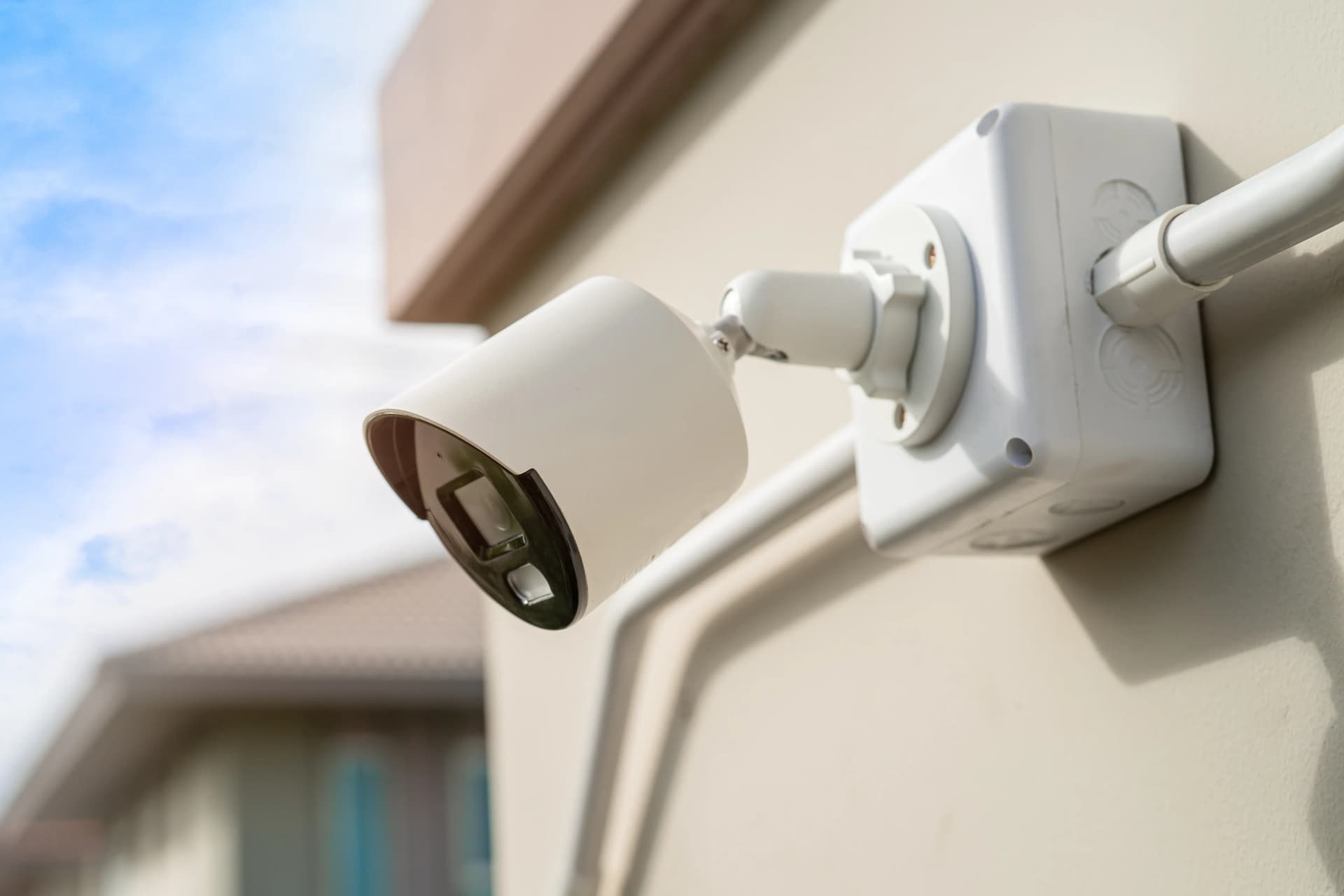
One employee reported the client for violation of the Personal Information Protection Act, stating that the filming had taken place without prior consent, and the client became subject to an investigation by the investigative authorities.
Although the audio recording function of the CCTV was disabled, because video in which an employee's face could be identified had been recorded, whether the law had been violated became the issue.
The client requested a consultation with an attorney specializing in criminal matters to seek legal assistance, stating that he had merely installed CCTV for crime prevention in the space of the company of which he was the representative and had had no unlawful intent whatsoever.
2. Violation of the Personal Information Protection Act | The Concept of the Personal Information Protection Act
A violation of the Personal Information Protection Act refers to an act that violates the law intended to protect information concerning an individual's personal details and to restrict the processing, use, and provision of such information.
Personal information includes not only a name or contact details, but also all forms of information by which a specific individual can be identified (video, audio, location information, and the like).
This law applies not only to public institutions but also where any business operator or organization handles personal information. In particular, when installing a video information processing device (CCTV), the purpose of filming, the location, the scope of filming, and the retention period must be made clear, and unnecessary collection of video is prohibited.
In other words, if a specific individual can be identified in CCTV footage, that footage constitutes personal information, and installing or using CCTV without authorization may give rise to a suspected violation of the Personal Information Protection Act.
If the charge is established, the offender is subject to imprisonment for not more than three years or a fine not exceeding 30 million won under the Personal Information Protection Act.
 Types of Personal Information
Personal information is classified as follows.
Category | Description | Examples |
General Personal Information | Information by which an individual can be identified | Name, address, telephone number, video, email |
Sensitive Information | Information that reveals an individual's private life or inner self | Health information, religion, political views, criminal record, and the like |
Video Information | Information by which an individual can be identified through video, such as CCTV | Face, behavioral patterns, arrival and departure at work, and the like |
Pseudonymized Information | Information by which an individual cannot be specified without additional information | Statistically processed data, encrypted customer codes |
3. Violation of the Personal Information Protection Act | Analysis of the Requirements and Issues for Establishing the Charge
🔗Violation of the Personal Information Protection Act In order for the charge to be established, the following requirements must be satisfied.
① Where there was collection or use of personal information
② Where it was collected without the consent of the data subject or without a legal basis
③ Where there was ‘intent’ in the act
In other words, the mere fact that CCTV was installed does not establish the crime, and the key issue becomes whether there was an ‘intention or purpose to unlawfully collect personal information.’
In this case, the issues were the following two.
① Did the control room constitute an ‘open place’?
An operator of a video information processing device may not use the recording function of CCTV installed in an open place (a place to which an unspecified number of people can freely enter).
However, the client's control room was an internal work space with restricted access by outsiders, to which the general public could not gain access.
② Did recording take place?
The client's CCTV operated only with a video recording function, and the audio recording function was disabled.
Accordingly, it could not be considered that the ‘prohibition on the collection of audio information’ under the Personal Information Protection Act had been violated.
Analysis of Precedents on Violation of the Personal Information Protection Act
The Supreme Court held that “if an act of submitting or using personal information does not violate social norms, its illegality may be precluded as a justifiable act under Article 20 of the Criminal Act” (Supreme Court Judgment of July 18, 2025, 2023Do17590).
In other words, the purport is that if personal information was unavoidably processed for business purposes, the act may be recognized as justified by reasonable grounds under generally accepted social norms.
In this case as well, the client installed the CCTV under the clear business purpose of safety management of the control room, and the footage was not leaked externally or used for an improper purpose, so there was ample room for the illegality to be precluded.


4. Violation of the Personal Information Protection Act | The Assistance of the Attorney Specializing in Criminal Matters

Through the assistance of the attorney specializing in criminal matters, the client received the following step-by-step response.
① Proving the Absence of Intent
The attorney specializing in criminal matters explained in detail that, at the time of installing the CCTV, the client had no awareness whatsoever of violating the Personal Information Protection Act and had operated the CCTV solely for security and operational efficiency.
② Refuting the Open-Place Requirement
As a matter of legal principle, an ‘open place’ for the operator of a video information processing device means a space to which the general public can freely gain access.
However, the attorney clearly argued that the control room was a work space accessible only to employees and therefore did not constitute an ‘open place.’
③ Submitting Evidence That the Recording Function Was Not Used
By submitting the technical specifications of the CCTV the client had installed and the actual recording files, the attorney proved that no audio recording had taken place.
④ Arguing for Recognition of a Justifiable Act
On the basis of the Supreme Court precedent, the attorney emphasized that installing CCTV to secure the control room constituted a justifiable act tolerated under generally accepted social norms, and that the illegality of the client's act was therefore precluded.
The Case Outcome
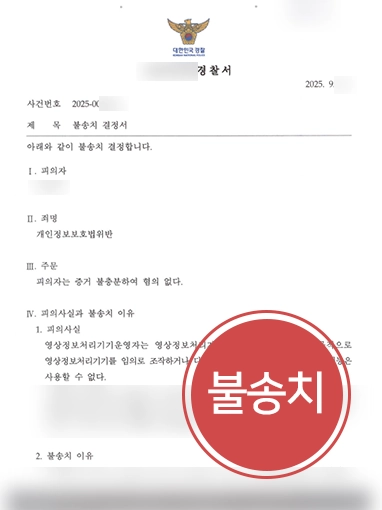
As a result of the investigation, the police confirmed that ① the control room was a space with restricted external access and was not an ‘open place,’ ② the audio recording function was not in operation, and ③ the footage had not been leaked externally.
Accordingly, the police rendered a decision of non-referral (no suspicion of crime), finding it difficult to conclude that the client's act had violated the Personal Information Protection Act.
Through this decision, the client was able to conclude the case without legal liability, and with the help of our firm's corporate attorney, he organized the company's future CCTV operation policy and implemented measures to prevent recurrence.
5. Violation of the Personal Information Protection Act | Legal Points for Responding to the Charge
Category | Response Point |
1. Purpose of CCTV Installation | If the purpose is crime prevention and safety management, it may be permissible under generally accepted social norms |
2. Whether It Is an Open Place | If it is an internal space with restricted access by outsiders, the illegality is low |
3. Whether the Audio Recording Function Was in Operation | A video record without audio recording has a low possibility of infringement |
4. Whether Prior Notice Was Given | Informing employees of the fact and purpose of the CCTV installation can prevent disputes |
5. Arguing a Justifiable Act | Arguing that it was a measure for occupational safety and security |
This case was a violation of the Personal Information Protection Act that arose from a lack of familiarity with the law.
The attorney specializing in criminal matters systematically proved the absence of intent, the non-public nature of the place, and the requirements of a justifiable act, thereby assisting the client in obtaining a decision of no suspicion.
The Personal Information Protection Act is a law that can readily apply even in everyday work environments such as workplaces, hospitals, and academies.
In particular, CCTV, customer information, and attendance management systems can lead to criminal punishment if mismanaged, so a clear understanding of the legal standards and a prior review are essential.
If you come to be investigated for a suspected violation of the Personal Information Protection Act in a similar situation, we strongly recommend that you obtain the assistance of an attorney specializing in criminal matters who can establish a response strategy based on legal grounds and precedents.
Our firm provides not only responses to criminal proceedings but also, in collaboration with corporate attorneys, advisory services to prevent corporate risks.
This content is based on actual case studies of Daeryun Law LLC with some adaptations, and the copyright belongs to our firm.
Unauthorized reproduction, duplication, or distribution and other copyright infringements may result in legal action under applicable laws.