
CONTENTS
- 1. A Client Who Requested a Response to a Construction Payment Lawsuit

- - What Is a Construction Payment Lawsuit?
- - Frequently Asked Questions About Construction Payment Lawsuits
- 2. Establishing a Response Strategy to Rebut the Construction Payment Lawsuit
- - Identifying the Party to the Contract
- - Circumstances of the Tax Invoice Issuance
- 3. Outcome of the Construction Payment Lawsuit Response: All of the Plaintiff's Claims Dismissed
- - How to Respond to a Construction Payment Lawsuit?

1. A Client Who Requested a Response to a Construction Payment Lawsuit
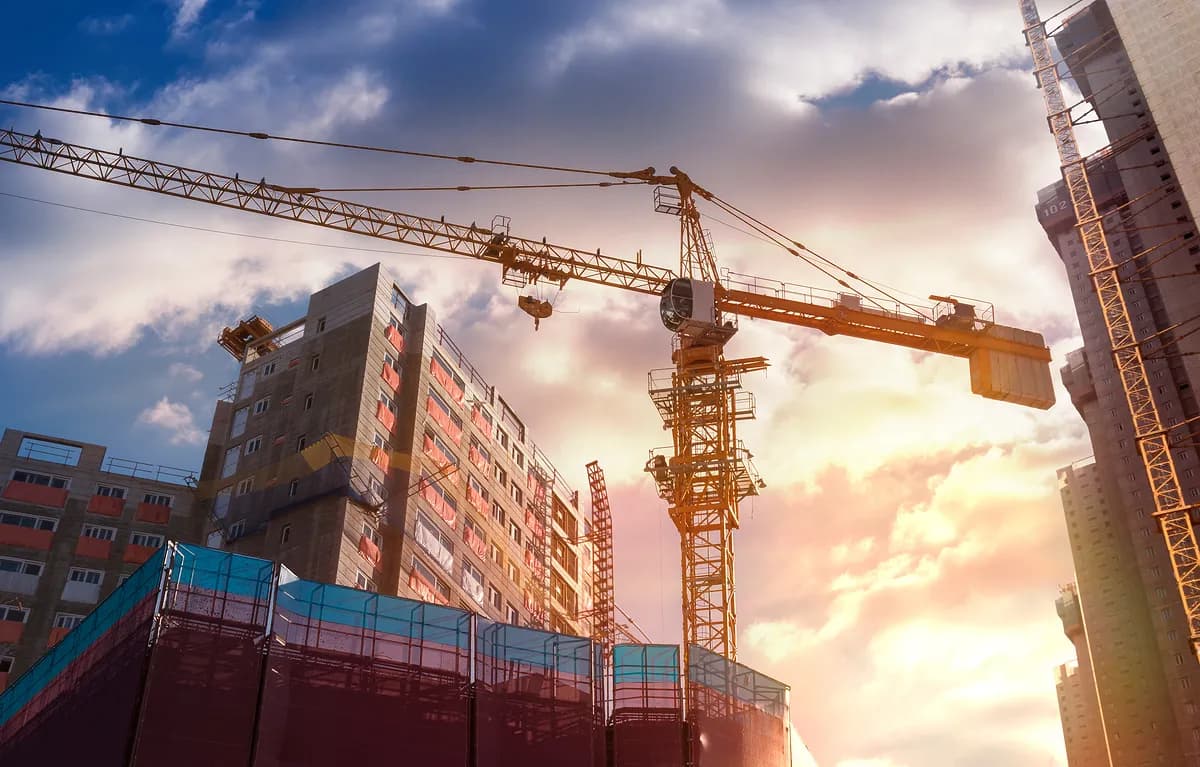
This is the account of a client who requested a response to a construction payment lawsuit.
The client operates a manufacturing company and had entered into a subcontract with the plaintiff regarding welding work.
The plaintiff filed this construction payment lawsuit, asserting that, despite having completed the work under the contract, the plaintiff had not received from the client a construction payment amounting to approximately 50 million won.
However, the client stated that, while it was true that the client had been a party to the preceding contract, the actual party to the contract was not the client but a third-party company.
Through careful consultation, the attorney in charge recognized that proving who the party to the contract was during the period at issue in the case was important, and undertook a tailored response.
 What Is a Construction Payment Lawsuit?
A construction payment lawsuit refers to a lawsuit in which a contractor claims payment from the court when, despite having completed specific work in construction, manufacturing, services, and the like, the ordering party or the prime contractor does not pay the due compensation.
For example, where a subcontractor has actually completed the work but the ordering party delays payment of the costs or pays only a portion, the subcontractor may file a construction payment lawsuit to recover the unpaid amount.
The main issues in a construction payment lawsuit are as follows.
Whether the construction payment claim was established: The key issue is whether a construction contract was validly concluded between the parties.
A construction payment claim can arise only if the contract is valid.
Whether the construction was completed and whether defects exist: Whether the construction was completed in accordance with the terms of the contract, and if there are defects, whether the full payment is made or the amount is reduced may differ depending on the degree and scope of those defects.
The issue of an increase or decrease in the construction payment: The initial contract amount may change due to design changes, the occurrence of additional work, changes in site conditions, and the like. In this case, the issue becomes whether the additional payment was calculated appropriately.
Whether the statute of limitations applies: A construction payment claim is subject to a short three-year extinctive prescription under the Civil Act. Accordingly, if three years have elapsed from the date of completion of the construction, the claim may be dismissed even if a lawsuit is filed.
Frequently Asked Questions About Construction Payment Lawsuits
Q. How long does a construction payment lawsuit take?
A. Although it varies depending on the complexity of the case and the degree of dispute, at the first-instance level it can ordinarily take from six months to more than a year.
If an appraisal (such as for the existence of defects) or a witness examination procedure is required in the interim, the period can become longer.
Q. Is a lawsuit possible even when only a portion of the construction payment has been received?
A. Yes. Even where only a portion, rather than the full construction payment, has been received, the remaining unpaid amount can be claimed. However, the paid portion and the unpaid portion must be distinguished and proved.
Q. If the construction payment is not made, does the matter go straight to a lawsuit?
A. Not necessarily.
A resolution may first be attempted through pre-litigation steps such as sending a certified letter of content, requesting consultation, and applying for a payment order.
However, if the other party ultimately refuses to pay or consultation fails, the matter proceeds in earnest to a construction payment claim lawsuit.


2. Establishing a Response Strategy to Rebut the Construction Payment Lawsuit
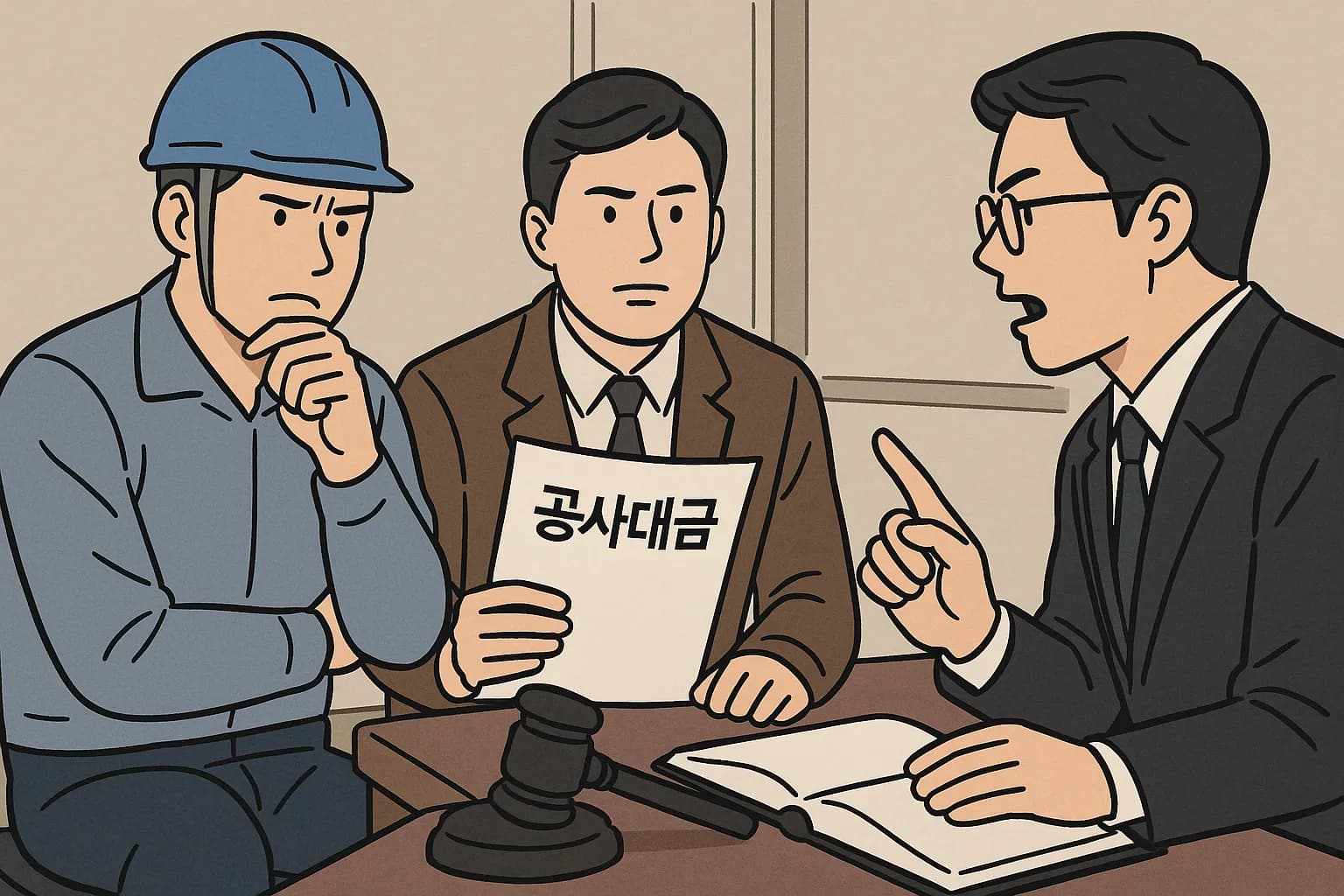
The firm set about establishing a response strategy to rebut the construction payment lawsuit.
Daeryun LLC formed a team of attorneys experienced in numerous construction payment cases and undertook the response to the case.
The plaintiff argued that it had entered into a subcontract with the client and had completed the construction accordingly, so the client had an obligation to pay the construction payment.
The plaintiff also took the position that, even if a third-party company had been involved in the process of issuing the tax invoice, this was merely a tax-processing matter and the client remained the debtor under the contract.
Identifying the Party to the Contract
The Daeryun attorney emphasized that the party to the contract during the period at issue asserted by the plaintiff was not the client but a third-party company.
In fact, during the relevant period the plaintiff had received construction payments transferred from the third-party company, which is a fact showing that the entity performing the contract was not the client.
▶Related precedent: Supreme Court Decision 2022Da247422, rendered June 15, 2023
Who the party to a contract is, is a matter of interpreting the intent of the parties involved in the contract. Where the intent of the parties is not in agreement, the party must be determined based on the nature and content of the contract, the circumstances of its conclusion, and the specific various circumstances before and after the conclusion of the contract, by the standard of whom a reasonable person would have understood to be the party to the contract, and whether the contract was formed and its effect must be judged on this basis.
Circumstances of the Tax Invoice Issuance
Under the Value-Added Tax Act, the plaintiff was required to collect tax from the party that provided the service. In practice, however, the plaintiff issued the tax invoice in the name of a third-party company at that company's request.
Counsel argued that the plaintiff's tax invoice constituted circumstantial evidence supporting the recognition of the third-party company as the contractual counterparty.
3. Outcome of the Construction Payment Lawsuit Response: All of the Plaintiff's Claims Dismissed
In the construction payment lawsuit, the court dismissed all of the plaintiff's claims.
Accepting the argument of Daeryun's counsel, the court found that during the period at issue it was reasonable to regard the contracting party as the third-party company rather than the defendant. In light of the facts that the third-party company directly paid the construction payment and that the tax invoice was also issued in the name of the third-party company, the court held that the plaintiff's claim was without merit.
As a result, the client was relieved of the risk of having to pay an additional construction payment of approximately 50 million won.
How to Respond to a Construction Payment Lawsuit?
A construction payment lawsuit is a complex proceeding that involves various issues, such as identification of the contracting party, whether the work was completed, the existence of defects, and the supporting evidence.
Accordingly, when a party is sued unjustly, the following responses are necessary.
Identifying the Contracting Party
The first matter to examine in a lawsuit is “who is the party to the contract.”
It must be clearly established who actually entered into the contract and who undertook to pay the amount.
Where the other party deliberately blurs the contractual relationship with a third-party company, it is important to identify the party through the contract, tax invoices, account transfer records, and similar materials.
Proving Whether the Work Was Completed and the Payment Was Made
If the other party did not properly complete the work, or if the payment has already been made, these facts must be proven through objective materials.
A construction log, photographs of the work, certificates of completed work, and transfer records may serve as key evidence.
Reviewing the Tax Invoice Issuance Records
The relationship for paying the construction payment is closely connected to the manner in which tax invoices are issued.
Where a tax invoice was issued in the name of a third party, this may serve as important circumstantial evidence showing that the transaction counterparty was different.
Obtaining the Assistance of an Attorney
A construction payment lawsuit involves various legal principles, including contract interpretation, tax materials, and the Fair Transactions in Subcontracting Act, which makes it difficult for a non-specialist to handle.
When a party is sued unjustly, establishing a litigation strategy with the assistance of an attorney at an early stage can affect the eventual outcome.
At Daeryun LLC, attorneys who have handled numerous construction payment matters provide the following services.
-Review of the contracting party and legal advisory
-Support in proving whether the work was completed and the payment was made
-Analysis of tax invoices and tax materials
-Professional litigation representation and comprehensive strategy development
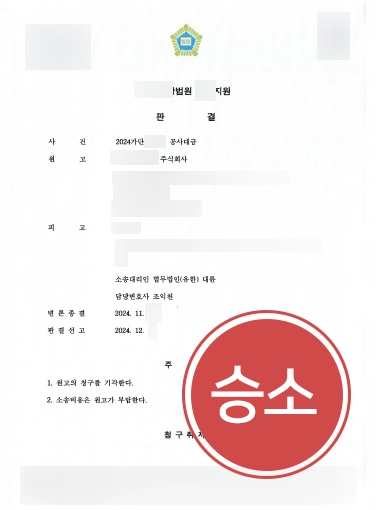
This content is based on actual case studies of Daeryun Law LLC with some adaptations, and the copyright belongs to our firm.
Unauthorized reproduction, duplication, or distribution and other copyright infringements may result in legal action under applicable laws.